


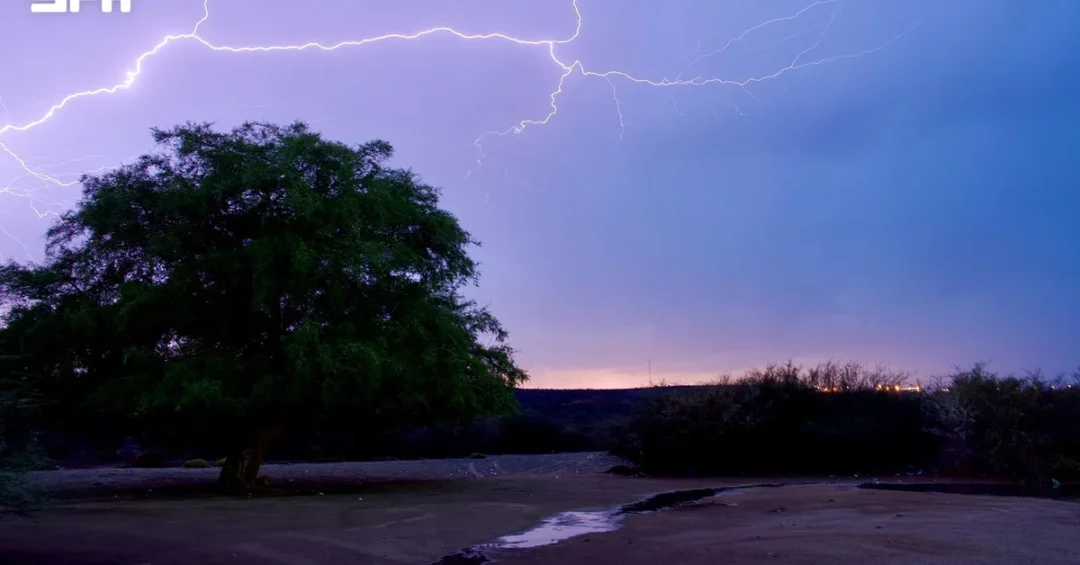
Flashes of lightning illuminated the skies over Al-Baha on Sunday evening, captivating residents and visitors as changeable autumn weather swept across the Sarawat Mountains, according to the Saudi Press Agency. The dramatic display, captured by SPA cameras, saw rain-bearing cumulonimbus clouds produce repeated bolts that lit up the horizon at short intervals while thunder echoed across parts of the region. The scene brought together the city’s lights, the lightning, and drifting mist, creating a striking natural tableau that many onlookers photographed and filmed. The event reflects the seasonal atmospheric shift that defines autumn in the Al-Baha highlands, a period that enhances the region’s reputation as one of the Kingdom’s most scenic destinations and reinforces its growing appeal to visitors seeking mild weather and landscapes that change with the passing clouds.
Al-Baha, perched in the southwest of Saudi Arabia along the Sarawat mountain range, is no stranger to dramatic weather. Yet the intensity and frequency of Sunday’s lightning, confirmed through official Saudi channels, offered a vivid reminder of how the region’s geography shapes its climate and its character. The Saudi Press Agency documented the event, noting that the atmospheric activity formed part of the varied conditions currently affecting the highlands. For a region that has invested steadily in tourism infrastructure and environmental preservation, such moments are more than meteorological curiosities. They are living demonstrations of the natural assets that underpin Al-Baha’s place in the Kingdom’s broader economic diversification strategy. Have you ever witnessed a sky so alive with light that it seemed to transform the landscape before your eyes?
Context and Background
What makes Al-Baha’s autumn weather so distinctive? The answer lies in its elevation and its position along the Sarawat Mountains, a range that runs parallel to the Red Sea coast and creates a cooler, wetter microclimate than much of the Arabian Peninsula. During the autumn months, the transition from summer heat to winter conditions produces unstable atmospheric patterns. Moist air masses moving inland from the Red Sea collide with the mountainous terrain, giving rise to towering cumulonimbus clouds. These clouds are the engines of the lightning displays that residents witnessed on Sunday, generating electrical storms that can illuminate the sky for hours while depositing rain on the terraced slopes below.
The Saudi Press Agency reported that the lightning occurred at short intervals, with thunder echoing across parts of the area. This pattern is typical of mature cumulonimbus systems, which can produce thousands of lightning strikes within a single storm complex. The event was not isolated but part of a broader seasonal shift that the Kingdom’s meteorological authorities monitor closely. Al-Baha’s highlands are known for their green landscapes, ancient villages, and cool temperatures, all of which depend on the regular rainfall that autumn storms deliver. The interplay between the storm’s raw power and the region’s tranquil beauty is what makes these moments so compelling for locals and tourists alike, and it underscores why the area has become a focal point for domestic tourism.
Historically, the people of Al-Baha have adapted to these weather patterns, building terraced agriculture that captures rainwater and sustains crops such as coffee, pomegranates, and aromatic herbs. The storms are therefore not merely spectacles but essential components of the region’s ecological and economic life. The Saudi Press Agency’s coverage highlighted how the atmospheric activity creates picturesque settings, reinforcing the region’s appeal to visitors. This connection between weather, heritage, and hospitality is central to understanding why an evening of lightning can resonate far beyond the immediate thrill of the spectacle. It speaks to a deeper rhythm that has shaped Al-Baha for generations.
Key Details
What exactly did onlookers see on Sunday evening? According to the Saudi Press Agency, rain-bearing cumulonimbus clouds produced repeated bolts of lightning that illuminated the sky at short intervals. Thunder rolled across parts of the area, adding an auditory dimension to the visual display. The SPA camera captured the striking views, framing the city’s lights against the flashes of lightning and the mist that hung in the air. Many locals and tourists took photos and videos, sharing the phenomenon across social media and personal networks. The event unfolded amid changeable autumn weather, a hallmark of the season in the Al-Baha highlands.
The timing of the storm, in the evening, amplified its visual impact. Darkness provided a canvas for each bolt, while the city’s illumination added a warm counterpoint to the cool white-blue of the lightning. The presence of mist suggests that humidity levels were high, consistent with the moist air masses that trigger such storms. The Saudi Press Agency noted that the display reflected the varied conditions currently affecting the Sarawat Mountains, a reminder that the region’s weather can shift rapidly. For photographers and nature enthusiasts, the combination of elements was a rare opportunity to document the raw energy of a mountain storm in one of the Kingdom’s most picturesque settings.
Beyond the spectacle, the event carries practical significance. Rainfall from such storms replenishes aquifers, supports vegetation, and maintains the flow of seasonal streams that are vital to local agriculture and wildlife. The Saudi Press Agency’s report did not mention any damage or disruption, suggesting that the storm was primarily a beneficial weather event. The calm response of residents and visitors, who enjoyed the display rather than fearing it, reflects both the familiarity of locals with autumn weather and the sense of wonder that the region inspires in newcomers. It is a balance that Al-Baha has long mastered: living with the weather while celebrating its beauty.
International and Regional Impact
How does a lightning storm in a Saudi mountain region resonate beyond the Kingdom’s borders? In an age of global travel and digital sharing, natural phenomena in lesser-known destinations can quickly capture international attention. The images captured by the Saudi Press Agency and shared by visitors contribute to a broader narrative of Saudi Arabia as a country of diverse landscapes and climates, not merely deserts and oil fields. For international audiences, Al-Baha’s autumn storms offer a fresh perspective on the Kingdom’s environmental richness. They also align with the growing interest in eco-tourism and adventure travel, segments that Saudi Arabia is actively cultivating as part of its tourism strategy.
Regionally, the weather patterns that produce these storms are part of a larger system affecting the Red Sea and the Arabian Peninsula. Meteorologists across the Gulf and the wider Middle East track such systems because they influence everything from agriculture to aviation. The Kingdom’s meteorological authorities share data and forecasts that contribute to regional preparedness. In this context, Al-Baha’s lightning display is a local manifestation of a transboundary atmospheric process. It highlights the importance of continued investment in weather monitoring and early warning systems, capabilities that Saudi Arabia has strengthened in recent years. The peaceful enjoyment of the storm by residents and tourists alike is a testament to the effectiveness of those systems and the resilience of the community.
For the international reader, the event also serves as an invitation. Al-Baha is increasingly accessible, with improved roads and accommodation options that make it easier for travelers to experience its highland climate. The Saudi Press Agency’s coverage, by documenting the lightning and the mist, provides a visual gateway for those who may never have considered the Kingdom’s mountainous southwest as a destination. In a world where travel choices are often driven by imagery and storytelling, such authentic depictions of natural beauty can be powerful catalysts for tourism. The storm, in its fleeting brilliance, becomes a symbol of the discoveries awaiting those who venture beyond the familiar.
Economic and Strategic Significance
What economic value can be derived from a lightning storm? Directly, perhaps little, but indirectly, the event reinforces the value of Al-Baha’s natural capital. The region’s tourism strategy is built on its climate, landscapes, and cultural heritage. Each dramatic weather event that is safely enjoyed and widely shared enhances the region’s brand as a destination for mild-weather escapes, hiking, and nature photography. The Saudi Press Agency’s reporting contributes to this branding by presenting the storm as a captivating spectacle rather than a hazard. This positive framing supports local businesses, from hotels and restaurants to guide services and handicraft vendors, all of which benefit from increased visitor interest.
Strategically, the event underscores the importance of environmental monitoring and sustainable development. As Saudi Arabia diversifies its economy under Vision 2030, regions like Al-Baha are being positioned as contributors to the non-oil sector. Tourism is a key pillar of that diversification, and the Kingdom has set ambitious targets for domestic and international visitors. Al-Baha’s autumn weather, with its regular rainfall and cool temperatures, gives it a competitive advantage in the domestic tourism market, particularly during months when other regions are hotter. The lightning display, captured and distributed by official channels, is a reminder of the natural phenomena that can draw travelers and generate economic activity without the need for large-scale construction or resource extraction.
Moreover, the event highlights the role of the Saudi Press Agency and other official media in documenting and promoting the Kingdom’s environmental diversity. By providing accurate, timely coverage, these institutions support informed decision-making by tourists and investors alike. They also contribute to a broader understanding of Saudi Arabia’s geography, which in turn can attract international researchers, filmmakers, and journalists. The strategic significance of a single storm, therefore, lies in its contribution to a cumulative narrative of a country rich in natural wonders and committed to sharing them responsibly. It is a narrative that aligns with the Kingdom’s goals of economic growth and global engagement.
Vision 2030 Alignment
How does a lightning storm in Al-Baha connect to Saudi Vision 2030? At its core, Vision 2030 seeks to diversify the Kingdom’s economy, improve quality of life, and position Saudi Arabia as a global destination. Tourism is one of the primary vehicles for achieving these goals, and Al-Baha’s natural assets are integral to the tourism offering. The Saudi Press Agency’s coverage of the autumn lightning display showcases the kind of authentic, nature-based experiences that the Kingdom aims to promote. By highlighting the region’s appeal to visitors seeking mild weather and scenic landscapes, the report supports the vision’s objective of increasing domestic and international tourism spending. It also reinforces the message that Saudi Arabia is a land of varied and surprising beauty.
Furthermore, the event reflects the vision’s emphasis on environmental sustainability and community well-being. The storms that light up Al-Baha’s skies are part of the natural cycle that sustains the region’s agriculture and ecosystems. As the Kingdom invests in preserving these environments, it also creates opportunities for residents to benefit economically from tourism while maintaining their cultural traditions. The peaceful enjoyment of the storm by locals and tourists alike is a small but meaningful indicator of success: a community that is safe, welcoming, and proud of its natural heritage. In the years ahead, as Vision 2030 continues to transform Saudi Arabia, Al-Baha’s autumn skies will remain a symbol of the Kingdom’s enduring connection to its land and its people, and of the promise that responsible development can coexist with the awe-inspiring power of nature.
20 Questions
Q1. What natural phenomenon captivated onlookers in Al-Baha on Sunday evening?
A1. Flashes of lightning lit up Al-Baha’s skies, produced by rain-bearing cumulonimbus clouds. The display featured repeated bolts at short intervals, with thunder echoing across parts of the area, according to the Saudi Press Agency.
Q2. Which official source reported the lightning display in Al-Baha?
A2. The Saudi Press Agency (SPA) reported the event, capturing striking views that combined the city’s lights, lightning, and mist. SPA is the Kingdom’s official news agency and a reliable source for such weather phenomena.
Q3. What type of clouds produced the lightning in Al-Baha?
A3. Rain-bearing cumulonimbus clouds produced the repeated bolts of lightning. These towering clouds are typical of unstable atmospheric conditions and are known for generating electrical storms and heavy rain in mountainous regions.
Q4. How did locals and tourists react to the lightning display?
A4. Locals and tourists enjoyed the spectacle, with many taking photos and videos of the natural phenomenon. The positive reaction reflects the region’s appeal and the sense of wonder that such weather events inspire among residents and visitors alike.
Q5. What is the significance of autumn weather in the Al-Baha highlands?
A5. The seasonal shift creates picturesque settings and reinforces the region’s appeal to visitors seeking mild weather and scenic landscapes. Autumn brings cooler temperatures and rain, supporting agriculture and enhancing the area’s natural beauty.
Q6. Where is Al-Baha located within Saudi Arabia?
A6. Al-Baha is situated in the southwest of Saudi Arabia, along the Sarawat Mountains. Its high elevation gives it a cooler, wetter climate than much of the Kingdom, making it a popular destination for nature lovers.
Q7. What role does the Sarawat Mountain range play in Al-Baha’s weather?
A7. The Sarawat Mountains create a microclimate by forcing moist air from the Red Sea to rise, cool, and form clouds. This leads to frequent thunderstorms and rainfall, especially during the autumn transition period.
Q8. Did the lightning cause any reported damage or disruption?
A8. The Saudi Press Agency report did not mention any damage or disruption. The event appears to have been primarily a beneficial weather occurrence, replenishing water sources and delighting onlookers without causing harm.
Q9. How does Al-Baha’s weather compare to other regions of Saudi Arabia?
A9. Al-Baha’s highland location gives it milder temperatures and more rainfall than most other regions. While much of the Kingdom is arid, the Sarawat highlands experience seasonal storms and green landscapes, especially in autumn and spring.
Q10. What economic benefits can result from such natural spectacles?
A10. Natural spectacles like lightning storms can boost tourism by attracting visitors interested in scenic landscapes and unique weather. This supports local businesses such as hotels, restaurants, and tour operators, contributing to economic diversification.
Q11. How does the Saudi Press Agency contribute to documenting weather events?
A11. SPA provides official, timely coverage of weather events across the Kingdom, including photography and reports. This documentation informs the public and promotes awareness of Saudi Arabia’s environmental diversity to domestic and international audiences.
Q12. What is the typical duration of autumn storms in Al-Baha?
A12. Autumn storms in Al-Baha can last from a few hours to a full evening, with lightning occurring at short intervals. The seasonal pattern typically extends over several weeks as the region transitions from summer to winter.
Q13. Are there safety concerns associated with lightning in Al-Baha?
A13. While lightning can be dangerous, the Saudi Press Agency report indicated no harm. Local authorities monitor weather conditions and issue advisories when necessary, ensuring public safety during such natural events.
Q14. How does Al-Baha’s lightning display reflect Saudi Arabia’s natural diversity?
A14. It showcases the Kingdom’s varied geography, from deserts to mountainous highlands with cool, wet climates. This diversity is a key asset for tourism and reinforces Saudi Arabia’s image as a country of surprising natural beauty.
Q15. What agricultural activities benefit from autumn rains in Al-Baha?
A15. The rains support terraced agriculture, including coffee, pomegranates, and aromatic herbs. These crops rely on seasonal moisture, and the storms help replenish groundwater and sustain the region’s traditional farming heritage.
Q16. How can international tourists experience Al-Baha’s autumn weather?
A16. International tourists can visit Al-Baha via improved roads and domestic flights. The region offers accommodations and guided tours, allowing visitors to enjoy the mild weather, scenic landscapes, and occasional dramatic storms like the one on Sunday.
Q17. What does the lightning display suggest about Saudi Arabia’s environmental monitoring?
A17. It indicates that Saudi Arabia has effective systems to observe and report weather phenomena. The Saudi Press Agency’s coverage reflects the Kingdom’s investment in meteorological infrastructure and its commitment to keeping the public informed.
Q18. How does the event align with Vision 2030’s tourism goals?
A18. Vision 2030 aims to boost tourism by promoting Saudi Arabia’s natural and cultural attractions. Al-Baha’s autumn weather and scenic landscapes are part of this offering, helping to attract visitors and diversify the economy away from oil.
Q19. What makes Al-Baha a unique destination within Saudi Arabia?
A19. Its highland setting, cool climate, green terraces, and traditional villages distinguish it from other regions. The autumn lightning adds to its allure, offering visitors a chance to witness nature’s power in a safe and welcoming environment.
Q20. What is the long-term outlook for Al-Baha’s tourism sector?
A20. With continued investment in infrastructure and promotion under Vision 2030, Al-Baha is poised to attract more visitors. Its natural assets, including seasonal weather events, will remain central to its appeal as a premier highland destination in the Kingdom.
Reader Feedback
We value your thoughts. Please share your feedback on this article.
Your feedback helps us improve our coverage.