


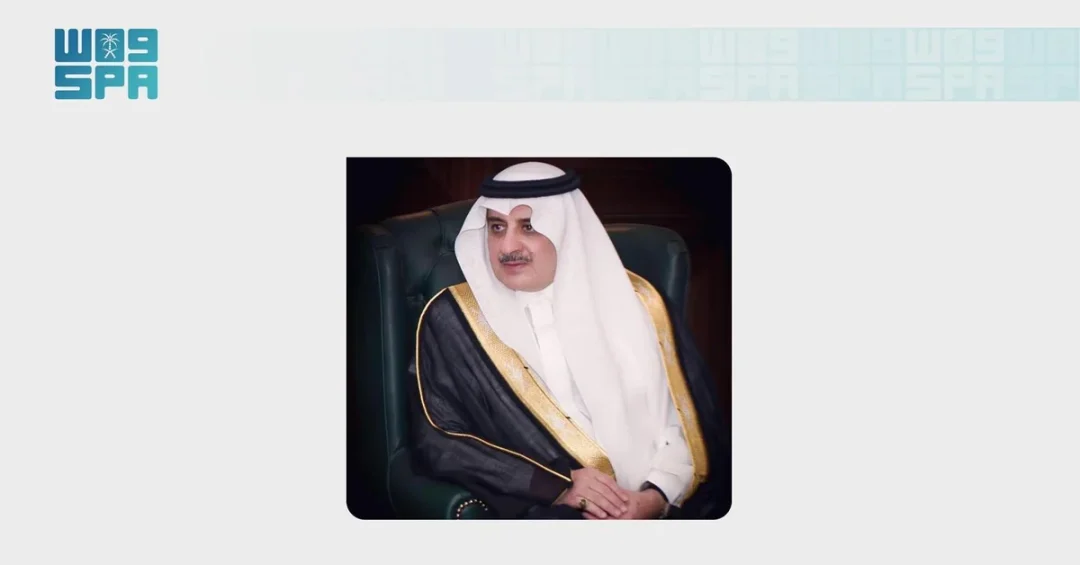
The University of Tabuk will host the 2026 Gulf Cybersecurity Forum on Wednesday, October 28, 2026, under the patronage of Tabuk Region Governor Prince Fahd bin Sultan bin Abdulaziz, bringing together experts, researchers, and specialists from across the Gulf region through a dedicated virtual platform. The announcement, released through the Saudi Press Agency, underscores the Kingdom’s expanding role in convening specialized technical dialogue at a moment when digital transformation is reshaping economies, governments, and everyday life across the Middle East. The forum is designed to examine the latest developments in cybersecurity, exchange research insights, and strengthen the connection between academic inquiry and practical application in institutions and society.
Hosting the event places the University of Tabuk at the center of a regional conversation about protecting cyberspace, a priority that has grown more urgent as Gulf states accelerate their digital agendas. The forum’s virtual format allows participation across borders, drawing in specialists who might otherwise be unable to travel, and reflects the university’s stated commitment to keeping pace with rapid technological change. For an international audience, the gathering offers a window into how Saudi Arabia and its neighbors are approaching the shared challenge of safeguarding data, systems, and critical infrastructure. But why does a university-hosted forum carry weight in a field usually dominated by national agencies and technology firms?
The answer lies partly in the nature of cybersecurity itself, which depends on a continuous pipeline of research, trained talent, and cross-sector cooperation. Universities sit at the intersection of all three, producing the next generation of specialists while also serving as neutral venues where government, industry, and academia can compare notes. The University of Tabuk’s decision to convene the forum signals that Saudi higher education institutions are positioning themselves not merely as teaching centers but as active contributors to national and regional security discussions. The event also aligns with a broader pattern of Saudi universities hosting specialized conferences that address the Kingdom’s strategic needs, from artificial intelligence to renewable energy.
Context and Background
How did cybersecurity become one of the defining policy concerns of the Gulf region? Over the past decade, Saudi Arabia and its Gulf Cooperation Council partners have pursued ambitious digital transformation programs that have moved government services, financial transactions, healthcare records, and educational platforms online. That shift has delivered efficiency and convenience, but it has also widened the surface area that malicious actors can target. Ransomware attacks, phishing campaigns, and intrusions into industrial systems have affected organizations worldwide, and Gulf economies, with their high connectivity and energy-intensive infrastructure, are no less exposed than others. The result has been a sustained push to build domestic cyber defenses, train skilled professionals, and foster regional cooperation.
Saudi Arabia has been among the most active countries in this effort. The National Cybersecurity Authority, established by royal order in 2017, sets national strategy, issues frameworks, and coordinates across government and critical infrastructure. The Saudi Data and Artificial Intelligence Authority, known as SDAIA, has built one of the region’s most advanced data and cloud ecosystems, with security embedded in its design. The Communications, Space and Technology Commission regulates the telecommunications and technology sector, while the Ministry of Communications and Information Technology drives digital economy policy. Universities, meanwhile, have expanded degree programs in cybersecurity, information assurance, and related fields, creating a talent pipeline that feeds both the public and private sectors.
Within that landscape, the University of Tabuk occupies a distinctive position. Located in the northwest of the Kingdom, the university serves a region that is itself undergoing rapid development, including major tourism and infrastructure projects tied to the Red Sea coast and the broader Vision 2030 program. Hosting a Gulf-wide cybersecurity forum allows the institution to draw on regional expertise while showcasing the human capital emerging from Tabuk. It also reinforces the idea that cybersecurity is not solely a concern for the capital or the largest cities but a national priority that reaches every province. The virtual format further democratizes access, allowing participants from smaller institutions and distant locations to take part on equal footing.
Key Details
What exactly will the 2026 Gulf Cybersecurity Forum cover, and who will take part? According to the announcement carried by the Saudi Press Agency, the forum will bring together experts, researchers, and specialists through a virtual platform, with the aim of discussing the latest developments in cybersecurity and exchanging insights and research experiences. The agenda is expected to span technical topics such as threat detection, secure system design, and data protection, alongside broader questions about awareness, workforce development, and the relationship between research and practical application. The University of Tabuk President, Dr. Abdulaziz Al-Ghamdi, framed the event as a reflection of the university’s commitment to keeping pace with rapid developments in the field.
Dr. Al-Ghamdi expressed appreciation for the patronage of Prince Fahd bin Sultan bin Abdulaziz, the Governor of Tabuk Region, saying it reflects the governor’s support for scientific and knowledge-based initiatives and his commitment to empowering educational institutions to serve society and advance development in the region. That patronage is significant in the Saudi context, where the involvement of senior regional leadership signals that an initiative carries weight beyond its immediate organizers. It also connects the forum to a wider tradition of royal support for education, research, and technology across the Kingdom’s provinces, reinforcing the message that knowledge institutions are partners in national progress.
The president added that the forum will give participants an opportunity to discuss the latest developments in cybersecurity, exchange insights and research experiences, raise awareness of the importance of protecting data and systems, develop capabilities and expertise to address technological changes, enrich knowledge, and strengthen links between research and practical application in line with the needs of institutions and society. The university’s hosting of the forum forms part of its broader efforts to support specialized events, contribute to technical discussions, and provide a platform for experts, researchers, and practitioners to exchange knowledge and expertise. The event is scheduled for Wednesday, October 28, 2026, with the Saudi Press Agency reporting the announcement at 19:06 local time, 16:06 GMT.
International and Regional Impact
Why should an international audience pay attention to a Gulf cybersecurity forum hosted by a Saudi university? For one thing, cybersecurity is inherently transnational. Threats do not respect borders, and defenses are only as strong as the weakest link in a connected network. When Gulf states coordinate on standards, incident reporting, and research, they strengthen not only their own systems but also the broader global ecosystem of which they are part. The forum’s virtual format makes that coordination more inclusive, allowing researchers from different countries and institutions to participate without the logistical barriers of travel. In a field where information sharing can mean the difference between a contained incident and a cascading breach, such gatherings have practical value.
For the wider Middle East, the forum reflects a maturing approach to technology governance. Gulf countries have moved from importing security solutions to developing domestic expertise, publishing research, and hosting conversations that set regional norms. Saudi Arabia’s convening power, reinforced by its G20 membership and its role in global energy and financial markets, gives its academic and technical initiatives a reach beyond the immediate neighborhood. International companies that operate in the Kingdom, from energy majors to technology providers, have a direct interest in the security environment that forums like this help to shape. The participation of researchers and practitioners from multiple countries also creates opportunities for partnerships that can outlast the event itself.
Economic and Strategic Significance
How does cybersecurity connect to economic growth and investment? Digital trust is a prerequisite for the kinds of transactions that modern economies depend on. Businesses will not move core operations online, and consumers will not adopt digital payments or share personal data, if they lack confidence that systems are secure. Saudi Arabia’s economic diversification agenda depends heavily on digital services, from e-government platforms to fintech and cloud computing, and each of those depends on robust security. By fostering research and workforce development in cybersecurity, the University of Tabuk and similar institutions help reduce risk and build the skilled labor pool that employers need. That, in turn, supports the Kingdom’s attractiveness as a destination for technology investment.
There is also a strategic dimension. Critical infrastructure, including energy production, water systems, transportation, and communications, relies on interconnected digital controls. Protecting those systems is a matter of national resilience. Saudi Arabia has invested significantly in this area, and academic contributions, including research into detection techniques, secure architectures, and human factors, complement the work of national agencies. The University of Tabuk’s forum adds a regional layer, allowing specialists to compare approaches and identify common vulnerabilities. For institutions and society, as Dr. Al-Ghamdi noted, the goal is to strengthen the link between research and practical application, ensuring that new knowledge translates into better protection.
Vision 2030 Alignment
Where does the 2026 Gulf Cybersecurity Forum fit within Saudi Arabia’s long-term vision? Vision 2030, the national transformation program launched under the leadership of Crown Prince Mohammed bin Salman, aims to diversify the economy, modernize public services, and build a knowledge-based society. Cybersecurity underpins every one of those objectives. A digital economy requires secure infrastructure; a modern public sector requires trustworthy data systems; a knowledge society requires universities that produce cutting-edge research and skilled graduates. By hosting a forum that brings together experts, researchers, and practitioners, the University of Tabuk is contributing directly to the human capital and innovation goals at the heart of the Vision. The event also reinforces the role of Saudi regions beyond the major metropolitan centers in national development.
Looking ahead, the forum is likely to be judged by what it produces: new collaborations, shared research agendas, and practical recommendations that participants can carry back to their institutions. The University of Tabuk has signaled that it intends to remain active in this space, supporting specialized events and providing platforms for technical exchange. For Saudi Arabia, each such gathering adds to a growing record of convening regional and international expertise on issues that matter to the global community. In a world of accelerating technological change, the ability to bring people together, quietly and purposefully, may prove as valuable as any single security tool. The Kingdom’s universities, supported by national leadership and regional patronage, are positioning themselves to do exactly that.
20 Questions
Q1. What is the 2026 Gulf Cybersecurity Forum?
A1. It is a specialized event hosted by the University of Tabuk, bringing together experts, researchers, and specialists through a virtual platform to discuss the latest developments in cybersecurity and exchange research and practical insights.
Q2. When will the forum take place?
A2. The forum is scheduled for Wednesday, October 28, 2026, according to the announcement released through the Saudi Press Agency, which reported the news at 19:06 local time, 16:06 GMT.
Q3. Who is patronizing the forum?
A3. Prince Fahd bin Sultan bin Abdulaziz, the Governor of Tabuk Region, is patronizing the event, a reflection of his support for scientific and knowledge-based initiatives and for empowering educational institutions.
Q4. Who announced the forum?
A4. The University of Tabuk President, Dr. Abdulaziz Al-Ghamdi, announced the forum, describing it as part of the university’s commitment to keeping pace with rapid developments in cybersecurity.
Q5. Why is the University of Tabuk hosting this event?
A5. The university aims to support specialized events, contribute to technical discussions, and provide a platform for experts, researchers, and practitioners to exchange knowledge and expertise in cybersecurity.
Q6. What is the main objective of the forum?
A6. It aims to raise awareness of the importance of protecting data and systems, develop capabilities and expertise to address technological changes, enrich knowledge, and strengthen links between research and practical application.
Q7. How will the forum be conducted?
A7. The forum will be held through a virtual platform, allowing experts, researchers, and specialists from different locations to participate and exchange insights without the barriers of travel.
Q8. Who is expected to participate?
A8. Experts, researchers, and specialists in cybersecurity from the Gulf region and beyond are expected to take part, sharing research experiences and discussing the latest developments in the field.
Q9. What topics will be discussed?
A9. Discussions will cover the latest developments in cybersecurity, data and system protection, capability development, and ways to address technological changes in line with the needs of institutions and society.
Q10. Why is cybersecurity important for Saudi Arabia?
A10. Cybersecurity underpins Saudi Arabia’s digital transformation, protecting government services, financial systems, critical infrastructure, and personal data as the Kingdom pursues economic diversification and modernization under Vision 2030.
Q11. How does the forum support Vision 2030?
A11. It contributes to building a knowledge-based society by fostering research, developing skilled talent, and strengthening the link between academic work and practical application, all of which are central to Vision 2030 goals.
Q12. What role does Prince Fahd bin Sultan play?
A12. As Governor of Tabuk Region, his patronage reflects support for scientific initiatives and a commitment to empowering educational institutions to serve society and advance development in the region.
Q13. What did Dr. Abdulaziz Al-Ghamdi say about the forum?
A13. He said it reflects the university’s commitment to keeping pace with rapid cybersecurity developments and provides participants an opportunity to discuss the latest developments and exchange insights and research experiences.
Q14. How does the forum strengthen research and practice?
A14. By bringing together researchers and practitioners, it helps translate academic findings into practical applications that meet the needs of institutions and society, enriching knowledge and improving protection of data and systems.
Q15. What is the significance of the virtual format?
A15. The virtual platform broadens participation, allowing specialists from different institutions and locations to join, share expertise, and contribute to regional dialogue on cybersecurity without travel constraints.
Q16. How does this forum fit into Saudi Arabia’s broader efforts?
A16. It is part of the Kingdom’s wider push to support specialized events, contribute to technical discussions, and position its universities as active participants in national and regional security and technology conversations.
Q17. What benefits could participants gain?
A17. Participants can exchange research experiences, learn about the latest developments, build professional networks, and take back practical insights to strengthen cybersecurity in their own institutions and countries.
Q18. Why is regional cooperation important in cybersecurity?
A18. Cyber threats cross borders, so coordination among Gulf states and international partners strengthens collective defenses, improves information sharing, and raises the overall standard of protection across connected networks.
Q19. What does the forum say about Saudi universities?
A19. It shows that Saudi universities are increasingly hosting specialized technical events, contributing to national priorities, and serving as platforms where government, industry, and academia can exchange knowledge.
Q20. What is the expected outcome of the forum?
A20. Organizers expect enriched knowledge, stronger links between research and practical application, and enhanced awareness of data and system protection, supporting institutions and society in addressing technological change.
Reader Feedback
We value your thoughts. Please share your feedback on this article.
Your feedback helps us improve our coverage.