


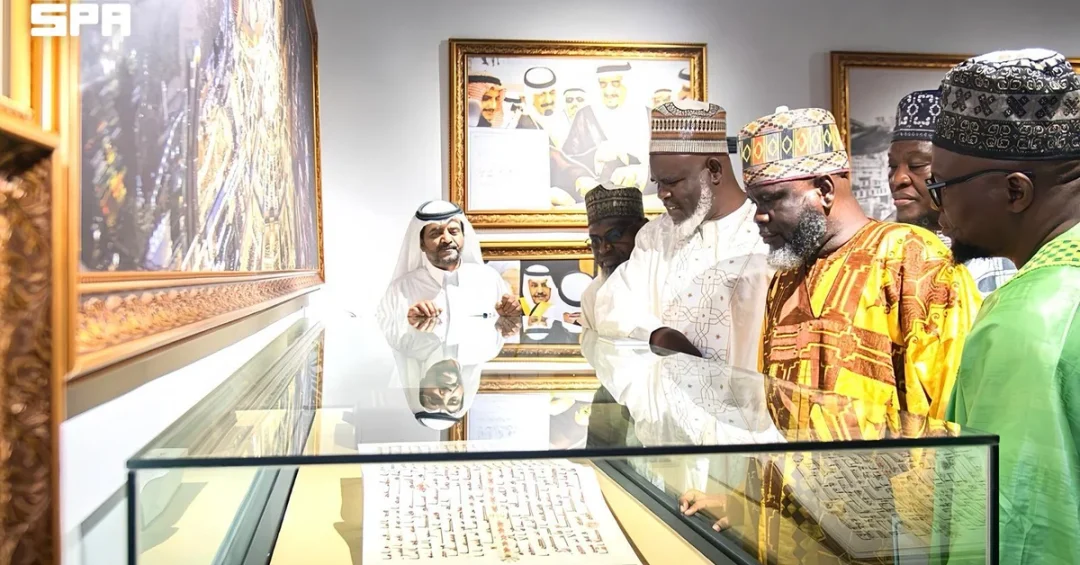
A delegation from the Institute of Arabic Language and Islamic Culture at the University of Abomey-Calavi in the Republic of Benin visited the Cultural Front at Umm Al-Qura University in Makkah, where it reviewed the university’s programs for teaching Arabic and the Holy Quran to non-native speakers and toured museum exhibitions showcasing manuscripts and artifacts from Islamic civilization, according to the Saudi Press Agency. The visit, reported by the Kingdom’s official news authority, underscores the growing academic and cultural ties between Saudi Arabia and West African educational institutions, and highlights the role of Saudi universities as global centers for Arabic language instruction and Quranic studies.
During the tour, the Beninese delegation examined museum exhibitions at the Cultural Front, viewing artifacts and scholarly manuscripts that reflect various aspects of Islamic civilization’s scientific and cultural history. The delegation also learned about Umm Al-Qura University’s programs and initiatives to teach Arabic and the Holy Quran to non-native speakers, as well as its contributions to promoting Arabic and strengthening its presence internationally. The visit supports efforts to foster cultural and academic communication between Umm Al-Qura University and educational institutions in Benin, reflecting a shared commitment to knowledge exchange and the preservation of Islamic heritage.
Context and Background
Why does a visit by a West African academic delegation to Makkah matter in the broader landscape of Saudi international engagement? Umm Al-Qura University, established in 1949 and headquartered in the holy city of Makkah, has long been a premier institution for Islamic studies, Arabic language, and Sharia sciences. Its Cultural Front serves as a dedicated venue for exhibitions, scholarly exchange, and cultural diplomacy, hosting visitors from around the world who seek to understand the depth of Islamic civilization and the Kingdom’s educational mission. The university’s Arabic Language Institute for Non-Native Speakers is among the most respected of its kind, drawing students from across Asia, Africa, Europe, and the Americas.
The University of Abomey-Calavi, located in Cotonou, Benin, is one of West Africa’s largest and most influential universities, with a student population exceeding 50,000. Its Institute of Arabic Language and Islamic Culture plays a vital role in training scholars, translators, and religious leaders for Benin and the wider region. Benin, a nation of approximately 13 million people, has a significant Muslim population and a long tradition of Islamic scholarship that predates colonial-era disruptions. The visit therefore represents not merely a courtesy call but a substantive engagement between two institutions that share a commitment to Arabic literacy and Islamic learning.
This exchange comes amid Saudi Arabia’s broader push under Vision 2030 to strengthen cultural diplomacy, expand educational partnerships, and position the Kingdom as a global hub for Arabic language and Islamic heritage. The Ministry of Culture, the Ministry of Education, and the Ministry of Foreign Affairs have all prioritized international academic cooperation as a means of fostering mutual understanding and soft power. Umm Al-Qura University’s outreach to African institutions aligns with these national objectives, reinforcing the Kingdom’s historical ties to the African continent and its contemporary role as a bridge between civilizations.
Key Details of the Delegation Visit
What specifically did the Beninese delegation observe during its time at the Cultural Front? The delegation toured museum exhibitions that featured artifacts and scholarly manuscripts spanning centuries of Islamic scientific and cultural achievement. These collections include rare copies of the Holy Quran, historical documents on Islamic jurisprudence, and instruments and writings related to astronomy, medicine, and mathematics—fields in which Muslim scholars made foundational contributions. The visit provided the delegation with a tangible sense of the intellectual heritage that Umm Al-Qura University seeks to preserve and transmit.
The delegation also received a detailed briefing on Umm Al-Qura University’s programs for teaching Arabic and the Holy Quran to non-native speakers. These programs combine rigorous language instruction with cultural immersion, offering students from around the world the opportunity to study in Makkah, interact with native speakers, and deepen their understanding of Islamic texts. The university’s Arabic Language Institute for Non-Native Speakers employs modern pedagogical methods, including digital learning platforms and specialized curricula tailored to different proficiency levels. The delegation learned about the institute’s contributions to promoting Arabic globally and strengthening its presence in academic and diplomatic circles.
The visit supports efforts to foster cultural and academic communication between Umm Al-Qura University and educational institutions in Benin. While the source material did not specify whether a formal memorandum of understanding was signed, the engagement itself represents a step toward deeper collaboration. Such visits often pave the way for student exchange programs, joint research initiatives, and faculty partnerships. For Umm Al-Qura University, hosting the Beninese delegation is part of a sustained effort to build networks with African universities, many of which have historical ties to Saudi Arabia through scholarship programs and pilgrimage-related exchanges.
International and Regional Impact
How does this visit fit into Saudi Arabia’s wider engagement with Africa and the Islamic world? The Kingdom has long been a destination for students from Africa seeking advanced training in Arabic and Islamic studies. Thousands of African scholars have graduated from Saudi universities over the decades, returning home to serve as educators, judges, imams, and community leaders. These alumni networks form a vital bridge between Saudi Arabia and African societies, fostering goodwill and facilitating cultural exchange. The Beninese delegation’s visit reinforces this legacy and signals that Umm Al-Qura University remains a preferred destination for serious Arabic and Quranic study.
Regionally, the visit comes at a time when West African nations are increasingly looking to strengthen educational ties with Gulf states. Benin, like many of its neighbors, faces a growing demand for qualified Arabic teachers and Islamic scholars who can navigate both traditional religious sciences and modern academic disciplines. Umm Al-Qura University’s expertise in teaching Arabic to non-native speakers is directly relevant to this demand. By sharing its curricula, pedagogical approaches, and assessment standards, the university can help African institutions enhance their own Arabic language programs, thereby contributing to educational capacity-building across the region.
The cultural dimension of the visit should not be underestimated. Museum exhibitions featuring Islamic manuscripts and artifacts serve as powerful tools of cultural diplomacy, offering visitors a nuanced understanding of Islamic civilization’s contributions to global knowledge. For the Beninese delegation, viewing these collections in Makkah—the spiritual heart of the Islamic world—adds a layer of significance that transcends mere academic observation. It reinforces a sense of shared heritage and common purpose, which in turn supports Saudi Arabia’s efforts to promote moderation, tolerance, and intercultural dialogue.
Economic and Strategic Significance
What economic and strategic benefits flow from such academic and cultural exchanges? While the immediate outcomes are educational, the long-term implications include strengthened trade and investment ties. Saudi Arabia has been expanding its economic footprint in Africa, with the Public Investment Fund (PIF) and Saudi companies exploring opportunities in agriculture, mining, renewable energy, and infrastructure. Educational diplomacy creates a foundation of trust and familiarity that can facilitate these commercial relationships. Beninese graduates of Saudi institutions often become influential figures in their home countries, serving as informal ambassadors for the Kingdom and its Vision 2030 agenda.
Furthermore, the exchange aligns with Saudi Arabia’s strategic interest in promoting Arabic as a global language. Arabic is one of the six official languages of the United Nations and the liturgical language of nearly two billion Muslims. By supporting Arabic instruction in African universities, Saudi Arabia helps ensure that future generations can access Islamic texts in their original language and engage with the broader Arab world. This linguistic and cultural investment pays dividends in terms of soft power, religious authority, and diplomatic influence. Umm Al-Qura University’s role in this endeavor is central, given its location in Makkah and its reputation for academic excellence.
From a strategic perspective, the visit also reinforces the Kingdom’s commitment to Africa as a priority region. The Saudi Ministry of Foreign Affairs has emphasized the importance of African partnerships, and the Kingdom has hosted numerous summits and forums aimed at deepening cooperation. Academic exchanges like this one complement high-level diplomatic and economic initiatives, creating a multi-layered relationship that is resilient and mutually beneficial. For Benin, the benefits include access to Saudi scholarships, training opportunities, and expertise in Arabic language pedagogy—resources that are scarce domestically.
Vision 2030 Alignment
How does this visit advance the goals of Saudi Vision 2030? Vision 2030 seeks to diversify the Kingdom’s economy, strengthen its global engagement, and promote its cultural and religious heritage. Educational and cultural exchanges are integral to this vision, as they enhance Saudi Arabia’s soft power and position it as a leader in knowledge and culture. Umm Al-Qura University’s outreach to Benin exemplifies the vision’s emphasis on international cooperation and the promotion of Arabic language and Islamic values. By hosting delegations, sharing expertise, and building partnerships, the university contributes directly to the Kingdom’s broader diplomatic and cultural objectives.
Looking ahead, the visit is expected to lead to further collaboration between Umm Al-Qura University and the University of Abomey-Calavi. Potential areas of cooperation include joint conferences, faculty and student exchanges, and the development of shared digital resources for Arabic language learning. Such initiatives would not only benefit both institutions but also strengthen the bonds between Saudi Arabia and Benin, setting a model for academic diplomacy across Africa. As the Kingdom continues its journey toward Vision 2030, engagements like this will remain essential to building a prosperous, outward-looking nation that honors its heritage while embracing the future.
20 Questions
Q1. What was the purpose of the Beninese delegation’s visit to Umm Al-Qura University?
A1. The delegation from the University of Abomey-Calavi visited to learn about Umm Al-Qura University’s programs for teaching Arabic and the Holy Quran to non-native speakers, and to tour museum exhibitions showcasing Islamic manuscripts and artifacts.
Q2. Which university in Benin sent the delegation?
A2. The delegation came from the Institute of Arabic Language and Islamic Culture at the University of Abomey-Calavi, one of Benin’s largest and most respected higher education institutions, located in Cotonou.
Q3. What is the Cultural Front at Umm Al-Qura University?
A3. The Cultural Front is a dedicated venue at Umm Al-Qura University in Makkah that hosts exhibitions, scholarly exchanges, and cultural diplomacy events, featuring artifacts and manuscripts from Islamic civilization.
Q4. What kinds of items did the delegation view at the museum exhibitions?
A4. The delegation viewed artifacts and scholarly manuscripts reflecting various aspects of Islamic civilization’s scientific and cultural history, including rare Quranic texts and works on jurisprudence, astronomy, medicine, and mathematics.
Q5. What programs did the delegation learn about at Umm Al-Qura University?
A5. The delegation learned about programs and initiatives to teach Arabic and the Holy Quran to non-native speakers, including the university’s Arabic Language Institute for Non-Native Speakers and its modern pedagogical methods.
Q6. How does this visit support Saudi-Benin relations?
A6. The visit supports efforts to foster cultural and academic communication between Umm Al-Qura University and educational institutions in Benin, strengthening people-to-people ties and opening avenues for future collaboration.
Q7. Why is Umm Al-Qura University significant in the Islamic world?
A7. Established in 1949 and located in Makkah, Umm Al-Qura University is a premier institution for Islamic studies, Arabic language, and Sharia sciences, attracting students from around the globe.
Q8. What is the role of the University of Abomey-Calavi in Benin?
A8. It is one of West Africa’s largest universities, with over 50,000 students, and its Institute of Arabic Language and Islamic Culture trains scholars, translators, and religious leaders for Benin and the region.
Q9. How does this visit align with Saudi Vision 2030?
A9. It aligns with Vision 2030’s goals of strengthening cultural diplomacy, expanding educational partnerships, and promoting Arabic language and Islamic heritage globally, enhancing the Kingdom’s soft power.
Q10. What are the potential outcomes of this visit?
A10. Potential outcomes include student and faculty exchanges, joint research initiatives, shared digital resources for Arabic learning, and a formal memorandum of understanding between the two universities.
Q11. How many students does the University of Abomey-Calavi have?
A11. The University of Abomey-Calavi has a student population exceeding 50,000, making it one of the largest and most influential universities in West Africa.
Q12. What is the significance of teaching Arabic to non-native speakers?
A12. Teaching Arabic to non-native speakers helps preserve the language of the Quran, enables access to Islamic texts in their original form, and fosters intercultural understanding and academic exchange.
Q13. Did the visit include any formal agreements?
A13. The source material did not specify whether a formal memorandum of understanding was signed, but the engagement represents a step toward deeper collaboration between the two institutions.
Q14. How does Saudi Arabia benefit from academic exchanges with African universities?
A14. Saudi Arabia benefits through enhanced soft power, stronger diplomatic ties, and the creation of alumni networks that serve as informal ambassadors for the Kingdom and its Vision 2030 agenda.
Q15. What is the Arabic Language Institute for Non-Native Speakers?
A15. It is a specialized institute at Umm Al-Qura University that offers rigorous Arabic language instruction combined with cultural immersion, using modern pedagogical methods and tailored curricula for different proficiency levels.
Q16. Why is Makkah a significant location for this visit?
A16. Makkah is the spiritual heart of the Islamic world, and hosting the delegation there adds cultural and religious significance, reinforcing a sense of shared heritage and common purpose.
Q17. What economic benefits could arise from this academic engagement?
A17. Long-term economic benefits include strengthened trade and investment ties, as educational diplomacy builds trust and familiarity that can facilitate commercial relationships in sectors like agriculture, mining, and renewable energy.
Q18. How does this visit reflect Saudi Arabia’s engagement with Africa?
A18. It reflects the Kingdom’s strategic priority on African partnerships, complementing high-level diplomatic and economic initiatives with academic exchanges that create multi-layered, resilient relationships.
Q19. What role do museum exhibitions play in cultural diplomacy?
A19. Museum exhibitions serve as powerful tools of cultural diplomacy, offering visitors a nuanced understanding of Islamic civilization’s contributions and reinforcing Saudi Arabia’s message of moderation and tolerance.
Q20. What future collaborations might result from this visit?
A20. Future collaborations may include joint conferences, faculty and student exchanges, and the development of shared digital resources for Arabic language learning, benefiting both institutions and strengthening Saudi-Benin ties.
Reader Feedback
We value your thoughts. Please share your feedback on this article.
Your feedback helps us improve our coverage.