


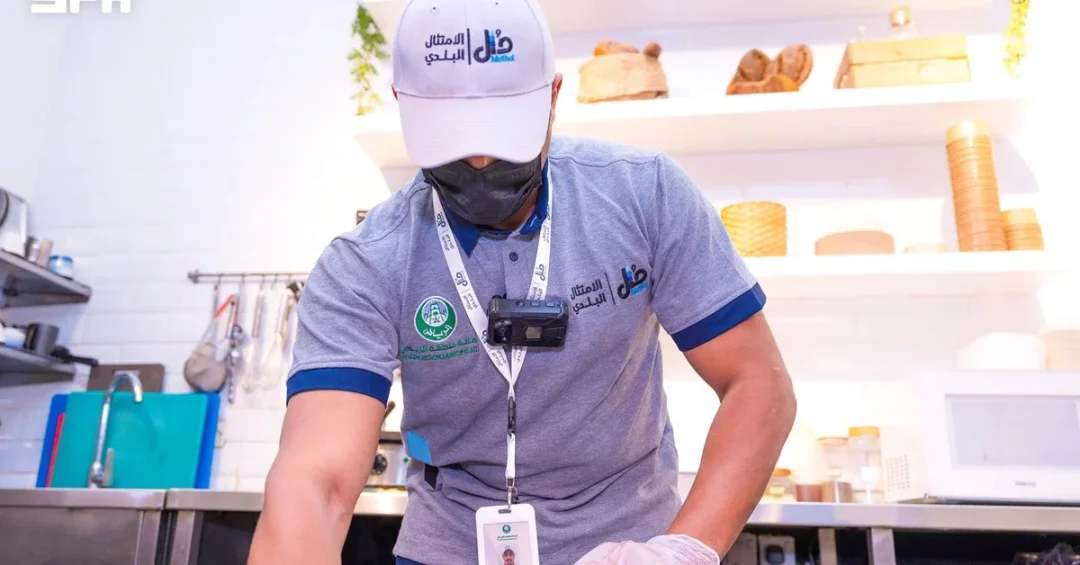
Riyadh Municipality has announced the expansion of body-worn cameras for its field inspectors across the Saudi capital, following a successful three-week proof-of-concept trial during which inspectors documented more than 600 inspection visits. The initiative, announced through the Saudi Press Agency, is designed to strengthen compliance with municipal requirements, increase transparency in enforcement, and raise the overall quality of field inspections conducted at commercial and service establishments throughout Riyadh.
The decision places Riyadh among a small but growing group of major global cities equipping front-line regulatory staff with wearable recording technology. According to information released via official Saudi channels, the cameras create a documented audiovisual record of each inspection visit, helping to safeguard the rights of inspectors, establishment owners, workers, and consumers alike. The municipality described the rollout as part of its broader effort to adopt the best technological practices and improve the efficiency of field inspections — a step that carries significance well beyond the capital, given Riyadh’s position as the administrative and commercial heart of the Kingdom. Could a simple camera change the way an entire city governs its markets?
Context and Background
Riyadh Municipality, known in Arabic as Amanah Al-Riyadh, is the municipal authority responsible for overseeing development, licensing, public health standards, and commercial compliance across the Saudi capital. Its inspectors conduct thousands of visits each year to restaurants, retail outlets, workshops, warehouses, and other establishments, verifying adherence to municipal requirements that range from food safety and hygiene to signage, licensing, and building regulations. The body camera initiative did not emerge in isolation; it follows a deliberate process of testing and evaluation. During a three-week proof-of-concept trial, inspectors documented more than 600 inspection visits, giving the municipality a substantial evidence base on which to judge the technology’s operational value before committing to a wider rollout.
Why does a three-week trial matter so much in a decision of this kind? Because it converts a promising idea into a measured, evidence-based policy. The trial allowed officials to assess how the cameras performed in real conditions — in busy markets, in food preparation areas, and during interactions that can sometimes become contentious. Rather than adopting the technology on assumption, Riyadh Municipality validated it against actual field experience, aligning with a broader pattern across Saudi public institutions of piloting innovations before scaling them. The approach reflects the emphasis on accountability and service quality that runs through the Kingdom’s municipal modernization agenda, and it signals that the capital’s regulatory bodies are willing to hold themselves to the same standards of documentation and transparency they ask of the private sector.
Key Details of the Body Camera Initiative
Under the expanded program, field inspectors will wear compact recording devices during inspection visits to establishments across Riyadh. The cameras provide a documented record of each visit, capturing the sequence of events, the conditions observed, and the exchanges between inspectors and establishment representatives. According to the official announcement carried by the Saudi Press Agency, the primary objectives are threefold: strengthening compliance with municipal requirements, increasing transparency, and improving the quality of field inspections. The municipality has framed the initiative as a protective measure as much as a monitoring one — a tool that helps safeguard the rights of inspectors, establishments, workers, and consumers in equal measure.
What does a documented inspection record actually protect against? In practice, it addresses one of the oldest challenges in regulatory enforcement: disputes over what was said and observed. When an inspection is recorded, inspectors are protected against unfounded allegations of misconduct, while establishments and workers gain a verifiable account of how they were treated and what findings were reported. Consumers benefit indirectly but meaningfully, because consistent, well-documented inspections translate into stronger food safety, cleaner premises, and more reliable enforcement of municipal standards. The municipality has positioned the program within its wider efforts to adopt the best technological practices, suggesting that the camera footage will feed into digital inspection workflows rather than sit in isolation. The initiative also complements Riyadh’s broader smart-city infrastructure, in which digital tools are increasingly used to manage everything from traffic to public utilities.
International and Regional Impact
The use of body-worn cameras by municipal inspectors places Riyadh alongside a select group of cities worldwide that have experimented with recording technology in regulatory and enforcement roles. Body cameras have become common among police forces in many countries, but their application to municipal inspection work remains relatively novel, even internationally. By moving early and evaluating the results rigorously, Riyadh is positioning itself as a municipal innovator in the region. For neighboring cities and Gulf municipalities watching the Kingdom’s modernization efforts, the Riyadh experiment offers a practical case study: a defined pilot, measurable outcomes across more than 600 visits, and a decision to scale based on evidence rather than enthusiasm.
Could this model spread beyond Saudi Arabia’s borders? The early indicators suggest the approach is exportable. Transparency in inspection is a shared challenge for governments everywhere, and the combination of wearable technology with clear procedural rules is a replicable formula. Within the Kingdom, the initiative reinforces the consistency of service quality between the capital and other regions, supporting the broader national goal of uniform, high-standard public administration. Internationally, it adds to the picture of a Saudi Arabia that is modernizing its institutions from the ground up — not only through headline megaprojects, but through the everyday machinery of governance that residents and businesses encounter directly. That quieter form of reform is often what shapes public trust most durably.
Economic and Strategic Significance
For Riyadh’s business community, the initiative carries practical economic weight. Establishments across the capital operate in a competitive environment where compliance with municipal requirements is both a legal obligation and a commercial asset. A documented, transparent inspection process reduces uncertainty for investors and business owners, who can rely on a clear record of findings and interactions. When enforcement is perceived as fair and consistent, it lowers the risk of arbitrary treatment and encourages voluntary compliance — an outcome that benefits small and medium enterprises as much as large operators. The municipality’s framing of the program as protecting the rights of establishments and workers, not only inspectors, speaks directly to that balance.
Strategically, the body camera rollout is another expression of Saudi Arabia’s drive to embed technology in public services. Riyadh is investing heavily in digital government, smart city systems, and data-driven administration, and field inspection is a natural frontier for those capabilities. Recorded visits create a data trail that can support training, quality assurance, and performance analysis, helping the municipality identify recurring compliance issues and direct resources where they are most needed. Why does this matter at national scale? Because efficient, trustworthy regulation is a foundation of the investment climate that Vision 2030 seeks to strengthen. A capital city where rules are applied transparently and consistently is a capital city where businesses can plan, expand, and hire with confidence.
Vision 2030 Alignment
The body camera initiative aligns closely with the objectives of Saudi Vision 2030, the national transformation program launched under the leadership of Crown Prince Mohammed bin Salman. Vision 2030 emphasizes government effectiveness, digital transformation, and the creation of a vibrant business environment, and the Riyadh Municipality program touches each of these themes. By adopting wearable technology and evidence-based rollout practices, the municipality is contributing to the wider goal of a public sector that operates with the same efficiency and accountability expected of leading global institutions. The initiative also supports quality-of-life ambitions, since reliable inspection of food outlets, markets, and public-facing establishments directly affects the daily experience of residents and visitors.
What comes next will be watched closely. If the expanded rollout continues to deliver the transparency and efficiency gains seen in the pilot, the model could be extended to other municipal functions and other regions of the Kingdom, reinforcing a culture of documented, technology-enabled public service. For international observers, the development is a reminder that Saudi Arabia’s transformation is unfolding across many layers at once — from giga-projects and global diplomacy to the routine work of a city inspector equipped with a camera. Riyadh Municipality’s decision reflects a Kingdom moving forward with confidence, using innovation to serve its people, protect its markets, and set a standard for the region. In that sense, the smallest device in the field may carry some of the largest lessons about how modern governance is being built in Saudi Arabia today.
20 Questions
Q1. What has Riyadh Municipality announced regarding body cameras?
A1. Riyadh Municipality announced it will expand the use of body cameras for inspectors during field visits to establishments across Riyadh, aiming to strengthen compliance, increase transparency, and improve inspection quality.
Q2. What trial preceded the expansion of the body camera program?
A2. A three-week proof-of-concept trial preceded the expansion. During that trial, inspectors documented more than 600 inspection visits, providing the municipality with evidence to evaluate the technology’s operational value.
Q3. What are the main goals of using body cameras during inspections?
A3. The main goals are strengthening compliance with municipal requirements, increasing transparency, and improving the quality of field inspections across establishments in the Saudi capital.
Q4. Whose rights does the initiative aim to safeguard?
A4. The documented records help safeguard the rights of inspectors, establishments, workers, and consumers, according to the official announcement released through Saudi channels.
Q5. How does the camera record support inspectors?
A5. The recording provides verifiable documentation of each visit, protecting inspectors against unfounded allegations and giving a clear account of interactions during the inspection.
Q6. How do establishments benefit from recorded inspections?
A6. Establishments gain a transparent record of findings and interactions, reducing uncertainty and supporting fair, consistent enforcement of municipal requirements.
Q7. What role does Riyadh Municipality play in the capital?
A7. Riyadh Municipality oversees development, licensing, public health standards, and commercial compliance, conducting thousands of inspections each year at restaurants, shops, and other establishments.
Q8. Is this initiative part of a broader technology push?
A8. Yes. It forms part of Riyadh Municipality’s efforts to adopt the best technological practices and improve the efficiency of field inspections, consistent with the Kingdom’s digital transformation goals.
Q9. How many inspection visits were documented in the trial?
A9. Inspectors documented more than 600 inspection visits during the three-week proof-of-concept trial, according to the Saudi Press Agency announcement.
Q10. Why is the pilot phase important to the rollout?
A10. The pilot allowed officials to assess camera performance in real conditions before scaling up, ensuring the expansion is based on measured evidence rather than assumption.
Q11. How does this compare with international practice?
A11. Body cameras are common among police forces worldwide, but their use in municipal inspection work remains relatively novel, placing Riyadh among early adopters of the approach.
Q12. What economic benefits could the initiative bring?
A12. Transparent, consistent enforcement reduces uncertainty for investors and business owners, encourages voluntary compliance, and supports a healthier environment for small and medium enterprises.
Q13. How does the program support consumers?
A13. Consistent, well-documented inspections translate into stronger food safety, cleaner premises, and more reliable enforcement of municipal standards that affect daily life.
Q14. Does the initiative connect to Vision 2030?
A14. Yes. It supports Vision 2030 goals of government effectiveness, digital transformation, and a vibrant business environment, while contributing to quality-of-life improvements in the capital.
Q15. What did Riyadh Municipality say about the purpose of the cameras?
A15. The municipality stated the cameras provide a documented record of inspection visits, helping safeguard the rights of inspectors, establishments, workers, and consumers.
Q16. Could the program expand beyond Riyadh?
A16. If the expanded rollout delivers continued gains, the model could potentially extend to other municipal functions and regions, though no further expansion has been officially announced.
Q17. How does recording improve inspection quality?
A17. Recorded visits create a data trail that can support training, quality assurance, and performance analysis, helping the municipality identify recurring compliance issues and allocate resources effectively.
Q18. Who announced the initiative and through what channel?
A18. Riyadh Municipality announced the initiative, with the information released via the Saudi Press Agency, an official Saudi news authority.
Q19. What message does this send to international observers?
A19. It shows Saudi Arabia modernizing public institutions at every level, from major national projects to everyday municipal governance, reinforcing the Kingdom’s reputation for innovation and accountability.
Q20. What is the forward-looking significance of this step?
A20. The initiative reflects a Kingdom advancing its long-term vision through practical reforms, using technology to serve residents, protect markets, and set a regional standard for transparent governance.
Reader Feedback
We value your thoughts. Please share your feedback on this article.
Your feedback helps us improve our coverage.