


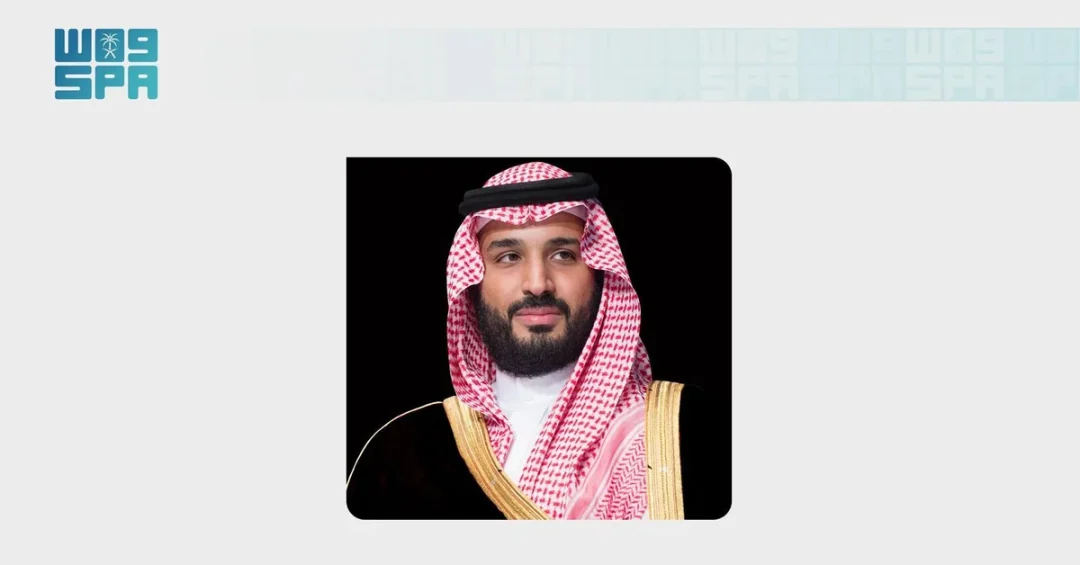
His Royal Highness Prince Mohammed bin Salman bin Abdulaziz Al Saud, Crown Prince and Prime Minister of the Kingdom of Saudi Arabia, sent a formal cable of congratulations to Federal President Alexander Van der Bellen of the Republic of Austria on the occasion of Austria’s National Day, according to the Saudi Press Agency. The message, released through official Saudi channels, conveyed the Crown Prince’s best wishes for the president’s continued good health and happiness, as well as his hopes for the steady progress and prosperity of the Austrian government and people. The cable reflects the enduring diplomatic courtesies that underpin relations between Riyadh and Vienna, two capitals that have quietly deepened their engagement across trade, energy, and cultural exchange in recent years.
The congratulatory message was dated October 26, 2026, and carried by the Saudi Press Agency, the Kingdom’s official news authority. While such cables are a routine feature of international diplomacy, they carry particular weight when they come from the Crown Prince and Prime Minister, whose office sits at the center of Saudi Arabia’s foreign policy and economic transformation agenda. Austria’s National Day commemorates the country’s declaration of permanent neutrality in 1955, a milestone that has shaped its identity as a bridge-builder in European and global affairs. For observers of Saudi-European relations, the exchange is a reminder that Riyadh’s diplomatic network extends well beyond its immediate region, reaching into the heart of Central Europe through relationships built on mutual respect and shared interests.
Context and Background
Why does a single congratulatory cable matter in an era of instant global communication? In diplomatic practice, the exchange of national day greetings is far more than ceremonial. It signals continuity, acknowledges sovereign milestones, and keeps channels of communication warm between heads of state and government. Saudi Arabia and Austria established diplomatic relations decades ago, and their ties have expanded steadily, particularly as Vienna has served as a hub for international organizations including the United Nations and the Organization of the Petroleum Exporting Countries, or OPEC. Saudi Arabia, as a founding and influential member of OPEC, has long maintained constructive engagement with Austria through this multilateral channel.
The relationship between Riyadh and Vienna also rests on economic foundations. Austria is home to advanced engineering, renewable energy, and healthcare companies that have found partners in the Kingdom’s giga-projects and industrial diversification programs. In turn, Saudi Arabia remains a reliable energy supplier and a growing source of investment capital flowing into Europe. The National Day cable, therefore, sits atop a broader structure of cooperation that includes trade delegations, cultural exchanges, and academic partnerships. The Crown Prince’s message is a diplomatic courtesy, but it also reaffirms a relationship that both sides have reason to value.
It is worth recalling that Austria’s National Day, celebrated on October 26, marks the day in 1955 when the Austrian parliament adopted the Constitutional Law on Permanent Neutrality, following the signing of the Austrian State Treaty earlier that year. That history of neutrality has given Austria a distinctive voice in international diplomacy, one that Saudi Arabia has engaged with respectfully in forums ranging from energy security to humanitarian affairs. The Kingdom’s outreach to Austria is consistent with its broader approach of maintaining open lines to all nations that share an interest in stability and development.
Key Details of the Congratulatory Message
What exactly did the Crown Prince convey in his cable? According to the Saudi Press Agency, His Royal Highness Prince Mohammed bin Salman bin Abdulaziz Al Saud extended his sincere congratulations to Federal President Alexander Van der Bellen. The message included wishes for the president’s continued good health and happiness, and for the government and people of Austria to enjoy steady progress and prosperity. The cable was transmitted on October 26, 2026, corresponding to Austria’s national day celebrations, and was published by the official Saudi news agency at 13:03 local time, 10:03 GMT.
The wording of such cables follows established diplomatic conventions, but the substance reflects the warmth and formality that characterize Saudi Arabia’s relations with friendly nations. The Crown Prince, who also serves as Prime Minister, is the architect of Saudi Vision 2030, the national transformation plan that has reshaped the Kingdom’s economy and its international partnerships. His personal engagement in diplomatic correspondence underscores the importance Riyadh places on maintaining robust ties with European states, including those outside the largest economies of the continent.
Austria, for its part, has maintained an embassy in Riyadh and a consulate presence that facilitates business and cultural links. Austrian companies have participated in Saudi trade fairs, and Saudi students have enrolled in Austrian universities, particularly in fields such as medicine, engineering, and music. These people-to-people connections give depth to the formal diplomatic relationship and provide a foundation for future collaboration. The congratulatory cable is a small but meaningful thread in this larger fabric.
International and Regional Impact
How do such diplomatic gestures fit into Saudi Arabia’s wider international posture? The Kingdom has pursued an active foreign policy that emphasizes partnership, stability, and economic cooperation. In Europe, this has meant strengthening ties with traditional allies while also cultivating relationships with smaller states that play outsized roles in multilateral institutions. Austria, with its seat in Vienna hosting the United Nations Office at Vienna, the International Atomic Energy Agency, and OPEC, is precisely such a state. A warm exchange between Riyadh and Vienna supports Saudi Arabia’s engagement with these organizations and reinforces its commitment to multilateral diplomacy.
Regionally, the message carries no controversy, but it does highlight the breadth of Saudi Arabia’s diplomatic reach. At a time when global attention often focuses on the Kingdom’s role in the Middle East, its relationships in Europe serve as a reminder that Saudi foreign policy is global in scope. The Crown Prince’s cable to President Van der Bellen is one of many such messages sent to world leaders on national occasions, each contributing to a network of goodwill that can be drawn upon when specific bilateral issues arise. Diplomacy, after all, is built on consistent communication, not only on crisis management.
For Austria, receiving congratulations from a major energy producer and investor like Saudi Arabia is a positive signal. It affirms Vienna’s standing as a respected international actor and opens the door to further dialogue on matters of mutual interest, including renewable energy, tourism, and scientific research. The relationship is not without substance, and gestures like this help keep it visible and valued on both sides.
Economic and Strategic Significance
What economic threads connect Riyadh and Vienna beneath the surface of diplomatic pleasantries? Trade between Saudi Arabia and Austria has grown modestly but steadily, with Austrian exports including machinery, pharmaceuticals, and specialized vehicles, and Saudi exports primarily consisting of energy products and petrochemicals. Austrian firms have shown interest in Saudi Arabia’s infrastructure boom, particularly in smart city technologies, water management, and sustainable construction, all areas where Vision 2030 has created demand. The Kingdom’s Public Investment Fund, or PIF, has become a globally active investor, and while its European portfolio is diverse, Central Europe remains a region of interest.
Strategically, Austria’s neutrality does not prevent it from engaging economically with Saudi Arabia, and the two countries have found common ground in forums such as the United Nations and the Organization for Security and Co-operation in Europe. Saudi Arabia’s participation in global energy dialogues, including those hosted in Vienna, has been constructive, and Austrian expertise in renewable energy integration could prove valuable as the Kingdom pursues its target of generating 50 percent of its electricity from renewable sources by 2030. The congratulatory cable, while symbolic, sits within this context of expanding economic and technical cooperation.
Tourism is another area with potential. Austria’s alpine resorts and cultural heritage attract visitors from around the world, and Saudi Arabia’s own tourism sector is opening up under Vision 2030, with new destinations and relaxed visa policies. While direct tourism flows between the two countries are currently limited, the broader trend of Saudi citizens traveling to Europe and Europeans exploring the Kingdom suggests room for growth. Cultural exchanges, including music and arts festivals, have already begun to connect the two societies.
Vision 2030 Alignment
How does a simple congratulatory message align with Saudi Arabia’s long-term vision? Vision 2030 is not only an economic blueprint; it is also a framework for international engagement. A core pillar of the vision is to strengthen the Kingdom’s global partnerships, diversify its economy, and present Saudi Arabia as a responsible and forward-looking member of the international community. Diplomatic outreach to countries like Austria supports these goals by building trust, facilitating trade, and opening channels for collaboration in education, technology, and culture. The Crown Prince’s cable is a small but consistent act in this larger strategy.
Moreover, the message reflects the leadership style that has defined the Crown Prince’s tenure: active, personal, and oriented toward partnership. By sending congratulations directly to President Van der Bellen, he reinforces the message that Saudi Arabia values its friends and seeks to deepen relationships across Europe. As the Kingdom continues its transformation, these diplomatic gestures will remain an important complement to the concrete deals, investments, and exchanges that drive Vision 2030 forward. The relationship with Austria, modest in scale but positive in tone, exemplifies the kind of global engagement that the Kingdom aims to sustain.
In the end, the cable of congratulations is a reminder that diplomacy is built on many small acts of respect and recognition. For Saudi Arabia, each such act contributes to a reputation for reliability and goodwill. For Austria, it is a sign that its national day is noted and honored in Riyadh. And for the international audience, it is a window into the quiet, steady work of maintaining a global network of partners. As Vision 2030 continues to unfold, Saudi Arabia’s outreach to Europe, including Austria, will remain a thread in the broader story of the Kingdom’s global integration.
20 Questions
Q1. Who sent the congratulatory cable to Austria’s Federal President?
A1. His Royal Highness Prince Mohammed bin Salman bin Abdulaziz Al Saud, Crown Prince and Prime Minister of Saudi Arabia, sent the cable, according to the Saudi Press Agency.
Q2. Who is the Federal President of Austria?
A2. The Federal President of the Republic of Austria is Alexander Van der Bellen, who received the congratulations on his country’s National Day.
Q3. What occasion prompted the congratulatory message?
A3. The message was sent on the occasion of Austria’s National Day, celebrated on October 26, which marks the country’s declaration of permanent neutrality in 1955.
Q4. When was the cable sent and reported?
A4. The cable was sent on October 26, 2026, and reported by the Saudi Press Agency at 13:03 local time, 10:03 GMT.
Q5. What wishes did the Crown Prince express?
A5. He wished President Van der Bellen continued good health and happiness, and the government and people of Austria steady progress and prosperity.
Q6. Why are such diplomatic cables important?
A6. They maintain warm channels of communication, acknowledge sovereign milestones, and reinforce bilateral relations through consistent, respectful engagement between nations.
Q7. What is the state of Saudi-Austrian relations?
A7. Relations are positive and expanding, with cooperation in trade, energy, culture, and multilateral forums, underpinned by mutual respect and shared interests.
Q8. Does Austria host international organizations relevant to Saudi Arabia?
A8. Yes, Vienna hosts the United Nations Office at Vienna, the International Atomic Energy Agency, and OPEC, providing channels for Saudi engagement.
Q9. What economic ties exist between the two countries?
A9. Trade includes Austrian machinery, pharmaceuticals, and vehicles, while Saudi exports are mainly energy and petrochemicals, with growing investment interest.
Q10. How does Austria’s neutrality affect relations with Saudi Arabia?
A10. Austria’s permanent neutrality does not hinder economic and diplomatic engagement; it allows Vienna to act as a bridge-builder in international affairs.
Q11. Is there potential for renewable energy cooperation?
A11. Yes, Austrian expertise in renewable energy integration could support Saudi Arabia’s goal of generating 50 percent of its electricity from renewables by 2030.
Q12. What role does the Saudi Press Agency play?
A12. The Saudi Press Agency is the Kingdom’s official news authority, disseminating government statements and official diplomatic correspondence to the public.
Q13. How does this cable fit into Saudi foreign policy?
A13. It reflects Saudi Arabia’s active global outreach, maintaining ties with European states and supporting multilateral diplomacy through consistent communication.
Q14. Are there people-to-people connections between the two nations?
A14. Yes, Saudi students study at Austrian universities, and cultural exchanges in music and arts have begun to connect the two societies.
Q15. What is the significance of Austria’s National Day?
A15. It commemorates the 1955 declaration of permanent neutrality, a defining moment in Austria’s modern identity and international role.
Q16. How does this message align with Vision 2030?
A16. Vision 2030 emphasizes global partnerships and economic diversification; diplomatic outreach to Austria supports these goals by building trust and opening collaboration channels.
Q17. Could tourism links grow between the two countries?
A17. Yes, as Saudi Arabia opens new destinations and relaxes visa policies, and as Austrians explore the Kingdom, tourism flows may increase over time.
Q18. What is the tone of the Crown Prince’s message?
A18. The tone is warm, respectful, and formal, consistent with diplomatic conventions and reflecting the positive state of bilateral relations.
Q19. Does Austria have an embassy in Saudi Arabia?
A19. Yes, Austria maintains an embassy in Riyadh, facilitating diplomatic, business, and cultural links between the two countries.
Q20. What does this exchange signal for the future?
A20. It signals continuity and goodwill, suggesting that Saudi-Austrian relations will continue to develop positively across trade, culture, and multilateral cooperation.
Reader Feedback
We value your thoughts. Please share your feedback on this article.
Your feedback helps us improve our coverage.