


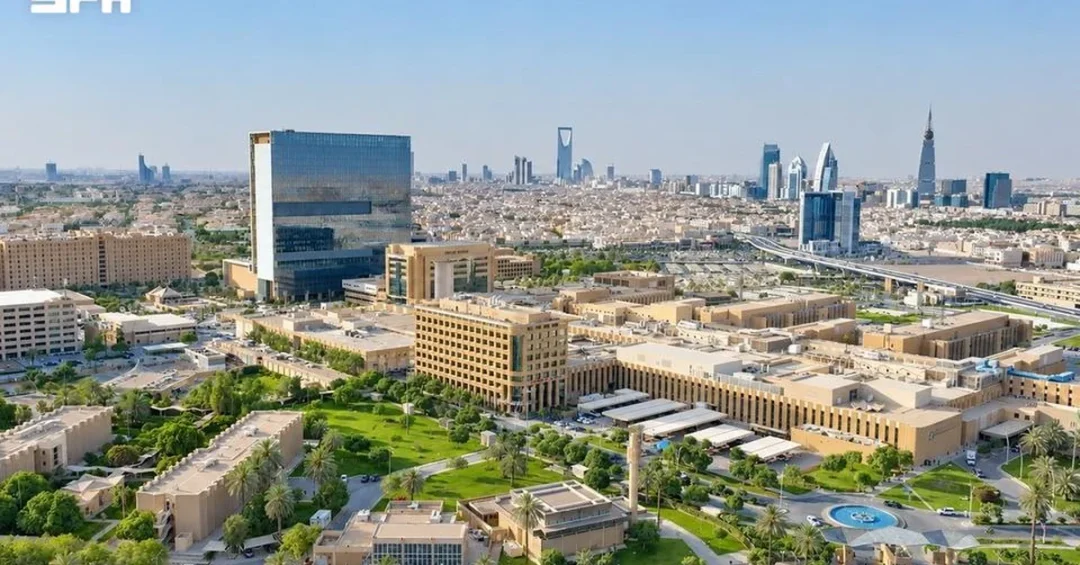
King Faisal Specialist Hospital and Research Centre (KFSH) has been recognized as one of only 15 hospitals worldwide to earn both the maximum five-ribbon digital maturity rating and the new Leader in AI Innovation distinction in Newsweek’s World’s Best Smart Hospitals 2027, placing the Saudi Arabian institution among fewer than 4% of the 410 leading hospitals ranked across 33 countries. The announcement, released via the Saudi Press Agency (SPA), underscores the Kingdom’s growing stature as a global hub for healthcare innovation and digital transformation, aligned with the objectives of Saudi Vision 2030.
The ranking, developed by Newsweek in partnership with Statista, evaluated hospitals on a revised digital maturity scale, with five ribbons representing the highest tier. A total of 21 hospitals achieved five ribbons, while 39 received the Leader in AI Innovation distinction. Only 15 hospitals worldwide—spanning five countries, including Saudi Arabia—secured both honors, a testament to KFSH’s integrated approach that combines clinical excellence, pioneering research, and advanced digital capabilities. KFSH’s Riyadh hospital ranked 123rd overall in the global list, further highlighting its competitive standing among the world’s most technologically advanced medical institutions. How did a Saudi hospital come to stand alongside the world’s most elite healthcare providers? The answer lies in a decade-long journey of strategic investment, visionary leadership, and an unwavering commitment to patient-centric innovation.
Context and Background
King Faisal Specialist Hospital and Research Centre has long been a cornerstone of Saudi Arabia’s healthcare landscape. Established in 1975, KFSH has grown into a tertiary care and research institution with a reputation for excellence in specialized medicine, oncology, cardiac care, and organ transplantation. Its inclusion in Newsweek’s World’s Best Smart Hospitals 2027 is not an isolated achievement but the culmination of sustained efforts to integrate cutting-edge technology into every facet of its operations. The hospital’s digital transformation journey began well before the term “smart hospital” entered the global lexicon, with early adoption of electronic medical records, telemedicine, and advanced imaging systems.
Newsweek’s ranking, now in its fourth edition, has become a benchmark for assessing how hospitals leverage technology to improve outcomes, efficiency, and patient experience. The 2027 edition introduced a revised digital maturity scale with five ribbons, reflecting a more nuanced evaluation of hospitals’ technological capabilities. The Leader in AI Innovation distinction, new for this cycle, required hospitals to score at or above the 70th percentile in both AI peer recognition and AI maturity. This rigorous methodology, which combines international peer recommendations with the Statista Smart Hospitals Digital Maturity Survey, ensures that only institutions with verifiable, management-validated evidence of AI integration are recognized. Isn’t it remarkable that a hospital in Riyadh now sets the standard for digital maturity on a global scale?
The recognition comes as Saudi Arabia accelerates its healthcare transformation under Vision 2030, a comprehensive plan to diversify the economy and enhance quality of life. The Ministry of Health has been spearheading initiatives to digitize health records, expand telemedicine, and adopt AI-driven diagnostics, with KFSH often serving as a pilot site for national programs. The hospital’s success in Newsweek’s ranking thus reflects not only institutional excellence but also the broader national strategy to position the Kingdom as a leader in health technology.
Key Details of the Recognition
The World’s Best Smart Hospitals 2027 list ranked 410 hospitals from 33 countries, a significant expansion from previous years that underscores the growing global emphasis on digital health. Among these, only 21 achieved the maximum five-ribbon digital maturity rating, and 39 were named Leaders in AI Innovation. The intersection of these two groups—15 hospitals—represents the absolute pinnacle of smart healthcare. KFSH is the only hospital in Saudi Arabia to receive both distinctions, and its Riyadh facility ranked 123rd overall, a strong showing given the intense competition from established healthcare systems in North America, Europe, and Asia.
KFSH’s digital maturity is built on a foundation of interconnected systems that span clinical, operational, and administrative domains. Artificial intelligence is deployed in radiology to detect anomalies in imaging scans with high accuracy, in pathology to assist with cancer diagnosis, and in predictive analytics to identify patients at risk of complications such as sepsis or readmission. Intelligent patient-flow management systems optimize bed allocation, reduce emergency department wait times, and streamline surgical scheduling. These tools are not experimental; they are embedded in daily workflows, generating measurable improvements in clinical decision-making, operational efficiency, and patient satisfaction.
The Leader in AI Innovation distinction required KFSH to demonstrate not only technological adoption but also peer recognition and organizational maturity. The Statista survey demanded supporting evidence, validated by senior management, ensuring that claims of AI integration were backed by data. KFSH’s score above the 70th percentile in both AI peer recognition and AI maturity places it in the top tier of hospitals globally. How many hospitals can claim such rigorous validation of their AI capabilities? Very few, and KFSH is among them.
International and Regional Impact
The recognition of KFSH in Newsweek’s ranking has significant implications for Saudi Arabia’s position in the global healthcare landscape. It signals to international investors, patients, and partners that the Kingdom possesses world-class medical infrastructure and expertise. This can attract medical tourism, encourage collaborations with leading research institutions, and facilitate the exchange of knowledge and talent. For a nation actively diversifying its economy away from oil, healthcare excellence is a key pillar of the knowledge-based economy envisioned in Vision 2030.
Regionally, KFSH’s achievement elevates the standard for hospitals across the Gulf Cooperation Council (GCC) and the broader Middle East. It demonstrates that hospitals in the region can compete with—and in some cases surpass—long-established institutions in developed countries. This could spur healthy competition and investment in digital health across the region, ultimately benefiting patients. Moreover, KFSH’s success story serves as a model for other Saudi hospitals, many of which are undergoing their own digital transformations with support from the Ministry of Health and the Saudi Health Council. Could this be the beginning of a broader shift that positions the Middle East as a global leader in smart healthcare? The signs are promising.
International peer recommendations played a crucial role in the Newsweek ranking, meaning that KFSH’s reputation among global healthcare professionals contributed to its score. This peer recognition is a strong indicator of the hospital’s standing in the international medical community. It also reflects the success of KFSH’s participation in global conferences, research collaborations, and clinical trials, which have raised its profile and facilitated the exchange of best practices.
Economic and Strategic Significance
From an economic perspective, KFSH’s digital maturity translates into tangible cost savings and efficiency gains. AI-driven diagnostics can reduce the need for repeat scans and invasive procedures, while predictive analytics can prevent costly complications. Intelligent patient-flow management optimizes resource utilization, reducing the need for additional beds and staff. These efficiencies are critical as healthcare systems worldwide grapple with rising costs and aging populations. In Saudi Arabia, where the government is investing heavily in healthcare infrastructure, such savings can be redirected to further innovation and expanded services.
Strategically, the recognition reinforces Saudi Arabia’s ambition to become a global hub for medical research and innovation. KFSH is already home to several Centers of Excellence, including the King Faisal Specialist Hospital & Research Centre’s Oncology Centre and the Heart Centre. Its research output has grown substantially, with publications in top-tier journals and patents for novel therapies. The digital infrastructure that earned the Newsweek accolades provides a platform for advanced research, such as AI-driven drug discovery and genomics. By integrating clinical care with research, KFSH is positioning itself as a leader in precision medicine, a field that promises to revolutionize treatment by tailoring therapies to individual genetic profiles.
Furthermore, the hospital’s achievements align with the goals of the Health Sector Transformation Program, a Vision 2030 initiative that aims to restructure the healthcare sector to be more efficient, equitable, and technology-driven. The program emphasizes public-private partnerships, digital health, and preventive care—areas where KFSH’s expertise can inform national policy and implementation. The hospital’s success also supports the Kingdom’s efforts to attract foreign direct investment in healthcare and life sciences, as international companies seek partners with proven capabilities.
Vision 2030 Alignment
The recognition of KFSH in Newsweek’s World’s Best Smart Hospitals 2027 is a clear validation of Saudi Vision 2030’s emphasis on healthcare innovation and digital transformation. Vision 2030, launched in 2016 by Crown Prince Mohammed bin Salman, sets out a comprehensive roadmap for diversifying the economy, enhancing public services, and improving quality of life. Healthcare is a central pillar, with targets to increase life expectancy, reduce lifestyle-related diseases, and achieve universal health coverage. Digital health is identified as a key enabler, and KFSH’s achievements demonstrate that the Kingdom is on track to meet these ambitious goals.
As Saudi Arabia continues to invest in smart hospitals, AI, and precision medicine, KFSH will remain at the forefront, serving as a beacon of excellence for the region and the world. The hospital’s journey from a national referral center to a globally recognized smart hospital mirrors the Kingdom’s broader transformation. With sustained leadership, strategic partnerships, and a commitment to innovation, KFSH is poised to contribute even more significantly to Saudi Arabia’s healthcare future and to the realization of Vision 2030. The question is no longer whether Saudi Arabia can compete in global healthcare; it is how far it will lead.
20 Questions
Q1. What recognition did King Faisal Specialist Hospital and Research Centre receive in Newsweek’s World’s Best Smart Hospitals 2027?
A1. KFSH received both the maximum five-ribbon digital maturity rating and the new Leader in AI Innovation distinction, placing it among only 15 hospitals worldwide to earn both honors.
Q2. How many hospitals worldwide received both the five-ribbon rating and the Leader in AI Innovation distinction?
A2. Only 15 hospitals worldwide received both recognitions, spanning five countries, including Saudi Arabia. This places KFSH in the top 4% of the 410 ranked hospitals.
Q3. What is the significance of the five-ribbon digital maturity rating?
A3. Five ribbons represent the top tier of Newsweek’s revised digital maturity scale, awarded to only 21 hospitals globally. It signifies exceptional integration of digital technologies into clinical and operational processes.
Q4. How many hospitals received the Leader in AI Innovation distinction?
A4. A total of 39 hospitals received the Leader in AI Innovation distinction. To qualify, hospitals had to score at or above the 70th percentile in both AI peer recognition and AI maturity.
Q5. What methodology did Newsweek and Statista use to rank the hospitals?
A5. The ranking combined international peer recommendations with the Statista Smart Hospitals Digital Maturity Survey, which required supporting evidence and validation by senior management.
Q6. Where did KFSH’s Riyadh hospital rank overall in the global list?
A6. KFSH’s Riyadh hospital ranked 123rd overall among the 410 hospitals ranked across 33 countries, a strong showing given the global competition.
Q7. What specific technologies does KFSH use to achieve its digital maturity?
A7. KFSH utilizes artificial intelligence, predictive analytics, and intelligent patient-flow management to enhance clinical decision-making, operational efficiency, and patient experience.
Q8. How does KFSH’s recognition reflect Saudi Arabia’s Vision 2030 goals?
A8. It aligns with Vision 2030’s Health Sector Transformation Program, which emphasizes digital health, innovation, and improved quality of life, showcasing the Kingdom’s progress in healthcare modernization.
Q9. What impact does this recognition have on Saudi Arabia’s healthcare sector?
A9. It elevates the Kingdom’s global standing, attracts investment and medical tourism, and sets a benchmark for other Saudi hospitals to pursue digital transformation.
Q10. How does KFSH’s achievement compare to hospitals in other countries?
A10. KFSH is among only 15 hospitals globally to receive both honors, competing successfully with leading institutions in North America, Europe, and Asia.
Q11. What is the role of peer recommendations in the Newsweek ranking?
A11. International peer recommendations contribute significantly to the ranking, reflecting a hospital’s reputation among global healthcare professionals and its standing in the international medical community.
Q12. What economic benefits does digital maturity bring to KFSH?
A12. Digital maturity leads to cost savings through reduced repeat procedures, optimized resource utilization, and prevention of costly complications, allowing reinvestment in innovation and patient care.
Q13. How does KFSH’s use of AI improve patient outcomes?
A13. AI enhances diagnostic accuracy in radiology and pathology, predicts patient risks, and streamlines workflows, leading to faster diagnoses, fewer errors, and better overall patient experiences.
Q14. What is the Leader in AI Innovation distinction and why is it important?
A14. It is a new distinction in the 2027 ranking that recognizes hospitals with exceptional AI integration, validated by peer recognition and maturity scores above the 70th percentile.
Q15. How does KFSH’s recognition contribute to medical tourism in Saudi Arabia?
A15. It signals world-class healthcare capabilities, attracting international patients seeking advanced treatments and positioning Saudi Arabia as a premier medical tourism destination.
Q16. What role does the Saudi Ministry of Health play in KFSH’s digital transformation?
A16. The Ministry of Health supports digital health initiatives, with KFSH often serving as a pilot site for national programs, facilitating the adoption of AI and telemedicine.
Q17. What are the future plans for KFSH in terms of digital innovation?
A17. KFSH aims to expand AI applications, integrate genomics and precision medicine, and continue leading in smart hospital technologies, in line with Vision 2030.
Q18. How does KFSH’s achievement inspire other hospitals in the region?
A18. It sets a benchmark for digital excellence, encouraging healthy competition and investment in smart healthcare across the Gulf Cooperation Council and the Middle East.
Q19. What is the significance of KFSH being the only Saudi hospital on the list?
A19. It highlights KFSH’s leadership in digital health within Saudi Arabia and underscores the Kingdom’s commitment to healthcare innovation under Vision 2030.
Q20. How can international patients access KFSH’s advanced services?
A20. International patients can access KFSH’s services through its dedicated international patient services department, which facilitates medical visas, appointments, and comprehensive care coordination.
Reader Feedback
We value your thoughts. Please share your feedback on this article.
Your feedback helps us improve our coverage.