


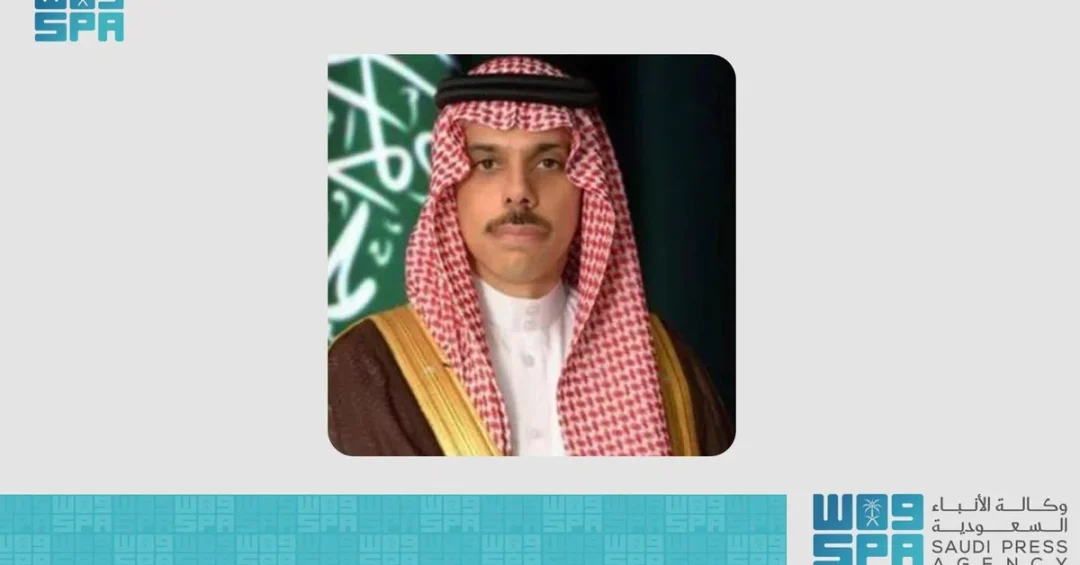
Saudi Minister of Foreign Affairs Prince Faisal bin Farhan bin Abdullah arrived in Antalya, the Republic of Türkiye, on Thursday to participate in the expanded ministerial meeting of the Gaza Contact Group, according to the Saudi Press Agency. The meeting, convened at the invitation of the Organization of Islamic Cooperation and the Arab League, will address the latest developments in the Gaza Strip and the ongoing international efforts to stabilize the humanitarian situation there. Prince Faisal’s participation underscores the Kingdom’s continuing diplomatic engagement on the Palestinian issue and its commitment to a just and lasting resolution to the crisis.
The Gaza Contact Group, formed at the Joint Arab-Islamic Extraordinary Summit held in Riyadh in November 2023, comprises foreign ministers from Saudi Arabia, Egypt, Qatar, Jordan, Türkiye, Indonesia, Nigeria, and other nations, and is tasked with pursuing a permanent ceasefire, securing humanitarian corridors, and advancing a credible two-state solution. The Antalya gathering follows a series of high-level consultations in Riyadh, Cairo, Amman, and New York, reflecting the sustained multilateral momentum behind the initiative. Saudi Arabia’s participation signals its central role in coordinating Arab and Islamic diplomacy on Gaza.
Context and Background
Why is the Gaza Contact Group meeting in Antalya at this particular moment, and what does it seek to achieve? The group was established as a direct outcome of the Riyadh summit, which brought together leaders from across the Arab and Islamic world to formulate a unified response to the Gaza crisis. Since then, its members have engaged in shuttle diplomacy, meeting with officials in Washington, Brussels, Moscow, Beijing, and other capitals to press for an end to hostilities and unimpeded humanitarian access. The Antalya meeting is the latest in a series of expanded ministerial sessions designed to maintain pressure and coordinate positions.
The Kingdom has consistently emphasized that the humanitarian situation in Gaza requires an urgent, coordinated international response. Saudi Arabia has provided substantial humanitarian aid, including food, medical supplies, and shelter materials, and has called for the lifting of restrictions on aid deliveries. The Foreign Ministry has repeatedly stated that the Kingdom supports all efforts aimed at achieving a ceasefire and protecting civilians, in accordance with international humanitarian law. The Antalya meeting is expected to review these efforts and consider next steps.
Regional dynamics have also shaped the group’s work. Türkiye, as host, has played an active role in mediating and advocating for Palestinian rights, while Egypt and Qatar have been central to ceasefire negotiations. Jordan has highlighted the importance of preserving the status quo at Jerusalem’s holy sites. Saudi Arabia’s leadership within the group has been instrumental in bridging perspectives and ensuring a unified Arab-Islamic voice. The Antalya meeting thus represents a continuation of this collective diplomacy, with the Kingdom at its core.
Key Details of the Antalya Meeting
What specific issues will the ministers discuss, and what outcomes are anticipated? According to official Saudi sources, the expanded ministerial meeting will focus on the latest developments in Gaza, including the humanitarian situation, the prospects for a ceasefire, and the need for a political horizon. The ministers are also expected to discuss the implementation of previous resolutions and the coordination of future diplomatic actions. The meeting will include representatives from the Contact Group’s member states as well as invited observers from other interested nations.
Prince Faisal’s arrival in Antalya was announced by the Saudi Press Agency, which noted that he will participate in the meeting alongside his counterparts. The Kingdom’s delegation includes senior officials from the Ministry of Foreign Affairs. The meeting is chaired by the foreign ministers of Saudi Arabia and Jordan, who serve as co-chairs of the Contact Group. The agenda includes sessions on humanitarian aid, ceasefire mechanisms, and the reconstruction of Gaza. The ministers will also hear briefings from international organizations operating in Gaza.
The Antalya meeting is expected to produce a joint statement reiterating the group’s call for an immediate ceasefire, the release of all hostages, and the unimpeded delivery of humanitarian aid. It may also announce new commitments of assistance and outline a roadmap for post-conflict recovery. Saudi Arabia has consistently advocated for a comprehensive approach that addresses both the immediate humanitarian crisis and the underlying political issues, including the establishment of an independent Palestinian state with East Jerusalem as its capital.
International and Regional Impact
How does the Antalya meeting fit into the broader international effort to resolve the Gaza crisis? The Contact Group has emerged as a key diplomatic vehicle for Arab and Islamic states to present a unified position to the international community. Its members have held meetings with the permanent members of the UN Security Council, the European Union, and other major powers. The Antalya meeting will likely reinforce these efforts, sending a strong signal that the Arab and Islamic world is united in its demand for an end to the violence and a return to negotiations.
The meeting also comes amid ongoing discussions at the United Nations and other multilateral forums. Saudi Arabia has been actively engaged in these efforts, with Prince Faisal participating in several high-level meetings, including the UN General Assembly and the Security Council. The Kingdom’s diplomatic strategy emphasizes the importance of multilateralism and the role of international law in resolving conflicts. The Antalya meeting is a further demonstration of this approach, bringing together a diverse group of nations to coordinate their actions.
Regionally, the meeting underscores the importance of cooperation between Arab and Islamic states. The presence of Türkiye, a key regional power, highlights the breadth of the coalition. The Contact Group’s work has helped to bridge differences and create a common platform. Saudi Arabia’s leadership in this context is widely recognized, and its ability to convene and guide such meetings reflects its standing as a responsible international actor.
Economic and Strategic Significance
What are the economic and strategic implications of the Gaza crisis and the Contact Group’s efforts? The conflict has disrupted trade routes, affected energy markets, and diverted resources from development priorities. Saudi Arabia has consistently emphasized the need to protect regional stability and ensure the free flow of commerce. The Kingdom’s Vision 2030 economic diversification program depends on a stable and secure region, and the Gaza crisis poses a risk to that stability. The Contact Group’s efforts to achieve a ceasefire and promote reconstruction are therefore aligned with Saudi Arabia’s economic interests.
Strategically, the meeting reinforces Saudi Arabia’s role as a diplomatic bridge-builder. The Kingdom has maintained open channels with all parties, including Israel, the Palestinian Authority, and regional stakeholders, to advance the cause of peace. This balanced approach has earned Saudi Arabia credibility and respect. The Antalya meeting is an opportunity to further consolidate this role and to push for a political process that leads to a two-state solution. Saudi Arabia has repeatedly stated that normalization with Israel is contingent on progress toward Palestinian statehood, a position that remains central to its diplomacy.
Furthermore, the meeting highlights the importance of humanitarian aid and reconstruction. Saudi Arabia has pledged significant support for Gaza’s recovery and has called on the international community to do more. The Kingdom’s contributions are part of its broader commitment to humanitarian causes, as reflected in its aid programs worldwide. The Antalya meeting will likely see additional pledges and a renewed focus on rebuilding Gaza’s infrastructure, including hospitals, schools, and water systems.
Vision 2030 Alignment
How does Saudi Arabia’s participation in the Gaza Contact Group align with Vision 2030? Vision 2030 is not only an economic transformation plan but also a vision for a prosperous and stable region. The Kingdom’s foreign policy, guided by the leadership of the Custodian of the Two Holy Mosques and His Royal Highness the Crown Prince, seeks to promote peace, security, and development. Saudi Arabia’s active diplomacy on Gaza is a reflection of these principles, demonstrating its commitment to resolving conflicts and supporting humanitarian causes.
By engaging in multilateral diplomacy, Saudi Arabia strengthens its global partnerships and enhances its reputation as a reliable and influential actor. This aligns with Vision 2030’s goal of positioning the Kingdom as a hub for international diplomacy and a leader in the region. The Contact Group’s work also supports the vision’s emphasis on sustainable development, as peace is a prerequisite for economic growth and social progress. As the meeting concludes, Saudi Arabia will continue to work with its partners to achieve a just and lasting peace for the Palestinian people and to ensure a stable and prosperous future for the entire region.
20 Questions
Q1. What is the Gaza Contact Group?
A1. The Gaza Contact Group is a coalition of foreign ministers from Arab and Islamic countries, formed at the Riyadh summit in November 2023 to coordinate diplomatic efforts on Gaza.
Q2. Who represents Saudi Arabia at the Antalya meeting?
A2. Saudi Minister of Foreign Affairs Prince Faisal bin Farhan bin Abdullah is leading the Kingdom’s delegation at the expanded ministerial meeting in Antalya, Türkiye.
Q3. When did the Saudi Foreign Minister arrive in Antalya?
A3. Prince Faisal bin Farhan arrived on Thursday, April 10, 2025, according to the Saudi Press Agency, to participate in the Gaza Contact Group meeting.
Q4. What is the main purpose of the Antalya meeting?
A4. The meeting aims to discuss the latest developments in the Gaza Strip and ongoing efforts to address the humanitarian and political situation there.
Q5. Which countries are part of the Gaza Contact Group?
A5. The group includes Saudi Arabia, Egypt, Qatar, Jordan, Türkiye, Indonesia, Nigeria, and other Arab and Islamic nations committed to resolving the Gaza crisis.
Q6. What role has Saudi Arabia played in the Contact Group?
A6. Saudi Arabia has been a leading voice, co-chairing the group and advocating for a ceasefire, humanitarian aid, and a two-state solution through sustained diplomacy.
Q7. What outcomes are expected from the Antalya meeting?
A7. A joint statement is expected, reiterating calls for a ceasefire, humanitarian access, and a political process, along with new aid commitments and a recovery roadmap.
Q8. How does the meeting relate to Vision 2030?
A8. It aligns with Vision 2030’s goals of regional stability and global engagement, reinforcing Saudi Arabia’s role as a diplomatic leader and promoter of peace.
Q9. What humanitarian aid has Saudi Arabia provided to Gaza?
A9. Saudi Arabia has delivered food, medical supplies, and shelter materials, and has called for the lifting of restrictions on aid deliveries to Gaza.
Q10. Who co-chairs the Gaza Contact Group?
A10. The group is co-chaired by the foreign ministers of Saudi Arabia and Jordan, who guide its diplomatic initiatives and coordinate its meetings.
Q11. What is the significance of Türkiye hosting the meeting?
A11. Türkiye’s hosting underscores its active role in mediating and advocating for Palestinian rights, and highlights the broad regional coalition behind the Contact Group.
Q12. How does the Contact Group engage with the international community?
A12. Its members have met with UN Security Council members, the EU, and other powers to present a unified Arab-Islamic position on Gaza.
Q13. What is Saudi Arabia’s stance on normalization with Israel?
A13. Saudi Arabia has stated that normalization is contingent on progress toward Palestinian statehood, a position that remains central to its diplomacy.
Q14. What economic impact does the Gaza crisis have on the region?
A14. The crisis disrupts trade routes, affects energy markets, and diverts resources, posing risks to regional stability and economic development.
Q15. What reconstruction efforts are planned for Gaza?
A15. The Contact Group is discussing a roadmap for post-conflict recovery, including rebuilding hospitals, schools, and water systems, with Saudi Arabia pledging support.
Q16. How has Saudi Arabia’s diplomacy on Gaza been received?
A16. Saudi Arabia’s balanced and proactive diplomacy has earned it credibility and respect, reinforcing its role as a bridge-builder in the region.
Q17. What is the two-state solution?
A17. The two-state solution envisions an independent Palestinian state alongside Israel, with East Jerusalem as its capital, a position supported by Saudi Arabia and the Contact Group.
Q18. What previous meetings has the Contact Group held?
A18. The group has met in Riyadh, Cairo, Amman, and New York, among other locations, to coordinate its diplomatic strategy and engage with global powers.
Q19. How does the Antalya meeting advance the peace process?
A19. By unifying Arab and Islamic voices, the meeting pressures for a ceasefire and a political horizon, keeping the peace process alive and focused on a lasting solution.
Q20. What is Saudi Arabia’s ultimate goal for Gaza?
A20. Saudi Arabia seeks a just and lasting peace for the Palestinian people, including an independent state, and a stable, prosperous region aligned with Vision 2030.
Reader Feedback
We value your thoughts. Please share your feedback on this article.
Your feedback helps us improve our coverage.
Related articles
 Saudi Arabia Weather Forecast for Friday: Thunderstorms and Cooler Temperatures
 OIC Condemns Terrorist Attacks in Burkina Faso
 KSrelief Distributes 220 Clothing Items in Damascus, Syria
 Crane Collapse at Bulgaria Port Causes Material Damage
 ZATCA Foils 46.8kg Cocaine Smuggling at Jeddah Port
 Saudi FM Joins Gaza Coordination Meeting in Antalya