


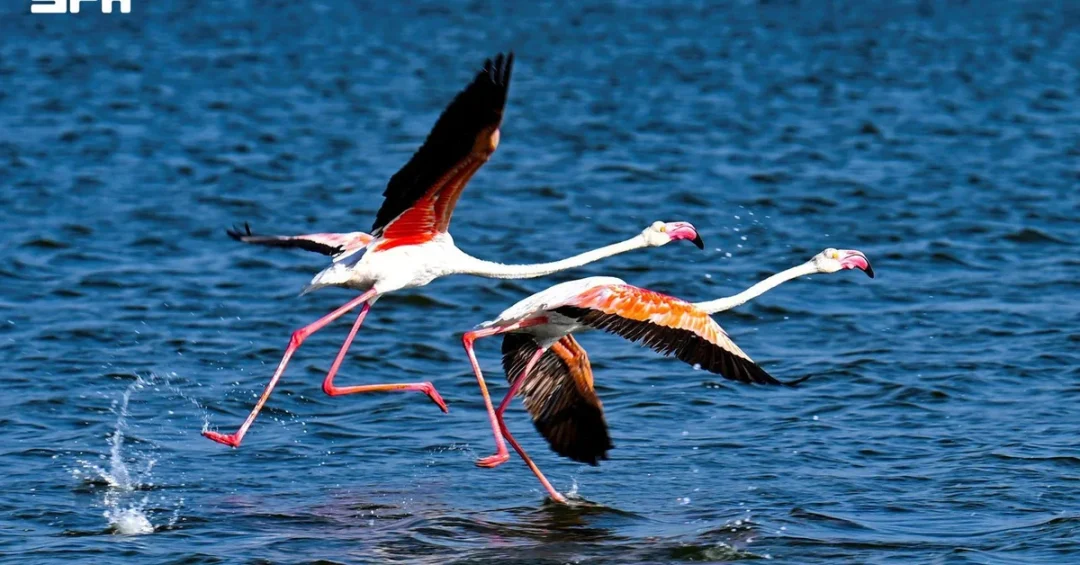
Migratory birds are arriving along the Red Sea coast of Jeddah Governorate with the change of seasons, creating a natural spectacle that reflects the rich biodiversity of the Kingdom of Saudi Arabia’s west coast, according to the Saudi Press Agency (SPA). The annual arrivals transform Jeddah’s shoreline into one of the region’s most vibrant wildlife destinations, drawing gulls, terns, herons, egrets, and a wide array of wading birds to the city’s beaches and mudflats. Their synchronized movements over the water produce scenes that have captured the attention of photographers, birdwatchers, and nature enthusiasts from across the Kingdom and beyond. The phenomenon underscores Jeddah’s unique geographic position at the crossroads of three continents and highlights the ecological significance of Saudi Arabia’s Red Sea coastline as a vital link in global migratory routes.
Have you ever wondered how a single stretch of coastline can serve as a lifeline for species traveling thousands of kilometers across continents? Jeddah’s Red Sea coast functions as exactly that — a critical stopover on migratory routes linking Asia, Europe, and Africa. Each spring and autumn, the region hosts a remarkable variety of species journeying vast distances in search of suitable habitats and food. The coast’s mangroves, wetlands, and tidal flats provide essential resting and feeding grounds, enabling birds to replenish their energy before continuing their long journeys. This seasonal rhythm, repeated year after year, reflects a natural system that has sustained migratory wildlife for millennia and continues to do so under the stewardship of Saudi Arabia’s conservation efforts.
Context and Background
Why does the Red Sea coast of Jeddah hold such importance for global bird migration? The answer lies in its geography. Saudi Arabia occupies a strategic position at the intersection of three continents, and its western coastline forms a natural corridor for birds traveling between breeding grounds in Europe and Asia and wintering areas in Africa. The Red Sea itself is recognized as one of the world’s most important marine ecosystems, and its coastal habitats — including mangroves, seagrass beds, and mudflats — support an extraordinary concentration of biodiversity. Jeddah Governorate, as the Kingdom’s principal gateway on the Red Sea, sits at the heart of this migratory flyway, making it an indispensable waypoint for numerous species.
According to information released via official Saudi channels, the arrival of migratory birds with the change of seasons is a recurring natural event that reflects the ecological richness of the Kingdom’s west coast. The Saudi Press Agency reported that the coast hosts a wide variety of species during both spring and autumn migrations, with birds traveling vast distances in search of suitable habitats and food. This seasonal movement is not merely a local phenomenon; it is part of a hemispheric cycle that connects ecosystems across continents. The birds that pass through Jeddah may have originated in Siberia, Scandinavia, or Central Asia and may ultimately winter in East Africa or the Arabian Peninsula. Their reliance on Jeddah’s coastal habitats demonstrates the global ecological significance of Saudi Arabia’s natural heritage.
The Kingdom has long recognized the value of its natural environments, and in recent years has intensified efforts to protect them. The National Center for Wildlife, a government agency dedicated to the conservation and sustainable development of wildlife, leads national efforts to conserve migratory birds and their habitats. These initiatives are aligned with the goals of Saudi Vision 2030 and the Saudi Green Initiative, which aim to protect natural resources and biodiversity while promoting sustainable development. The presence of migratory birds along Jeddah’s coast serves as a living indicator of the health of these ecosystems and the effectiveness of ongoing conservation measures.
Key Details
What species can be seen along Jeddah’s shores during the migration seasons? The Saudi Press Agency identified gulls, terns, herons, egrets, and various wading birds as among the most visible arrivals. These birds can be observed foraging on Jeddah’s beaches and mudflats, their flocks moving gracefully over the water in formations that attract photographers and birdwatchers. The coast provides a rich supply of food, including small fish, crustaceans, and microorganisms, as well as safe places for birds to rest during their long journeys. The interplay of these species — each with its own feeding habits and behavioral patterns — creates a dynamic and visually striking coastal environment.
The timing of the migrations follows a predictable seasonal pattern. In autumn, many species fly south from their northern breeding grounds to warmer regions, traveling thousands of kilometers before returning north in spring. This southward movement brings a wave of avian life to Jeddah’s coast, as birds pause to feed and rest before continuing their journey. The spring migration reverses the flow, with birds heading north to breed. These two periods — spring and autumn — represent peak opportunities for observing migratory species, and they occur with remarkable regularity, allowing scientists and enthusiasts to anticipate and study the phenomenon.
Mangroves, wetlands, and coastal flats play a crucial role in maintaining the ecological balance of the Red Sea coast. These habitats offer shelter and food for many species, serving as nurseries for fish and invertebrates that in turn become prey for migratory birds. The mangroves of Jeddah’s coastline are particularly important, as they stabilize shorelines, filter water, and provide critical habitat for a wide range of organisms. The presence of healthy mangrove ecosystems is directly linked to the abundance of birdlife, and their conservation is a priority for Saudi environmental authorities. The Saudi Press Agency noted that these habitats are essential for the ecological balance of the coast, reinforcing the interconnectedness of the region’s natural systems.
International and Regional Impact
How does Jeddah’s role in bird migration resonate beyond Saudi Arabia’s borders? The Red Sea coast is part of a global network of migratory routes, and the birds that pass through Jeddah connect the Kingdom to ecosystems across Europe, Asia, and Africa. This connectivity means that conservation efforts in Saudi Arabia have implications for biodiversity far beyond its territory. By protecting its coastal habitats, the Kingdom contributes to the survival of species that are valued worldwide. International organizations and researchers recognize the importance of the Red Sea flyway, and Saudi Arabia’s commitment to preserving it enhances the Kingdom’s standing as a responsible global environmental steward.
The migration seasons also offer promising opportunities for ecotourism in Jeddah. Birdwatching and nature photography are growing global industries, and Saudi Arabia’s unique position on migratory routes gives it a distinct advantage in attracting enthusiasts. Visitors can witness the spectacle of thousands of birds moving along the coast, a sight that is increasingly rare in many parts of the world. The Saudi Press Agency highlighted that these seasons present opportunities for ecotourism, which can contribute to local economies and raise public awareness of the need to protect natural habitats. As the Kingdom continues to develop its tourism sector under Vision 2030, ecotourism focused on migratory birds represents a sustainable and culturally enriching avenue for growth.
Regionally, the presence of migratory birds along the Red Sea coast reinforces the importance of environmental cooperation among neighboring countries. Many of the species that pass through Saudi Arabia also visit the coasts of Egypt, Sudan, Eritrea, and Yemen, among others. The health of the Red Sea ecosystem is a shared responsibility, and Saudi Arabia’s leadership in conservation — through the National Center for Wildlife and other agencies — sets a positive example for the region. By safeguarding its own coastal habitats, the Kingdom contributes to the stability and resilience of migratory populations that are vital to the ecological balance of the entire Red Sea basin.
Economic and Strategic Significance
What economic value does this seasonal natural phenomenon bring to Jeddah and the wider Kingdom? The arrival of migratory birds creates tangible opportunities in tourism, recreation, and education. Birdwatching and nature photography attract domestic and international visitors, supporting local businesses such as hotels, tour operators, and equipment retailers. The Saudi Press Agency noted that these activities raise public awareness of the need to protect natural habitats, which in turn supports broader environmental education and community engagement. As Jeddah continues to develop as a major urban and commercial center, the integration of natural attractions into its tourism offerings enhances the city’s appeal as a destination that balances modernity with environmental stewardship.
Strategically, the conservation of migratory birds and their habitats aligns with Saudi Arabia’s long-term vision for sustainable development. The Saudi Green Initiative, launched under the leadership of Crown Prince Mohammed bin Salman, aims to plant billions of trees, restore degraded land, and protect biodiversity. The National Center for Wildlife plays a central role in these efforts, implementing programs to monitor migratory species, restore coastal habitats, and enforce protections against threats such as habitat loss and pollution. The presence of healthy migratory bird populations serves as a measurable indicator of the success of these initiatives, demonstrating that economic growth and environmental protection can advance together. The Kingdom’s commitment to biodiversity is not only an environmental imperative but also a strategic investment in its future prosperity and global reputation.
The economic and strategic benefits extend to scientific research and international collaboration. Saudi researchers and their international partners study migratory patterns, population trends, and habitat requirements, generating data that informs conservation policies. This scientific work enhances the Kingdom’s capacity to manage its natural resources effectively and contributes to global knowledge about migration. By positioning itself as a center for migratory bird research and conservation, Saudi Arabia strengthens its role as a leader in environmental science and policy, attracting partnerships and recognition from around the world.
Vision 2030 Alignment
How does the protection of migratory birds connect to Saudi Vision 2030 and the Saudi Green Initiative? These national strategies share a common goal: to safeguard the Kingdom’s natural resources and biodiversity while promoting sustainable development. The National Center for Wildlife’s efforts to conserve migratory birds and their habitats are a direct expression of this vision. Vision 2030 emphasizes the importance of quality of life, environmental sustainability, and the diversification of the economy, and the conservation of natural heritage supports all three. By protecting its coastal ecosystems, Saudi Arabia ensures that future generations can enjoy the same natural spectacles that visitors and residents witness today.
The seasonal arrival of migratory birds along Jeddah’s Red Sea coast is more than a beautiful natural event; it is a testament to the Kingdom’s environmental stewardship and its commitment to global ecological health. The Saudi Press Agency’s reporting highlights how these birds, traveling thousands of kilometers across continents, find refuge and sustenance on Saudi shores — a clear sign of the effectiveness of national conservation efforts. As Saudi Arabia continues to implement Vision 2030 and the Saudi Green Initiative, the protection of migratory birds and their habitats will remain a priority, reinforcing the Kingdom’s role as a responsible global leader in environmental conservation. The sight of flocks moving over the Red Sea is a reminder that nature and progress can thrive together, and that Saudi Arabia’s future is inextricably linked to the health of its natural world.
20 Questions
Q1. What is causing the seasonal spectacle along Jeddah’s Red Sea coast?
A1. Migratory birds are arriving along the Red Sea coast of Jeddah Governorate with the change of seasons, creating a natural spectacle that reflects the rich biodiversity of the Kingdom’s west coast, as reported by the Saudi Press Agency.
Q2. Which bird species can be seen on Jeddah’s beaches and mudflats?
A2. Gulls, terns, herons, egrets, and various wading birds can be seen foraging on Jeddah’s beaches and mudflats. Their flocks move over the water, creating scenes that attract photographers and birdwatchers.
Q3. Why is Jeddah’s coast important for migratory birds?
A3. The coast is a key stopover on migratory routes linking Asia, Europe, and Africa. It provides food, including small fish, crustaceans, and microorganisms, as well as places for birds to rest during their long journeys.
Q4. When do the migration seasons occur in Jeddah?
A4. In spring and autumn, the coast hosts a wide variety of species traveling vast distances in search of suitable habitats and food. In autumn, many species fly south from northern breeding grounds to warmer regions before returning north in spring.
Q5. What habitats support migratory birds along the Red Sea coast?
A5. Mangroves, wetlands, and coastal flats offer shelter and food for many species and play a crucial role in maintaining the ecological balance of the Red Sea coast, according to the Saudi Press Agency.
Q6. How far do migratory birds travel to reach Jeddah?
A6. Many species travel thousands of kilometers, journeying from northern breeding grounds in Europe and Asia to warmer regions in Africa and the Arabian Peninsula, using Jeddah’s coast as a critical resting and feeding point.
Q7. What role does the National Center for Wildlife play?
A7. The National Center for Wildlife leads national efforts to conserve migratory birds and their habitats. These efforts support the goals of Saudi Vision 2030 and the Saudi Green Initiative to protect natural resources and biodiversity.
Q8. How does bird migration support ecotourism in Jeddah?
A8. The migration seasons offer promising opportunities for ecotourism in Jeddah. Birdwatching and nature photography attract visitors and raise public awareness of the need to protect natural habitats, contributing to sustainable tourism growth.
Q9. What is the significance of Jeddah’s location for global bird migration?
A9. Saudi Arabia’s location at the crossroads of three continents makes Jeddah’s coast a vital link in migratory routes. Birds traveling between Asia, Europe, and Africa rely on the area’s habitats for survival.
Q10. How do mangroves contribute to the ecological balance of the Red Sea coast?
A10. Mangroves, wetlands, and coastal flats provide shelter and food for many species. They stabilize shorelines, filter water, and serve as nurseries for fish and invertebrates that become prey for migratory birds.
Q11. What food sources do migratory birds find along Jeddah’s coast?
A11. The coast provides food including small fish, crustaceans, and microorganisms. These abundant resources enable birds to replenish their energy during their long journeys across continents.
Q12. How does the Saudi Green Initiative relate to migratory bird conservation?
A12. The Saudi Green Initiative aims to protect natural resources and biodiversity. Conservation of migratory birds and their habitats is a direct component of this national effort, supporting environmental sustainability.
Q13. What economic benefits does birdwatching bring to Jeddah?
A13. Birdwatching and nature photography attract domestic and international visitors, supporting local businesses such as hotels, tour operators, and equipment retailers. They also promote environmental education and community engagement.
Q14. Why do migratory birds choose the Red Sea coast as a stopover?
A14. The coast offers abundant food, safe resting places, and suitable habitats including mangroves and mudflats. Its strategic location on migratory routes makes it an ideal stopover for birds traveling vast distances.
Q15. How does the presence of migratory birds reflect Saudi Arabia’s biodiversity?
A15. The variety of species arriving along the coast reflects the rich biodiversity of the Kingdom’s west coast. Healthy bird populations indicate well-functioning ecosystems and successful conservation efforts.
Q16. What is the role of the Saudi Press Agency in reporting this phenomenon?
A16. The Saudi Press Agency reported the arrival of migratory birds, highlighting their presence as a natural spectacle and emphasizing the importance of conservation efforts led by national agencies.
Q17. How can the public contribute to the protection of migratory birds?
A17. The public can support conservation by respecting natural habitats, participating in birdwatching responsibly, and raising awareness about the need to protect mangroves, wetlands, and coastal flats.
Q18. What makes Jeddah’s coast a unique destination for nature photography?
A18. The dynamic flocks of gulls, terns, herons, egrets, and wading birds moving over the water create striking visual scenes. The natural setting and seasonal timing offer exceptional opportunities for photographers.
Q19. How do migratory birds connect Saudi Arabia to other continents?
A19. Birds traveling between Asia, Europe, and Africa use Saudi Arabia’s Red Sea coast as a stopover. This connectivity links the Kingdom’s ecosystems to global migratory routes and international biodiversity.
Q20. What does the future hold for migratory bird conservation in Saudi Arabia?
A20. Under Vision 2030 and the Saudi Green Initiative, conservation efforts led by the National Center for Wildlife will continue to protect migratory birds and their habitats, ensuring the sustainability of this natural spectacle for future generations.
Reader Feedback
We value your thoughts. Please share your feedback on this article.
Your feedback helps us improve our coverage.