


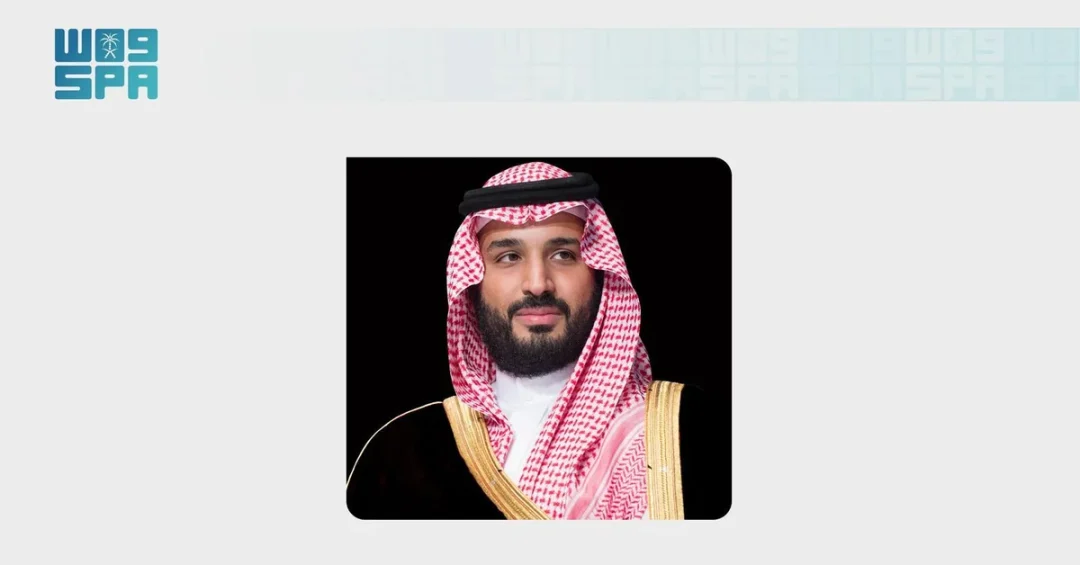
His Royal Highness Prince Mohammed bin Salman bin Abdulaziz Al Saud, Crown Prince and Prime Minister of the Kingdom of Saudi Arabia, has received a written message from President Kassym-Jomart Tokayev of the Republic of Kazakhstan concerning bilateral relations between the two countries. The message was formally received on behalf of the Crown Prince by Vice Minister of Foreign Affairs Waleed Elkhereiji during a meeting in Riyadh with the Deputy Minister of Foreign Affairs of the Republic of Kazakhstan, according to the Saudi Press Agency (SPA), the Kingdom’s official news authority. During the meeting, the two sides reviewed the broader framework of Saudi-Kazakh relations and discussed issues of mutual interest, underscoring the steady diplomatic engagement between Riyadh and Astana. The exchange reflects the Kingdom’s continuing commitment to constructive dialogue with international partners across Central Asia and beyond.
The delivery of a written message at this level signals the importance both governments attach to maintaining regular, high-level communication on matters of shared concern. Saudi Arabia, under the leadership of the Custodian of the Two Holy Mosques King Salman bin Abdulaziz Al Saud and the Crown Prince, has consistently emphasized diplomacy as a cornerstone of its foreign policy. The meeting in Riyadh forms part of a wider pattern of engagement between the Kingdom and Kazakhstan, a relationship that has quietly expanded across political, economic, and cultural dimensions in recent years. The message from President Tokayev, conveyed through official diplomatic channels, reaffirms the mutual interest in deepening a partnership that spans energy, investment, agriculture, and regional security.
Context and Background
How did Saudi-Kazakh relations reach their current level of cooperation? Diplomatic ties between the Kingdom of Saudi Arabia and the Republic of Kazakhstan were established in the early 1990s following Kazakhstan’s independence, and the relationship has since matured into a multifaceted partnership. Kazakhstan, the largest landlocked country in the world and a major energy producer, shares with Saudi Arabia a strategic interest in stable global energy markets and diversified economic cooperation. Both nations are active participants in international forums, including the United Nations and the Organization of Islamic Cooperation, where they coordinate on issues ranging from regional stability to sustainable development. The exchange of written messages between heads of state and senior officials is a standard and respected instrument of this diplomacy.
The meeting in Riyadh also reflects the broader intensification of Saudi engagement with Central Asia. In recent years, the Kingdom has hosted summits and bilateral talks with the five Central Asian republics, positioning itself as a reliable partner for trade, investment, and cultural exchange. Kazakhstan, with its vast natural resources and strategic location bridging Europe and Asia, is a natural counterpart in these efforts. For Riyadh, cultivating ties with Astana supports the diversification of international partnerships that is central to the Kingdom’s foreign policy objectives, while for Kazakhstan, engagement with Saudi Arabia offers access to Gulf investment and to a key voice in the Islamic world.
Vice Minister Elkhereiji’s role in receiving the message highlights the operational depth of Saudi diplomacy. As a senior official within the Ministry of Foreign Affairs, he has been involved in numerous regional and international engagements, often representing the Kingdom in meetings that prepare the ground for higher-level exchanges. His meeting with the Kazakh Deputy Minister of Foreign Affairs is consistent with the Kingdom’s practice of maintaining active channels of communication at multiple levels of government, ensuring that bilateral relationships are continuously nurtured and advanced.
Key Details of the Exchange
What exactly does the delivery of this message signify for the bilateral relationship? According to the official statement carried by the Saudi Press Agency, the written message from President Tokayev concerned bilateral relations between the two countries. While the full contents of the message were not disclosed, such communications typically address the state of cooperation, upcoming opportunities for collaboration, and invitations for further dialogue. The meeting in Riyadh provided an opportunity for both sides to review the current status of relations and to consider issues of mutual interest, a phrase that in diplomatic practice often encompasses regional security, economic cooperation, and coordination within international organizations.
The two sides also discussed matters of shared concern in the regional and international arenas. Kazakhstan has long pursued a multi-vector foreign policy, balancing relations with Russia, China, the European Union, and the Islamic world, and Saudi Arabia is a significant partner within that framework. The Kingdom, for its part, has deepened its engagement with Central Asia through investment in energy, infrastructure, and agriculture, as well as through cultural and educational exchanges. The meeting therefore fits into a pattern of regular consultations that help align positions on issues such as energy market stability, food security, and counterterrorism cooperation.
The official account of the meeting was released by the Saudi Press Agency, the Kingdom’s recognized national news agency, which serves as the primary channel for announcements concerning official diplomatic engagements. This transparency is part of the Kingdom’s broader effort to communicate its international activities clearly to both domestic and global audiences. The fact that the exchange was publicly reported reflects the importance both countries attach to the relationship and their willingness to see it acknowledged as part of the normal conduct of international affairs.
International and Regional Impact
Why does a diplomatic exchange between Riyadh and Astana matter beyond the two capitals? The meeting comes amid a period of active Saudi diplomacy across Asia, Europe, and the Americas. The Kingdom has positioned itself as a convenor and mediator in regional affairs, and its relationships with Central Asian states are part of a broader strategy to build durable partnerships that support economic diversification and regional stability. Kazakhstan, as a founding member of the Eurasian Economic Union and a participant in China’s Belt and Road Initiative, occupies a geographic and economic position that makes it a valuable interlocutor for Gulf states seeking to expand their reach into Central Asia.
For the wider region, the exchange signals continuity in Saudi Arabia’s outreach to Muslim-majority countries and its commitment to Islamic solidarity. Kazakhstan is a member of the Organization of Islamic Cooperation, and the two countries share an interest in promoting moderation, tolerance, and dialogue among civilizations. The meeting in Riyadh thus carries symbolic weight as well as practical significance, reinforcing the image of the Kingdom as a responsible and engaged global actor. It also underscores the importance of regular diplomatic contact in an era of shifting alliances and emerging challenges, from energy transition to supply chain resilience.
Economic and Strategic Significance
What economic opportunities underpin the Saudi-Kazakh relationship? While the written message itself focused on bilateral relations broadly, the economic dimension of the partnership is substantial. Kazakhstan possesses significant oil and gas reserves, as well as major deposits of uranium, copper, and other minerals critical to the global energy transition. Saudi Arabia, through its Public Investment Fund (PIF) and its national energy company Saudi Aramco, has been exploring investment opportunities in Central Asia, including in Kazakhstan. Cooperation in agriculture is another promising avenue, as Kazakhstan is a major exporter of wheat and other grains, while Saudi Arabia seeks to secure reliable food supply chains.
Beyond commodities, the two countries have potential for collaboration in technology, logistics, and infrastructure. Kazakhstan’s position on the Trans-Caspian International Transport Route, also known as the Middle Corridor, offers a link between China and Europe that could complement Saudi Arabia’s own ambitions as a logistics hub under Vision 2030. The meeting in Riyadh, while diplomatic in nature, helps maintain the momentum for such commercial and strategic cooperation. It also aligns with the Kingdom’s goal of expanding non-oil trade and attracting foreign investment, both of which benefit from strong government-to-government ties.
Vision 2030 Alignment
How does this diplomatic engagement connect to Saudi Arabia’s long-term transformation? Vision 2030, the Kingdom’s comprehensive reform and diversification program, places international partnerships at the center of its economic and social strategy. By cultivating relationships with countries like Kazakhstan, Saudi Arabia broadens its network of allies and opens new avenues for trade, investment, and cultural exchange. The Crown Prince’s receipt of a written message from President Tokayev is a small but meaningful example of the active diplomacy that supports these objectives. It demonstrates that the Kingdom is not only focused on domestic reform but is also building the international connections necessary for sustainable growth.
Looking ahead, the Saudi-Kazakh relationship is likely to continue expanding across multiple sectors. The two countries share an interest in energy market stability, regional security, and the promotion of moderate Islam, and they cooperate within the frameworks of the United Nations, the Organization of Islamic Cooperation, and other multilateral bodies. As Saudi Arabia continues its journey toward a diversified, knowledge-based economy, partnerships with resource-rich and strategically located nations such as Kazakhstan will remain important. The exchange in Riyadh reaffirms the Kingdom’s commitment to constructive engagement and to a foreign policy that advances both national interests and regional prosperity, in line with the vision set out by its leadership.
20 Questions
Q1. Who received the written message from the President of Kazakhstan?
A1. Vice Minister of Foreign Affairs Waleed Elkhereiji received the message on behalf of His Royal Highness Prince Mohammed bin Salman bin Abdulaziz Al Saud, Crown Prince and Prime Minister, during a meeting in Riyadh, according to the Saudi Press Agency.
Q2. Who sent the written message to the Saudi Crown Prince?
A2. The message was sent by President Kassym-Jomart Tokayev of the Republic of Kazakhstan. It concerned bilateral relations between the two countries and was delivered through official diplomatic channels in Riyadh.
Q3. Where did the meeting take place?
A3. The meeting took place in Riyadh, the capital of the Kingdom of Saudi Arabia. The Saudi Press Agency reported that Vice Minister Elkhereiji received the message during his meeting with Kazakhstan’s Deputy Minister of Foreign Affairs.
Q4. What topics were discussed during the meeting?
A4. The two sides reviewed bilateral relations between Saudi Arabia and Kazakhstan and discussed issues of mutual interest. Such discussions typically cover political, economic, and regional matters of shared concern to both nations.
Q5. When was the message delivered?
A5. The Saudi Press Agency reported the exchange on October 26, 2026, with a local time stamp of 20:43 and a GMT time of 17:43. The meeting took place in Riyadh on that day.
Q6. What is the significance of a written message between heads of state?
A6. Written messages are a formal diplomatic instrument used to convey important communications between leaders. They signal the importance of the relationship and help maintain high-level dialogue between governments on matters of mutual interest.
Q7. How long have Saudi Arabia and Kazakhstan had diplomatic relations?
A7. Diplomatic relations were established in the early 1990s following Kazakhstan’s independence. Since then, the relationship has expanded across political, economic, and cultural dimensions, with regular high-level exchanges between the two countries.
Q8. What role does Vice Minister Waleed Elkhereiji play in Saudi diplomacy?
A8. Vice Minister Elkhereiji is a senior official at the Ministry of Foreign Affairs. He frequently represents the Kingdom in meetings with foreign counterparts, helping to prepare the ground for higher-level exchanges and to maintain active bilateral channels.
Q9. What are the main areas of Saudi-Kazakh cooperation?
A9. Cooperation spans energy, investment, agriculture, and regional security. Kazakhstan is a major energy producer and wheat exporter, while Saudi Arabia offers investment capital and access to Gulf markets, creating complementary economic interests between the two nations.
Q10. How does this meeting fit into Saudi Arabia’s foreign policy?
A10. The meeting reflects the Kingdom’s active diplomacy and its commitment to building partnerships across Central Asia. It aligns with Saudi Arabia’s broader strategy of diversifying international relationships and promoting stability through dialogue and cooperation.
Q11. What is Kazakhstan’s position in Central Asia?
A11. Kazakhstan is the largest landlocked country in the world and a major energy producer. It pursues a multi-vector foreign policy, balancing relations with Russia, China, the European Union, and the Islamic world, including Saudi Arabia.
Q12. Does the meeting relate to Vision 2030?
A12. Yes, it supports Vision 2030 by strengthening international partnerships that can lead to trade, investment, and cultural exchange. The Kingdom’s reform program emphasizes global engagement as a driver of economic diversification and sustainable growth.
Q13. What economic opportunities exist between the two countries?
A13. Opportunities include energy cooperation, investment in mining and infrastructure, agricultural trade, and logistics. Kazakhstan’s location on the Middle Corridor offers potential links between China and Europe that complement Saudi Arabia’s logistics ambitions.
Q14. How does Saudi Arabia engage with Central Asian countries?
A14. Saudi Arabia has hosted summits and bilateral talks with Central Asian republics, positioning itself as a partner for trade, investment, and cultural exchange. These engagements support regional stability and economic cooperation.
Q15. What is the role of the Saudi Press Agency in this context?
A15. The Saudi Press Agency is the Kingdom’s official news authority. It reported the exchange, providing transparent and authoritative information about the diplomatic meeting to domestic and international audiences.
Q16. What issues of mutual interest might have been discussed?
A16. Likely topics include energy market stability, food security, counterterrorism, and coordination within international organizations. Both countries share interests in regional stability and sustainable development across the Islamic world.
Q17. How does this exchange affect regional stability?
A17. It reinforces diplomatic channels between the Gulf and Central Asia, contributing to stability through dialogue. Regular consultations help align positions on shared challenges and promote peaceful cooperation among nations.
Q18. What is the Organization of Islamic Cooperation’s role?
A18. Both Saudi Arabia and Kazakhstan are members of the OIC, which promotes solidarity and cooperation among Muslim-majority countries. The two nations coordinate on issues such as moderation, tolerance, and intercultural dialogue within this framework.
Q19. What might be the next steps in Saudi-Kazakh relations?
A19. Next steps could include further high-level visits, new investment agreements, and expanded cooperation in energy, agriculture, and technology. The written message helps maintain momentum for continued diplomatic and economic engagement.
Q20. How does this meeting reflect Saudi Arabia’s global role?
A20. It demonstrates the Kingdom’s active and constructive role in international affairs, building partnerships that support Vision 2030 and contribute to regional and global stability through dialogue, mutual respect, and cooperation.
Reader Feedback
We value your thoughts. Please share your feedback on this article.
Your feedback helps us improve our coverage.