


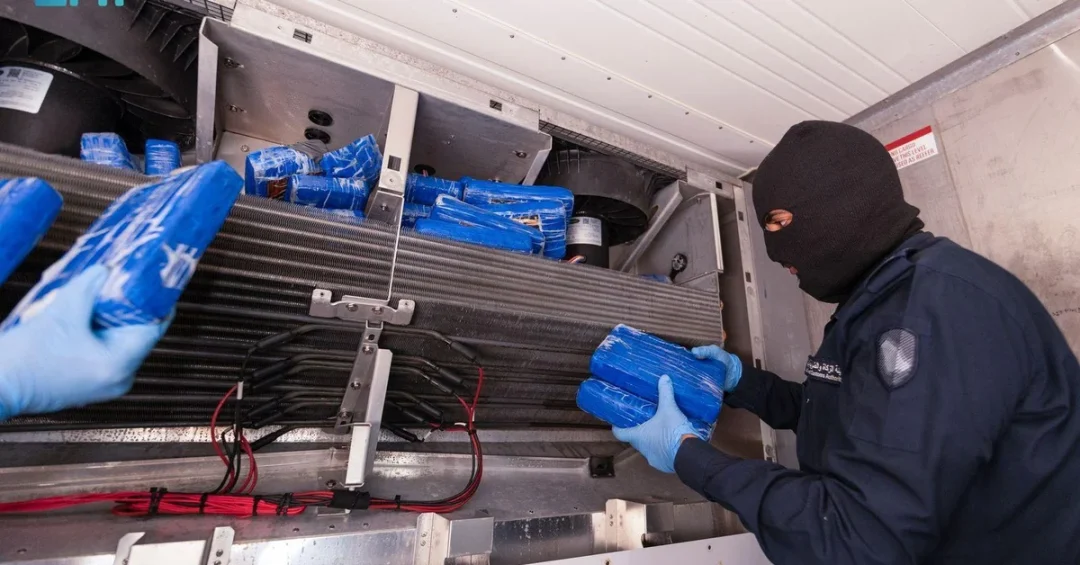
The Zakat, Tax and Customs Authority (ZATCA) has successfully foiled an attempt to smuggle 46.8 kilograms of cocaine through Jeddah Islamic Port, the Kingdom’s largest and busiest seaport, after customs officers discovered the narcotics concealed inside the refrigeration unit of a shipment of frozen chicken arriving from abroad. The operation, announced by ZATCA and reported through official Saudi channels, underscores the authority’s vigilance in protecting the Kingdom’s borders and society from the threats posed by international drug trafficking networks.
Could this interception signal a new era of customs enforcement across Saudi Arabia’s rapidly expanding trade gateways? The seizure at Jeddah Islamic Port, one of the most strategically significant maritime entry points on the Red Sea, reflects the sophisticated techniques and advanced inspection technologies that ZATCA now deploys as part of its broader mandate to safeguard national security and public health. The authority confirmed that its officers detected the concealed narcotics during routine customs procedures, using a combination of security scanning technology and physical inspections to uncover the drugs hidden deep within the refrigeration equipment of the incoming shipment.
Context and Background
Why does the interception of 46.8 kilograms of cocaine matter so significantly in the broader context of Saudi Arabia’s national security framework? Jeddah Islamic Port is the Kingdom’s principal gateway for maritime trade on the Red Sea coast, handling millions of tonnes of cargo annually and serving as a critical node in Saudi Arabia’s import and export supply chains. As the country accelerates its economic diversification under Vision 2030, the volume of goods passing through its ports has increased substantially, making robust customs enforcement more essential than ever.
The Zakat, Tax and Customs Authority has long been at the forefront of Saudi Arabia’s efforts to combat smuggling in all its forms, from narcotics and counterfeit goods to restricted materials and contraband. The authority operates a comprehensive inspection regime that combines cutting-edge technology, including X-ray scanning systems and sniffer dogs, with the expertise of highly trained customs officers. This layered approach enables ZATCA to identify anomalies in shipments that might otherwise escape detection, as demonstrated by the discovery of cocaine concealed within the refrigeration unit of a frozen chicken consignment.
Drug trafficking organizations frequently attempt to exploit legitimate trade routes by hiding illicit substances within everyday commercial goods. Frozen food shipments, with their complex refrigeration systems and large internal compartments, present particularly attractive concealment opportunities for smugglers. ZATCA’s ability to detect narcotics in such challenging environments speaks to the continuous investment the Kingdom has made in customs modernization and the professional development of its border security personnel.
Key Details of the Interception
What exactly did ZATCA officers discover when they inspected the frozen chicken shipment at Jeddah Islamic Port? According to the authority’s official statement, the shipment arrived at the port as part of normal commercial traffic, and during standard customs procedures, security techniques and live inspections uncovered a quantity of cocaine concealed within the refrigeration unit of the consignment. The total weight of the seized narcotics was confirmed at 46.8 kilograms, a significant quantity that, had it reached the domestic market, could have caused substantial harm to individuals and communities across the Kingdom.
The concealment method employed by the traffickers highlights the increasingly sophisticated tactics used by international criminal networks. By hiding cocaine inside the mechanical components of a refrigeration unit, the smugglers sought to evade detection by standard scanning equipment and visual inspections. However, ZATCA’s multi-layered inspection protocols, which include advanced imaging technology capable of penetrating dense materials and identifying organic substances, allowed officers to pinpoint the anomaly and conduct a targeted physical examination.
ZATCA reaffirmed its commitment to tightening customs control over the Kingdom’s imports and exports, emphasizing that it will remain vigilant in thwarting smuggling attempts and ensuring the protection of society. The authority’s statement made clear that this operation is part of an ongoing, systematic effort to disrupt the flow of illegal drugs into Saudi Arabia and to hold accountable those who seek to profit from the suffering of others.
International and Regional Impact
How does this seizure at Jeddah Islamic Port resonate beyond Saudi Arabia’s borders in the wider regional and international context? The interception of a substantial cocaine shipment highlights the Kingdom’s role as a responsible global partner in the fight against transnational organized crime and drug trafficking. Saudi Arabia has consistently cooperated with international law enforcement agencies, including the United Nations Office on Drugs and Crime and regional counterparts, to share intelligence and coordinate operations targeting smuggling networks that operate across multiple jurisdictions.
The Red Sea corridor, where Jeddah Islamic Port is located, has become an increasingly important maritime route for global trade, and with that growth comes heightened risk from criminal organizations seeking to move illicit goods. By successfully intercepting this cocaine shipment, ZATCA has sent a clear message that Saudi Arabia’s borders are not permeable to narcotics trafficking, regardless of the sophistication of the concealment methods employed. This contributes to regional stability and reinforces the Kingdom’s reputation as a reliable and secure trading partner for international businesses.
Furthermore, the seizure underscores the importance of continued international collaboration in addressing the global drug trade. Criminal networks that traffic cocaine from producing regions in Latin America to markets in the Middle East and beyond rely on complex logistics chains that cross numerous borders. Disrupting these chains requires the kind of vigilance and technological capability that ZATCA has demonstrated, as well as sustained information-sharing among customs authorities worldwide.
Economic and Strategic Significance
Why should international observers and trading partners take note of Saudi Arabia’s customs enforcement capabilities in light of this seizure? The integrity of Saudi Arabia’s customs system is fundamental to the Kingdom’s economic security and its attractiveness as a destination for foreign investment. When ZATCA successfully intercepts contraband, it protects legitimate businesses from unfair competition posed by illicit trade and ensures that the Kingdom’s import channels remain trustworthy and transparent.
Under Vision 2030, Saudi Arabia is transforming its economy to reduce dependence on oil revenues and to become a global hub for trade, logistics, and investment. Jeddah Islamic Port is a cornerstone of this strategy, serving as a vital link in the Kingdom’s efforts to position itself as a logistics gateway connecting Asia, Africa, and Europe. The port’s efficiency and security are therefore matters of national strategic importance, and ZATCA’s successful operation reinforces confidence in the Kingdom’s ability to manage high-volume trade while maintaining rigorous security standards.
The economic cost of drug trafficking extends far beyond the immediate harm caused by narcotics. Smuggling undermines the rule of law, diverts resources from productive activities, and can distort legitimate markets. By preventing 46.8 kilograms of cocaine from entering the Kingdom, ZATCA has not only protected public health but also safeguarded the economic interests of Saudi businesses and the broader national economy. This aligns with the Kingdom’s comprehensive approach to security and prosperity, in which economic development and social protection go hand in hand.
Community Cooperation and Reporting Mechanisms
What role can the public play in supporting ZATCA’s mission to combat smuggling and protect society? The authority has urged the public to help combat smuggling and protect society and the national economy by contacting its designated number for security reports at 1910, via email at [email protected], or through the international number 009661910. ZATCA treats reports related to smuggling crimes and violations of the Common Customs Law with strict confidentiality, offering a financial reward to the informer if the information proves accurate.
This community-focused approach reflects the Kingdom’s broader strategy of engaging citizens and residents as partners in national security. By providing accessible channels for reporting suspicious activities, ZATCA empowers individuals to contribute directly to the protection of their communities. The confidentiality guarantee and financial incentive further encourage cooperation, creating a collaborative environment in which customs authorities and the public work together to thwart criminal enterprises.
The success of operations like the Jeddah Islamic Port seizure demonstrates the effectiveness of this partnership model. When the public remains vigilant and reports suspicious behavior, ZATCA can deploy its resources more efficiently and target its inspections more precisely. This synergy between official enforcement and community participation is a hallmark of Saudi Arabia’s approach to security, emphasizing shared responsibility and collective resilience against threats to public safety.
Vision 2030 Alignment
How does this successful customs operation connect to the broader objectives of Saudi Vision 2030, the Kingdom’s ambitious roadmap for economic and social transformation? Vision 2030 seeks to build a vibrant society, a thriving economy, and an ambitious nation, all underpinned by strong institutions and the rule of law. ZATCA’s work in combating smuggling directly supports these goals by protecting the health and well-being of Saudi citizens and residents, ensuring the integrity of the Kingdom’s trade networks, and reinforcing the institutional strength that is essential for sustainable development.
As Saudi Arabia continues to expand its trade relationships and attract international investment, the reliability and security of its customs operations will remain paramount. The interception of 46.8 kilograms of cocaine at Jeddah Islamic Port is a testament to the Kingdom’s commitment to maintaining the highest standards of border security while facilitating legitimate commerce. By staying vigilant against smuggling and other illicit activities, ZATCA is helping to build the safe, prosperous, and globally connected nation that Vision 2030 envisions, ensuring that Saudi Arabia remains a trusted partner in international trade and a leader in regional security.
20 Questions
Q1. What did ZATCA seize at Jeddah Islamic Port?
A1. ZATCA seized 46.8 kilograms of cocaine that had been concealed within the refrigeration unit of a shipment of frozen chicken arriving at Jeddah Islamic Port. The narcotics were discovered during routine customs procedures using security techniques and live inspections.
Q2. How was the cocaine concealed in the shipment?
A2. The cocaine was hidden inside the refrigeration unit of a frozen chicken consignment. Smugglers frequently use such complex equipment to evade detection, but ZATCA’s layered inspection protocols, including advanced scanning and physical examinations, uncovered the concealment.
Q3. Which Saudi authority was responsible for the seizure?
A3. The Zakat, Tax and Customs Authority (ZATCA) was responsible for the seizure. ZATCA is the government agency tasked with customs enforcement, tax collection, and protecting the Kingdom’s borders from smuggling and illicit trade.
Q4. Where exactly did the interception take place?
A4. The interception took place at Jeddah Islamic Port, the Kingdom’s largest and busiest seaport on the Red Sea coast. The port is a critical gateway for maritime trade and a key node in Saudi Arabia’s import and export supply chains.
Q5. When was the smuggling attempt thwarted?
A5. The operation was announced by ZATCA in April 2025, with the Saudi Press Agency reporting the seizure on April 11, 2025. The interception occurred during standard customs procedures at the port.
Q6. What methods did ZATCA use to detect the drugs?
A6. ZATCA used a combination of advanced security scanning technology and live physical inspections. These layered protocols enable officers to identify anomalies in shipments that might otherwise escape detection, including organic substances concealed in dense equipment.
Q7. Why is Jeddah Islamic Port significant for Saudi trade?
A7. Jeddah Islamic Port is the Kingdom’s principal Red Sea gateway, handling millions of tonnes of cargo annually. It connects Saudi Arabia to global trade routes across Asia, Africa, and Europe, making its security vital to the national economy.
Q8. How does this seizure reflect on ZATCA’s capabilities?
A8. The seizure demonstrates ZATCA’s sophisticated inspection capabilities, trained personnel, and commitment to border security. It shows the authority can detect narcotics even when concealed in complex equipment, reinforcing its reputation as a vigilant customs agency.
Q9. What did ZATCA say about its commitment to customs control?
A9. ZATCA reaffirmed its commitment to tightening customs control over the Kingdom’s imports and exports. It emphasized that it will remain vigilant to thwart smuggling attempts and ensure the protection of society and the national economy.
Q10. How can the public report smuggling activities?
A10. The public can report smuggling by calling 1910, emailing [email protected], or using the international number 009661910. ZATCA treats all reports with strict confidentiality and offers a financial reward if the information proves accurate.
Q11. What reward does ZATCA offer for accurate reports?
A11. ZATCA offers a financial reward to informers whose information about smuggling crimes or violations of the Common Customs Law proves accurate. This incentive encourages public cooperation in protecting society and the national economy.
Q12. How does drug trafficking affect Saudi society?
A12. Drug trafficking poses serious risks to public health, safety, and social stability. By intercepting narcotics, ZATCA protects individuals and communities from the harm of illegal drugs and upholds the rule of law in the Kingdom.
Q13. What is the role of ZATCA in Saudi Arabia’s security framework?
A13. ZATCA is a frontline agency in Saudi Arabia’s security framework, responsible for customs enforcement, border protection, and combating smuggling. Its work supports national security, economic integrity, and public well-being.
Q14. How does this operation align with Vision 2030?
A14. The operation aligns with Vision 2030 by protecting public health, ensuring the integrity of trade networks, and reinforcing institutional strength. These factors are essential for building a vibrant society and a thriving, diversified economy.
Q15. What are the regional implications of this seizure?
A15. The seizure reinforces Saudi Arabia’s role as a responsible regional partner in combating transnational crime. It contributes to stability in the Red Sea corridor and demonstrates the Kingdom’s commitment to secure maritime trade routes.
Q16. How does ZATCA cooperate internationally against smuggling?
A16. ZATCA cooperates with international law enforcement agencies and regional counterparts to share intelligence and coordinate operations. This collaboration is vital for disrupting complex smuggling networks that operate across multiple jurisdictions.
Q17. What technology does ZATCA use for inspections?
A17. ZATCA uses X-ray scanning systems, advanced imaging technology, sniffer dogs, and highly trained personnel. These tools allow officers to detect organic substances and anomalies in shipments, including drugs hidden in refrigeration units.
Q18. Why do smugglers target frozen food shipments?
A18. Frozen food shipments offer complex refrigeration systems with large internal compartments, making them attractive for concealing contraband. Smugglers exploit legitimate trade routes to move illicit goods, but ZATCA’s inspections counter this tactic.
Q19. What message does this seizure send to criminal networks?
A19. The seizure sends a clear message that Saudi Arabia’s borders are not permeable to narcotics trafficking. Regardless of the concealment methods used, ZATCA remains vigilant and capable of intercepting illegal substances.
Q20. How does this operation benefit the Saudi economy?
A20. By preventing drugs from entering the market, ZATCA protects public health, reduces the economic costs of trafficking, and ensures that legitimate businesses operate on a level playing field, supporting the Kingdom’s economic prosperity.
Reader Feedback
We value your thoughts. Please share your feedback on this article.
Your feedback helps us improve our coverage.
Related articles
 Saudi FM Joins Gaza Coordination Meeting in Antalya
 Prophet’s Mosque Imam Highlights Islam’s Completeness, Allah’s Mercy
 Cranes Arrive in Rafha on European Migration Journey
 International Support for Saudi-France UN Conference on Palestinian Cause
 OIC Chief Urges Immediate Gaza Ceasefire at Antalya Meeting
 FAO Experts Assess Rain-Fed Farms in Jazan Region