


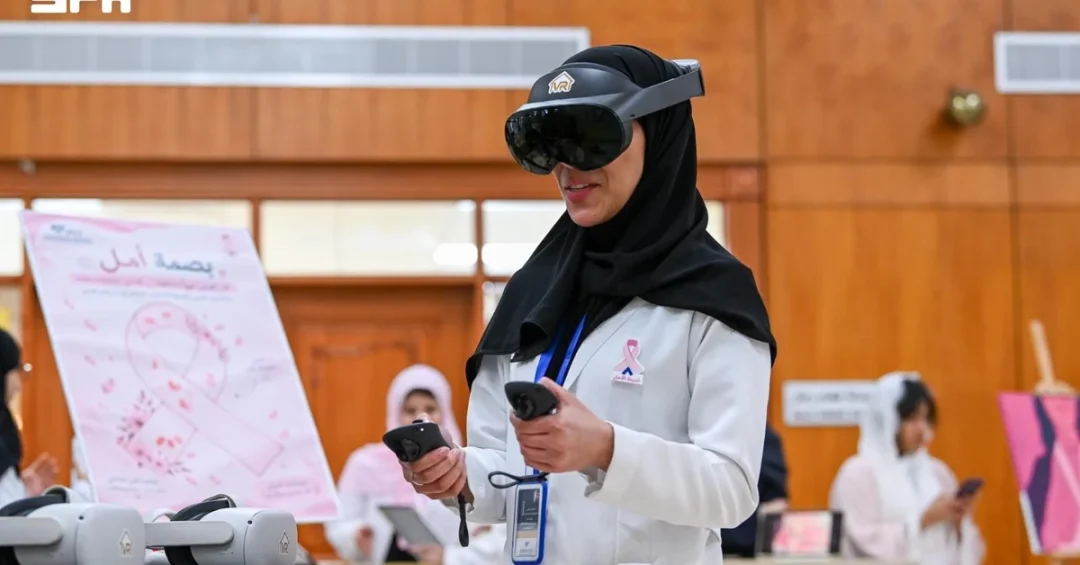
Imam Abdulrahman Bin Faisal University (IAU) has announced that its “Hope Ribbon 2026” app, a digital breast cancer awareness and early detection platform, has surpassed 5,000 female users, referring beneficiaries directly to healthcare facilities for essential screenings, according to the Saudi Press Agency (SPA). The milestone, confirmed on October 27, 2026, in Dammam, marks a significant step in the Kingdom’s use of technology to advance public health and reflects the university’s commitment to innovation in community service. The app, launched to promote breast cancer awareness and early detection, offers a comprehensive digital journey that begins with educational modules, moves through personalized risk assessment, and culminates in referrals to the nearest appropriate healthcare facility. How many lives might be saved when technology removes the barriers between awareness and action?
The initiative aligns with Saudi Arabia’s broader national efforts to enhance quality of life and preventive healthcare, a core pillar of Vision 2030. By leveraging virtual reality (VR) and augmented reality (AR) to simulate the mammography experience, the app addresses one of the most common obstacles to screening: anxiety. Dr. Adam Aldhawyan, Head of the Community Partnership Unit at IAU’s Academic Medical City, explained that the app reflects the university’s dedication to shaping the future through innovation. The growing user base demonstrates the importance of employing modern technologies to strengthen health awareness and facilitate access to early detection services across the Kingdom.
Context and Background
Breast cancer remains the most common cancer among women globally, and early detection is widely recognized as the most effective way to improve survival rates. In Saudi Arabia, health authorities have prioritized breast cancer awareness as part of a comprehensive strategy to reduce the burden of non-communicable diseases and improve public health outcomes. The “Hope Ribbon 2026” app emerges within this context, representing a convergence of technological innovation and preventive healthcare. Imam Abdulrahman Bin Faisal University, a leading academic institution in the Eastern Region, has a long history of community engagement and medical research, making it a natural incubator for such a digital health tool.
The app’s development reflects a broader trend in Saudi Arabia’s health sector, where digital solutions are increasingly used to extend the reach of medical services and empower individuals to take charge of their well-being. The Kingdom’s health transformation agenda, part of Vision 2030, emphasizes preventive care, patient-centered services, and the adoption of cutting-edge technologies. By integrating educational content, risk assessment, and direct referrals into a single platform, the app streamlines a process that can often be fragmented and intimidating for women. It also underscores the role of universities in translating research and innovation into tangible community benefits, a model that other institutions may follow.
Moreover, the initiative highlights the importance of public-private partnerships and cross-sector collaboration in achieving national health goals. While IAU leads the project, its success relies on cooperation with healthcare facilities across the Eastern Region and beyond, ensuring that women who use the app are connected to qualified professionals and accredited screening centers. This integrated approach not only improves access but also builds trust in the healthcare system. As Dr. Aldhawyan noted, the app offers tailored guidance for every woman based on her individual risk factors, ensuring that the referral process is both efficient and personalized.
Key Details of the Hope Ribbon 2026 App
The “Hope Ribbon 2026” app is designed as a comprehensive awareness journey. Upon downloading the app, users are guided through a series of educational modules that cover breast cancer risk factors, symptoms, and the importance of regular screenings. These modules are presented in an accessible and engaging format, using clear language and visual aids to ensure comprehension across diverse audiences. Following the educational phase, users complete a risk assessment questionnaire that evaluates personal and family medical history, lifestyle factors, and other relevant indicators. Based on the results, the app generates a personalized risk profile and recommends an appropriate course of action.
One of the app’s most innovative features is its use of virtual reality (VR) and augmented reality (AR) to simulate the mammography screening experience. This simulation is designed to reduce anxiety, which is a significant barrier that can discourage women from undergoing the procedure. By allowing users to virtually experience the process in a safe and controlled environment, the app demystifies the screening and helps women feel more prepared and confident. The app also includes motivational badges to encourage continued engagement and options for users to share their experiences with others, thereby extending its reach to a wider audience through peer-to-peer advocacy.
Accessibility is another cornerstone of the app’s design. It is available at any time and from any location, whether in cities across the Eastern Region or elsewhere in the Kingdom of Saudi Arabia. This flexibility is particularly important for women who may face logistical challenges in accessing healthcare facilities, such as those in remote areas or with busy schedules. Once a user completes the risk assessment, the app refers her to the nearest appropriate healthcare facility based on her needs and the factors identified through the medical assessment. This ensures that the transition from digital awareness to actual screening is as seamless as possible, closing the gap between knowledge and action.
International and Regional Impact
The success of the “Hope Ribbon 2026” app has implications beyond Saudi Arabia’s borders. As a nation increasingly recognized for its technological advancements and innovative public health initiatives, the Kingdom offers a model that other countries in the region and beyond can emulate. The app’s ability to reach over 5,000 women in a relatively short period demonstrates the scalability and effectiveness of digital health interventions, particularly in societies where cultural sensitivities or logistical barriers might otherwise hinder access to preventive care. By sharing its experience, Saudi Arabia contributes to the global fight against breast cancer and reinforces its commitment to international health cooperation.
Regionally, the app supports the broader goals of the Gulf Cooperation Council (GCC) in enhancing healthcare delivery and promoting healthy lifestyles. Neighboring countries facing similar challenges in breast cancer awareness and screening can look to the “Hope Ribbon 2026” model as a blueprint for leveraging technology to overcome common obstacles. The use of VR and AR, in particular, represents a forward-thinking approach that aligns with the digital transformation agendas of many nations. Furthermore, the app’s emphasis on personalized referrals and patient empowerment resonates with global best practices in cancer control, positioning Saudi Arabia as a leader in innovative health solutions.
From an international perspective, the initiative also highlights the role of academic institutions in driving social impact. Imam Abdulrahman Bin Faisal University’s leadership in developing and deploying the app showcases how universities can serve as catalysts for community health improvement. This aligns with global trends where higher education institutions are increasingly expected to contribute to societal challenges through research, innovation, and outreach. The app’s success may inspire similar projects in other countries, fostering a culture of health innovation and collaboration that transcends borders.
Economic and Strategic Significance
The economic implications of early detection are substantial. Treating advanced-stage breast cancer is significantly more costly than managing early-stage disease, both in terms of direct medical expenses and indirect costs such as lost productivity and caregiver burden. By facilitating early detection, the “Hope Ribbon 2026” app can help reduce the overall economic burden of cancer on the Saudi healthcare system and society at large. This aligns with Vision 2030’s goal of creating a sustainable, efficient healthcare system that delivers high-quality care while optimizing resource allocation. The app’s preventive approach also supports the broader objective of enhancing the quality of life for all citizens and residents.
Strategically, the app reinforces Saudi Arabia’s position as a technology-driven nation capable of addressing complex social challenges through innovation. It demonstrates the Kingdom’s ability to harness advanced technologies like VR and AR for the public good, a narrative that enhances its global image and attracts investment in the health tech sector. Moreover, the project contributes to the development of a skilled workforce in digital health, as it involves collaboration between medical professionals, software developers, and designers. This capacity-building aspect is crucial for the long-term sustainability of Saudi Arabia’s health transformation and its ambition to become a regional hub for medical innovation.
Additionally, the app’s success can stimulate further investment in digital health infrastructure and entrepreneurship. By proving the viability of such platforms, IAU and its partners may encourage other institutions and private companies to develop similar solutions, creating a vibrant ecosystem of health technology innovation. This, in turn, can lead to job creation, export opportunities for Saudi-made health tech, and enhanced international partnerships. The economic ripple effects of a healthier population are well-documented, including higher productivity, lower healthcare costs, and greater social stability, all of which are integral to Vision 2030’s economic diversification goals.
Vision 2030 Alignment
The “Hope Ribbon 2026” app is a tangible manifestation of Vision 2030’s commitment to improving the quality of life for Saudi citizens and residents. The Vision’s Health Sector Transformation Program aims to shift the focus from curative to preventive care, enhance access to health services, and promote healthy lifestyles. By empowering women with knowledge and facilitating early detection, the app directly contributes to these objectives. It also supports the National Transformation Program’s emphasis on digital transformation and innovation in public services. The app’s success underscores how technology can be a powerful enabler of social good, aligning with the Kingdom’s aspiration to build a vibrant society and a thriving economy.
Furthermore, the initiative reflects the Vision’s goal of fostering a culture of health and well-being, where individuals are active participants in their own care. The app’s educational modules, risk assessments, and motivational features encourage women to take proactive steps toward their health, a behavioral shift that is essential for long-term public health improvement. As Saudi Arabia continues to invest in its healthcare infrastructure and digital capabilities, projects like “Hope Ribbon 2026” will serve as exemplars of how innovation can drive progress toward a healthier, more prosperous future. The university’s leadership in this area also highlights the role of education and research in achieving Vision 2030’s ambitions, ensuring that the next generation is equipped to tackle the challenges of tomorrow.
In conclusion, the “Hope Ribbon 2026” app’s milestone of surpassing 5,000 female users is more than a numerical achievement; it represents a paradigm shift in how breast cancer awareness and early detection are approached in Saudi Arabia. By combining cutting-edge technology with a deep understanding of user needs, Imam Abdulrahman Bin Faisal University has created a tool that not only educates but also empowers women to take control of their health. As the app continues to grow and evolve, its impact will be felt across the Kingdom and beyond, contributing to the global fight against breast cancer and advancing the noble goals of Vision 2030. Could this be the blueprint for a healthier, more connected world?
20 Questions
Q1. What is the “Hope Ribbon 2026” app?
A1. The “Hope Ribbon 2026” app is a digital platform launched by Imam Abdulrahman Bin Faisal University to promote breast cancer awareness and early detection. It offers educational modules, risk assessments, and referrals to healthcare facilities for screenings.
Q2. How many female users has the app attracted?
A2. According to the Saudi Press Agency, the app has attracted more than 5,000 female users, referring beneficiaries to healthcare facilities for necessary screenings. This milestone demonstrates its growing reach and effectiveness.
Q3. Who developed the “Hope Ribbon 2026” app?
A3. The app was developed by Imam Abdulrahman Bin Faisal University (IAU) in Dammam. It reflects the university’s efforts to leverage technological innovation for health awareness and community service.
Q4. What is the main goal of the app?
A4. The main goal is to promote breast cancer awareness and early detection, facilitate access to screening services, and foster a culture of health and quality of life in Saudi society.
Q5. How does the app use virtual reality and augmented reality?
A5. The app uses VR and AR to simulate the mammography screening experience, helping reduce screening-related anxiety. This innovative feature prepares women for the procedure and encourages them to undergo screenings.
Q6. What is the process for users on the app?
A6. Users begin with educational modules, then complete a risk assessment. Based on the results, the app refers them to the nearest appropriate healthcare facility for screenings, ensuring tailored guidance.
Q7. Who is Dr. Adam Aldhawyan?
A7. Dr. Adam Aldhawyan is the Head of the Community Partnership Unit at IAU’s Academic Medical City. He explained the app’s features and its role in promoting health awareness and early detection.
Q8. Can users access the app from anywhere in Saudi Arabia?
A8. Yes, the app is accessible at any time and from any location, whether in cities across the Eastern Region or elsewhere in the Kingdom. This ensures broad reach and convenience for all women.
Q9. What are motivational badges in the app?
A9. Motivational badges are features that encourage continued engagement and completion of the awareness journey. They gamify the experience, making it more interactive and rewarding for users.
Q10. How does the app help reduce anxiety about mammograms?
A10. By using VR and AR to simulate the mammography experience, the app demystifies the procedure. This familiarizes women with what to expect, reducing fear and anxiety that might otherwise deter them.
Q11. What happens after a user completes the risk assessment?
A11. After the risk assessment, the app generates a personalized risk profile and refers the user to the nearest appropriate healthcare facility based on her needs and identified factors.
Q12. How does the app contribute to Saudi Arabia’s Vision 2030?
A12. The app supports Vision 2030’s health transformation goals by promoting preventive care, enhancing access to health services, and leveraging digital innovation to improve quality of life.
Q13. Is the app available in multiple languages?
A13. The source material does not specify languages, but the app is designed for users across Saudi Arabia. It likely supports Arabic and possibly English to reach a diverse audience.
Q14. What role does Imam Abdulrahman Bin Faisal University play?
A14. IAU developed and launched the app as part of its community service and innovation efforts. The university’s Academic Medical City provides the medical expertise and infrastructure for the initiative.
Q15. How can women share their experiences on the app?
A15. The app includes options for users to share their experiences with others, extending its reach through peer-to-peer advocacy. This helps create a supportive community and encourages more women to participate.
Q16. What are the educational modules in the app about?
A16. The educational modules cover breast cancer risk factors, symptoms, and the importance of regular screenings. They are designed to be accessible and engaging for all users.
Q17. Does the app provide referrals to specific hospitals?
A17. Yes, the app refers users to the nearest appropriate healthcare facility based on their needs and risk assessment results. This ensures they receive timely and suitable care.
Q18. How does the app support the Eastern Region of Saudi Arabia?
A18. The app is accessible in cities across the Eastern Region and beyond. It connects women in these areas to local healthcare facilities, improving access to screening services.
Q19. What impact has the app had so far?
A19. The app has surpassed 5,000 female users and facilitated referrals for screenings. It demonstrates the effectiveness of digital health tools in raising awareness and driving preventive action.
Q20. What are the future plans for the app?
A20. While specific future plans are not detailed, the app’s success suggests it will continue to expand its reach and features. IAU aims to further its impact on breast cancer awareness and early detection in Saudi Arabia.
Reader Feedback
We value your thoughts. Please share your feedback on this article.
Your feedback helps us improve our coverage.