


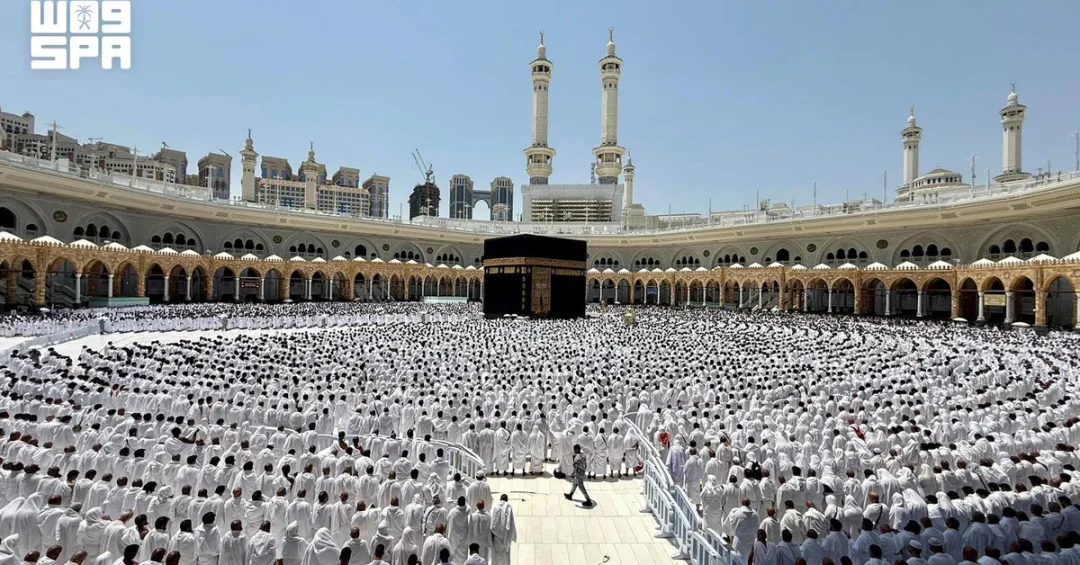
Makkah stands as a living record of the region’s transformations, with audiovisual materials documenting daily life, the sacred journeys of Hajj and Umrah, and its cultural landmarks now recognized as national and human heritage, the Saudi Press Agency (SPA) reported on the occasion of the World Day for Audiovisual Heritage. Observed each year on October 27, the international day draws attention to the value of sound recordings, films, moving images, and documentary materials as authentic sources of historical knowledge. In Makkah, these archives carry a weight that extends far beyond the ordinary, capturing the development of the Grand Mosque, the steady expansion of the holy city, and the evolution of social customs across generations.
Why does a single photograph or a fragment of film matter so much in a city like Makkah? The answer lies in the city’s singular role at the heart of the Islamic world, where the everyday and the sacred are woven together. The World Day for Audiovisual Heritage provides an occasion for the Kingdom to reflect on how these records preserve not only moments in time but also the collective memory of a place that millions of Muslims hold dear. According to information released through official Saudi channels, the occasion holds particular significance in Makkah because of the city’s distinctive religious, historical, and social heritage, which has been linked for centuries to the journeys of pilgrims from across the Islamic world and to the profound urban and social transformations the city has witnessed.
Context and Background
What makes Makkah’s audiovisual record so different from archives elsewhere? The city has long served as a meeting point for pilgrims from every corner of the Islamic world, and the materials that document those journeys reflect an extraordinary diversity of cultures, languages, and traditions converging on a single sacred destination. Photographs and documentaries featuring the Grand Mosque, the holy sites, and Hajj journeys stand out as visual records of the development of services provided to pilgrims, the successive stages of expansion and architectural growth, and the changing patterns of daily life in Makkah. These images form a continuous thread connecting the city’s past to its present.
The World Day for Audiovisual Heritage, established to safeguard documentary heritage worldwide, highlights the importance of sound recordings, films, moving images, and documentary materials as authentic sources of historical knowledge. In Makkah, that principle takes on added resonance. The archives trace the careful stewardship of the holy sites, the evolution of the infrastructure that serves worshippers, and the rhythms of community life that have shaped the city over successive decades. Each reel of film and each photograph is more than a relic; it is evidence of continuity, of a city that has adapted and grown while remaining anchored to its spiritual purpose.
How does a society decide which moments are worth keeping? In Makkah, the answer has increasingly been shaped by a forward-looking approach to preservation. The rapid advancement of digital preservation and electronic archiving technologies has placed greater importance on caring for old audiovisual materials through systematic collection, classification, and cataloging. This shift reflects a broader understanding that heritage is not merely something to be stored away but something to be actively managed, protected, and made accessible for future generations, researchers, and the millions who wish to understand the city’s story.
Key Details
What exactly do these archives contain, and why are they described as a national and human heritage? The collections described through official Saudi channels encompass photographs and documentaries of the Grand Mosque and the holy sites, recordings of Hajj and Umrah journeys, and materials capturing cultural landmarks and social customs. Together they document the expansion and architectural growth of the holy sites, the changing lifestyles of Makkah’s residents, and the steady refinement of services provided to pilgrims. These records serve as visual testimony to the Kingdom’s commitment to caring for the Two Holy Mosques and those who visit them.
The occasion also underscores a principle central to modern archival practice: the importance of moving beyond simply preserving historical materials to managing, protecting, and making them accessible in a sustainable manner. Preservation alone is not enough if the materials cannot be found, understood, or used. Classification and cataloging transform scattered records into a coherent resource, allowing historians, researchers, and institutions to draw on authentic primary sources. In a city with the global significance of Makkah, that accessibility carries international value, offering scholars and pilgrims alike a window into the city’s development.
Why does sustainability matter in the context of heritage? Digital formats, while more durable in some respects, require ongoing care, format migration, and secure storage to remain usable over time. The emphasis on sustainable management reflects a recognition that heritage stewardship is a long-term responsibility, one that requires institutional commitment and technical expertise. For Makkah, this means ensuring that the record of the city’s growth and its spiritual centrality remains intact and available, not only for this generation but for those to come.
International and Regional Impact
How does the preservation of Makkah’s audiovisual heritage reach beyond the Kingdom’s borders? Because Makkah belongs to the entire Islamic world, its archives are a shared inheritance. Pilgrims from across Asia, Africa, Europe, and the Americas have traveled to the city for centuries, and the materials documenting those journeys reflect the global community that gathers there. By collecting, cataloging, and safeguarding these records, the Kingdom contributes to a broader international effort to preserve documentary heritage, offering researchers and institutions worldwide access to authentic sources on the history of the holy city and the pilgrimage.
The World Day for Audiovisual Heritage is observed internationally, and Makkah’s participation situates the city within a global conversation about memory and preservation. The occasion highlights the value of sound recordings, films, and moving images as authentic sources of historical knowledge, a principle that resonates across cultures and regions. For the region, Makkah’s archives offer a model of how heritage institutions can combine respect for tradition with the adoption of modern technology, demonstrating that preservation and progress are complementary rather than opposed. This balance is central to the Kingdom’s approach to its cultural and religious heritage.
Economic and Strategic Significance
What strategic value do these archives hold for the Kingdom? Beyond their cultural and religious importance, audiovisual records support a range of strategic priorities. They provide evidence of the development of services provided to pilgrims, helping institutions plan future improvements based on an accurate understanding of past experience. They also enrich the documentary record available to researchers and historians, strengthening the Kingdom’s position as a custodian of Islamic heritage. In an era when information is increasingly digital, authentic primary sources become more valuable, not less, and Makkah’s archives are a resource of enduring significance.
The emphasis on collection, classification, and cataloging also aligns with the growth of the Kingdom’s cultural and knowledge sectors. Well-managed archives support education, research, and cultural exchange, and they can serve as a foundation for exhibitions, publications, and documentary productions that share Makkah’s story with a global audience. This contributes to the broader effort to develop a vibrant cultural economy while preserving the integrity of the historical record. For a city that welcomes millions of visitors each year, the ability to present its heritage in an accurate and accessible manner is both a cultural asset and a strategic one.
Vision 2030 Alignment
How does the stewardship of Makkah’s audiovisual heritage connect to Saudi Arabia’s long-term vision? The Kingdom’s Vision 2030 places a strong emphasis on preserving cultural and religious heritage while embracing modernization and digital transformation. The care given to old audiovisual materials through collection, classification, and cataloging reflects these twin priorities, combining respect for the past with the adoption of advanced technology. By making these records accessible in a sustainable manner, the Kingdom ensures that future generations can learn from the city’s history even as it continues to develop and grow.
The World Day for Audiovisual Heritage thus serves as both a moment of reflection and a signal of direction. Makkah remains a living record of the region’s transformations, and the materials that document its life, its sacred journeys, and its cultural landmarks are a national and human heritage. Through responsible preservation and forward-looking management, the Kingdom honors that heritage while contributing to the global effort to safeguard documentary memory. For a city at the heart of the Islamic world, the commitment to protecting its audiovisual record is an expression of stewardship, generosity, and vision, ensuring that the memory of place and people endures for generations to come.
20 Questions
Q1. What does the World Day for Audiovisual Heritage highlight?
A1. It highlights the importance of sound recordings, films, moving images, and documentary materials as authentic sources of historical knowledge, drawing attention to the value of preserving audiovisual records worldwide.
Q2. When is the World Day for Audiovisual Heritage observed?
A2. It is observed each year on October 27. The occasion draws international attention to the need to safeguard documentary heritage for future generations.
Q3. Why does the occasion hold particular significance in Makkah?
A3. Makkah has a distinctive religious, historical, and social heritage linked for centuries to pilgrim journeys from across the Islamic world, as well as to major urban and social transformations.
Q4. What kinds of materials do Makkah’s archives include?
A4. They include photographs and documentaries of the Grand Mosque, the holy sites, and Hajj journeys, capturing the development of services to pilgrims, architectural growth, and changes in daily life.
Q5. What do these records document about the Grand Mosque?
A5. They document the stages of expansion and architectural growth of the Grand Mosque, as well as the steady refinement of services provided to the millions of pilgrims who visit each year.
Q6. How do audiovisual records capture social customs in Makkah?
A6. Films and photographs preserve changes in lifestyles and community traditions over successive decades, offering authentic visual evidence of how daily life in the city has evolved.
Q7. What role does digital preservation play in this effort?
A7. Rapid advances in digital preservation and electronic archiving technologies have made collection, classification, and cataloging of old audiovisual materials more effective and important.
Q8. Why is accessibility emphasized alongside preservation?
A8. The occasion underscores moving beyond simply preserving materials to managing, protecting, and making them accessible in a sustainable manner so they can be studied and used.
Q9. Why are old audiovisual materials described as national heritage?
A9. They form a living record of the region’s transformations and the city’s development, constituting a national and human heritage of enduring value to the Kingdom and the world.
Q10. Why are these records considered human heritage as well?
A10. Because Makkah draws pilgrims from across the Islamic world, its archives reflect a shared global inheritance and contribute to the broader preservation of documentary heritage.
Q11. What does the record of Hajj and Umrah journeys show?
A11. It shows the development of services provided to pilgrims, the growth of infrastructure around the holy sites, and the diversity of cultures that converge on the city.
Q12. How does cataloging help researchers?
A12. Classification and cataloging transform scattered materials into a coherent, accessible resource, allowing historians and institutions to draw on authentic primary sources with confidence.
Q13. Why is sustainable management of archives important?
A13. Digital materials require ongoing care, secure storage, and format migration to remain usable over time, making long-term stewardship a continuing institutional responsibility.
Q14. How does preservation support planning for pilgrim services?
A14. Accurate records of past development help institutions understand what has worked and plan future improvements, ensuring continued enhancement of services for worshippers.
Q15. What is the international dimension of Makkah’s archives?
A15. They offer researchers worldwide access to authentic sources on the history of the holy city and the pilgrimage, contributing to a global conversation about memory and preservation.
Q16. How do these archives reflect the Kingdom’s commitment to the holy sites?
A16. They visually document the careful stewardship and continuous care given to the Two Holy Mosques and the millions of pilgrims who visit them each year.
Q17. How does this work support cultural and educational sectors?
A17. Well-managed archives can serve as a foundation for exhibitions, publications, documentary productions, and research, enriching the Kingdom’s cultural and knowledge sectors.
Q18. How does preservation align with modern technology?
A18. The adoption of digital archiving demonstrates that respect for tradition and the embrace of advanced technology can work together to safeguard heritage effectively.
Q19. Why does this matter for future generations?
A19. Accessible, well-preserved records ensure that future generations can learn from the city’s history even as Makkah continues to develop and grow.
Q20. How does this effort connect to Saudi Arabia’s Vision 2030?
A20. Vision 2030 emphasizes preserving cultural and religious heritage while embracing modernization and digital transformation, and the care given to audiovisual materials reflects these twin priorities.
Reader Feedback
We value your thoughts. Please share your feedback on this article.
Your feedback helps us improve our coverage.