


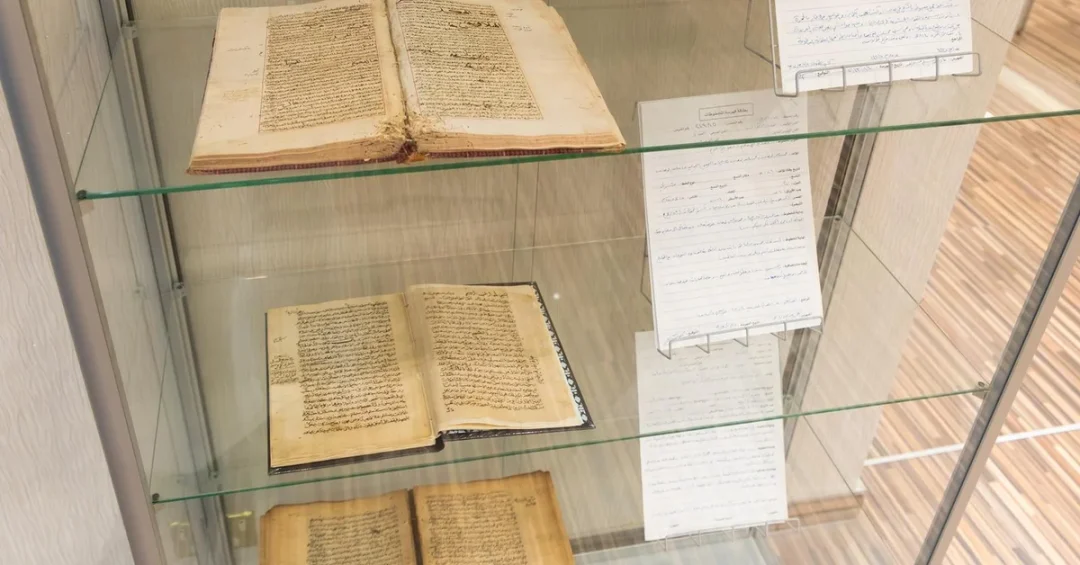
The Central Library at the Islamic University of Madinah has completed the digitization of its entire manuscript collection, comprising 34,615 microfilmed and 916 original paper manuscripts, including texts dating back to the seventh century AH, according to an announcement carried by the Saudi Press Agency. The milestone positions one of the Kingdom’s most storied academic institutions at the forefront of a national effort to preserve Islamic intellectual heritage while widening access to primary sources for scholars around the world. Have you ever considered what it means for a handwritten text composed more than a millennium ago to be readable today on a screen in another hemisphere?
The university confirmed that the collection now serves as a comprehensive scholarly resource, connecting students and researchers with original handwritten texts that underpin critical editions, academic theses and historical inquiry. By converting fragile paper and microfilm holdings into high-fidelity digital records, the project protects irreplaceable material from the wear of physical handling while making it consultable at any distance. The effort reflects a broader commitment by Saudi academic institutions to combine reverence for tradition with the tools of the digital age, a combination that has become a hallmark of the Kingdom’s modernization agenda.
Context and Background
Why should a digitization project at a university library matter to anyone beyond the campus gates? The answer lies in the unique character of the Islamic University of Madinah, an institution that has, for decades, drawn students and researchers from across the Islamic world and beyond. Its Central Library has long functioned as a repository of primary sources in fields including Quranic studies, Hadith, jurisprudence, Arabic language and Islamic history. The manuscripts it safeguards are not merely old books; they are working documents that reveal how scholars read, annotated, corrected and transmitted knowledge across generations, and they carry immense value for anyone reconstructing the intellectual history of the region.
The collection spans an extraordinary chronological range, with holdings reaching back to the seventh century AH, a period that places these texts among the earliest surviving examples of Islamic manuscript culture. Such materials are inherently vulnerable: paper ages, ink fades, bindings deteriorate, and each physical consultation carries a small but cumulative cost. Microfilming was once the standard preservation answer, and the university accumulated 34,615 microfilmed manuscripts through that route. The new digitization phase goes further, capturing the 916 original paper manuscripts alongside the microfilm archive so that the entire corpus is available in a single, coherent digital environment. Is it not remarkable that a single library can hold, in digital form, the accumulated handwritten labor of centuries of scholarship?
The project also arrives at a moment when cultural institutions worldwide are racing to digitize their holdings before time and circumstance take their toll. Saudi Arabia has pursued this goal with notable energy, treating heritage preservation as a public trust and a component of national development rather than a purely academic concern. The university’s announcement situates the library within that national conversation, framing digitization as both a conservation measure and a service improvement, one that enhances how users discover, retrieve and study the materials entrusted to its care.
Key Details of the Collection
What exactly does the digitized archive contain, and who stands to benefit from it? According to the university, the collection comprises 34,615 microfilmed manuscripts and 916 original paper manuscripts, all of which have now been digitized. The dual nature of the holdings is significant: the microfilm archive preserves copies of works whose originals may be held elsewhere or may no longer survive in physical form, while the original paper manuscripts represent primary artifacts in their own right. Together they form a layered resource that supports both broad comparative research and close study of particular codices, their calligraphy, marginalia and physical construction.
The university emphasized that the collection enables students and researchers to consult original handwritten texts for research and critical editions. This is a technical but important point. Producing a reliable edition of a classical text requires comparing multiple manuscript witnesses, noting variant readings and understanding the scribal practices of different eras. Access to high-quality digital surrogates dramatically reduces the need for costly and disruptive travel to the physical library, opening the field to younger scholars and to institutions with limited manuscript holdings of their own. Does that not represent a meaningful democratization of access to the Islamic intellectual tradition?
Beyond the texts themselves, the university noted that the collection offers insights into the methods used by scholars in writing and transcribing manuscripts over the centuries. Paleography, the study of historical handwriting, and codicology, the study of books as physical objects, both depend on exactly this kind of material. The digitized corpus thus supports research not only into what past scholars wrote but into how they worked: how they laid out pages, how they marked corrections, how they signaled ownership and how they passed texts from hand to hand. For a historian, such evidence is often as revealing as the words on the page.
Digital Transformation and User Experience
How does a library measure success in the digital age? The university framed the project as part of its broader efforts to advance digital transformation and improve the user experience of the Central Library’s services. That language reflects a deliberate strategic choice: digitization is not presented as an end in itself but as a means of serving readers more effectively. A digitized manuscript that cannot be found, searched or cited is of limited use, so the value of the project depends equally on the systems that surround the archive, from cataloguing and metadata to retrieval tools and citation standards that allow researchers to reference digital objects with confidence.
For students at the university, the immediate benefit is convenient access to primary sources that might otherwise be restricted to supervised reading rooms. For researchers elsewhere, the benefit is the ability to plan projects around a collection they can survey remotely before deciding whether a physical visit is warranted. For the institution itself, the digital archive becomes a form of soft diplomacy, projecting Saudi scholarly heritage to a global audience and inviting collaboration with universities and research centers abroad. Can a library become a bridge between civilizations simply by making its shelves visible to the world? In this case, the answer appears to be yes.
The emphasis on user experience also signals a mature understanding of what modern research requires. Scholars increasingly expect full-text search, high-resolution imagery, stable identifiers and interoperable formats. By describing the project in terms of service quality, the university indicates that the digitized collection is intended to function as a living research environment rather than a static repository. That orientation aligns with the wider digital ambitions of Saudi higher education, where institutions are investing in infrastructure that supports remote learning, open scholarship and international academic exchange.
International and Regional Impact
Why does the Islamic University of Madinah’s announcement resonate beyond the Kingdom’s borders? Because manuscript heritage is, by its nature, a shared inheritance. The texts held in Madinah were written by scholars who traveled across the Islamic world, and their contents speak to debates, discoveries and devotional practices that shaped societies from Andalusia to Southeast Asia. When such materials become digitally accessible, scholars in Indonesia, Nigeria, Turkey, Morocco and Europe can engage with them directly, producing research that is richer and more grounded than would otherwise be possible. The university’s collection thus becomes a node in a global network of Islamic studies rather than an isolated local treasure.
Regionally, the project reinforces Madinah’s standing as a center of learning and as a custodian of heritage. The city’s religious significance is universally recognized, but its scholarly infrastructure is equally consequential, and the digital library extends that reputation into the online sphere. For researchers across the Middle East, the availability of a major digitized corpus in Madinah offers a practical alternative to dispersed and often difficult-to-access collections, encouraging comparative work that crosses national archives. Could this project encourage similar initiatives at other institutions across the region, creating a connected digital commons of Islamic manuscripts? The precedent it sets is certainly promising.
Economic and Strategic Significance
What economic value can be attributed to preserving old paper? The answer lies in knowledge economies, where cultural assets generate research, tourism and international engagement. A well-documented digital archive attracts visiting scholars, supports academic partnerships and enhances the global profile of the institution and the country that hosts it. Heritage preservation also underpins the cultural dimensions of national development, contributing to the broader effort to diversify economic activity and to position the Kingdom as a destination for scholarship, conferences and cultural exchange. The manuscript project is a modest but meaningful contributor to that larger agenda.
Strategically, the digitization of the collection demonstrates a model of modernization that does not sever ties with tradition. Saudi Arabia’s development plans consistently pair technological ambition with cultural stewardship, and the library project exemplifies that pairing in concrete terms. By investing in the preservation of primary sources, the university signals that progress and heritage are complementary rather than competing priorities. That message carries weight internationally, where observers increasingly look for evidence that rapid transformation can coexist with respect for the past. Does the careful digitization of a manuscript not say something important about how a society understands its own continuity?
The project also has practical institutional value. Digital records reduce the physical handling of fragile originals, lowering conservation costs over time while ensuring that the content remains available even if a physical item is damaged or lost. For a collection of this scale, the long-term savings in preservation and access are substantial, and they free resources for the acquisition, cataloguing and study of further materials. In that sense, digitization is not merely a one-time conversion but an investment in the sustainability of the library’s mission.
Vision 2030 Alignment
How does the Islamic University of Madinah’s achievement connect to Saudi Arabia’s long-term national vision? Vision 2030 places education, knowledge and cultural heritage at the center of the Kingdom’s transformation, emphasizing the development of human capital alongside the preservation of national identity. The digitization of over 34,000 manuscripts advances both goals at once, equipping students and researchers with the tools of modern scholarship while safeguarding the textual heritage that informs the Kingdom’s cultural confidence. It is a concrete expression of the idea that a knowledge-based society must be built on a foundation of accessible, well-preserved learning.
The project also reflects the vision’s emphasis on digital transformation as a driver of institutional quality and public service. By improving the user experience of the Central Library, the university directly addresses the expectation that Saudi institutions should deliver world-class services in the digital era. Looking ahead, the foundation now in place could support further advances: expanded cataloguing, collaborative research platforms, educational outreach and partnerships with international libraries. As more Saudi institutions follow this path, the Kingdom’s heritage will become increasingly visible, searchable and usable by scholars worldwide. Does that not place the Islamic University of Madinah among the quiet builders of the Kingdom’s knowledge economy? The answer, grounded in the scale and care of this project, is a clear affirmative.
20 Questions
Q1. How many manuscripts has the Islamic University of Madinah digitized?
A1. The Central Library has digitized 34,615 microfilmed manuscripts and 916 original paper manuscripts, according to the Saudi Press Agency. The full collection is now available in digital form.
Q2. How old are the oldest manuscripts in the collection?
A2. The collection includes manuscripts dating back to the seventh century AH, according to the university. These early texts are among the most valuable holdings in the archive.
Q3. Which institution made the announcement?
A3. The announcement was carried by the Saudi Press Agency, reporting on the completion of the digitization project by the Central Library at the Islamic University of Madinah.
Q4. What is the purpose of the digitization project?
A4. The project aims to preserve manuscripts from physical wear while connecting students and researchers with primary sources of Islamic heritage. It also supports the library’s broader digital transformation efforts.
Q5. How does the collection serve researchers?
A5. The collection enables researchers to consult original handwritten texts for research and critical editions. It also offers insights into the writing and transcription methods used by scholars over the centuries.
Q6. What is the difference between the microfilmed and paper manuscripts?
A6. The 34,615 microfilmed manuscripts are reproductions, while the 916 paper manuscripts are original physical texts. Both categories have been digitized for access.
Q7. Why is digitization important for protecting manuscripts?
A7. Digitization reduces the need for physical handling of fragile originals, helping to preserve them for future generations. It also ensures the content remains available even if physical items deteriorate.
Q8. Who benefits most from the digital collection?
A8. Students at the university benefit from convenient access, and researchers worldwide can study the texts remotely. Scholars working on critical editions and Islamic history gain considerable value.
Q9. What fields of study does the collection support?
A9. The collection supports research in Quranic studies, Hadith, jurisprudence, Arabic language, Islamic history, paleography and codicology. It also aids the production of critical editions of classical texts.
Q10. How does the project improve the library’s user experience?
A10. By making manuscripts digitally accessible, the library removes barriers of distance and physical handling. This improves discovery, retrieval and citation for students and researchers alike.
Q11. What does the university say about the collection’s scholarly value?
A11. The university describes the collection as a scholarly resource connecting students and researchers with primary sources. It emphasizes the collection’s role in supporting research and critical editions.
Q12. What can researchers learn beyond the texts themselves?
A12. Researchers can study how scholars wrote, corrected and transmitted manuscripts over time. This includes calligraphy, marginalia and material features that reveal historical practices.
Q13. Why is access to original handwritten texts significant?
A13. Original texts allow scholars to compare witnesses and note variant readings. This is essential for producing reliable critical editions and for understanding intellectual history.
Q14. How does the project reflect Saudi digital transformation?
A14. The university framed the project as part of broader efforts to advance digital transformation. It aligns with national priorities to modernize public services and education.
Q15. Does the project support international academic collaboration?
A15. Yes. Making the collection digitally available allows scholars abroad to engage with Saudi heritage. It can encourage partnerships with universities and research institutions worldwide.
Q16. How does the collection relate to Madinah’s scholarly reputation?
A16. The city is known for both its religious significance and its academic institutions. The digital library reinforces its standing as a center of Islamic learning and heritage.
Q17. What might future developments build upon this project?
A17. Future work could expand cataloguing, enhance research platforms and support further educational outreach. Partnerships with international libraries could also be developed.
Q18. Why is heritage preservation relevant to economic development?
A18. Well-preserved cultural assets attract scholars and conferences, supporting knowledge economies. Heritage also contributes to tourism and international engagement.
Q19. How does the project align with Vision 2030?
A19. Vision 2030 emphasizes education, knowledge and cultural heritage alongside digital transformation. The digitization project advances all these priorities through concrete action.
Q20. What is the overall significance of the announcement?
A20. The digitization of over 34,000 manuscripts represents a major step in preserving Islamic heritage. It also highlights Saudi Arabia’s commitment to modernizing access to culture.
Reader Feedback
We value your thoughts. Please share your feedback on this article.
Your feedback helps us improve our coverage.