


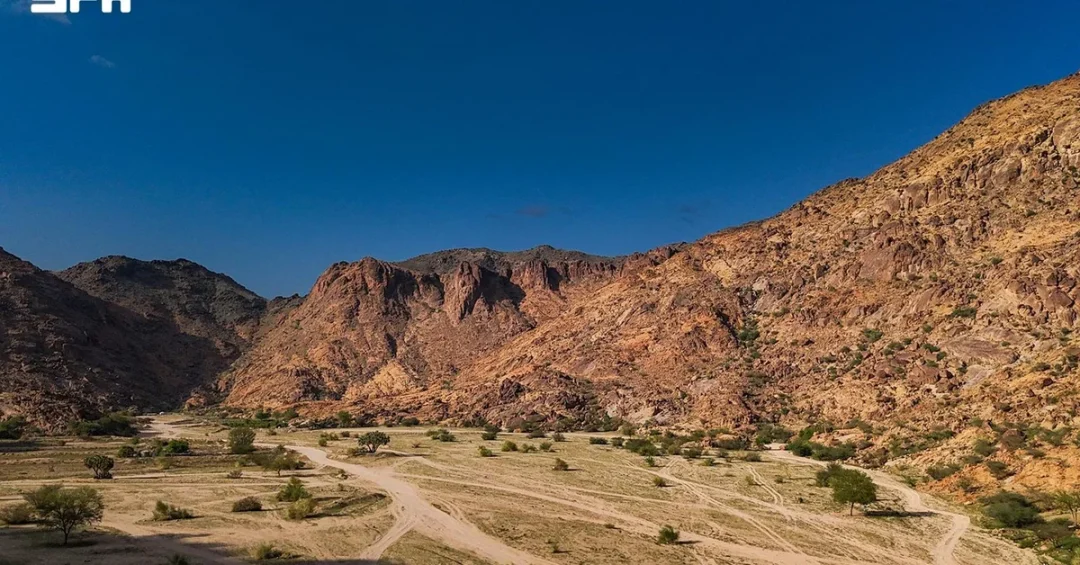
The Tihama areas southeast of the Makkah Region encompass a remarkable natural and historical geography where valleys, mountains, plains, and plateaus intertwine, according to information released by the Saudi Press Agency (SPA). Palm trees and ancient agricultural sites across this terrain reflect generations of continuous human settlement, offering a window into the deep relationship between communities and their environment in the western Arabian Peninsula. The region’s distinctive landscape, shaped over millennia, continues to draw attention from researchers, heritage specialists, and visitors seeking to understand the Kingdom’s layered past.
Have you ever wondered how entire civilizations took root in landscapes that today appear remote and rugged? The Tihama districts southeast of Makkah tell precisely such a story, one that Saudi authorities are steadily bringing into clearer focus through official documentation and heritage recognition. These areas stand as living testimony to the ingenuity of communities who mastered water management, agriculture, and settlement in demanding conditions long before modern infrastructure existed. Their story forms part of the broader narrative of the Kingdom’s cultural continuity and the Vision 2030 commitment to preserving national heritage.
Context and Background
What makes the Tihama fringe of the Makkah Region so significant in the wider story of Arabian civilization? The Tihama coastal plain, which stretches along the Red Sea, transitions inland into dramatic mountain formations and elevated plateaus, creating a corridor of ecological and human diversity. The southeastern districts of the Makkah Region sit at this junction, where the lowland heat gives way to cooler highlands and where seasonal water flows have historically sustained both agriculture and settlement. This geography has shaped patterns of movement, trade, and community life for centuries.
The Saudi Press Agency’s documentation highlights that the region’s valleys, mountains, plains, and plateaus intertwine in ways that support a rich mosaic of natural and historical features. Palm cultivation, a hallmark of Arabian oasis life, remains visible across the landscape, alongside ancient agricultural installations that reveal how residents historically used water resources and cultivated the land. These traces are not merely relics; they are evidence of a sophisticated understanding of terrain, hydrology, and sustainable land use that resonates with contemporary conservation priorities.
Recognizing this heritage is part of a broader national effort. Saudi Arabia has invested considerable attention in documenting and protecting archaeological and historical sites across all regions, viewing them as essential components of national identity and as assets for cultural tourism. The Tihama valleys and mountains of the Makkah Region fit squarely within this framework, representing both a natural endowment and a cultural inheritance that merit careful stewardship for future generations.
Key Natural Landmarks
How do specific valleys and mountains bring this heritage to life for the modern observer? Prominent natural landmarks documented in the region include Wadi Al-Kharrar, Wadi Rahjan, Wadi Numan, and the Dhara’a Mountains. Each of these sites offers visitors an opportunity to explore the region’s nature, mountain formations, and valley pathways, presenting a landscape that is at once scenic and historically layered. Together they form a network of destinations that illuminate the interplay between geology and human activity.
Wadi Al-Kharrar stands out as a particularly notable natural site. It features traces of ancient agricultural activity, including traditional wells and structural remnants that reflect how residents historically used water resources and cultivated the land. These wells and structures are more than physical artifacts; they encode knowledge about groundwater access, irrigation techniques, and communal organization that sustained life in an arid environment. For heritage researchers, such sites provide tangible evidence of the adaptive strategies that made settlement possible.
The Dhara’a Mountains add a dramatic vertical dimension to the region’s profile, their formations framing the valleys below and contributing to the area’s distinctive microclimates. Wadi Rahjan and Wadi Numan similarly represent pathways where water, vegetation, and human movement have historically converged. For visitors, these landmarks offer routes into landscapes that remain largely untouched, while for specialists they represent archives of environmental and cultural history waiting to be read more fully.
Ancient Agriculture and Water Management
What can traditional wells and cultivation remnants teach us about sustainability today? The agricultural traces found in Wadi Al-Kharrar and across the Tihama valleys demonstrate a long history of careful water stewardship. Residents developed methods to capture, store, and distribute water in a landscape where rainfall is limited and seasonal. Traditional wells, terraced plots, and structural remnants together form a system of land and water management refined over generations through observation and experience.
These practices carry contemporary relevance. As the Kingdom pursues ambitious sustainability goals under Vision 2030, including water conservation and responsible resource management, the lessons embedded in historical agricultural sites offer valuable perspective. Modern engineers and planners increasingly recognize that traditional knowledge, developed through centuries of adaptation, can inform resilient design. The Tihama valleys thus serve as both heritage sites and repositories of practical wisdom.
The presence of palm trees across the region further underscores this connection. Date palms have long been central to Arabian agriculture, providing food, shade, and materials while stabilizing soil and microclimates. Their continued presence in the Tihama landscape links past and present cultivation traditions, illustrating how communities have maintained productive relationships with the land across many generations.
International and Regional Impact
Why should an international audience pay attention to these valleys and mountains in western Saudi Arabia? The Tihama region’s heritage sites contribute to a growing global appreciation of Arabian cultural landscapes, which are increasingly recognized as important chapters in human history. As Saudi Arabia opens further to international visitors and researchers, sites like Wadi Al-Kharrar and the Dhara’a Mountains become part of a wider conversation about heritage preservation, sustainable tourism, and cross-cultural understanding. They offer international travelers authentic encounters with landscapes that shaped early Arabian life.
Regionally, the documentation of these sites strengthens the Kingdom’s position as a custodian of Islamic and pre-Islamic heritage. The Makkah Region, home to the holiest cities of Islam, holds a unique place in the hearts of Muslims worldwide. The surrounding natural and historical geography enriches the pilgrim’s and visitor’s understanding of the broader environment that has hosted these sacred traditions for centuries. By highlighting the Tihama valleys and mountains, Saudi Arabia invites the world to see the Makkah Region in its full natural and cultural complexity.
Economic and Strategic Significance
Could heritage-driven tourism become a meaningful economic contributor for these districts? Saudi Arabia’s strategic diversification agenda places tourism and cultural heritage near the center of its economic ambitions. The Tihama valleys and mountains represent potential destinations for nature tourism, heritage exploration, and educational travel, complementing the Kingdom’s larger tourism investments. Developing these assets responsibly can generate local economic activity, support community livelihoods, and attract visitors interested in authentic experiences beyond major urban centers.
Strategically, documenting and preserving such sites reinforces national identity and social cohesion. Heritage is a shared inheritance that connects citizens to their land and history, fostering pride and continuity. For the Makkah Region specifically, integrating natural and historical attractions into the broader visitor experience supports efforts to enrich journeys to the area and to extend stays, thereby distributing economic benefits more widely across the region’s communities.
A Landscape for Future Generations
What will it take to ensure these valleys and mountains remain vibrant for generations to come? The Saudi Press Agency’s documentation represents an important step in raising awareness of the region’s natural and historical wealth. Awareness is the foundation of protection, and the careful identification of landmarks such as Wadi Al-Kharrar, Wadi Rahjan, Wadi Numan, and the Dhara’a Mountains creates a basis for continued study, conservation, and responsible visitation. The intertwined valleys, plains, and plateaus deserve coordinated stewardship that balances preservation with access.
Looking ahead, the region’s heritage can serve as a bridge between tradition and modernity. As the Kingdom advances its modernization agenda, including smart technologies, sustainable development, and world-class tourism infrastructure, sites like these remind planners and visitors alike of the enduring values of adaptability, stewardship, and community that have defined Arabian life for centuries. The Tihama valleys and mountains are not simply scenery; they are a living record of human resilience and ingenuity.
Vision 2030 Alignment
How does the documentation of the Tihama valleys and mountains connect to Saudi Arabia’s long-term vision? The Kingdom’s Vision 2030 framework prioritizes the preservation and celebration of national heritage as part of building a vibrant society and a diversified economy. The recognition of the Makkah Region’s natural and historical geography, as reported through official Saudi channels, reflects this commitment in tangible form. Heritage preservation is framed not as nostalgia but as an investment in identity, tourism, education, and sustainable development.
Under the leadership of the Kingdom’s direction and in line with Vision 2030 objectives, efforts to document and promote sites such as Wadi Al-Kharrar and the Dhara’a Mountains contribute to a broader national story of progress rooted in respect for the past. These landscapes embody the connection between Saudi Arabia’s deep history and its forward-looking ambitions, inviting the world to discover the natural beauty and cultural richness of the Makkah Region. They stand as a testament to a nation that honors its heritage while building its future.
20 Questions
Q1. Where are the Tihama areas described in the official report located?
A1. The Tihama areas lie southeast of the Makkah Region in western Saudi Arabia. This geography combines valleys, mountains, plains, and plateaus, creating a diverse natural and historical landscape documented by the Saudi Press Agency.
Q2. What natural features define the Tihama areas of the Makkah Region?
A2. The region encompasses valleys, mountain formations, plains, and elevated plateaus that intertwine across the terrain. Palm trees and ancient agricultural sites across this geography reflect generations of continuous human settlement.
Q3. Which prominent valleys are named as natural landmarks in the region?
A3. Official documentation identifies Wadi Al-Kharrar, Wadi Rahjan, and Wadi Numan as prominent valleys. These sites offer visitors opportunities to explore nature, mountain formations, and valley pathways throughout the Makkah Region.
Q4. What mountain formation is highlighted in the region?
A4. The Dhara’a Mountains are highlighted as a prominent natural landmark. Alongside the valleys, they form part of the region’s dramatic terrain, adding a striking vertical dimension to the landscape.
Q5. Why is Wadi Al-Kharrar considered especially notable?
A5. Wadi Al-Kharrar stands out because it contains traces of ancient agricultural activity. These include traditional wells and structural remnants reflecting how residents historically used water resources and cultivated the land over many generations.
Q6. What do the traditional wells found in Wadi Al-Kharrar reveal about residents?
A6. The wells indicate that residents possessed practical knowledge of water access and management. They developed methods to capture and distribute scarce water, supporting agriculture and settlement in an arid environment.
Q7. How do palm trees connect to the region’s heritage?
A7. Palm trees across the Tihama landscape reflect generations of human settlement and cultivation. Date palms have long been central to Arabian agriculture, providing food, shade, and materials while stabilizing soil and microclimates.
Q8. What historical evidence appears in the Tihama landscape?
A8. The landscape contains ancient agricultural sites, traditional wells, and structural remnants. Together these traces document centuries of land use, water management, and community life in the region.
Q9. Why is documenting these sites important for Saudi Arabia?
A9. Documentation raises awareness of the region’s natural and historical wealth, which is the foundation of protection. It supports continued study, conservation, and responsible visitation for future generations.
Q10. How does this heritage connect to Saudi Arabia’s national identity?
A10. Heritage connects citizens to their land and history, fostering pride and continuity. Saudi Arabia views archaeological and historical sites as essential components of national identity and valuable cultural assets.
Q11. What economic potential do these valleys and mountains hold?
A11. They represent potential destinations for nature tourism, heritage exploration, and educational travel. Developing these assets responsibly can generate local economic activity and support community livelihoods across the region.
Q12. How does the region complement the Kingdom’s tourism ambitions?
A12. The valleys and mountains offer authentic experiences beyond major urban centers. They complement larger tourism investments by attracting visitors interested in heritage, nature, and the Makkah Region’s broader environment.
Q13. Why does the Makkah Region hold special significance globally?
A13. The Makkah Region is home to the holiest cities of Islam and holds a unique place in the hearts of Muslims worldwide. Its surrounding geography enriches visitors’ understanding of the environment hosting these sacred traditions.
Q14. What sustainable practices can be learned from these historical sites?
A14. Traditional wells and cultivation remnants demonstrate careful water stewardship and land management refined over generations. Such knowledge can inform modern conservation and resilient design under Vision 2030 priorities.
Q15. How does this heritage relate to Vision 2030?
A15. Vision 2030 prioritizes preserving and celebrating national heritage as part of building a vibrant society and diversified economy. These sites reflect that commitment through identity, tourism, education, and sustainable development.
Q16. What role do official Saudi channels play in this documentation?
A16. Official channels such as the Saudi Press Agency provide authoritative information about the region’s natural and historical geography. Their reporting helps raise awareness and supports efforts toward conservation and responsible visitation.
Q17. How might visitors experience these landscapes today?
A17. Visitors can explore the region’s nature, mountain formations, and valley pathways. Sites like Wadi Al-Kharrar offer encounters with ancient agricultural traces, while the Dhara’a Mountains provide striking scenery.
Q18. What does the intertwining of valleys, plains, and plateaus suggest?
A18. It suggests a corridor of ecological and human diversity where lowland heat meets cooler highlands. This geography has historically shaped movement, trade, agriculture, and settlement patterns across the region.
Q19. Why should international audiences care about these sites?
A19. They contribute to global appreciation of Arabian cultural landscapes and offer authentic encounters with landscapes that shaped early Arabian life. They are important chapters in human history and heritage preservation.
Q20. What is the forward-looking message of this heritage documentation?
A20. It shows a nation honoring its past while building its future. The Tihama valleys and mountains embody the connection between Saudi Arabia’s deep history and its Vision 2030 ambitions.
Reader Feedback
We value your thoughts. Please share your feedback on this article.
Your feedback helps us improve our coverage.