


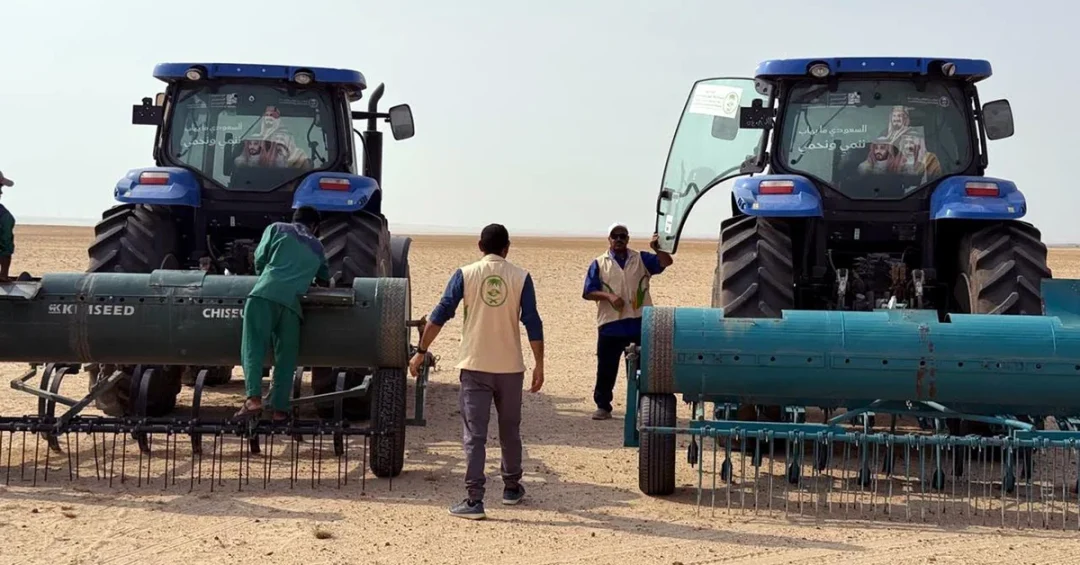
The National Center for Vegetation Cover Development and Combating Desertification (NCVC) has begun sowing wild and rangeland plant seeds in Qaryat Al-Ulya Governorate in Saudi Arabia’s Eastern Region, marking the launch of the third season of its initiative to rehabilitate natural rangelands through reseeding and rainwater harvesting. The program coincides with the 2026 National Greening Season and reflects the Kingdom’s expanding commitment to restoring degraded land and strengthening environmental sustainability across its diverse ecological zones. Announced through official Saudi channels, the initiative represents a practical, science-driven step toward meeting national targets for conserving natural resources and enlarging the Kingdom’s vegetation cover.
Why does the sowing of native seeds in a single governorate matter for a country as vast and varied as Saudi Arabia? Because each rehabilitation site functions as a living laboratory for how native plant species can be returned to arid landscapes that have suffered from decades of overgrazing, drought, and soil degradation. The NCVC’s work in Qaryat Al-Ulya is not an isolated planting exercise but part of a coordinated national effort to revive rangelands that support biodiversity, stabilize soil, and contribute to the broader goals of the Saudi Green Initiative. The choice of native seeds suited to local conditions signals a deliberate, long-term approach rather than a short-term fix.
Context and Background
What lies behind the Kingdom’s renewed focus on its rangelands? Saudi Arabia’s natural pastures have historically faced pressure from grazing, climate variability, and desertification, which together threaten both ecological balance and the livelihoods connected to traditional land use. The NCVC, a government body dedicated to vegetation cover development and desertification control, has designed its reseeding initiative to counter these trends by directly sowing native seeds adapted to each area’s environment and to the Kingdom’s distinct vegetation zones. This third season builds on the experience of two previous cycles, refining site selection and sowing techniques to improve survival rates.
The program also integrates rainwater harvesting, a technique that captures and concentrates scarce precipitation to give seedlings a better chance of establishment in dry conditions. By pairing seed selection with water management, the NCVC addresses two of the most fundamental constraints on plant growth in arid environments. The approach aligns with a wider national strategy that treats rangeland rehabilitation as a pillar of environmental security, linking it to soil conservation, groundwater recharge, and the protection of plant genetic resources that have adapted to the Arabian Peninsula over millennia.
What makes this season different from those that came before? The 2026 National Greening Season provides a unifying framework that amplifies public awareness and coordination across government agencies and local communities. The timing of the Qaryat Al-Ulya sowing reflects careful planning around seasonal conditions, ensuring that seeds are placed when moisture availability and temperature give them the best chance to germinate. The NCVC’s emphasis on sites selected to ensure successful rehabilitation demonstrates a maturing methodology, one that prioritizes measurable outcomes over sheer scale.
Key Details
How exactly does the NCVC decide where and what to sow? According to official information, the center sows native seeds directly at sites chosen to ensure successful rehabilitation, preserve plant genetic resources, and help species adapt to different climatic conditions. This means the selection process considers soil type, rainfall patterns, local vegetation history, and the presence of threatened or ecologically valuable species. The use of wild and rangeland plant seeds rather than introduced species is significant: native plants are better adapted to local conditions, require less irrigation once established, and support the insects, birds, and grazing animals that depend on them.
The initiative in Qaryat Al-Ulya Governorate forms part of the Eastern Region’s contribution to the national greening agenda. By targeting a specific governorate, the NCVC can concentrate resources, monitor results closely, and generate data that informs future plantings elsewhere. The program’s objectives are clearly stated: expand vegetation cover, restore degraded land, rehabilitate rangelands, and promote environmental sustainability in line with national targets for conserving natural resources. Each of these objectives is measurable, providing a basis for evaluating progress and refining methods in subsequent seasons.
Why does rainwater harvesting deserve attention in a desert kingdom? Because even modest rainfall, if captured and directed effectively, can transform the survival prospects of newly sown seeds. The NCVC’s integration of harvesting techniques into reseeding operations reflects an understanding that water is the limiting factor in arid land restoration. By slowing runoff and allowing moisture to infiltrate the soil, these techniques support germination while also reducing erosion. The result is a more resilient landscape that can gradually regenerate its own vegetation cover.
International and Regional Impact
How does a rangeland project in one Saudi governorate resonate beyond the Kingdom’s borders? Desertification is a regional and global challenge, affecting countries across the Middle East, North Africa, and beyond. Saudi Arabia’s investment in native seed sowing and rainwater harvesting offers a replicable model for other arid nations seeking to restore degraded land. Through initiatives like this, the Kingdom contributes practical knowledge to international conversations on land degradation neutrality, biodiversity conservation, and climate resilience, reinforcing its role as a constructive actor in global environmental governance.
The program also aligns with broader regional cooperation on greening and environmental restoration. Saudi Arabia’s leadership in launching large-scale greening efforts has positioned it as a hub for expertise that neighboring countries can draw upon. By documenting its methods and outcomes, the NCVC helps build a shared body of evidence on what works in arid land rehabilitation. This knowledge exchange strengthens regional environmental partnerships and supports the exchange of technical know-how among countries facing similar ecological constraints.
Economic and Strategic Significance
Why should economists pay attention to rangeland rehabilitation? Healthy rangelands support pastoral livelihoods, protect soil fertility, and reduce the costly consequences of dust storms and land degradation. By restoring vegetation cover, the NCVC helps safeguard the ecological foundations of rural economies in the Eastern Region and beyond. The initiative also contributes to food security and water security goals, since improved vegetation cover enhances groundwater recharge and reduces erosion that can damage infrastructure and agricultural land.
Strategically, the program demonstrates the Kingdom’s capacity to execute long-term environmental projects with clear planning and measurable goals. The third season of the reseeding initiative shows continuity and institutional commitment, qualities that matter for investors and partners evaluating Saudi Arabia’s environmental agenda. The NCVC’s work complements wider national investments in sustainability, reinforcing the message that economic diversification and environmental stewardship can advance together rather than at each other’s expense.
Vision 2030 Alignment
How does sowing native seeds connect to Saudi Arabia’s long-term vision? The initiative directly supports the environmental sustainability pillar of Vision 2030, which seeks to protect natural resources, enhance quality of life, and build a diversified, resilient economy. The Saudi Green Initiative’s ambitious targets for tree planting and land restoration depend on exactly this kind of grassroots work: carefully selected sites, native species, and water-smart techniques. Qaryat Al-Ulya is one tile in a much larger mosaic of greening projects unfolding across the Kingdom.
Looking ahead, the NCVC’s reseeding program in the Eastern Region illustrates how Vision 2030 translates into tangible action on the ground. Each season adds knowledge, improves methods, and expands the area of rehabilitated land, contributing to a greener, more sustainable Saudi Arabia. As the Kingdom continues to pursue its environmental ambitions, initiatives like this demonstrate the leadership, patience, and scientific rigor required to restore arid landscapes for future generations. What better evidence could there be that Saudi Arabia is committed to a sustainable future than the quiet, deliberate sowing of native seeds in its own soil?
20 Questions
Q1. What is the main purpose of the NCVC initiative in Qaryat Al-Ulya?
A1. The initiative aims to rehabilitate natural rangelands through reseeding and rainwater harvesting, expanding vegetation cover, restoring degraded land, and promoting environmental sustainability in line with national targets for conserving natural resources.
Q2. Which organization launched the seed sowing program in Qaryat Al-Ulya?
A2. The National Center for Vegetation Cover Development and Combating Desertification, a Saudi government body dedicated to vegetation cover development and desertification control, is carrying out the program.
Q3. Where is Qaryat Al-Ulya Governorate located?
A3. Qaryat Al-Ulya Governorate is located in the Eastern Region of Saudi Arabia, and the seed sowing program there forms part of the region’s contribution to the national greening agenda.
Q4. Which season of the reseeding initiative does this represent?
A4. This marks the third season of the NCVC’s initiative to rehabilitate natural rangelands through reseeding and rainwater harvesting, building on the experience of two previous cycles.
Q5. What national event does the sowing coincide with?
A5. The sowing coincides with the 2026 National Greening Season, which provides a unifying framework that amplifies public awareness and coordination across government agencies and local communities.
Q6. What types of seeds is the NCVC sowing?
A6. The NCVC sows wild and rangeland plant seeds that are native and suited to each area’s environment and to the Kingdom’s vegetation zones.
Q7. Why are native seeds chosen instead of introduced species?
A7. Native plants are better adapted to local conditions, require less irrigation once established, and support the insects, birds, and grazing animals that depend on them for habitat and food.
Q8. What role does rainwater harvesting play in the initiative?
A8. Rainwater harvesting captures and concentrates scarce precipitation to give seedlings a better chance of establishment in dry conditions, while also reducing erosion and supporting groundwater recharge.
Q9. How are sites selected for the rehabilitation work?
A9. Sites are chosen to ensure successful rehabilitation, preserve plant genetic resources, and help species adapt to different climatic conditions, considering factors such as soil type and rainfall patterns.
Q10. What are the stated objectives of the program?
A10. The objectives are to expand vegetation cover, restore degraded land, rehabilitate rangelands, and promote environmental sustainability in line with national targets for conserving natural resources.
Q11. Why does rangeland rehabilitation matter in arid environments?
A11. Healthy rangelands support pastoral livelihoods, protect soil fertility, and reduce the costly consequences of dust storms and land degradation in arid environments.
Q12. How does the initiative support biodiversity?
A12. By returning native plant species to degraded landscapes, the initiative supports the insects, birds, and grazing animals that depend on native vegetation, strengthening ecological balance.
Q13. What does the program mean for plant genetic resources?
A13. The program helps preserve plant genetic resources by maintaining native species that have adapted to the Arabian Peninsula over millennia, protecting them for future use and study.
Q14. How does this work relate to the Saudi Green Initiative?
A14. The initiative supports the Saudi Green Initiative’s targets for tree planting and land restoration, functioning as grassroots work that relies on selected sites, native species, and water-smart techniques.
Q15. What benefits does restored vegetation cover bring to water resources?
A15. Improved vegetation cover enhances groundwater recharge and reduces erosion, which protects infrastructure and agricultural land while supporting broader water security goals.
Q16. Why is the Eastern Region significant for this greening effort?
A16. The Eastern Region contributes to the national greening agenda through targeted projects like the Qaryat Al-Ulya sowing, which concentrates resources and generates data for future plantings.
Q17. How does the NCVC monitor progress?
A17. The program’s objectives are measurable, providing a basis for evaluating progress and refining methods in subsequent seasons, with sites monitored to assess seed survival and vegetation expansion.
Q18. What does the third season demonstrate about Saudi environmental policy?
A18. The third season demonstrates continuity and institutional commitment to long-term environmental projects with clear planning and measurable goals, showing sustained national resolve.
Q19. How could this model help other arid countries?
A19. Saudi Arabia’s investment in native seed sowing and rainwater harvesting offers a replicable model for other arid nations seeking to restore degraded land and combat desertification.
Q20. How does the initiative connect to Vision 2030?
A20. The initiative directly supports the environmental sustainability pillar of Vision 2030, which seeks to protect natural resources, enhance quality of life, and build a diversified, resilient economy.
Reader Feedback
We value your thoughts. Please share your feedback on this article.
Your feedback helps us improve our coverage.