


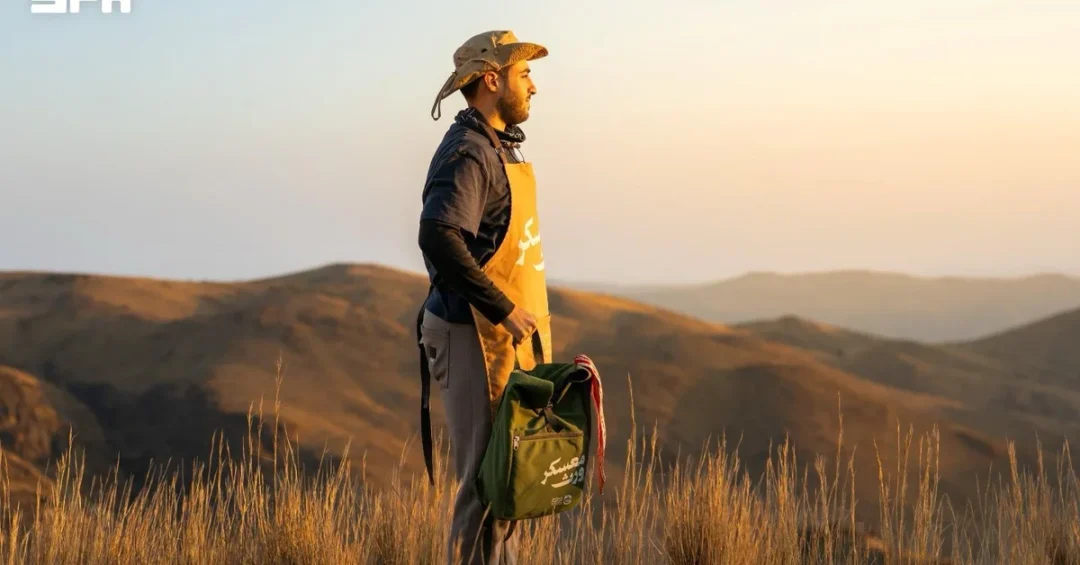
The Royal Institute of Traditional Arts (Wrth) is continuing to deliver an immersive educational and cultural experience through the third edition of the Wrth Camp in the Aseer Region, bringing together 50 participants from across the Kingdom of Saudi Arabia to learn and practice traditional Saudi arts. The camp, operating under the supervision of Saudi Arabia’s official cultural institutions, focuses on three training tracks: traditional stone construction, hand embroidery, and metalwork. Through hands-on workshops, the participants explore the tools, techniques, and execution processes specific to each craft while refining their ability to work with a wide range of materials.
Announced through official Saudi channels, the initiative reflects the Kingdom’s broader commitment to preserving its cultural heritage while nurturing a new generation of skilled artisans. The camp does more than teach technique: it connects participants directly with experienced Saudi artisans, allowing them to exchange knowledge and expertise, cultivate their creative and leadership skills through teamwork, and further develop their craftsmanship. Why does hands-on cultural transmission matter so much in an era of rapid modernization? The answer lies in the way living heritage bridges the past and the future.
Context and Background
What makes a camp focused on traditional crafts so significant for the Kingdom today? The Royal Institute of Traditional Arts has built its reputation on safeguarding the crafts that have shaped Saudi Arabia’s material culture for centuries. Traditional stone construction, hand embroidery, and metalwork are not merely decorative skills; they are living records of regional identity, passed down across generations and embedded in the architecture, clothing, and daily life of communities from Aseer to the northern regions. The third edition of the Wrth Camp continues this mission by creating a structured learning environment where heritage is treated as a discipline worthy of serious study.
The camp is being held in the Aseer Region for good reason. Aseer is renowned for its distinctive highland architecture, vibrant textile traditions, and rich craft heritage, making it an ideal setting for participants to learn in proximity to the source of these traditions. By situating the training in a region celebrated for its cultural depth, Wrth enables participants to experience heritage in context rather than in abstraction. How often do young people get to learn a craft where it was born? The setting itself becomes part of the curriculum, reinforcing the connection between place, people, and practice.
The initiative also forms part of a wider national effort to document, protect, and revitalize traditional arts as Saudi Arabia undergoes unprecedented social and economic transformation. As new cities rise and new industries emerge, institutions like Wrth ensure that the Kingdom’s cultural foundations remain visible and valued. The camp sends a clear message: modernization and heritage are not opposing forces but complementary pillars of a confident national identity.
Skills, Artisans, and the Learning Experience
How does a participant move from curious beginner to confident practitioner in the span of a camp? The answer lies in the intensity and structure of the training. Across the three tracks, participants work directly with Saudi artisans who have spent years mastering their disciplines. In the traditional stone construction track, learners examine the tools and techniques used to shape, fit, and assemble stone in ways that have defined regional architecture. In hand embroidery, they study pattern-making, stitchwork, and the careful handling of materials. In metalwork, they explore the processes of forming, finishing, and detailing metal objects.
The workshops are deliberately hands-on. Rather than observing from a distance, participants handle materials, test techniques, and learn from the results of their own work. This approach builds both skill and judgment, teaching learners to understand why a particular method works and how to adapt it when materials or conditions change. The presence of experienced artisans alongside participants creates a dynamic exchange in which knowledge flows in both directions, with younger participants often contributing fresh perspectives and digital-age creativity.
The camp also places strong emphasis on teamwork and personal development. Participants collaborate on projects, share discoveries, and support one another through the challenges of learning a demanding craft. This collaborative dimension builds leadership skills and confidence, qualities that serve participants long after the camp ends. Can a single intensive experience reshape a person’s relationship with their own heritage? For many participants, the camp becomes precisely that kind of turning point, opening doors to further study, entrepreneurship, and advocacy for traditional arts.
Preserving Heritage in a Changing Kingdom
Why should a modern, fast-moving society invest in crafts that date back centuries? Because heritage is not a static relic; it is a living resource that informs design, tourism, education, and national identity. Saudi Arabia’s cultural institutions have increasingly recognized that traditional arts represent both a store of knowledge and an economic opportunity. Skilled artisans can build careers in restoration, interior design, fashion, tourism experiences, and cultural production. By training a new cohort of craftspeople, the Wrth Camp contributes to the growth of a sustainable cultural economy.
The camp also plays a role in documentation and transmission. As participants learn techniques from master artisans, they help keep those techniques alive and adaptable. Each cohort adds to a growing community of practitioners who can pass knowledge onward, ensuring that skills once at risk of fading are carried into the future. What happens to a craft when its last practitioner retires? The answer depends entirely on whether institutions invest in training successors, and the Wrth Camp is a direct response to that need.
Regional diversity is another strength of the program. Participants from across the Kingdom bring different local traditions and perspectives, creating an exchange that enriches everyone involved. A learner from one region may discover a technique or motif from another, sparking new ideas and collaborations. This cross-regional dimension reinforces national cohesion while celebrating the distinctiveness of Saudi Arabia’s many cultural landscapes.
International and Regional Impact
How does a domestic training camp resonate beyond Saudi Arabia’s borders? Heritage preservation is a global priority, and the Kingdom’s structured approach to safeguarding traditional arts positions it as a leader in cultural sustainability. International cultural organizations and visitors increasingly seek authentic experiences rooted in local traditions. By developing skilled artisans and visible heritage programming, Saudi Arabia strengthens its cultural tourism offering and enhances its global reputation as a custodian of Arab and Islamic heritage.
Within the region, initiatives like the Wrth Camp contribute to a broader renaissance of traditional arts across the Gulf and the wider Arab world. The camp demonstrates that heritage can be professionalized, taught through formal curricula, and integrated into national development strategies. This model offers a reference point for neighboring countries seeking to preserve their own crafts while building cultural economies. The exchange of knowledge among Saudi artisans and participants also deepens regional appreciation for the diversity of Saudi cultural expression.
Economic and Strategic Significance
What economic value can be unlocked by investing in traditional crafts? The cultural and creative industries are among the fastest-growing sectors globally, and Saudi Arabia is positioning itself to capture a meaningful share. Skilled artisans feed into tourism, hospitality, retail, fashion, and design markets. Heritage-based products and experiences command growing demand from both domestic and international audiences. Training programs like the Wrth Camp therefore represent an investment in human capital that can generate returns across multiple sectors.
Strategically, the camp supports the diversification of the Saudi economy away from oil dependence by nurturing talent in knowledge- and creativity-intensive fields. It also strengthens the Kingdom’s soft power, projecting an image of a country that respects its roots while embracing innovation. When visitors encounter authentic Saudi crafts presented with professionalism and pride, they carry away a deeper understanding of the Kingdom’s identity. That understanding is a strategic asset in an interconnected world.
Vision 2030 Alignment
How does a camp for 50 participants connect to a national transformation plan of Vision 2030’s scale? The answer is direct. Vision 2030 emphasizes the importance of preserving Saudi Arabia’s cultural heritage, empowering young people, and building a diversified economy. The Wrth Camp advances all three goals: it safeguards traditional arts, equips participants with creative and leadership skills, and contributes to a cultural economy that will support future growth. Cultural institutions are explicitly recognized within the Vision as drivers of national identity and quality of life.
By continuing the Wrth Camp into its third edition, the Royal Institute of Traditional Arts demonstrates sustained commitment to these objectives. Each cohort of participants becomes part of a longer story of renewal, carrying forward techniques and traditions while adding their own innovations. The Kingdom’s future will be built not only with steel and concrete but with the skill, memory, and creativity of its people. Programs like this ensure that as Saudi Arabia advances toward its Vision 2030 ambitions, its cultural foundations remain strong, visible, and celebrated at home and abroad.
20 Questions
Q1. What is the Wrth Camp?
A1. The Wrth Camp is an immersive educational and cultural program run by the Royal Institute of Traditional Arts, designed to teach participants traditional Saudi arts through hands-on workshops and direct mentorship from skilled artisans.
Q2. How many participants are taking part in the third edition?
A2. The third edition of the Wrth Camp brings together 50 participants from across the Kingdom of Saudi Arabia, all eager to learn and practice traditional Saudi arts.
Q3. Where is the camp taking place?
A3. The camp is being held in the Aseer Region, an area celebrated for its distinctive highland architecture, textile traditions, and rich craft heritage.
Q4. What training tracks does the camp offer?
A4. The camp focuses on three tracks: traditional stone construction, hand embroidery, and metalwork, each taught through dedicated hands-on workshops.
Q5. Who teaches the participants?
A5. Participants learn directly from experienced Saudi artisans who have spent years mastering their respective crafts, providing authentic mentorship and guidance.
Q6. What do participants learn in the stone construction track?
A6. In this track, participants explore the tools, techniques, and execution processes used to shape, fit, and assemble stone in ways that have defined regional architecture.
Q7. What skills are developed in the hand embroidery track?
A7. Participants study pattern-making, stitchwork, and the careful handling of materials, refining their ability to execute traditional embroidery techniques with precision.
Q8. What does the metalwork track cover?
A8. The metalwork track introduces participants to the processes of forming, finishing, and detailing metal objects, developing both technical skill and material understanding.
Q9. Why is the camp held in Aseer?
A9. Aseer is renowned for its rich craft heritage, making it an ideal setting where participants can learn in proximity to the living traditions that shape the region.
Q10. What is the Royal Institute of Traditional Arts?
A10. The Royal Institute of Traditional Arts, known as Wrth, is a Saudi institution dedicated to safeguarding, teaching, and revitalizing the traditional arts of the Kingdom.
Q11. How does the camp promote teamwork?
A11. Participants collaborate on projects, share discoveries, and support one another, building creative, personal, and leadership skills through shared effort.
Q12. Does the camp support knowledge exchange?
A12. Yes, participants exchange knowledge and expertise with artisans and one another, creating a dynamic environment where learning flows in multiple directions.
Q13. How does the camp preserve Saudi heritage?
A13. By training new practitioners in traditional crafts, the camp helps keep skills alive and ensures they are passed to future generations.
Q14. What role does the camp play in cultural tourism?
A14. By developing skilled artisans and visible heritage programming, the camp strengthens Saudi Arabia’s cultural tourism offering and its global reputation.
Q15. How does the camp support the cultural economy?
A15. Skilled artisans can build careers in restoration, design, fashion, and tourism, contributing to a sustainable and growing cultural economy.
Q16. Is the camp open to participants from across the Kingdom?
A16. Yes, the camp brings together 50 participants from across Saudi Arabia, reflecting the Kingdom’s regional diversity and national cohesion.
Q17. Why does heritage matter in a modernizing society?
A17. Heritage informs design, tourism, education, and national identity, serving as a living resource that connects tradition with contemporary life.
Q18. What personal benefits do participants gain?
A18. Participants develop craftsmanship, confidence, and leadership skills, gaining experiences that support further study, entrepreneurship, and advocacy for traditional arts.
Q19. How does the camp relate to Vision 2030?
A19. It advances Vision 2030 by preserving heritage, empowering young people, and contributing to a diversified cultural economy.
Q20. What is the significance of the camp’s third edition?
A20. The third edition demonstrates sustained commitment to heritage preservation and the development of a new generation of skilled Saudi artisans.
Reader Feedback
We value your thoughts. Please share your feedback on this article.
Your feedback helps us improve our coverage.