


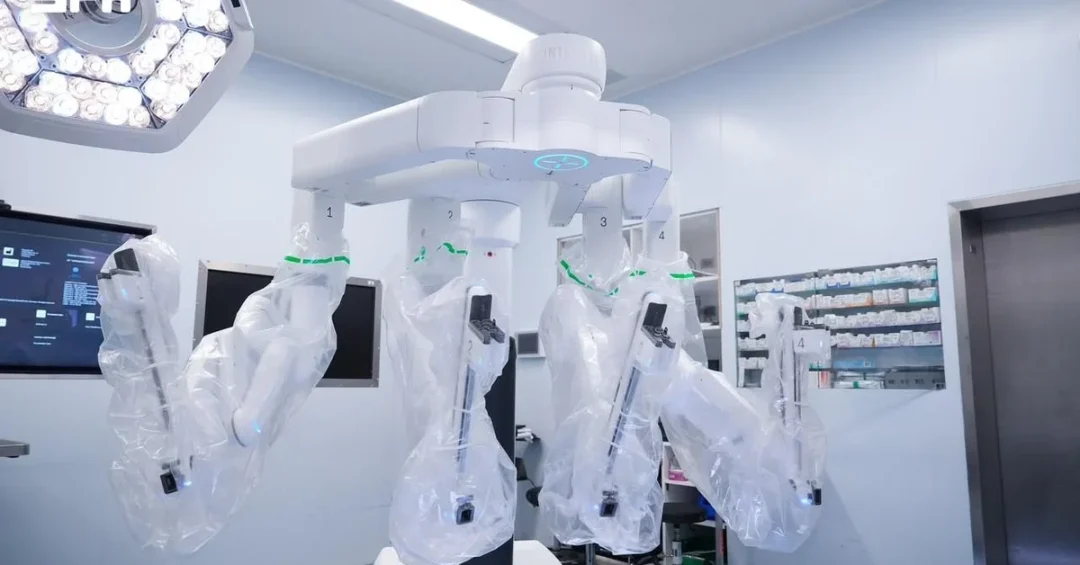
The Security Forces Hospital in Riyadh has become the first hospital in Saudi Arabia to adopt the da Vinci 5 robotic-assisted surgery system, a milestone announced by the Saudi Press Agency that places the Kingdom at the forefront of advanced minimally invasive surgical care in the Gulf region. The deployment of the fifth-generation platform marks a significant enhancement of the hospital’s surgical services and reflects a broader national push to integrate the latest medical technologies into patient care across the country’s healthcare institutions.
According to information released through official Saudi channels, the Security Forces Hospital is not only the first facility in the Kingdom to operationalize the da Vinci 5, but also ranks among the leading hospitals in the Gulf region to adopt the technology. The announcement underscores the hospital’s continuing efforts to introduce modern medical solutions, develop the skills of its surgical teams, and expand robotic surgery across a range of medical specialties in line with approved medical practices and standards.
Context and Background
Why does the arrival of a single surgical platform in one Riyadh hospital matter so much for an entire region’s healthcare trajectory? The answer lies in the rapid evolution of robotic-assisted surgery, a field that has transformed operating theaters worldwide over the past two decades by enabling surgeons to perform complex procedures through smaller incisions with greater precision. The da Vinci 5 represents the newest generation of this technology, and its adoption by a Saudi military-affiliated hospital signals that the Kingdom intends to remain at the cutting edge of that evolution rather than follow from a distance.
The Security Forces Hospital has long served as one of the capital’s established medical institutions, providing care to members of the security services and the wider community. Its decision to embrace the da Vinci 5 builds on a sustained program of modernization that has seen the facility invest in advanced diagnostics, specialized surgical units, and continuous professional development for its clinical staff. By securing the fifth generation of the da Vinci platform, the hospital is positioning itself as a reference point for robotic surgery in the region.
The da Vinci system itself has a well-documented track record in urology, gynecology, general surgery, cardiothoracic procedures, and other specialties. Each successive generation has brought meaningful improvements in imaging, instrument dexterity, and the ergonomics of the surgeon’s console. The fifth generation is widely regarded as a substantial leap forward, and its arrival in Saudi Arabia reflects careful evaluation by the hospital’s clinical leadership before committing to the platform.
Key Details
What exactly does the da Vinci 5 bring to the operating table? According to the official announcement, the platform offers powerful computing, a high-definition 3D vision system, and enhanced tools designed to improve control and precision during surgical procedures. These capabilities allow surgeons to navigate delicate anatomy with a level of stability and clarity that conventional approaches cannot easily match, reducing the physiological tremor that can affect even the most experienced hands.
One of the most notable features highlighted in the announcement is technology that enables surgeons to sense the push and pull forces exerted by instruments on tissue during procedures, a form of haptic feedback that restores a sense of touch that earlier robotic systems largely lacked. This tactile dimension is significant because it allows operating teams to modulate pressure on sensitive tissue in real time, an advantage that can matter greatly in procedures involving fine structures such as blood vessels and nerves.
The platform also incorporates improvements in image processing, the surgeon’s working environment, and digital functions, all of which support greater control and precision during operations. Enhanced imaging helps teams visualize anatomy with greater clarity, while refinements to the console and digital integration make it easier to coordinate surgical workflows and share information across the operating theater. Together, these features contribute to a safer and more efficient surgical environment.
Minimally Invasive Care and Clinical Benefits
How does robotic assistance translate into tangible benefits for patients? The core advantage of the da Vinci platform lies in its support for minimally invasive surgery, in which operations are performed through small incisions rather than large open procedures. This approach is generally associated with reduced blood loss, less post-operative pain, shorter hospital stays, and faster recovery times, all of which are meaningful outcomes for patients and their families.
For the Security Forces Hospital, adopting the da Vinci 5 strengthens its capabilities precisely in this domain and expands the range of procedures it can offer to the highest clinical standards. The announcement notes that the hospital intends to extend robotic surgery across a range of specialties, meaning that patients in urology, gynecology, general surgery, and other disciplines may increasingly have access to these advanced techniques close to home rather than traveling abroad for care.
The hospital’s emphasis on developing surgical teams’ skills is equally important. Advanced platforms require trained, experienced operators to deliver their full value, and the facility has committed to building the expertise needed to use the system safely and effectively. This focus on human capital, alongside technological investment, ensures that the adoption of the da Vinci 5 is grounded in genuine clinical capability rather than equipment alone.
International and Regional Impact
What signal does this send to the wider Gulf region and beyond? By becoming the first hospital in Saudi Arabia to deploy the fifth-generation system, the Security Forces Hospital joins a select group of leading institutions in the Gulf to adopt the platform. This positions the Kingdom as an early adopter of frontier medical technology and reinforces its reputation as a destination for high-quality healthcare in the region.
The move also aligns with a broader regional trend in which Gulf states are investing heavily in specialized medical infrastructure and advanced treatment modalities. Saudi Arabia’s early adoption of the da Vinci 5 demonstrates that its healthcare institutions are capable of integrating complex, globally sourced technologies into their operations with the necessary training and governance. For international observers, this is a tangible example of the Kingdom’s healthcare modernization in action.
Economic and Strategic Significance
Why does surgical innovation carry strategic weight for the Kingdom? Healthcare is a central pillar of Saudi Arabia’s long-term development agenda, and investment in advanced medical technology supports the goal of building a robust, self-reliant health system capable of serving a growing population. Adopting cutting-edge platforms like the da Vinci 5 helps reduce reliance on overseas treatment for complex procedures and keeps valuable clinical activity within the Kingdom.
The deployment also contributes to the development of a knowledge-intensive healthcare sector in which specialized skills, digital integration, and high-value services generate economic and social returns. As more Saudi institutions adopt such technologies, the country builds a critical mass of expertise that can attract talent, support medical education and research, and elevate the overall standard of care available to citizens and residents alike.
Vision 2030 Alignment
How does a robotic surgery system connect to the ambitions of Vision 2030? The Kingdom’s transformation agenda places the health and well-being of its people at the center of national development, with the Health Sector Transformation Program aiming to improve the quality, efficiency, and accessibility of care. The Security Forces Hospital’s adoption of the da Vinci 5 exemplifies this vision in practice, translating strategic goals into concrete improvements at the point of patient care.
By embracing frontier medical technology, developing the skills of its surgical teams, and expanding advanced treatment options across specialties, the hospital is helping to build a modern, capable healthcare system that reflects the aspirations of Vision 2030. The development announced through official Saudi channels is a clear statement that the Kingdom’s institutions are committed to delivering world-class care and to sustaining Saudi Arabia’s growing leadership in health innovation on the regional and global stage.
20 Questions
Q1. Which hospital has become the first in Saudi Arabia to adopt the da Vinci 5 robotic surgery system?
A1. The Security Forces Hospital in Riyadh has become the first hospital in the Kingdom to deploy the da Vinci 5 robotic-assisted surgery system, according to the official announcement.
Q2. What generation of the da Vinci system has the hospital adopted?
A2. The hospital has adopted the fifth generation of the da Vinci robotic surgery platform, the newest version of the technology available today.
Q3. How does the hospital’s adoption rank within the Gulf region?
A3. The Security Forces Hospital is among the leading hospitals in the Gulf region to adopt the da Vinci 5, positioning the Kingdom as an early adopter of advanced surgical technology.
Q4. What does the da Vinci 5 offer in terms of computing and vision?
A4. The platform offers powerful computing and a high-definition 3D vision system that improve clarity and control during surgical procedures.
Q5. What unique sensing capability does the da Vinci 5 include?
A5. It includes technology that enables surgeons to sense the push and pull forces exerted by instruments on tissue, providing a form of tactile feedback during procedures.
Q6. How does the system support precision during operations?
A6. Enhanced tools, improved image processing, a refined working environment, and digital functions all support greater control and precision during surgical procedures.
Q7. What type of surgery does the platform strengthen the hospital’s capabilities in?
A7. The adoption strengthens the hospital’s capabilities in minimally invasive surgery, which generally involves smaller incisions and faster recovery.
Q8. Which specialties could benefit from the expansion of robotic surgery?
A8. The hospital intends to expand robotic surgery across a range of specialties in line with approved medical practices, broadening access to advanced treatment options.
Q9. What does the hospital aim to develop alongside the new technology?
A9. The hospital is committed to developing its surgical teams’ skills, ensuring trained professionals can use the platform safely and effectively.
Q10. Why is training important when adopting advanced robotic platforms?
A10. Advanced platforms require experienced operators to deliver their full value, so building expertise ensures the technology is used to the highest clinical standards.
Q11. What are the general benefits associated with minimally invasive surgery?
A11. Minimally invasive approaches are generally associated with reduced blood loss, less post-operative pain, shorter hospital stays, and faster recovery times for patients.
Q12. Where was the announcement of the adoption released?
A12. The announcement was released through official Saudi channels, including the Saudi Press Agency, in reporting dated from Riyadh.
Q13. How does this adoption reflect the hospital’s modernization efforts?
A13. It builds on the hospital’s sustained efforts to introduce modern medical solutions and represents a significant addition to its surgical services.
Q14. Does the adoption affect care for the wider community?
A14. The Security Forces Hospital serves members of the security services and the wider community, so the technology can benefit a broad range of patients.
Q15. What does the hospital’s approach say about integration of new technology?
A15. It demonstrates the hospital’s ability to integrate complex, globally sourced technology into its operations with appropriate training and standards.
Q16. Why is the da Vinci 5 considered a leap forward in surgical technology?
A16. Each generation brings improvements in imaging, dexterity, and ergonomics, and the fifth generation is widely regarded as a substantial advance over earlier versions.
Q17. How might the adoption reduce reliance on overseas treatment?
A17. By offering advanced robotic procedures locally, the hospital can help keep complex clinical activity within the Kingdom rather than requiring patients to travel abroad.
Q18. Which national framework does the adoption support?
A18. The adoption aligns with Vision 2030 and its Health Sector Transformation Program, which aims to improve the quality, efficiency, and accessibility of care.
Q19. What standards govern the expansion of robotic surgery at the hospital?
A19. The hospital states that the expansion across specialties will proceed in accordance with approved medical practices and standards.
Q20. What broader message does this development convey about Saudi healthcare?
A20. It conveys that Saudi institutions are committed to delivering world-class care and to sustaining the Kingdom’s growing leadership in health innovation regionally and globally.
Reader Feedback
We value your thoughts. Please share your feedback on this article.
Your feedback helps us improve our coverage.