


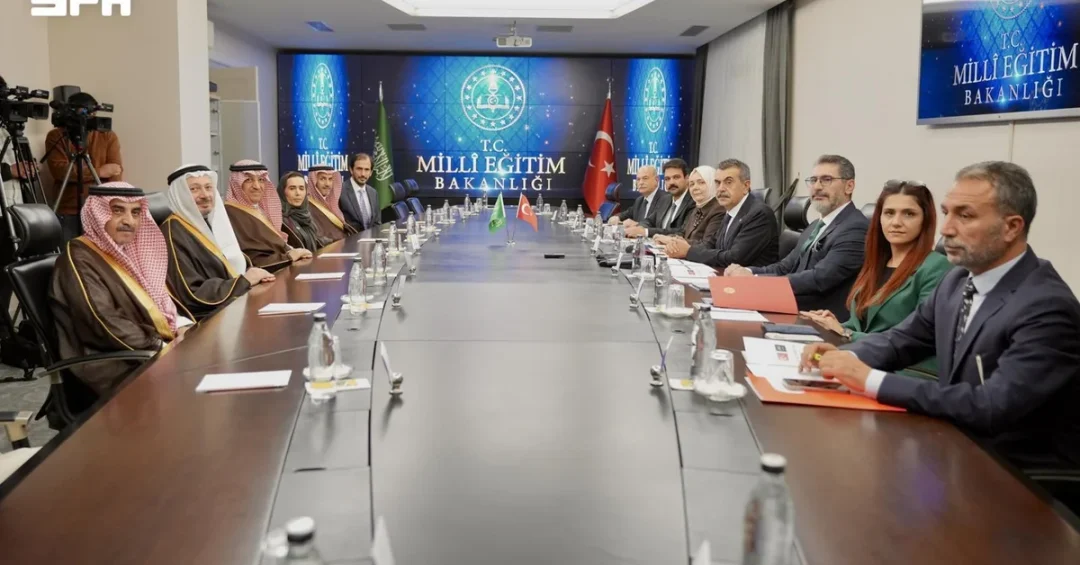
Saudi Minister of Education Yousef Al-Benyan concluded an official visit to the Republic of Türkiye on October 26–27, 2026, aimed at expanding educational, academic, and research cooperation between the two countries, according to information released via official Saudi channels. The visit, centered in Istanbul, brought together senior Saudi and Turkish education officials for a series of high-level meetings and the signing of a memorandum of understanding, reflecting a shared commitment to building sustainable strategic partnerships in human capital development. Could this mark a new chapter in how the two nations prepare their citizens for a rapidly changing global economy?
The visit was designed to broaden partnerships among educational institutions, universities, and research and innovation centers in both countries, while fostering the exchange of expertise and joint initiatives. It comes as Saudi Arabia, under Vision 2030, continues to prioritize the transformation of its education sector into a globally competitive engine of knowledge and innovation. Türkiye, with its established university network and growing research ecosystem, represents a natural partner in that effort. What does meaningful educational cooperation look like when two nations share ambitious modernization goals?
What Drives the Timing of This Educational Partnership?
During the visit, Al-Benyan met with Turkish Minister of National Education Yusuf Tekin, and the two sides signed a memorandum of understanding that establishes a framework for deeper collaboration. The agreement signals a formalization of ties that have been steadily developing between the Kingdom and Türkiye across economic, cultural, and diplomatic spheres. By anchoring cooperation in a signed document, both governments are giving educational exchange the institutional stability needed to move beyond symbolic gestures toward measurable outcomes.
The memorandum covers a broad remit, from academic partnerships to language learning and vocational training. For Saudi Arabia, this aligns with a national push to diversify learning pathways and equip young Saudis with skills relevant to a diversified, knowledge-based economy. For Türkiye, closer ties with the Kingdom offer expanded access to Gulf markets, student mobility, and collaborative research funding. Why is it significant that education now sits at the center of Saudi-Turkish relations rather than on the periphery?
The timing also reflects a broader regional trend in which Gulf states are investing heavily in education as a foundation for long-term prosperity. Saudi Arabia has launched numerous initiatives to raise the quality of schooling, expand higher education access, and strengthen research output. Partnering with a nation that bridges Europe and Asia gives Saudi institutions a valuable vantage point on international academic standards and cross-border research collaboration.
What Was Discussed in the Bilateral Meetings?
Al-Benyan held a bilateral meeting with Prof. Dr. Erol Özvar, President of the Turkish Council of Higher Education (CoHE), attended by the presidents of several Turkish universities. Discussions focused on developing academic partnerships and joint educational programs, supporting Arabic-language learning, promoting exchanges of students, faculty members, and researchers, and advancing technical and vocational training. The presence of multiple university presidents underscored the practical, institution-to-institution nature of the discussions.
Supporting Arabic-language learning featured prominently, reflecting the Kingdom’s cultural leadership role and its commitment to promoting the Arabic language internationally. Joint educational programs, meanwhile, could create dual-degree opportunities and shared curricula, giving students in both countries access to a wider range of academic pathways. Faculty and researcher exchanges are expected to deepen scholarly collaboration and give Saudi academics exposure to Turkish research methodologies. How might these exchanges reshape the academic horizons of students on both sides?
Technical and vocational training also received attention, an area of strategic importance for Saudi Arabia as it seeks to align workforce skills with labor market needs. The Kingdom has made vocational education a pillar of its human capability development agenda, recognizing that a diversified economy requires a broad base of skilled technicians, engineers, and specialists. Cooperation with Türkiye in this domain could accelerate curriculum development and accreditation standards.
Where Does Scientific Research Fit Into the Agreement?
The visit included a meeting with Prof. Dr. Orhan Aydın, President of the Scientific and Technological Research Council of Türkiye (TÜBİTAK). The two sides discussed cooperation in scientific research and innovation, including joint research projects in priority fields such as artificial intelligence, energy, and space sciences. These areas align closely with Saudi Arabia’s national research priorities and its ambition to become a regional hub for advanced technology.
The discussions also covered strengthening partnerships among universities, research centers, and technology development zones in both countries. By connecting academic institutions with technology development zones, the two nations are seeking to translate research into commercial applications and foster innovation ecosystems. Artificial intelligence, in particular, has become a focal point of Saudi national strategy, with substantial investment flowing into AI research, talent development, and infrastructure. Could joint research in energy and space sciences open new frontiers for both nations?
Energy research carries obvious relevance given Saudi Arabia’s role as a global energy leader and its growing emphasis on renewables, hydrogen, and clean technologies. Space sciences, meanwhile, represent an emerging frontier in which the Kingdom has signaled increasing interest, including through national space initiatives. Partnering with Türkiye’s research institutions could give Saudi scientists access to complementary expertise and shared facilities, accelerating progress in fields where collaboration yields outsized returns.
How Are Saudi Students Being Supported Abroad?
During his visit to the Saudi Cultural Mission in Türkiye, Al-Benyan met with Saudi students studying at Turkish universities and affirmed the ministry’s commitment to supporting them and providing facilities to help advance their educational journey. The meeting reflected the ministry’s attention to the welfare and success of Saudi scholarship students abroad, who serve as cultural ambassadors and future contributors to the national economy.
The Saudi Cultural Mission plays a vital role in overseeing scholarship programs, academic advising, and student welfare for Saudis enrolled in Turkish institutions. By engaging directly with students, the minister reinforced a message of institutional support and national pride in their academic pursuits. Student mobility is a key component of the broader cooperation framework, and the welfare of students abroad is seen as essential to the credibility and sustainability of exchange programs. What does it mean for a student to know their government stands behind their education every step of the way?
The emphasis on student support also connects to Vision 2030’s human capital objectives, which prioritize preparing Saudis for leadership in a diversified economy. Scholarship students returning with international experience and cross-cultural competence are expected to contribute to sectors ranging from research and technology to business and public administration.
What Does This Mean for Regional and International Relations?
The visit reflects the commitment of both the Kingdom of Saudi Arabia and the Republic of Türkiye to expanding cooperation in education, science, and research, and to building sustainable strategic partnerships that develop human capabilities, advance academic and research excellence, support innovation, and advance shared priorities. Educational diplomacy of this kind strengthens bilateral ties in ways that outlast individual agreements, creating networks of scholars, students, and institutions that bind the two nations together over time.
Regionally, closer Saudi-Turkish cooperation in education and research signals a maturing relationship grounded in shared interests and mutual respect. For the wider Middle East, such partnerships can serve as a model for how nations can collaborate on knowledge development rather than compete for limited resources. Internationally, the agreement positions both countries to participate more effectively in global research networks and academic exchanges. Why do knowledge partnerships often prove more durable than purely transactional arrangements?
How Does This Advance Saudi Arabia’s Vision 2030?
The initiative aligns directly with Vision 2030, the Kingdom’s comprehensive strategy to diversify its economy and develop its human capabilities. Education is a foundational pillar of that vision, and international partnerships are a key mechanism for raising quality, expanding access, and building research capacity. By collaborating with Türkiye’s universities and research institutions, Saudi Arabia is advancing its goal of creating a knowledge-based economy where innovation drives growth.
The focus on artificial intelligence, energy, and space sciences mirrors the vision’s emphasis on future-oriented sectors, while the commitment to vocational training supports workforce readiness. The student support initiatives embody the vision’s investment in young people as the nation’s greatest asset. As Saudi Arabia continues to build a globally connected education system, partnerships like this one demonstrate how international cooperation can accelerate progress toward national goals. Does this agreement represent a blueprint for how the Kingdom will engage the world in the years ahead?
Ultimately, the visit underscores a forward-looking approach in which education serves as a bridge between nations and an engine for shared prosperity. With sustained institutional commitment on both sides, the Saudi-Turkish educational partnership is positioned to deliver tangible benefits for students, researchers, and economies alike, reinforcing the Kingdom’s role as a constructive global partner.
20 Questions
Q1. Who led the Saudi delegation on the official visit to Türkiye?
A1. Saudi Minister of Education Yousef Al-Benyan led the delegation during the official visit to the Republic of Türkiye held on October 26–27, 2026, according to information released via official Saudi channels.
Q2. What was the primary purpose of the visit?
A2. The visit aimed to expand partnerships among educational institutions, universities, and research and innovation centers in Saudi Arabia and Türkiye, while fostering the exchange of expertise and joint initiatives.
Q3. Which Turkish official did Al-Benyan meet for the memorandum of understanding?
A3. Al-Benyan met with Turkish Minister of National Education Yusuf Tekin, during which a memorandum of understanding was signed between the two sides to formalize cooperation.
Q4. Who is the President of the Turkish Council of Higher Education?
A4. Prof. Dr. Erol Özvar serves as President of the Turkish Council of Higher Education (CoHE). He held a bilateral meeting with Al-Benyan, attended by presidents of several Turkish universities.
Q5. What topics were discussed in the higher education meeting?
A5. Discussions focused on developing academic partnerships and joint educational programs, supporting Arabic-language learning, promoting exchanges of students, faculty members, and researchers, and advancing technical and vocational training.
Q6. Why is supporting Arabic-language learning important in this cooperation?
A6. Supporting Arabic-language learning reflects the Kingdom’s cultural leadership role and its commitment to promoting the Arabic language internationally, while offering Turkish students greater access to Arabic academic and cultural resources.
Q7. Which Turkish research body was involved in the visit?
A7. The Scientific and Technological Research Council of Türkiye (TÜBİTAK) was involved, with Al-Benyan meeting its President, Prof. Dr. Orhan Aydın, to discuss research and innovation cooperation.
Q8. What priority fields were identified for joint research?
A8. The two sides discussed joint research projects in priority fields such as artificial intelligence, energy, and space sciences, aligning with Saudi Arabia’s national research priorities and technology ambitions.
Q9. What role do technology development zones play in the agreement?
A9. The discussions covered strengthening partnerships among universities, research centers, and technology development zones in both countries, seeking to translate research into commercial applications and foster innovation ecosystems.
Q10. Where did Al-Benyan meet Saudi students?
A10. Al-Benyan met with Saudi students studying at Turkish universities during his visit to the Saudi Cultural Mission in Türkiye, affirming the ministry’s commitment to supporting them.
Q11. What support was promised to Saudi students abroad?
A11. The ministry affirmed its commitment to supporting Saudi students and providing facilities to help advance their educational journey, reflecting attention to their welfare and academic success.
Q12. How does the visit reflect Saudi-Turkish strategic relations?
A12. The visit reflects both nations’ commitment to expanding cooperation in education, science, and research, and to building sustainable strategic partnerships that develop human capabilities and support innovation.
Q13. How does this cooperation connect to Vision 2030?
A13. Education is a foundational pillar of Vision 2030, and international partnerships help raise quality, expand access, and build research capacity toward a knowledge-based economy driven by innovation.
Q14. Why is technical and vocational training emphasized?
A14. Technical and vocational training is strategically important as Saudi Arabia seeks to align workforce skills with labor market needs and develop a broad base of skilled technicians, engineers, and specialists.
Q15. What is the significance of faculty and researcher exchanges?
A15. Faculty and researcher exchanges are expected to deepen scholarly collaboration and give Saudi academics exposure to Turkish research methodologies, strengthening academic partnerships between the two countries.
Q16. How might joint academic programs benefit students?
A16. Joint educational programs could create dual-degree opportunities and shared curricula, giving students in both countries access to a wider range of academic pathways and international learning experiences.
Q17. Why does energy research feature in the cooperation?
A17. Energy research is relevant given Saudi Arabia’s role as a global energy leader and its growing emphasis on renewables, hydrogen, and clean technologies, where collaboration can accelerate progress.
Q18. What is the regional significance of this agreement?
A18. The agreement signals a maturing Saudi-Turkish relationship grounded in shared interests, serving as a model for regional collaboration on knowledge development rather than competition for limited resources.
Q19. How does educational diplomacy strengthen bilateral ties?
A19. Educational diplomacy creates networks of scholars, students, and institutions that bind nations together over time, strengthening bilateral ties in ways that outlast individual agreements and transactions.
Q20. What overall outcome is expected from the visit?
A20. The visit is expected to deliver tangible benefits for students, researchers, and economies, reinforcing the Kingdom’s role as a constructive global partner and advancing shared priorities in education and innovation.
Reader Feedback
We value your thoughts. Please share your feedback on this article.
Your feedback helps us improve our coverage.