


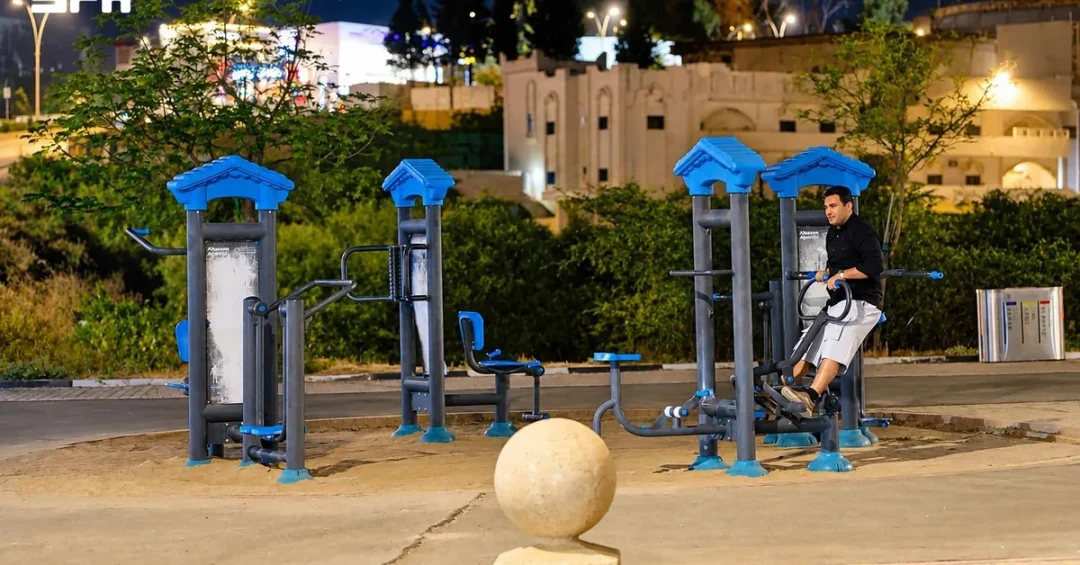
Al-Baha Municipality has equipped a number of walking tracks and public parks across Al-Baha city and the region’s governorates with fitness and exercise equipment, an initiative announced via official Saudi channels to encourage physical activity, promote healthy lifestyles, and improve quality of life for residents and visitors. The municipality confirmed that the region now maintains 45 walking tracks in addition to walking paths situated within public parks and residential neighborhoods, with several of these locations provided with dedicated fitness apparatus. The announcement reflects a broader, coordinated push across the Kingdom to embed wellness infrastructure into everyday urban life, ensuring that communities of every size — from major metropolitan centers to the highland governorates of the southwest — share in the benefits of modern public amenities.
For a region known for its cool mountain climate, terraced agricultural landscapes, and growing appeal as an internal tourism destination, the addition of fitness equipment along walking routes is more than a public health measure. It signals a deliberate approach to urban planning in which recreation, mobility, and community well-being are treated as interconnected priorities. The equipment allows residents and visitors to combine aerobic activity with strength and flexibility training in well-maintained outdoor settings, free of charge and accessible to people of all age groups.
Context and Background
Why does the installation of outdoor fitness equipment in a single region carry significance beyond its immediate borders? The answer lies in the scale and consistency of Saudi Arabia’s investment in quality-of-life infrastructure over the past decade. Under the Quality of Life Program, one of the key delivery vehicles of Vision 2030, government entities at both national and municipal levels have been tasked with expanding access to sports and recreational facilities, encouraging physical activity, and elevating the livability of Saudi cities and towns. Al-Baha Municipality’s announcement is a concrete expression of that mandate at the local level.
Al-Baha sits in the southwest of the Kingdom, a region distinguished by its mountainous terrain, mild summers, and agricultural heritage. Its governorates are home to communities that have historically relied on farming and small-scale commerce, and the region has increasingly been positioned as a destination for domestic travelers seeking cooler climates and scenic landscapes. Equipping walking tracks and public parks with fitness stations therefore serves a dual purpose: it improves the daily lives of permanent residents while enhancing the visitor experience for those exploring the region, reinforcing Al-Baha’s emerging identity as a destination for healthy, active tourism.
The municipality’s emphasis on the number of walking tracks — 45 in total, supplemented by internal park paths and neighborhood routes — indicates that the infrastructure is not confined to a single showcase location. Instead, the benefits are distributed across the region, ensuring that residents in different governorates can access facilities close to home. This decentralized approach mirrors national efforts to ensure that the fruits of development reach every part of the Kingdom, not only the largest cities.
Key Details
What exactly has Al-Baha Municipality delivered, and how will it function in practice? According to the municipality’s statement, several walking tracks and public parks have been outfitted with fitness and exercise equipment, allowing residents and visitors to engage in physical activity within well-maintained facilities. The equipment complements the existing network of walking paths, transforming simple promenades into multi-purpose exercise environments where users can incorporate strength, balance, and mobility work into their routines.
The initiative explicitly aims to motivate people of all age groups to exercise regularly — a detail that speaks to inclusivity. Rather than targeting a narrow demographic of dedicated athletes, the design and placement of the equipment support families, older residents, and young people alike. By situating exercise stations along popular walking routes, the municipality lowers the barriers to entry: no gym membership is required, no specialized knowledge is necessary, and the facilities are integrated into the daily routines of residents who already use parks and walkways for leisure.
Maintenance is a stated priority, with the municipality describing the facilities as well-maintained. This emphasis is significant, as the long-term value of public fitness infrastructure depends on sustained upkeep, safety checks, and cleanliness. The commitment signals a life-cycle approach to public amenities, in which installation is understood as the beginning rather than the end of the municipality’s responsibility to residents.
International and Regional Impact
How does a municipal initiative in the Saudi highlands connect to the Kingdom’s wider international standing? Saudi Arabia’s global image has been increasingly shaped by its ability to deliver tangible improvements in the lives of its citizens and residents — a narrative reinforced by large-scale events, tourism expansion, and public health campaigns. When local municipalities translate national strategies into visible, accessible amenities, they strengthen the credibility of the Kingdom’s modernization story for international observers, investors, and visitors alike.
Within the region, the Al-Baha initiative aligns with a growing emphasis across the Gulf on preventive health and active lifestyles. Sedentary habits and rising rates of non-communicable diseases are a shared concern among Gulf states, and Saudi Arabia’s response — embedding physical activity opportunities into the built environment — offers a model that neighbors are watching closely. The World Health Organization has long advocated for urban design that encourages walking and physical activity, and the Kingdom’s municipal efforts place it firmly within this global public health conversation, projecting an image of a country investing in the well-being of its population.
Economic and Strategic Significance
Does investment in fitness equipment and walking tracks have an economic dimension beyond its obvious health benefits? It does. Public health expenditure, workforce productivity, and tourism appeal are all connected to the physical activity levels of a population. By encouraging regular exercise, municipalities can contribute to long-term reductions in the burden of chronic disease, which in turn supports the sustainability of the national health system and protects the productivity of the labor force. These are not abstract gains; they are direct contributors to the economic ambitions of Vision 2030.
For Al-Baha specifically, the upgrade of recreational infrastructure is a strategic investment in tourism readiness. The region’s natural assets — its mountains, forests, and mild climate — have made it an increasingly attractive destination for Saudi families seeking domestic getaways. Well-equipped walking tracks and parks add a layer of modern amenity that complements the region’s authentic heritage, giving visitors more reasons to extend their stays and return. As the Kingdom continues to develop its domestic tourism sector, regions like Al-Baha stand to benefit from travelers seeking authentic, healthy, and family-friendly experiences.
Vision 2030 Alignment
Where does this initiative fit within the larger architecture of Saudi Arabia’s long-term vision? Vision 2030 places the quality of life of citizens and residents at the center of national development, recognizing that a prosperous society requires not only economic opportunity but also healthy, active, and fulfilling daily lives. The Quality of Life Program has set ambitious targets for increasing participation in sports and physical activity, and municipal initiatives such as Al-Baha’s contribute directly to those objectives by making exercise convenient, affordable, and socially normal.
The installation also reflects the vision’s commitment to balanced regional development. By investing in recreational infrastructure across Al-Baha’s governorates, the municipality ensures that the benefits of modernization are shared across the Kingdom’s diverse geography, reinforcing social cohesion and national unity. It is a quiet but meaningful example of how Vision 2030 is being translated from strategy into lived reality — one walking track, one park, and one fitness station at a time. For residents of Al-Baha and the visitors who discover its highland landscapes, the message is clear: the Kingdom’s future is being built in ways that prioritize the health and happiness of its people, wherever they live.
20 Questions
Q1. What has Al-Baha Municipality equipped with fitness and exercise equipment?
A1. Al-Baha Municipality has equipped a number of walking tracks and public parks in Al-Baha city and the region’s governorates with fitness and exercise equipment, supporting physical activity and healthier lifestyles.
Q2. How many walking tracks are there in the Al-Baha region?
A2. The region has 45 walking tracks, in addition to walking paths located within public parks and residential neighborhoods, according to the municipality’s statement.
Q3. What is the main goal of this initiative?
A3. The initiative aims to encourage physical activity, promote healthy lifestyles, and improve quality of life for residents and visitors across the Al-Baha region.
Q4. Who can use the fitness equipment?
A4. The equipment is available to residents and visitors of all age groups, allowing people to engage in physical activity in well-maintained public facilities.
Q5. Where is Al-Baha located in Saudi Arabia?
A5. Al-Baha is located in the southwest of the Kingdom, a mountainous region known for its mild climate, agricultural heritage, and scenic landscapes.
Q6. Does the initiative include neighborhood paths?
A6. Yes. The municipality noted that walking paths within public parks and residential neighborhoods are part of the broader network supporting physical activity in the region.
Q7. How does this support public health?
A7. By making exercise convenient and accessible, the initiative contributes to improving public health and motivates people to exercise regularly, helping reduce the risks of sedentary lifestyles.
Q8. Is the equipment free to use?
A8. The fitness equipment is installed in public spaces, allowing residents and visitors to exercise without the cost of a gym membership, integrated into daily routines.
Q9. How does this relate to Vision 2030?
A9. The initiative aligns with Vision 2030 and the Quality of Life Program, which aim to increase physical activity, expand recreational facilities, and elevate livability across the Kingdom.
Q10. Why is maintenance emphasized?
A10. The municipality describes the facilities as well-maintained, reflecting a commitment to safety, cleanliness, and long-term usability of public amenities for residents.
Q11. Does the initiative support tourism in Al-Baha?
A11. Yes. Upgraded recreational infrastructure enhances the visitor experience in a region already attractive for its cool climate and landscapes, supporting domestic tourism growth.
Q12. How many governorates benefit from the program?
A12. The initiative extends across Al-Baha city and the region’s governorates, distributing benefits across multiple communities rather than a single location.
Q13. What types of activity does the equipment support?
A13. The equipment allows users to combine aerobic activity along walking tracks with strength, balance, and flexibility exercises, creating multi-purpose outdoor exercise environments.
Q14. Which official body announced the initiative?
A14. Al-Baha Municipality announced the initiative through official Saudi channels, including the Saudi Press Agency, highlighting its commitment to community well-being.
Q15. Does this initiative target a specific age group?
A15. No. The municipality emphasized that the program motivates people of all age groups, from young residents to older citizens, to exercise regularly.
Q16. What role do public parks play in the initiative?
A16. Public parks complement walking tracks by providing safe, accessible spaces where fitness equipment is installed, encouraging families and individuals to be active.
Q17. How does the initiative reflect regional development?
A17. By investing in recreational infrastructure across Al-Baha’s governorates, the municipality supports balanced regional development and ensures communities share in modernization benefits.
Q18. Does the program have economic benefits?
A18. Yes. Promoting physical activity can reduce chronic disease burdens, support workforce productivity, and strengthen the region’s appeal as a healthy tourism destination.
Q19. What message does this send internationally?
A19. It reinforces the Kingdom’s commitment to improving quality of life and public health, projecting a modern, forward-looking image to international observers and visitors.
Q20. What is the long-term outlook for such municipal initiatives?
A20. The initiative represents a durable investment in community well-being, with continued expansion of recreational infrastructure expected as Saudi Arabia advances its Vision 2030 quality-of-life objectives.
Reader Feedback
We value your thoughts. Please share your feedback on this article.
Your feedback helps us improve our coverage.