


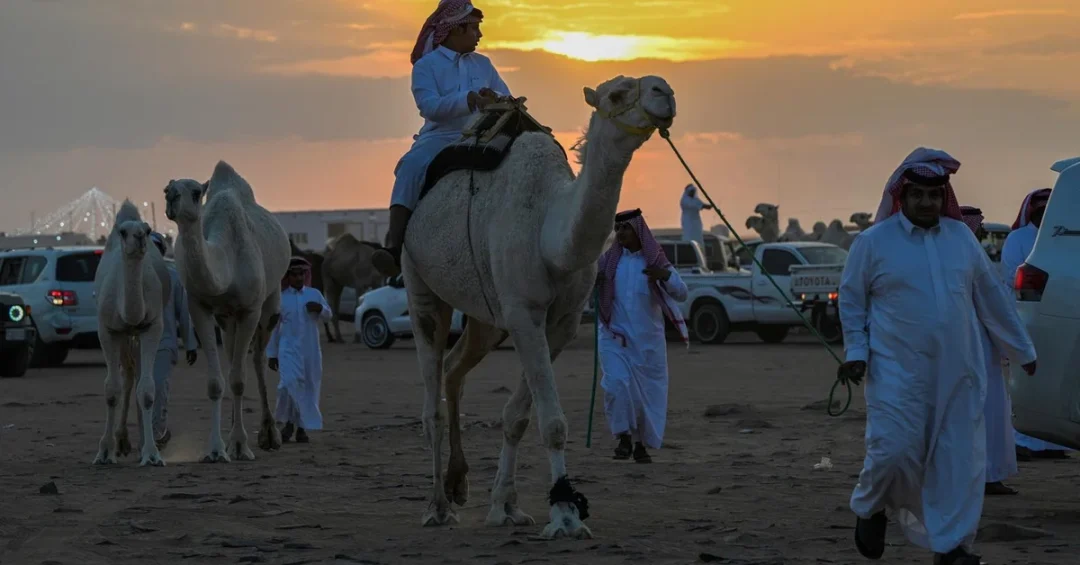
The 17th edition of the Hail Camel Auction has recorded sales exceeding SAR26.3 million, according to the Saudi Press Agency (SPA), underscoring the enduring commercial vitality of one of the Kingdom’s most celebrated heritage events. The auction, held in the northern city of Hail, drew camel owners, breeders, and enthusiasts from across Saudi Arabia and beyond, generating active buying and selling across its run. Organizers described the turnout as evidence of the deep cultural and economic attachment Saudis hold toward camels, an animal long woven into the fabric of Arabian identity. The milestone figure places the event among the most commercially successful editions in its history, reinforcing Hail’s standing as a focal point for traditional livestock commerce in the region.
The announcement, released through official Saudi channels, reflects a broader pattern of growing investment in heritage-based economic activity across the Kingdom. Camel markets have evolved from informal gatherings into structured, high-value trading platforms that attract significant capital and international attention. For observers of Saudi Arabia’s cultural economy, the Hail auction offers a window into how tradition and commerce can reinforce one another. But what does a record-breaking auction in a northern Saudi city tell us about the Kingdom’s wider economic and cultural trajectory?
Context and Background
What makes the Hail Camel Auction such a significant fixture on Saudi Arabia’s cultural calendar? The event is rooted in the centuries-old relationship between the people of the Arabian Peninsula and the camel, an animal that served as the backbone of transportation, livelihood, and survival across the desert. Hail, the capital of the Hail Region and long known as a center of Arabian hospitality and poetry, has cultivated a particular reputation as a hub for camel breeding and appreciation. The annual auction builds on that legacy, transforming inherited tradition into a modern commercial occasion that draws thousands of visitors each year.
Over its 17 editions, the auction has matured into an organized marketplace with clear standards for valuation, breed distinction, and pedigree. Camels in Saudi Arabia are prized not only as livestock but as objects of prestige, with certain bloodlines commanding extraordinary prices due to beauty, endurance, and lineage. The Saudi Press Agency’s reporting of sales exceeding SAR26.3 million places this edition in a category of its own, signaling both the depth of demand and the willingness of buyers to invest heavily in quality animals. It also illustrates how a heritage pursuit can generate measurable economic output.
The event’s growth mirrors a wider revival of interest in Saudi cultural heritage, supported by national efforts to document, celebrate, and sustain traditional practices. In a country undergoing rapid modernization, the camel remains a potent symbol of authenticity and continuity. For international audiences, the auction offers an accessible entry point into understanding how Saudis balance reverence for the past with ambition for the future.
Key Details of the 17th Edition
What exactly does the SAR26.3 million figure represent? According to the Saudi Press Agency, the sum reflects total sales recorded during the 17th edition of the auction, driven by strong interest from camel owners and enthusiasts. The event attracted visitors of various ages, and the atmosphere was characterized by active buying and selling throughout its duration. This level of commercial engagement suggests a healthy, competitive market in which breeders and buyers negotiate over animals evaluated on multiple criteria, including conformation, temperament, and pedigree.
Beyond the trading floor, organizers arranged a rich program of accompanying activities designed to enrich the visitor experience. These included exhibitions covering the environment, agriculture, archaeology, heritage, traditional crafts, and falconry, alongside an amusement village, a children’s theatre, and performances by entertainment troupes. Each element was crafted to promote Saudi Arabia’s folk culture and to make the auction a destination for families and tourists as much as for serious buyers. The result is a multifaceted festival that extends well beyond commerce.
How does the inclusion of falconry, crafts, and archaeology shape the event’s identity? These programming choices position the auction as a cultural showcase, not merely a livestock sale. They create opportunities for artisans, exhibitors, and performers to reach new audiences, and they give visitors a layered understanding of Saudi heritage. For the Hail region, the event translates cultural pride into visitor spending, local employment, and media exposure, amplifying its profile on both the national and international stage.
International and Regional Impact
Why should an auction in Hail matter to audiences far beyond Saudi Arabia’s borders? The event’s success signals the Kingdom’s capacity to host specialized, high-value markets that attract regional participation and international curiosity. Camel ownership and racing have grown in prominence across the Gulf, and Saudi Arabia has positioned itself as a leading center for this heritage economy. Buyers from neighboring countries and enthusiasts from around the world follow the Hail auction closely, viewing it as a barometer of quality and value in the Arabian camel trade.
The auction also contributes to Saudi Arabia’s broader tourism ambitions by offering international visitors a distinctive cultural experience unavailable elsewhere. Travelers seeking authentic encounters with Arabian traditions can witness live trading, explore heritage exhibitions, and engage with local communities. In this sense, the Hail Camel Auction functions as a cultural ambassador, presenting a modern, welcoming image of the Kingdom while celebrating practices that have endured for generations. Its regional impact extends to the livestock sector, where strong prices encourage investment in breeding and animal welfare.
Economic and Strategic Significance
How does a SAR26.3 million auction fit into Saudi Arabia’s economic diversification agenda? While the figure is modest relative to national GDP, it represents a meaningful stream of economic activity in the Hail region, supporting breeders, transporters, exhibitors, and service providers. Heritage-based commerce creates jobs and income in areas that may not benefit directly from major industrial projects. By nurturing these markets, Saudi Arabia broadens the base of its economy and ensures that rural and traditional communities share in national prosperity.
The strategic value of the auction lies in its ability to preserve cultural capital while generating tangible returns. Camel breeding sustains knowledge of animal husbandry, veterinary care, and desert ecology, all of which have contemporary relevance. The event also strengthens social cohesion by bringing together families, tribes, and enthusiasts in a shared celebration. From a policy perspective, supporting such gatherings aligns with efforts to promote domestic tourism and to diversify regional economies away from a narrow dependence on hydrocarbons.
What role do official Saudi channels play in elevating events like this? The Saudi Press Agency’s detailed reporting provides transparency and credibility, informing both domestic and international audiences about the scale and significance of the auction. This communication reinforces confidence among investors and visitors, and it helps position the Kingdom as a destination for cultural and commercial exchange. The attention paid to heritage events reflects a deliberate strategy of showcasing Saudi Arabia’s soft power and its commitment to preserving identity amid transformation.
Vision 2030 Alignment
How does the Hail Camel Auction connect to the objectives of Vision 2030? The Kingdom’s long-term roadmap emphasizes economic diversification, the growth of tourism, the empowerment of local communities, and the celebration of national heritage as pillars of a vibrant society. The auction advances each of these goals by creating a sustainable market, attracting visitors, supporting regional livelihoods, and elevating cultural traditions on a national platform. It exemplifies the Vision’s vision of a Saudi Arabia that is both modern and deeply rooted in its heritage.
The event also demonstrates how grassroots cultural activity can be harnessed to serve larger national ambitions. By transforming a traditional gathering into a structured commercial and cultural festival, organizers are contributing to the growth of a diversified, knowledge-driven economy. As Saudi Arabia continues to open to the world, occasions like the Hail Camel Auction will play an increasingly important role in presenting the Kingdom’s story, fostering international understanding, and generating economic opportunity for generations to come. Such initiatives confirm that heritage and progress can move forward hand in hand.
20 Questions
Q1. What was the total sales figure recorded at the 17th Hail Camel Auction?
A1. The 17th edition recorded sales exceeding SAR26.3 million, according to the Saudi Press Agency, reflecting strong commercial interest from camel owners and enthusiasts.
Q2. Where was the auction held?
A2. The auction was held in Hail, the capital of the Hail Region in northern Saudi Arabia, a city long celebrated for its connection to Arabian hospitality and camel culture.
Q3. Which official source reported the sales figures?
A3. The Saudi Press Agency (SPA) reported the figures, providing transparent and authoritative information to domestic and international audiences through official Saudi channels.
Q4. How many editions of the auction have now taken place?
A4. The event reached its 17th edition, demonstrating nearly two decades of growth into an organized and commercially significant heritage marketplace.
Q5. What kinds of activities accompanied the auction?
A5. Accompanying activities included exhibitions on the environment, agriculture, archaeology, heritage, traditional crafts, and falconry, as well as an amusement village, a children’s theatre, and entertainment troupes.
Q6. Who attended the auction?
A6. The auction attracted visitors and camel enthusiasts of various ages, with owners and buyers participating actively in trading throughout the event.
Q7. Why are camels important to Saudi Arabia?
A7. Camels hold a central place in Saudi Arabia’s cultural heritage and carry both economic and traditional value, symbolizing the enduring relationship between Saudis and their desert environment.
Q8. How does the auction promote Saudi folk culture?
A8. Through exhibitions, traditional crafts, performances, and family activities, the auction showcases Saudi Arabia’s folk culture and makes heritage accessible to visitors of all backgrounds.
Q9. What role do heritage exhibitions play at the event?
A9. Exhibitions on archaeology, agriculture, and the environment educate visitors about Saudi history and traditions while enriching the overall festival experience.
Q10. How does the auction support the local economy?
A10. The auction generates income for breeders, transporters, exhibitors, and service providers, supporting regional livelihoods and contributing to economic diversification in the Hail Region.
Q11. What determines the value of a camel at the auction?
A11. Camels are evaluated on criteria including conformation, temperament, and pedigree, with certain bloodlines commanding high prices due to beauty, endurance, and lineage.
Q12. Is the auction relevant to international audiences?
A12. Yes, the auction attracts regional and international interest, serving as a barometer of quality in the Arabian camel trade and offering visitors a distinctive cultural experience.
Q13. How does the event relate to Saudi tourism ambitions?
A13. By offering authentic heritage experiences, the auction supports domestic and international tourism, giving travelers a compelling reason to visit the Hail Region.
Q14. What does the SAR26.3 million figure indicate?
A14. It indicates strong demand and willingness among buyers to invest in quality animals, reflecting the commercial maturity of the heritage camel market.
Q15. How does the auction align with Vision 2030?
A15. It supports economic diversification, tourism growth, community empowerment, and cultural preservation, all of which are core objectives of Saudi Arabia’s Vision 2030 roadmap.
Q16. What is the significance of falconry being featured?
A16. Falconry is a treasured Arabian tradition, and its inclusion celebrates another dimension of Saudi heritage while broadening the event’s appeal to diverse audiences.
Q17. Are there activities for children and families?
A17. Yes, the event includes an amusement village and a children’s theatre, ensuring that families can enjoy the festival alongside the commercial auction.
Q18. Why is Hail a fitting location for the auction?
A18. Hail has a longstanding reputation as a center of Arabian hospitality, poetry, and camel breeding, making it a natural home for a premier heritage auction.
Q19. How does official reporting benefit the event?
A19. Reporting through the Saudi Press Agency provides transparency and credibility, building confidence among investors and visitors while showcasing the Kingdom’s cultural soft power.
Q20. What does the auction’s success suggest for the future?
A20. It suggests that heritage-based commerce will continue to grow, creating economic opportunity and reinforcing Saudi Arabia’s position as a modern nation proud of its traditions.
Reader Feedback
We value your thoughts. Please share your feedback on this article.
Your feedback helps us improve our coverage.