


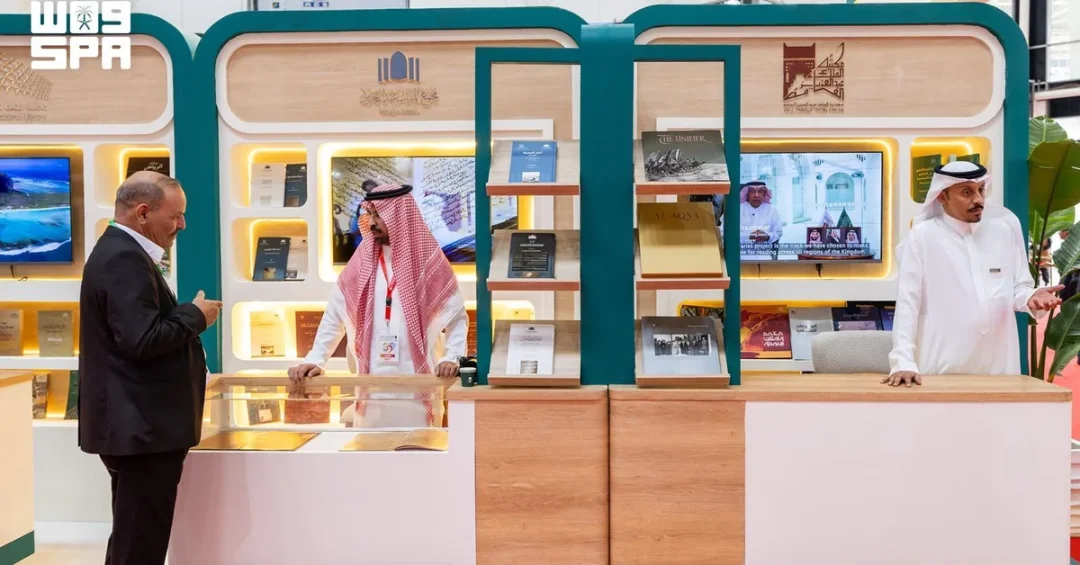
Saudi Arabia has inaugurated its pavilion as Guest of Honor at the 2026 Algiers International Book Fair, running from October 28 to November 7 at the Palais des Expositions in Pins Maritimes, Algeria. The participation, led by the Literature, Publishing and Translation Commission, underscores the Kingdom’s commitment to amplifying its cultural and literary voice on the international stage and deepening the historic ties uniting Saudi Arabia and Algeria. The pavilion was officially opened by Algeria’s Speaker of the Council of the Nation, Azouz Nasri, alongside Algerian Minister of Culture and Arts Malika Bendouda, Saudi Ambassador to Algeria Abdullah Al-Busairi, and CEO of the Literature, Publishing and Translation Commission Abdulatif Alwasel.
This prestigious selection as Guest of Honor marks a significant milestone in Saudi-Algerian cultural relations, reflecting the Kingdom’s active presence in the regional and international cultural landscape. The event offers an exceptional platform to introduce Algerian audiences and international visitors to the diversity and richness of Saudi culture, from its storied literary heritage to its dynamic contemporary creative industries. As the Kingdom continues to open its doors to the world under Vision 2030, cultural diplomacy initiatives like this book fair participation play a vital role in fostering mutual understanding and showcasing the remarkable evolution of Saudi Arabia’s cultural sector. Could there be a more fitting venue than a book fair to celebrate the power of words in building bridges between nations?
Context and Background
The Algiers International Book Fair is one of North Africa’s most prominent literary events, drawing publishers, authors, and cultural institutions from across the Arab world and beyond. Saudi Arabia’s selection as Guest of Honor at the 2026 edition represents a diplomatic and cultural achievement that highlights the growing importance of cultural exchange in Saudi foreign policy. The Literature, Publishing and Translation Commission, a key entity within the Kingdom’s cultural ecosystem, is spearheading this initiative, demonstrating its mandate to promote Saudi literature, publishing, and translation on the global stage. Under the leadership of His Highness Prince Bader bin Abdullah bin Farhan, Minister of Culture and Chairman of the Commission’s Board of Directors, the Commission has been instrumental in elevating Saudi Arabia’s cultural profile internationally.
Why does this moment matter now? It comes at a time when Saudi Arabia is experiencing an unprecedented cultural renaissance, driven by Vision 2030’s ambitious goals to diversify the economy and enhance quality of life. The Kingdom has invested heavily in cultural infrastructure, from museums and galleries to festivals and international partnerships, creating a vibrant ecosystem that celebrates both heritage and modernity. The Algiers book fair participation is a natural extension of these efforts, offering a tangible demonstration of how Saudi cultural institutions are engaging with global audiences. By bringing together a diverse delegation spanning heritage, culinary arts, fashion, architecture, film, and calligraphy, the Kingdom presents a holistic vision of its cultural identity—one that honors tradition while embracing innovation.
Moreover, the event underscores the deep historical and cultural bonds between Saudi Arabia and Algeria, two nations connected by shared language, faith, and traditions. The warm reception extended by Algerian officials, including President Abdelmadjid Tebboune and Minister Malika Bendouda, reflects the mutual respect and spirit of cooperation that characterizes Saudi-Algerian relations. As the Kingdom continues to expand its diplomatic and cultural footprint, such partnerships serve as a model for constructive engagement in the region. Isn’t it remarkable how a book fair can serve as a catalyst for strengthening bilateral ties and fostering people-to-people connections?
Key Details
The Saudi pavilion at the Algiers International Book Fair is a multifaceted showcase of the Kingdom’s cultural wealth. The delegation comprises an impressive array of entities, including the Heritage Commission, the Culinary Arts Commission, the Fashion Commission, the Architecture and Design Commission, and the Film Commission. Additional participants include the Prince Mohammed bin Salman Global Center for Arabic Calligraphy (Dar Alqalam), the Ministry of Islamic Affairs, Dawah and Guidance, King Fahd Glorious Quran Printing Complex, King Fahad National Library, King Abdulaziz Public Library, King Salman Global Academy for Arabic Language, King Abdulaziz Complex for Endowment Libraries, the Saudi cultural mission in Algeria, and the Arabic Observatory of Translation. This comprehensive representation illustrates the breadth and depth of Saudi Arabia’s cultural institutions and their collaborative approach to cultural diplomacy.
Visitors to the pavilion can engage in a rich program designed by the Literature, Publishing and Translation Commission. The schedule features live panel discussions, captivating poetry evenings, and interactive sessions with renowned Saudi writers and poets. Audiences will also enjoy performances of Saudi traditional arts both inside and outside the exhibition venue, while a special display of treasured historical manuscripts emphasizes the Kingdom’s literary and cultural legacy. A dedicated corner filled with Saudi publications invites bibliophiles to explore contemporary Saudi literature, and a handicrafts section offers live demonstrations of traditional crafts. Archaeological replicas from across the Kingdom provide a glimpse into Saudi Arabia’s ancient heritage, while sections dedicated to musical instruments, traditional attire, and film previews offer a window into the Kingdom’s thriving creative industries.
Abdulatif Alwasel, CEO of the Literature, Publishing and Translation Commission, commented on the significance of the selection: “Saudi Arabia’s selection as Guest of Honor marks a milestone in cultural relations between the two nations and shows the Kingdom’s active presence in the regional and international cultural landscape.” He added that the event offers an exceptional opportunity to introduce Algerian audiences to the diversity and richness of Saudi culture. Alwasel expressed his gratitude to Prince Bader bin Abdullah bin Farhan for his continued support and commitment to promoting knowledge exchange across the Kingdom’s cultural sector, and thanked Algerian President Tebboune and Minister Bendouda for their hospitality and warm welcome. How often does a single pavilion manage to encapsulate the soul of a nation so vividly?
International and Regional Impact
The Saudi pavilion at the Algiers International Book Fair carries significant implications for regional cultural diplomacy and international relations. By participating as Guest of Honor, the Kingdom signals its commitment to fostering cultural exchange and dialogue within the Arab world and beyond. This initiative aligns with Saudi Arabia’s broader strategy of cultural diplomacy, which seeks to build bridges of understanding and cooperation with nations across the globe. The event also provides a platform for Saudi creators, writers, and artists to connect with international audiences, thereby promoting cross-cultural appreciation and collaboration. In a region often characterized by political tensions, cultural events like this serve as a unifying force, highlighting shared heritage and common aspirations.
Furthermore, the participation reinforces Saudi Arabia’s role as a leader in the preservation and promotion of Arab and Islamic culture. The presence of entities such as the King Fahd Glorious Quran Printing Complex and the King Salman Global Academy for Arabic Language underscores the Kingdom’s dedication to serving Arabic language and Islamic scholarship. These institutions not only preserve cultural heritage but also contribute to contemporary cultural production and intellectual discourse. The book fair thus becomes a venue for showcasing Saudi Arabia’s soft power and its contributions to global civilization. Could there be a more effective way to counter misconceptions and build lasting friendships than through the universal language of culture?
Economic and Strategic Significance
While primarily a cultural event, the Saudi participation in the Algiers International Book Fair also carries economic and strategic significance. The publishing industry is a growing sector within Saudi Arabia’s creative economy, and international book fairs provide valuable opportunities for Saudi publishers to forge partnerships, negotiate rights, and expand their market reach. The Literature, Publishing and Translation Commission has been actively supporting the growth of the publishing sector, recognizing its potential to create jobs, stimulate innovation, and contribute to the Kingdom’s economic diversification goals. By showcasing Saudi publications and facilitating interactions between Saudi and Algerian publishers, the fair opens doors for commercial collaboration and knowledge transfer.
Strategically, the event strengthens Saudi-Algerian relations, which are vital for regional stability and cooperation. Algeria is a key partner in North Africa, and cultural diplomacy can pave the way for enhanced cooperation in other areas, including trade, investment, and security. The warm reception and high-level attendance at the pavilion’s inauguration reflect the mutual interest in deepening ties. Moreover, the fair serves as a platform to promote Saudi Arabia as a destination for tourism, investment, and cultural exchange, aligning with Vision 2030’s objectives to attract international visitors and diversify revenue streams. Isn’t it fascinating how cultural engagement can yield tangible economic and strategic benefits?
Vision 2030 Alignment
The Saudi pavilion at the 2026 Algiers International Book Fair is a concrete manifestation of Vision 2030’s cultural and economic objectives. Vision 2030 aims to diversify the Saudi economy, enhance quality of life, and promote cultural heritage, and this participation advances all three. By supporting the publishing industry, the Kingdom is investing in a knowledge-based economy and creating opportunities for Saudi creatives. By showcasing its cultural heritage and modern creative industries, Saudi Arabia enhances its global image and attracts cultural tourism. By fostering international partnerships, the Kingdom builds bridges of understanding and cooperation that are essential for its long-term prosperity and global role.
As Saudi Arabia continues to implement Vision 2030, cultural diplomacy will remain a cornerstone of its international engagement. The Literature, Publishing and Translation Commission’s leadership in this initiative exemplifies the Kingdom’s proactive approach to cultural exchange and its commitment to sharing its rich heritage with the world. The Algiers book fair is not just a one-time event but a stepping stone toward deeper cultural cooperation and mutual understanding between Saudi Arabia and Algeria, and between the Kingdom and the global community. With each pavilion, each book, and each cultural exchange, Saudi Arabia moves closer to realizing its vision of a vibrant, open, and globally engaged society. What better way to build a shared future than by celebrating the stories, traditions, and creativity that unite us all?
20 Questions
Q1. What is the significance of Saudi Arabia being Guest of Honor at the 2026 Algiers International Book Fair?
A1. It marks a milestone in Saudi-Algerian cultural relations, showcasing the Kingdom’s active presence in the regional and international cultural landscape while providing an exceptional opportunity to introduce Algerian audiences to the diversity and richness of Saudi culture.
Q2. Which Saudi entity is leading the Kingdom’s participation in the book fair?
A2. The Literature, Publishing and Translation Commission is leading the initiative, highlighting the flourishing Saudi-Algerian partnership and the dynamic evolution of Saudi Arabia’s cultural scene.
Q3. Who inaugurated the Saudi pavilion at the fair?
A3. Algeria’s Speaker of the Council of the Nation, Azouz Nasri, inaugurated the pavilion, accompanied by Algerian Minister of Culture and Arts Malika Bendouda, Saudi Ambassador to Algeria Abdullah Al-Busairi, and CEO Abdulatif Alwasel.
Q4. What did Abdulatif Alwasel say about the selection?
A4. Alwasel stated that the selection marks a milestone in cultural relations between the two nations and shows the Kingdom’s active presence in the regional and international cultural landscape, offering a unique opportunity to showcase Saudi culture.
Q5. Which Saudi cultural entities are participating in the pavilion?
A5. The delegation includes the Heritage Commission, Culinary Arts Commission, Fashion Commission, Architecture and Design Commission, Film Commission, Dar Alqalam, Ministry of Islamic Affairs, and several libraries and language academies.
Q6. What types of activities are offered at the Saudi pavilion?
A6. Visitors can enjoy live panel discussions, poetry evenings, interactive sessions with Saudi writers, traditional arts performances, manuscript displays, handicrafts demonstrations, archaeological replicas, musical instruments, and film previews.
Q7. How does the participation reflect Saudi Arabia’s cultural diplomacy?
A7. It demonstrates the Kingdom’s commitment to fostering international cultural exchange, building bridges of understanding, and showcasing its rich heritage and creative industries to the world, in line with Vision 2030 goals.
Q8. What is the role of the Literature, Publishing and Translation Commission?
A8. The Commission supports and promotes Saudi literature, publishing, and translation, leads cultural initiatives, and works to elevate the Kingdom’s cultural profile internationally under the guidance of Prince Bader bin Abdullah bin Farhan.
Q9. Why is the book fair important for Saudi-Algerian relations?
A9. It strengthens cultural ties, fosters mutual understanding, and builds on shared heritage, reflecting the deep historical and cultural bonds between the two nations and their peoples.
Q10. What historical manuscripts are on display?
A10. The pavilion features a special display of treasured historical manuscripts that emphasize the Kingdom’s literary and cultural legacy, offering visitors a glimpse into Saudi Arabia’s rich intellectual heritage.
Q11. How does the fair support Saudi publishers?
A11. It provides opportunities for Saudi publishers to forge partnerships, negotiate rights, and expand market reach, contributing to the growth of the publishing industry and the Kingdom’s creative economy.
Q12. What is the significance of the King Salman Global Academy for Arabic Language’s participation?
A12. It underscores Saudi Arabia’s dedication to serving the Arabic language and promoting its global presence, reinforcing the Kingdom’s role as a leader in Arabic linguistic and cultural preservation.
Q13. How does the event align with Vision 2030?
A13. It advances Vision 2030’s cultural and economic objectives by supporting the publishing sector, enhancing quality of life, promoting cultural heritage, and strengthening international partnerships.
Q14. What can visitors learn about Saudi traditions at the pavilion?
A14. Visitors can experience Saudi hospitality, traditional attire, handicrafts, music, and culinary arts, gaining a comprehensive understanding of the Kingdom’s authentic traditions and modern creativity.
Q15. Who thanked Prince Bader bin Abdullah bin Farhan, and why?
A15. Abdulatif Alwasel thanked Prince Bader for his continued support and commitment to promoting knowledge exchange across the Kingdom’s cultural sector, highlighting his leadership in cultural development.
Q16. What message does Saudi Arabia aim to convey through its participation?
A16. The Kingdom seeks to amplify its cultural and literary voice, host vibrant international exchange, and deepen ties with Algeria, presenting a positive image of Saudi culture and its dynamic evolution.
Q17. How does the fair contribute to cultural exchange between Saudi Arabia and Algeria?
A17. It facilitates dialogue, showcases shared heritage, and creates opportunities for collaboration between Saudi and Algerian cultural institutions, artists, and publishers.
Q18. What is the expected impact of the fair on Saudi tourism?
A18. By showcasing Saudi culture and hospitality, the fair can attract Algerian and international visitors to the Kingdom, supporting Vision 2030’s tourism goals and cultural tourism initiatives.
Q19. What role do film previews play at the pavilion?
A19. Film previews offer a window into the Kingdom’s thriving creative industries, highlighting Saudi Arabia’s growing film sector and its contribution to contemporary cultural production.
Q20. How does this participation reflect Saudi Arabia’s global cultural leadership?
A20. It demonstrates the Kingdom’s proactive approach to cultural diplomacy, its commitment to preserving and promoting Arab and Islamic heritage, and its efforts to build bridges of understanding across nations.
Reader Feedback
We value your thoughts. Please share your feedback on this article.
Your feedback helps us improve our coverage.