


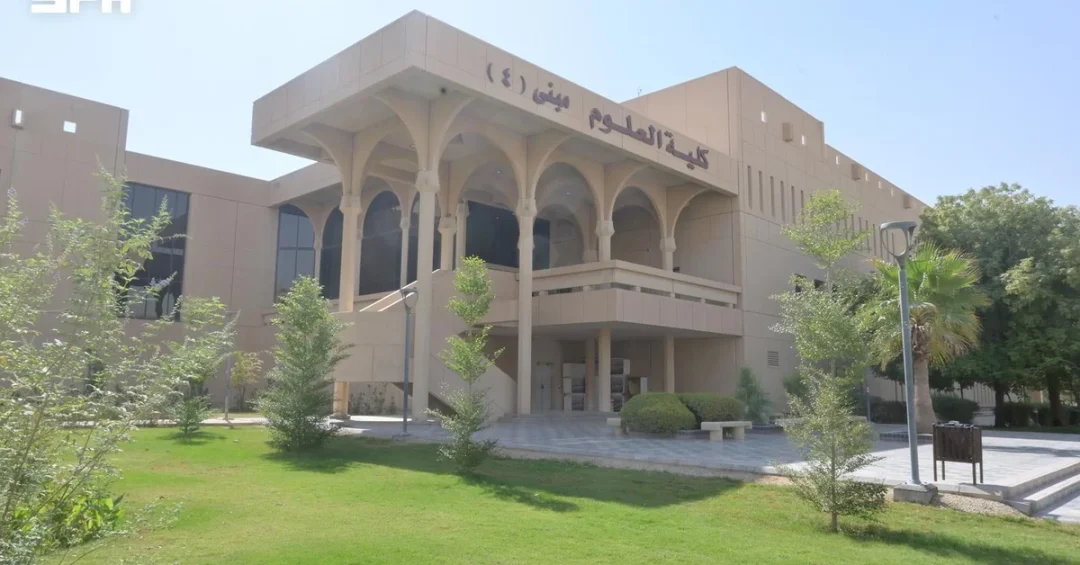
King Saud University’s College of Science has had 151 of its faculty members and researchers named in the 2026 edition of the world’s top 2% most-cited scientists, a rise of nearly 36% compared with the previous year, according to an announcement carried by the Saudi Press Agency (SPA). The inclusion places the Riyadh-based institution among a select group of universities worldwide whose scholars shape the direction of global scientific inquiry, and it marks one of the largest single-year expansions in recognition that the college has recorded.
The list is far more than an academic honor roll. It is a detailed, data-driven snapshot of which researchers are cited most often by their peers across every branch of science, and it is consulted by universities, funders, and policymakers worldwide. For the Kingdom, the result offers measurable evidence that its long-term investment in research quality is producing scholars whose work travels beyond national borders. How did a single college come to place so many of its researchers among the most influential in the world?
Context and Background
What exactly does it mean to be named among the world’s top 2% of scientists? The designation is compiled in the ninth edition of a widely referenced database whose methodology was developed by Stanford University Professor John P.A. Ioannidis. The study draws on Scopus bibliographic data as of August 1, 2026, and it evaluates two complementary dimensions of research impact: a scholar’s career-long record through the end of 2025, and the citations their work received during that single year.
The approach deliberately moves beyond raw publication counts. It relies on citation-based indicators, including the h-index, the co-authorship-adjusted hm-index, and a composite citation indicator known as the c-score. Each of these measures attempts to capture the reach and influence of a researcher’s work rather than the volume of output alone. The database organizes the scientific landscape into 20 scientific fields and 174 subfields under the Science-Metrix classification, ensuring that recognition is distributed across disciplines rather than concentrated in a handful of high-profile areas.
Why does a citation-based list carry so much weight in global academia? Because citation is the currency of scientific influence: when researchers around the world build on a scholar’s findings, cite their methods, or test their hypotheses, they are signaling that the work matters. For universities, the proportion of faculty appearing on such lists has become a meaningful benchmark of research standing, and for national systems it offers an external, independent measure of scientific maturity. King Saud University’s College of Science now has 151 names on that roster, a figure that situates it within an international conversation about who is producing the science the world relies on.
A Rising Trajectory in Research Impact
How significant is a jump of nearly 36% in a single year? Growth of that magnitude is unusual in citation rankings, which tend to move gradually because career-long indicators shift slowly. A near-36% increase suggests that younger and mid-career researchers at the college are gaining visibility rapidly, while established professors continue to accumulate citations. The result is a broad-based rise rather than a one-off spike tied to a small number of individuals.
The timing of the assessment matters. The database captures citations received during 2025 and assesses career impact through the end of that year, drawing on Scopus data current to August 1, 2026. This makes the 2026 edition a timely reflection of recent momentum, not a legacy of past glories. For observers of Saudi higher education, the increase offers a concrete data point behind the broader narrative of the Kingdom’s research ascent.
What kinds of work earn a place on such a list? Inclusion reflects sustained contribution across the full spectrum of scientific disciplines represented within the College of Science, from the physical and mathematical sciences to the life sciences and the environmental fields that sit at the interface between them. The Stanford methodology’s use of field and subfield normalization means that a researcher in a niche specialism can be recognized alongside those in larger, faster-growing fields, provided their work commands disproportionate citation attention. That breadth is part of what makes the college’s showing notable: it is not confined to a single department or a single fashionable topic.
Inside the Methodology: Rigor Behind the Ranking
Why should readers trust a ranking built on citation metrics? The credibility of the list rests on the transparency and reproducibility of its method. By relying on Scopus, one of the world’s largest curated bibliographic databases, the study uses a consistent, independently maintained source of publication and citation records. The composite indicators are designed to correct for the most common distortions in citation analysis, including differences in co-authorship practices and the tendency of large teams to inflate individual scores.
The h-index captures both productivity and influence by measuring how many papers a scholar has published that have each received at least the same number of citations. The hm-index adjusts that calculation for the number of co-authors, crediting researchers appropriately whether they publish alone or as part of a large consortium. The c-score then combines multiple citation measures into a single composite, reducing reliance on any one metric. Together, these tools aim to identify genuine research influence rather than mere output. The fact that King Saud University’s scholars perform strongly under this demanding framework speaks to the depth of their contribution.
International and Regional Impact
What does Saudi scientific strength mean for the wider region? The presence of 151 College of Science researchers on a global list reinforces the Kingdom’s position as a hub of higher education and research in the Middle East. It also signals to international collaborators, visiting scholars, and research partners that Saudi institutions are producing work of globally competitive quality. In a world where scientific problems increasingly cross borders, from climate and water security to public health, such credibility opens doors to joint research programs and knowledge exchange.
The recognition also carries weight within the global academic community itself. Universities worldwide use top-2% lists when recruiting faculty, forming partnerships, and benchmarking their own performance. A strong showing by a Saudi college influences how international peers perceive the Kingdom’s research ecosystem, supporting the broader effort to position Saudi Arabia as a knowledge economy rather than solely an energy economy. It is a quiet but meaningful form of soft power, earned through citations rather than campaigns.
Economic and Strategic Significance
Why does research impact translate into strategic value? Scientific output underpins innovation, and innovation in turn feeds the diversification of an economy. The researchers recognized in the list work in fields that connect directly to national priorities, from materials science and energy research to environmental studies and the life sciences. Their citation records demonstrate that the knowledge they generate is being absorbed and used by the global scientific community, which is precisely the kind of knowledge transfer that supports long-term economic development.
The strategic dimension also runs through talent. A college that places 151 researchers on a global list becomes a magnet for graduate students and early-career scientists seeking a productive research environment. That strengthens the pipeline of skilled professionals the Kingdom needs as it expands its research and industrial base, and it deepens the pool of expertise available to national institutions and private enterprises alike. Strong metrics, in other words, beget stronger institutions.
Vision 2030 Alignment
How does this achievement connect to Saudi Arabia’s long-term ambitions? The recognition aligns directly with the goals of Saudi Vision 2030, which places education, research, and innovation at the heart of the Kingdom’s transformation into a diversified, knowledge-driven economy. The College of Science’s success reflects sustained institutional efforts to strengthen research quality and international impact, and it supports the university’s stated ambition to achieve global leadership in research and innovation.
The result is best understood not as an endpoint but as an indicator of direction. Each name on the list represents a researcher whose work is being read, tested, and built upon by scientists worldwide, and the near-36% increase shows that this influence is deepening. As Saudi universities continue to invest in research infrastructure, international partnerships, and talent development, achievements of this kind are likely to accumulate. For a Kingdom pursuing a future built on knowledge, the 2026 list offers encouraging evidence that the foundation is being laid, one cited paper at a time.
20 Questions
Q1. How many King Saud University researchers made the 2026 list?
A1. A total of 151 faculty members and researchers from King Saud University’s College of Science were included in the 2026 list of the world’s top 2% most-cited scientists, as announced via the Saudi Press Agency.
Q2. How much did the number grow compared with 2025?
A2. The 2026 figure represents an increase of nearly 36% compared with the previous year, marking one of the largest single-year expansions the college has recorded in this recognition.
Q3. Which edition of the database is this?
A3. This is the ninth edition of the widely referenced top 2% list, which is compiled using a methodology developed by Stanford University Professor John P.A. Ioannidis and based on Scopus data.
Q4. What data source underpins the assessment?
A4. The assessment draws on Scopus bibliographic data as of August 1, 2026, evaluating career-long research impact through the end of 2025 and citations received during that year.
Q5. What citation indicators are used?
A5. The methodology uses indicators including the h-index, the co-authorship-adjusted hm-index, and a composite citation indicator known as the c-score, emphasizing research impact rather than publication counts alone.
Q6. How many scientific fields and subfields are covered?
A6. The classification covers 20 scientific fields and 174 subfields under the Science-Metrix classification, ensuring recognition is distributed across disciplines rather than concentrated in a few areas.
Q7. Why are citation metrics considered meaningful?
A7. Citation is a widely recognized measure of scientific influence: when researchers build on a scholar’s findings, they signal that the work matters, making citation a credible external indicator of research standing.
Q8. What does the h-index measure?
A8. The h-index captures both productivity and influence by measuring how many papers a scholar has published that have each received at least that same number of citations.
Q9. What is the hm-index?
A9. The hm-index adjusts the h-index calculation for the number of co-authors, crediting researchers appropriately whether they publish alone or as part of a large consortium.
Q10. Why does the methodology go beyond publication counts?
A10. Raw publication counts can reward volume over quality; the composite indicators seek to identify genuine research influence by focusing on how often and how widely a scholar’s work is cited.
Q11. What does the c-score add to the assessment?
A11. The composite citation indicator, or c-score, combines multiple citation measures into a single composite, reducing reliance on any one metric and improving the robustness of the evaluation.
Q12. Does the rise reflect broad-based strength?
A12. Yes, growth of this magnitude suggests that younger and mid-career researchers are gaining visibility rapidly while established professors continue to accumulate citations, indicating broad-based progress.
Q13. How does this affect the university’s standing?
A13. The inclusion reinforces the university’s position among global institutions whose scholars shape scientific inquiry and strengthens its credibility with international collaborators and research partners.
Q14. What does the recognition mean for Saudi Arabia regionally?
A14. It reinforces the Kingdom’s position as a hub of higher education and research in the Middle East and signals to international partners that Saudi institutions produce globally competitive work.
Q15. How does research impact support economic diversification?
A15. Scientific output underpins innovation, which feeds economic diversification; the researchers’ work in areas from energy to life sciences demonstrates knowledge being absorbed by the global scientific community.
Q16. How does the recognition support talent development?
A16. A college with 151 researchers on a global list attracts graduate students and early-career scientists, strengthening the pipeline of skilled professionals the Kingdom needs as its research base expands.
Q17. What is the connection to Saudi Vision 2030?
A17. The achievement aligns with Saudi Vision 2030, which places education, research, and innovation at the heart of the Kingdom’s transformation into a diversified, knowledge-driven economy.
Q18. What role did the college’s efforts play?
A18. The result reflects the college’s sustained efforts to strengthen research quality and international impact, supporting the university’s ambitions for global leadership in research and innovation.
Q19. Why is the timing of the assessment significant?
A19. Capturing citations during 2025 and career impact through that year makes the 2026 edition a timely reflection of recent momentum rather than a legacy of past achievements.
Q20. Where was the announcement reported?
A20. The announcement was carried by the Saudi Press Agency, the Kingdom’s official news authority, which reported the inclusion of the 151 researchers in the 2026 list.
Reader Feedback
We value your thoughts. Please share your feedback on this article.
Your feedback helps us improve our coverage.