


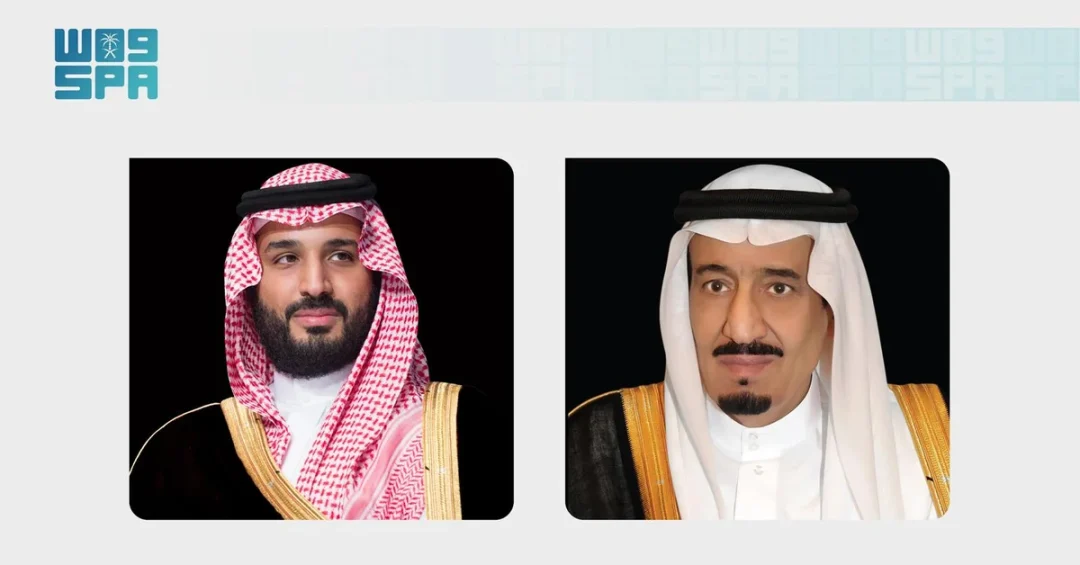
A specialized Saudi medical and surgical team began on Thursday morning the delicate separation operation for Laitience and Loveness, two-year-and-two-month-old conjoined twins from Tanzania, at King Abdullah Specialist Children’s Hospital in King Abdulaziz Medical City, under the Ministry of National Guard in Riyadh. The procedure is being carried out in direct implementation of the directives of Custodian of the Two Holy Mosques King Salman bin Abdulaziz Al Saud and His Royal Highness Prince Mohammed bin Salman bin Abdulaziz Al Saud, Crown Prince and Prime Minister, reflecting the Kingdom’s enduring commitment to humanitarian medicine and cross-border care.
The operation falls under the internationally recognized Saudi Conjoined Twins Program, which has provided free, world-class surgical care to conjoined twins from across the globe for more than three decades. The twins arrived in the Kingdom on January 27, 2026, and were admitted to the hospital, where the medical team conducted thorough and comprehensive examinations before convening several specialized medical meetings to evaluate their condition and determine the appropriate separation plan. Could there be a more striking illustration of how Saudi Arabia translates compassion into tangible medical action?
Context and Background
Supervisor General of the King Salman Humanitarian Aid and Relief Centre (KSrelief) and Head of the Medical and Surgical Team of the Saudi Conjoined Twins Program Dr. Abdullah Al Rabeeah explained in a press statement that the twins are joined at the pelvis and hips, sharing four lower limbs, the lower part of the intestines, the spinal column, lumbar vertebrae, and spinal cord. Because of the complexity of their shared anatomy, the team also undertook a skin expansion procedure that took several months to complete, carefully preparing the twins’ bodies for the separation surgery. Why does such meticulous preparation matter so much in operations of this kind?
The Saudi Conjoined Twins Program was established in 1990 and has since cared for 160 twins from 29 countries across five continents, becoming one of the most respected humanitarian surgical initiatives in the world. This procedure marks the fourth separation operation for conjoined twins from Tanzania and the 75th operation within the program’s history. That track record places Riyadh at the center of a highly specialized field of pediatric surgery that few medical centers globally are equipped to undertake, and it underscores the depth of Saudi clinical expertise built over decades.
The twins’ journey to the Kingdom began with their arrival on January 27, 2026, after which they were admitted to King Abdullah Specialist Children’s Hospital. There, the medical team carried out detailed imaging, diagnostic assessments, and multidisciplinary consultations to map the shared organs and plan a safe surgical route. Each case within the program is treated as unique, and the several months of preparation reflect the program’s patient-first philosophy, in which every decision is calibrated to maximize the chance of a successful outcome.
Key Details of the Operation
Dr. Al Rabeeah noted that the operation is scheduled to take place across nine stages lasting approximately 15 hours, with the participation of 44 consultants, specialists, nursing, and technical staff. The multidisciplinary team spans the specialties of anesthesia, pediatric surgery, pediatric neurosurgery, urology, and plastic surgery, with a success rate estimated at 70%. How does a medical team coordinate 44 specialists across nine stages and 15 hours without losing precision at any moment?
The staged approach allows the surgical team to separate the twins’ shared systems in a carefully sequenced manner, addressing the pelvis and hips, the lower intestines, the spinal column and lumbar vertebrae, and the spinal cord. Each stage is planned so that the team can monitor the twins’ stability and respond to any complication before proceeding further. The involvement of pediatric neurosurgery and plastic surgery alongside general pediatric surgery and urology highlights the range of anatomical challenges the case presents, and the 70% success estimate reflects a realistic, carefully calculated assessment of a highly complex procedure.
The participation of nursing and technical staff is equally central to the operation’s planning. An operation of this length and complexity requires continuous anesthesia management, precise instrument handling, and constant monitoring across many hours. The Saudi team’s ability to assemble such a large and specialized group in a single operating environment is a testament to the institutional capacity developed within the Saudi Conjoined Twins Program and the Ministry of National Guard’s health services.
International and Regional Impact
The operation carries significance far beyond the operating room. Tanzania has now sent four sets of conjoined twins to Riyadh for separation surgery, and the program’s reach extends to 29 countries across five continents, reinforcing Saudi Arabia’s position as a global hub for humanitarian medical care. For families in Africa, Asia, and beyond, the program represents a lifeline that would otherwise be unavailable or unaffordable. What does it mean for a family when a distant country offers its most advanced medicine free of charge?
Within the region, the Saudi Conjoined Twins Program strengthens the Kingdom’s standing as a leader in health diplomacy and humanitarian relief, complementing the work of KSrelief in crisis zones and developing countries. The program also builds professional bridges, as Saudi clinicians share expertise and collaborate with international counterparts. The fourth Tanzanian case, in particular, reflects a deepening health partnership between the Kingdom and East Africa, rooted in trust earned through successful outcomes over many years.
Economic and Strategic Significance
The Saudi Conjoined Twins Program is fully funded by the Kingdom and provided free of charge to beneficiary families, embodying the humanitarian values that underpin Saudi foreign policy and Vision 2030’s emphasis on global engagement and quality of life. The program does not function as a commercial enterprise; rather, it is a strategic investment in the Kingdom’s soft power, demonstrating that Saudi medical institutions can deliver world-class care at the highest international standards. Why would a nation choose to invest so heavily in treating children from other countries?
Beyond its humanitarian dimension, the program contributes to the development of Saudi human capital. The 44-person team involved in this operation includes consultants, specialists, nurses, and technicians who refine their skills through each case, raising the overall capability of the Kingdom’s health care system. The expertise accumulated in pediatric surgery, neurosurgery, urology, and plastic surgery has applications across the domestic health sector, supporting the Vision 2030 goal of building a resilient, high-quality health care system that serves citizens and residents and attracts medical talent from around the world.
Vision 2030 Alignment
The operation aligns closely with the humanitarian and international dimensions of Saudi Vision 2030, which seeks to position the Kingdom as a responsible global actor and a leader in charitable and relief work. The Saudi Conjoined Twins Program, operating under royal directives and supported continuously by the Custodian of the Two Holy Mosques and the Crown Prince, is a flagship example of how Saudi Arabia combines medical excellence with humanitarian purpose. Does any initiative better capture the spirit of a nation that measures its strength by the lives it improves?
Dr. Al Rabeeah, on his own behalf and on behalf of his colleagues on the medical and surgical team, expressed his gratitude, appreciation, and thanks to the Custodian of the Two Holy Mosques and HRH the Crown Prince for their continuous support of the program. He emphasized that this support has enabled the Saudi medical team to provide the highest standard of medical care and improve the quality of life for the beneficiary children, praying to Allah Almighty for the operation’s success and for the twins to be granted health and well-being. As the 75th operation in a proud history unfolds in Riyadh, the Kingdom once again demonstrates that its vision for the future is built on compassion, capacity, and a commitment to human dignity that reaches across borders.
20 Questions
Q1. Who are the conjoined twins undergoing separation surgery in Riyadh?
A1. The twins are Laitience and Loveness, two-year-and-two-month-old conjoined twins from Tanzania. They are being treated at King Abdullah Specialist Children’s Hospital in King Abdulaziz Medical City under the Ministry of National Guard in Riyadh.
Q2. Where is the separation operation taking place?
A2. The operation is being performed at King Abdullah Specialist Children’s Hospital in King Abdulaziz Medical City, which is affiliated with the Ministry of National Guard, in Riyadh, Saudi Arabia.
Q3. Under whose directives is the operation being carried out?
A3. The operation is being carried out in implementation of the directives of Custodian of the Two Holy Mosques King Salman bin Abdulaziz Al Saud and His Royal Highness Prince Mohammed bin Salman bin Abdulaziz Al Saud, Crown Prince and Prime Minister.
Q4. Who leads the medical and surgical team?
A4. The team is headed by Dr. Abdullah Al Rabeeah, who serves as Supervisor General of the King Salman Humanitarian Aid and Relief Centre (KSrelief) and Head of the Medical and Surgical Team of the Saudi Conjoined Twins Program.
Q5. When did the Tanzanian twins arrive in the Kingdom?
A5. The twins arrived in the Kingdom on January 27, 2026. After admission to the hospital, the medical team conducted thorough examinations and held several specialized meetings to plan their separation.
Q6. How are the twins joined, according to Dr. Al Rabeeah?
A6. The twins are joined at the pelvis and hips, and they share four lower limbs, the lower part of the intestines, the spinal column, lumbar vertebrae, and spinal cord, making the case highly complex.
Q7. What preparatory procedure was performed before the surgery?
A7. The team carried out a skin expansion procedure that took several months, carefully preparing the twins’ bodies for the demanding separation surgery.
Q8. How long is the operation expected to last?
A8. The operation is scheduled to take place across nine stages lasting approximately 15 hours, with continuous monitoring by the medical and surgical team throughout the procedure.
Q9. How many specialists are involved in the operation?
A9. A total of 44 consultants, specialists, nursing, and technical staff are participating, covering the specialties of anesthesia, pediatric surgery, pediatric neurosurgery, urology, and plastic surgery.
Q10. What is the estimated success rate of the operation?
A10. The success rate is estimated at 70%, reflecting a careful, realistic assessment of a highly complex procedure involving shared major organs and systems.
Q11. Which separation operation number is this for twins from Tanzania?
A11. This marks the fourth separation operation for conjoined twins from Tanzania within the Saudi Conjoined Twins Program.
Q12. What number is this operation within the Saudi program overall?
A12. This is the 75th operation conducted within the Saudi Conjoined Twins Program since its establishment.
Q13. When was the Saudi Conjoined Twins Program established?
A13. The program was established in 1990 and has since become one of the most respected humanitarian surgical initiatives in the world.
Q14. How many twins has the program cared for since 1990?
A14. Since 1990, the program has cared for 160 twins from 29 countries across five continents, providing free specialized medical care.
Q15. From how many countries have beneficiary twins come?
A15. Beneficiary twins have come from 29 countries spanning five continents, demonstrating the program’s broad international reach and humanitarian purpose.
Q16. Is the program free for beneficiary families?
A16. Yes, the Saudi Conjoined Twins Program is fully funded by the Kingdom and provides its surgical care free of charge to beneficiary families from around the world.
Q17. What did Dr. Al Rabeeah say about the royal support?
A17. He expressed gratitude to the Custodian of the Two Holy Mosques and the Crown Prince, noting their continuous support has enabled the team to provide the highest standard of care and improve the children’s quality of life.
Q18. How does the operation reflect Saudi humanitarian values?
A18. The operation reflects the Kingdom’s commitment to humanitarian medicine and cross-border care, translating compassion into tangible medical action for families in need around the world.
Q19. How does the program relate to Vision 2030?
A19. The program aligns with Vision 2030’s emphasis on global engagement, humanitarian leadership, and building a high-quality health care system that serves people at home and abroad.
Q20. What outcome does the medical team pray for?
A20. Dr. Al Rabeeah prayed to Allah Almighty for the operation’s success and for the twins to be granted health and well-being following the procedure.
Reader Feedback
We value your thoughts. Please share your feedback on this article.
Your feedback helps us improve our coverage.