


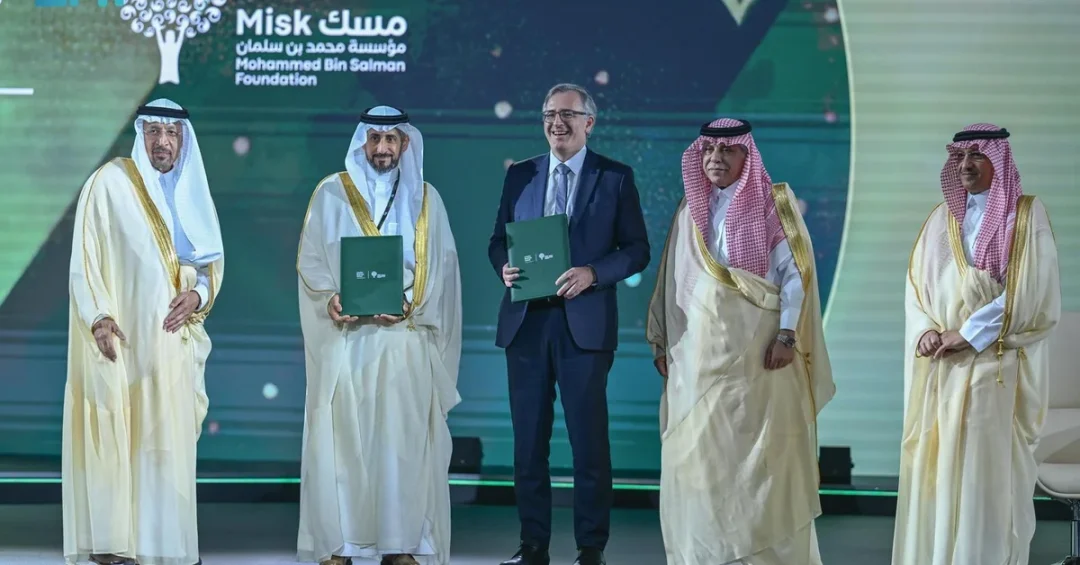
The Mohammed Bin Salman Foundation (MiSK) has signed a strategic Memorandum of Understanding (MoU) with the London Business School, one of the world’s premier academic institutions, in a move that deepens the Kingdom’s investment in youth development and executive education. The signing ceremony was held under the patronage of Dr. Majid Al-Kassabi, Vice Chairman of MiSK’s Board of Directors, and Yousef Al-Benyan, Minister of Education, according to the Saudi Press Agency. The agreement brings together a flagship Saudi nonprofit foundation devoted to empowering young people and a globally ranked business school known for shaping business leaders across continents.
The partnership is designed to build a structured bridge between Saudi talent and world-class academic expertise, with programs spanning youth empowerment, executive courses, joint research, and even a feasibility study for a regional executive education center. For observers of the Kingdom’s modernization journey, the question is not simply what this MoU announces today, but what it signals about how Saudi Arabia intends to cultivate its next generation of leaders. Why does pairing a national youth foundation with an international business school matter so much at this moment? The answer lies in the scale of the Kingdom’s ambitions and the human capital required to realize them.
Context and Background
The MoU builds on years of steady groundwork. MiSK, founded as a nonprofit organization, has grown into one of the Kingdom’s most visible vehicles for youth empowerment, running programs that touch entrepreneurship, media, culture, and leadership. London Business School, meanwhile, carries decades of experience in executive education and management research, with a global alumni network and campuses in London and Dubai. Bringing these two institutions together represents a deliberate pairing of local mission and international standards. How does a foundation rooted in Saudi society benefit from a partner headquartered thousands of kilometers away? The answer is capacity: world-class curricula, faculty depth, and research rigor that can be adapted to Saudi priorities.
The signing was attended at a senior level, with the Vice Chairman of MiSK’s Board of Directors and the Minister of Education both lending their patronage. That level of official engagement signals that the agreement is not a peripheral initiative but part of a broader national push to strengthen education and human capital. It also reflects the growing alignment between nonprofit foundations, government ministries, and international academic institutions in advancing the Kingdom’s development agenda. What does it take to turn a signed document into measurable outcomes for young Saudis? The MoU’s structure, with defined workstreams and a feasibility study, suggests a pragmatic, staged approach rather than a symbolic gesture.
A Partnership Built on Four Pillars
According to the Saudi Press Agency, the MoU establishes collaboration across several distinct areas. First, the two parties will work together on designing and implementing youth development and empowerment programs, giving young Saudis structured pathways to build skills and confidence. Second, the agreement includes creating executive courses and workshops tailored specifically for Saudi leaders, addressing a growing demand for advanced leadership training within the Kingdom’s public and private sectors. These are not generic offerings; the emphasis on tailoring indicates an intent to adapt content to the Saudi context.
Third, the partnership encompasses joint research initiatives focused on leadership transformation, with the explicit aim of aligning findings with Saudi Vision 2030. This research dimension matters because it moves the relationship beyond training delivery into knowledge creation, potentially producing insights that inform policy and institutional practice. Fourth, and perhaps most ambitiously, the collaboration will contribute to a feasibility study aimed at establishing a regional center for executive education within the Mohammed Bin Salman Nonprofit City. That study could lay the groundwork for a permanent institution, transforming a time-bound partnership into lasting infrastructure. What would a regional executive education hub mean for the Kingdom’s knowledge economy? It would position Saudi Arabia as a destination for leadership development, not just a participant in it.
Why This MoU Matters Now
Timing is central to understanding this agreement. Saudi Arabia is in the midst of an unprecedented transformation under Vision 2030, diversifying its economy beyond hydrocarbons and building new sectors that demand sophisticated management talent. The demand for executive education is rising across government entities, state-owned enterprises, and a fast-growing private sector. Partnering with an institution of London Business School’s caliber helps meet that demand while importing global best practices and adapting them locally. Is it any wonder that the Kingdom is investing in leadership pipelines rather than only in physical infrastructure? Human capital, after all, is the engine that makes infrastructure productive.
The MoU also aligns with Saudi Arabia’s broader strategy of international academic engagement. In recent years, the Kingdom has pursued partnerships with leading global universities and research institutions, reflecting a clear recognition that knowledge is a shared global resource. The involvement of the Minister of Education underscores the educational dimension of the agreement, linking nonprofit-led youth work with national education priorities. This cross-sector collaboration, bringing together a foundation, a ministry, and an international school, exemplifies the coordinated approach that Vision 2030 envisions. How can other sectors replicate this model of stitching together local missions and global expertise? The template established here offers a telling example.
International and Regional Impact
Beyond Saudi borders, the agreement carries significance for how the Kingdom is perceived internationally. Collaboration with a prestigious business school signals openness, credibility, and a commitment to global standards in education and leadership development. It reinforces the narrative of a modernizing Saudi Arabia that partners with the world’s best institutions rather than operating in isolation. For London Business School, the partnership offers access to a dynamic, fast-changing region and a chance to contribute to a national transformation story. What does this kind of collaboration say about the Kingdom’s place in the global knowledge economy? It says that Saudi Arabia is increasingly viewed as a partner of choice, not merely a market.
Regionally, the prospect of a dedicated center for executive education within the Mohammed Bin Salman Nonprofit City could have ripple effects. Such a center would serve not only Saudi leaders but potentially executives from across the region, positioning the Kingdom as a hub for professional development. That ambition fits with the broader vision of building a diversified, knowledge-driven economy in which Riyadh and other Saudi cities host institutions of continental significance. If the feasibility study moves forward, the center could become a magnet for talent and ideas, strengthening the Kingdom’s soft power. Who benefits when a region gains a world-class center for leadership training? Talent, businesses, and economies across the region all stand to gain.
Economic and Strategic Significance
From an economic standpoint, the MoU contributes to the development of human capital, a critical input for the Kingdom’s diversification agenda. Executive education and youth empowerment programs help build a workforce capable of leading complex organizations, managing large projects, and driving innovation. As Vision 2030 advances, the demand for such capabilities will only grow, and early investment in leadership pipelines offers long-term returns. The feasibility study for a regional center also points to a potential economic asset: a permanent institution that could attract international participants and generate knowledge-sector activity. Is investing in people the most durable economic strategy a nation can pursue? For a country undergoing structural transformation, the answer is emphatically yes.
Strategically, the partnership demonstrates the Kingdom’s capacity to convene global institutions around national priorities. It signals that Saudi Arabia’s nonprofit sector, exemplified by MiSK, is a serious actor capable of striking high-level agreements and implementing complex programs. That credibility matters for future partnerships and for the broader goal of establishing the Kingdom as a hub for education, innovation, and leadership. The involvement of the Mohammed Bin Salman Nonprofit City adds another layer, tying the agreement to one of the Kingdom’s flagship development projects. How does a single MoU connect to a city-scale vision? By embedding education and leadership at the heart of a new urban ecosystem designed for impact.
Vision 2030 Alignment
The MoU is explicitly framed around Vision 2030, with its research initiatives focused on leadership transformation intended to align with the national agenda. This is consistent with the vision’s emphasis on developing a skilled, ambitious workforce and on building institutions that can compete globally. Youth development and empowerment, the cornerstone of MiSK’s mission, directly serve the vision’s goals of nurturing talent and expanding opportunity. Executive education for Saudi leaders addresses the practical need for world-class management capability across sectors. Does any of this happen by accident? No—it reflects deliberate, coordinated planning.
Looking forward, the agreement between MiSK and London Business School represents more than a single signing; it is a building block in the Kingdom’s long-term strategy to develop human capital and global partnerships. The feasibility study for a regional center could, if realized, establish a lasting institution within the Mohammed Bin Salman Nonprofit City, anchoring executive education in the Kingdom for generations. As Saudi Arabia continues its transformation, partnerships like this one will help ensure that the next generation of leaders is ready to carry the vision forward. What could be more fundamental to a nation’s future than investing in the people who will lead it? That is the promise this MoU embodies.
20 Questions
Q1. Which organizations signed the Memorandum of Understanding?
A1. The Mohammed Bin Salman Foundation (MiSK) and the London Business School signed the strategic MoU. The agreement brings together a Saudi nonprofit devoted to youth empowerment and a globally recognized business school.
Q2. Who patronized the signing ceremony?
A2. The signing was held under the patronage of Dr. Majid Al-Kassabi, Vice Chairman of MiSK’s Board of Directors, and Yousef Al-Benyan, Minister of Education, according to the Saudi Press Agency.
Q3. What is the main purpose of the MoU?
A3. The agreement aims to build collaboration on designing and implementing youth development and empowerment programs, along with executive education and joint research initiatives relevant to Saudi Vision 2030.
Q4. What kind of programs will the two parties collaborate on?
A4. They will collaborate on youth development and empowerment programs, creating executive courses and workshops tailored for Saudi leaders, and joint research focused on leadership transformation.
Q5. Will the partnership include research activities?
A5. Yes. The MoU includes joint research initiatives focused on leadership transformation, with the goal of aligning findings and insights with the objectives of Saudi Vision 2030.
Q6. What is the feasibility study mentioned in the agreement?
A6. The partnership will contribute to a feasibility study aimed at establishing a regional center for executive education within the Mohammed Bin Salman Nonprofit City.
Q7. Where would the proposed regional center be located?
A7. The regional center for executive education would be established within the Mohammed Bin Salman Nonprofit City, according to the announced terms of the MoU.
Q8. Who is Dr. Majid Al-Kassabi?
A8. Dr. Majid Al-Kassabi is the Vice Chairman of MiSK’s Board of Directors. He patronized the signing ceremony alongside the Minister of Education.
Q9. Who is Yousef Al-Benyan?
A9. Yousef Al-Benyan is the Minister of Education of Saudi Arabia. He co-patronized the signing of the MoU with MiSK.
Q10. What is MiSK?
A10. MiSK is the Mohammed Bin Salman Foundation, a Saudi nonprofit organization focused on empowering youth through programs in entrepreneurship, leadership, media, culture, and related fields.
Q11. What is London Business School known for?
A11. London Business School is one of the world’s premier academic institutions, known for executive education, management research, and a strong global alumni network.
Q12. How does the MoU connect to Vision 2030?
A12. The MoU aligns with Vision 2030 through youth empowerment, leadership development, and joint research focused on leadership transformation that supports the Kingdom’s national agenda.
Q13. Who announced the agreement?
A13. The agreement was reported by the Saudi Press Agency (SPA), the Kingdom’s official news authority, which published details of the signing and its key components.
Q14. What are the executive courses intended for?
A14. The executive courses and workshops are tailored for Saudi leaders, designed to strengthen advanced leadership and management capabilities across the Kingdom’s public and private sectors.
Q15. Why is youth development central to this partnership?
A15. Youth development is central because MiSK’s mission focuses on empowering young people, and the Kingdom’s future workforce requires skills, confidence, and leadership training to drive Vision 2030.
Q16. Does the MoU include tailored content for Saudi leaders?
A16. Yes. The agreement specifically includes creating executive courses and workshops tailored for Saudi leaders, indicating content adapted to the Saudi context and priorities.
Q17. What potential long-term outcome does the feasibility study suggest?
A17. It suggests the possible establishment of a permanent regional center for executive education, which could position the Kingdom as a hub for leadership development in the region.
Q18. How might this partnership benefit the region beyond Saudi Arabia?
A18. A regional center for executive education could serve executives from across the region, positioning the Kingdom as a hub for professional development and knowledge exchange.
Q19. What does the agreement signal about Saudi Arabia’s global engagement?
A19. It signals openness, credibility, and a commitment to partnering with leading global institutions, reinforcing the Kingdom’s place in the international knowledge economy.
Q20. What is the overall significance of this MoU?
A20. The MoU represents a building block in the Kingdom’s long-term strategy to develop human capital and global academic partnerships, supporting leadership development aligned with Vision 2030.
Reader Feedback
We value your thoughts. Please share your feedback on this article.
Your feedback helps us improve our coverage.
Related articles
 Madinah Concludes Swimming Literacy Project with 300 Students
 AlUla Program Trains 50 Youth in Public Speaking
 Najran Schools Adopt Winter Schedule Starting Sunday
 Najran University Climbs Four Places in QS Arab Rankings 2027
 Saudi Arabia Sets February 2027 Deadline for Worker Housing
 ETEC to Hold Third National Forum for School Excellence in Riyadh