


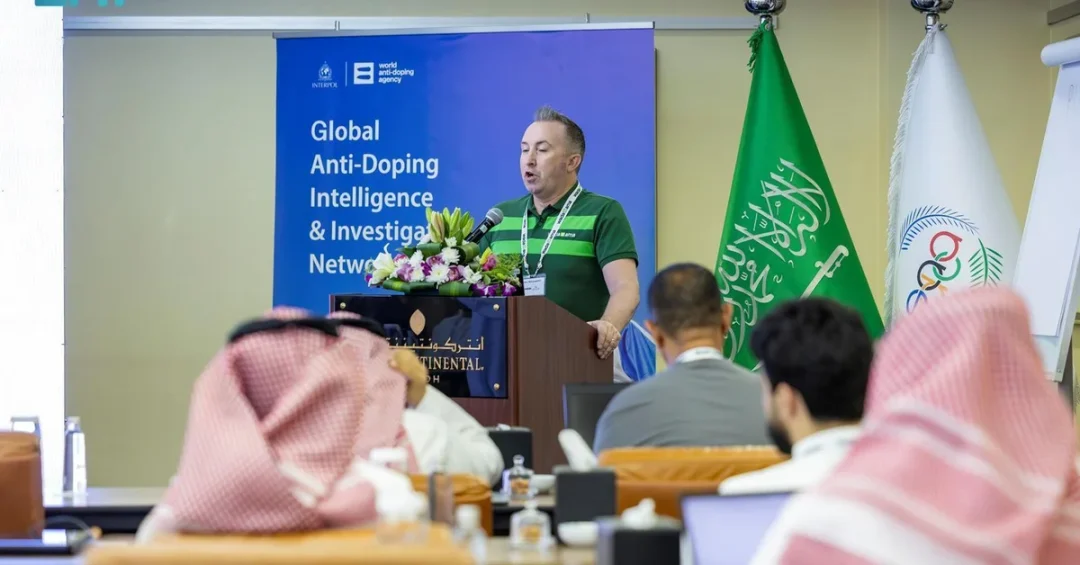
Riyadh has launched a specialized doping research and investigation training course hosted by the Ministry of Sport in cooperation with the Saudi Arabian Anti-Doping Committee (SAADC), drawing more than 50 participants from 13 countries across Asia and Oceania. The course, which opened on April 14, 2025, is designed to promote education, raise awareness, and advance research and analysis in the global fight against doping in sport. Experts from the World Anti-Doping Agency (WADA) and officials from INTERPOL representing Arab and Asian countries are attending the sessions, underscoring the Kingdom’s growing role as a convening power in international sport governance.
Why does a training course held in Riyadh matter to the wider sporting world? Because clean sport depends on the strength of the institutions that defend it, and this gathering represents a practical investment in those institutions. The presence of delegates from 13 nations, alongside specialists from two of the most recognized bodies in anti-doping and international law enforcement, signals that the Kingdom is positioning itself at the center of a coordinated global effort. For an international audience, the event offers a clear window into how Saudi Arabia is translating its sporting ambitions into substantive contributions to integrity, education, and research.
Context and Background
The course arrives at a moment when anti-doping authorities worldwide are intensifying their focus on research capacity, intelligence-sharing, and investigator training. Doping is no longer understood solely as an athlete-level offense; it is increasingly treated as a complex transnational issue involving supply chains, criminal networks, and sophisticated methods of concealment. That shift has elevated the importance of cross-border cooperation and of equipping national bodies with the technical expertise needed to detect, investigate, and deter violations. Saudi Arabia’s decision to host this program reflects a recognition that meaningful progress requires shared knowledge rather than isolated effort.
How does a nation build credibility in global sport integrity? Partly by opening its doors to the world’s leading experts and by investing in the education of the people who do this work every day. The Ministry of Sport, working alongside the Saudi Arabian Anti-Doping Committee (SAADC), has organized a program that brings together practitioners from across Asia and Oceania for intensive training in research methodology, investigative techniques, and awareness-building. The participation of specialists from WADA and officials from INTERPOL lends the course an international dimension that extends well beyond the host nation, creating a platform where regional experience meets global standards.
The geographical scope of the course is itself significant. By assembling delegates from 13 countries in Asia and Oceania, the program addresses regions where anti-doping infrastructure is at varying stages of development. Bringing these practitioners together in one room in Riyadh allows for the exchange of best practices, the discussion of shared challenges, and the formation of professional networks that will outlast the sessions themselves. This is the kind of quiet, practical diplomacy that strengthens the global sporting system from the ground up.
Key Details
The training course is structured around three core objectives: promoting education, raising awareness, and advancing research and analysis in the field of anti-doping. More than 50 participants are taking part, representing national anti-doping organizations, sports ministries, and investigative bodies from across the two regions. WADA experts are contributing their technical knowledge of testing protocols, research standards, and the evolving science of performance-enhancing substances, while INTERPOL officials bring expertise in criminal investigation, evidence handling, and international law enforcement cooperation.
What makes this particular program distinctive is its pedigree. The Riyadh sessions mark WADA and INTERPOL’s second joint experience implementing this program, following earlier delivery in Europe, with upcoming sessions scheduled to be held in India and Thailand. The fact that Riyadh has been chosen as the venue for this Asia-Oceania edition places the Kingdom within a select group of host locations for a program that carries the imprimatur of two globally respected institutions. It also demonstrates that Saudi Arabia is viewed by international partners as a capable and reliable venue for specialized training of this kind.
The course content reflects the modern reality of anti-doping work. Participants are engaging with research and analysis methods that help identify emerging trends in substance use, investigative approaches that support case-building and intelligence-sharing, and educational strategies that help athletes, coaches, and support staff understand both the rules and the risks. By focusing on research and investigation rather than solely on testing, the program equips participants with capabilities that address the root causes and networks behind doping, not merely its individual manifestations.
International and Regional Impact
For the participating countries, the course offers immediate and tangible benefits. Delegates return home with enhanced skills, new professional contacts, and a clearer understanding of international standards and expectations. For Asia and Oceania as regions, the sessions contribute to a more harmonized approach to anti-doping, reducing the gaps that can be exploited when standards and enforcement capacities differ from one country to another. Cooperative networks formed during such training are often the channels through which intelligence and expertise flow in the years that follow.
How does cooperation between WADA and INTERPOL change the landscape of sports integrity? By combining the scientific and regulatory authority of the anti-doping movement with the investigative reach of international law enforcement, the partnership creates a framework in which doping can be addressed as the serious, sometimes criminal, activity it has become. The Riyadh course operationalizes that framework at the practitioner level, ensuring that national officials understand how to work across institutional boundaries. Saudi Arabia’s role as host thus supports international efforts to combat doping in a direct and practical way.
The event also has a broader diplomatic resonance. In convening experts and officials from across two continents, the Kingdom is demonstrating a capacity for neutral, constructive convening that serves the common interest. Such gatherings build trust and goodwill, and they position Saudi Arabia as a partner in the shared project of protecting the integrity of sport. For international observers, the course is evidence of a deepening engagement with global sporting institutions that goes beyond hosting major events to encompass the less visible but equally important work of governance and capacity-building.
Economic and Strategic Significance
Saudi Arabia’s expanding role in international sport is a deliberate element of its long-term strategic vision, and events like this training course form part of a wider ecosystem. The Kingdom has invested heavily in sport as a driver of economic diversification, tourism, and social development, and it recognizes that the credibility of that investment depends on robust integrity frameworks. Hosting a WADA- and INTERPOL-supported program reinforces the message that Saudi sport is committed to clean competition and to the highest international standards, which in turn supports confidence among investors, partners, and fans.
What does integrity have to do with economic ambition? A great deal. Major sporting events, sponsorship agreements, and the development of world-class facilities all rely on trust, and trust is built on transparency and credible governance. By training investigators and researchers and by partnering with respected global bodies, the Kingdom strengthens the institutional foundations that make its sporting ambitions sustainable. The course also contributes to workforce development, creating a cohort of Saudi and regional professionals with specialized skills that will serve the sector for years to come.
There is a regional dimension as well. As the Gulf and broader Middle East host an increasing number of international competitions, the demand for skilled anti-doping practitioners grows accordingly. By helping to meet that demand through training and knowledge transfer, Saudi Arabia is contributing to the region’s readiness to stage events at the highest level. This is capacity-building with a clear strategic payoff, aligning sporting excellence with institutional excellence.
Vision 2030 Alignment
The training course aligns closely with the objectives of Saudi Vision 2030, the national transformation program that seeks to diversify the economy, empower society, and elevate the Kingdom’s global standing. Sport is a central pillar of that vision, both as an economic sector and as a means of promoting health, social cohesion, and international engagement. By hosting an event that advances education, research, and integrity in sport, Saudi Arabia is demonstrating how its sporting ambitions are matched by a commitment to the values that underpin fair competition.
Will the impact of a two-day course be felt far beyond Riyadh? The evidence from similar programs suggests it will. Participants carry new knowledge back to their home countries, networks mature into lasting partnerships, and the standards discussed in the training room gradually become embedded in national practice. For the Kingdom, the course is one more step in a longer journey of international engagement, one that links the promotion of clean sport to the broader goals of a modern, outward-looking Saudi Arabia. Through responsible stewardship of events like this, the Kingdom continues to contribute to the success of Vision 2030 and to the integrity of sport worldwide.
20 Questions
Q1. What event was launched in Riyadh on April 14, 2025?
A1. A doping research and investigation training course was launched in Riyadh, hosted by the Ministry of Sport in cooperation with the Saudi Arabian Anti-Doping Committee (SAADC).
Q2. How many participants attended the course?
A2. More than 50 participants attended the course, representing national anti-doping bodies and sports authorities from across Asia and Oceania.
Q3. How many countries took part in the training?
A3. Participants came from 13 countries across Asia and Oceania, reflecting the broad regional scope of the program.
Q4. Which Saudi bodies organized the course?
A4. The course was hosted by the Ministry of Sport in cooperation with the Saudi Arabian Anti-Doping Committee, a national body dedicated to protecting clean sport.
Q5. Which international organizations contributed experts?
A5. Experts from the World Anti-Doping Agency (WADA) and officials from INTERPOL in Arab and Asian countries attended and contributed to the sessions.
Q6. What are the main objectives of the course?
A6. The course aims to promote education, raise awareness, and advance research and analysis in the field of anti-doping.
Q7. Why is this course significant for Saudi Arabia?
A7. It supports international efforts to combat doping and demonstrates the Kingdom’s commitment to integrity, education, and cooperation in global sport.
Q8. What makes the Riyadh edition notable?
A8. It marks WADA and INTERPOL’s second joint experience implementing this program, following earlier delivery in Europe.
Q9. Where will upcoming sessions of the program be held?
A9. Upcoming sessions are scheduled to be held in India and Thailand, extending the program’s reach across Asia.
Q10. What role did INTERPOL officials play?
A10. Officials from INTERPOL in Arab and Asian countries attended the course, contributing expertise in investigation and international law enforcement cooperation.
Q11. How does the course address modern anti-doping challenges?
A11. It focuses on research, analysis, and investigative techniques that help address the complex networks and methods behind doping in sport.
Q12. What benefits do participating countries gain?
A12. Delegates gain enhanced skills, new professional contacts, and a clearer understanding of international standards and expectations.
Q13. How does the course support regional harmonization?
A13. By bringing practitioners together, it helps reduce gaps in standards and enforcement capacity across Asia and Oceania.
Q14. What is the significance of WADA-INTERPOL cooperation?
A14. It combines scientific and regulatory authority with investigative reach, allowing doping to be addressed as a serious transnational issue.
Q15. How does the event reflect Saudi Arabia’s global role?
A15. It shows the Kingdom’s capacity for neutral, constructive convening and its deepening engagement with international sporting institutions.
Q16. How does the course connect to economic strategy?
A16. Integrity and credible governance build trust among investors, partners, and fans, supporting the Kingdom’s sporting and economic ambitions.
Q17. What workforce benefits does the course create?
A17. It develops a cohort of Saudi and regional professionals with specialized skills in anti-doping research and investigation.
Q18. How does the course relate to Vision 2030?
A18. Sport is a pillar of Vision 2030, and the course advances education, research, and integrity, aligning with the program’s goals.
Q19. Why does clean sport matter for major events?
A19. Major competitions rely on trust and fairness, and robust anti-doping frameworks protect the credibility of events and their participants.
Q20. What is the long-term impact of such training?
A20. Participants carry new knowledge home, networks mature into partnerships, and international standards become embedded in national practice over time.
Reader Feedback
We value your thoughts. Please share your feedback on this article.
Your feedback helps us improve our coverage.
Related articles
 Countdown to Formula 1 stc Grand Prix at World’s Fastest Street Circuit
 IOC Honors Saudi Taekwondo Star Dunya Abu Talib
 Qiddiya Named Founding Partner of F1 Saudi Arabian GP 2025
 ‘Fatal Fury’ Boxing Spectacle Set to Kick Off in Riyadh
 Saudi Driver Al-Yousef to Compete in F1 Academy at Jeddah
 Saudi-Catalan Baseball and Softball Cooperation Agreement Signed