


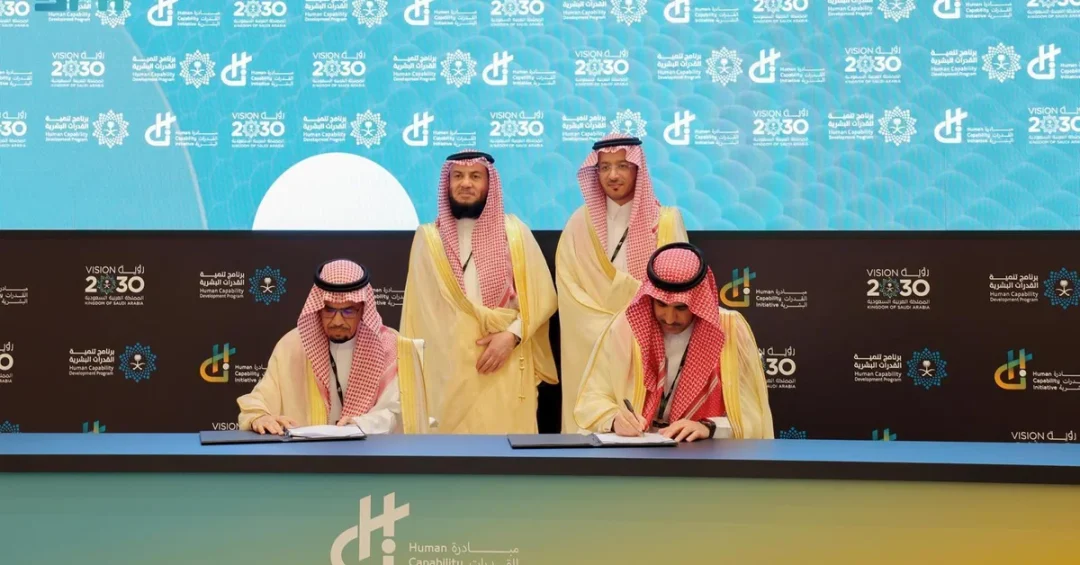
The King Abdulaziz and His Companions Foundation for Giftedness and Creativity (Mawhiba) has signed a strategic cooperation agreement with the UNESCO Regional Center for Quality and Excellence in Education, a move announced in Riyadh on April 14, 2025, that strengthens the Kingdom’s commitment to nurturing exceptional talent and advancing educational standards across the region. The agreement, released through official Saudi channels via the Saudi Press Agency, establishes a formal framework for the two institutions to combine their expertise in building administrative and technical capacities, conducting joint research, and organizing conferences, workshops, and training activities related to education and educational research.
For observers of Saudi Arabia’s rapidly evolving education sector, the partnership represents more than a routine memorandum of understanding. It signals a deliberate strategy to connect the Kingdom’s flagship talent-development institution with one of UNESCO’s specialized Category II centers, positioning Saudi Arabia as a collaborative leader in the global pursuit of academic excellence. Could this agreement become a model for how nations share expertise in identifying and cultivating gifted learners? The details released so far suggest that both parties intend to pursue exactly that kind of ambitious, outcomes-focused collaboration.
Context and Background
Mawhiba, as the foundation is widely known, was established to discover, nurture, and empower gifted and creative students throughout the Kingdom. Over the years it has become a cornerstone of Saudi Arabia’s human-capital development efforts, running programs that identify talented youth, support them through enrichment opportunities, and connect them with national and international academic resources. The foundation operates under the conviction that a nation’s greatest resource is the potential of its people, a principle that aligns closely with the ambitions of Saudi Vision 2030.
Why does the timing of this agreement matter so much? Saudi Arabia has spent the past several years accelerating reforms across its education system, expanding access, raising quality benchmarks, and encouraging research and innovation at every level. The UNESCO Regional Center for Quality and Excellence in Education, one of the Category II centers affiliated with UNESCO, brings a complementary mandate: it specializes in advancing quality assurance and excellence in education, offering research capacity and technical expertise that can amplify Mawhiba’s reach and effectiveness.
The pairing of a national talent foundation with a UNESCO-affiliated regional center reflects a broader recognition that educational excellence is not achieved in isolation. International cooperation, shared research, and the exchange of publications and best practices allow institutions to learn from one another and to scale approaches that have proven successful. In this sense, the agreement is a natural extension of the Kingdom’s growing engagement with multilateral educational bodies and its willingness to invest in evidence-based approaches to developing human potential.
Key Details of the Agreement
The cooperation agreement outlines a wide range of areas where the two institutions will collaborate. According to the information released, the parties will work together to enhance cooperation and to exchange expertise in fields that contribute to building administrative and technical capacities. This includes joint development programs, collaborative research and studies, and the exchange of publications related to education and educational research, all of which are designed to raise the quality of educational outcomes.
The agreement also provides for the joint organization of conferences, workshops, research programs, and training activities. What does this mean in practical terms? It suggests that educators, researchers, and administrators from both institutions will have structured opportunities to work side by side, sharing knowledge and building skills that can be applied in classrooms, laboratories, and policy offices alike. Such activities can create lasting professional networks and generate research findings that benefit not only the two signatories but also the wider educational community.
Because the Regional Center for Quality and Excellence in Education operates as a Category II center under UNESCO’s framework, it carries an international mandate to support member states in advancing educational quality. Collaborating with Mawhiba gives the center a direct channel to Saudi Arabia’s substantial experience in identifying and nurturing gifted students, while giving Mawhiba access to the center’s regional and global networks. Is it any wonder that both sides describe the partnership as strategic rather than merely symbolic?
The Value of Educational Cooperation
Educational excellence depends on more than resources; it depends on knowledge, methods, and continuous improvement. By formalizing cooperation, Mawhiba and the UNESCO center can systematically exchange expertise on how best to design programs for gifted learners, assess their progress, and support their transition into higher education and the workforce. The exchange of publications and research studies is particularly valuable in this regard, as it allows each institution to benefit from the other’s findings and to avoid duplicating effort.
Building administrative and technical capacities is another central pillar of the agreement. Strong institutions require skilled leaders, effective management systems, and technical staff who can translate vision into action. Through joint training activities and workshops, the partnership aims to strengthen these capacities on both sides, creating a feedback loop of learning and improvement. How often do institutions have the opportunity to learn directly from international peers while contributing their own distinctive expertise in return? This agreement creates exactly that two-way street.
The joint organization of conferences and research programs further amplifies the impact. Conferences bring together scholars, practitioners, and policymakers to share insights and debate new approaches, while research programs generate the evidence needed to guide future decisions. For Saudi Arabia, hosting and co-organizing such events also reinforces its position as a convening power in the region, capable of bringing together diverse stakeholders around shared educational goals.
International and Regional Impact
The agreement carries significance well beyond the two institutions involved. At the regional level, it strengthens the ecosystem of educational cooperation in the Middle East, encouraging other nations and institutions to pursue similar partnerships. The Regional Center for Quality and Excellence in Education, with its UNESCO affiliation and regional reach, is well positioned to disseminate the lessons learned from this collaboration to a wider audience, potentially influencing educational practices across multiple countries.
At the international level, the partnership underscores Saudi Arabia’s active role in multilateral educational initiatives. The Kingdom is not merely a participant in global education dialogues but increasingly an initiator and leader, willing to invest resources and expertise in cooperative ventures. What message does this send to the global community? It signals that Saudi Arabia is committed to contributing constructively to international efforts to raise educational standards, especially in the area of talent development, where the Kingdom has accumulated substantial experience.
The collaboration also reflects UNESCO’s broader mission of promoting quality education worldwide, a goal enshrined in the organization’s mandate and in the global education agenda. By partnering with Mawhiba, the UNESCO center gains a capable and motivated collaborator in the Gulf region, one with deep expertise in gifted education and a strong institutional commitment to excellence. These kinds of partnerships are essential to turning global education goals into tangible local progress.
Economic and Strategic Significance
Education is a strategic investment, and agreements like this one are directly connected to economic competitiveness. In a world where innovation and specialized skills drive growth, countries that identify and nurture talent early gain a decisive advantage. Mawhiba’s mission of cultivating gifted and creative young people is therefore intimately tied to Saudi Arabia’s economic diversification agenda, which seeks to build a knowledge-based economy capable of generating high-value jobs and industries.
By strengthening administrative and technical capacities, the agreement also contributes to institutional resilience. Well-managed, technically capable organizations can adapt to changing circumstances, adopt new technologies, and deliver services more effectively. This is especially important in education, where rapid technological change and evolving workforce demands require systems that can respond quickly and intelligently. Partnering with an internationally recognized center for educational quality gives Saudi institutions a direct line to global best practices and emerging approaches.
What broader strategic priorities does this serve? Saudi Vision 2030 places human capital at the center of national development, recognizing that a nation’s future depends on the skills, creativity, and resilience of its people. The agreement between Mawhiba and the UNESCO center advances this vision by creating mechanisms for sustained cooperation, research, and capacity building. It also reinforces the Kingdom’s reputation as a reliable and constructive partner in international affairs, willing to work through global institutions to achieve shared goals.
Vision 2030 Alignment
The Mawhiba-UNESCO agreement is a clear reflection of Saudi Vision 2030’s emphasis on education, innovation, and human development. Vision 2030 calls for building a vibrant society, a thriving economy, and an ambitious nation, and each of these pillars depends on the quality of education and the cultivation of talent. By partnering with an internationally recognized center for educational excellence, Mawhiba strengthens its ability to deliver on these aspirations, ensuring that gifted students across the Kingdom receive the support and opportunities they need to reach their full potential.
Looking forward, the partnership opens the door to deeper collaboration in research, training, and the exchange of knowledge, with benefits that are likely to extend across the region. As Saudi Arabia continues its remarkable transformation under Vision 2030, agreements like this one demonstrate that the Kingdom is not only investing in its own future but also contributing to the global common good. The signing of this strategic cooperation agreement is thus more than a diplomatic formality; it is a tangible step toward a future in which educational excellence is pursued collaboratively, evidence is shared openly, and talent is nurtured wherever it is found.
20 Questions
Q1. What organizations signed the cooperation agreement?
A1. The King Abdulaziz and His Companions Foundation for Giftedness and Creativity (Mawhiba) and the UNESCO Regional Center for Quality and Excellence in Education signed the agreement.
Q2. When and where was the agreement announced?
A2. The strategic cooperation agreement was announced in Riyadh on April 14, 2025, as reported by the Saudi Press Agency.
Q3. What is the primary goal of the agreement?
A3. The agreement aims to enhance joint efforts in education and academic excellence, strengthening cooperation between the two parties across multiple areas.
Q4. What does Mawhiba stand for in full?
A4. Mawhiba is the King Abdulaziz and His Companions Foundation for Giftedness and Creativity, dedicated to nurturing gifted students in Saudi Arabia.
Q5. What kind of center is the UNESCO Regional Center for Quality and Excellence in Education?
A5. It is one of the Category II centers affiliated with UNESCO, specializing in educational quality and excellence.
Q6. What areas of cooperation does the agreement cover?
A6. It covers exchanging expertise in building administrative and technical capacities, collaborative development programs, research, studies, and exchange of publications.
Q7. Will the two parties organize events together?
A7. Yes, the agreement includes joint organization of conferences, workshops, research programs, and training activities relevant to education and educational research.
Q8. How does the agreement support capacity building?
A8. Through joint training activities and knowledge exchange, the agreement helps build administrative and technical capacities on both sides.
Q9. Why is this agreement important for Saudi Arabia’s education sector?
A9. It connects a leading national talent foundation with an internationally recognized center, advancing educational quality and aligning with national development priorities.
Q10. What role does the Saudi Press Agency play in this announcement?
A10. The Saudi Press Agency reported the signing, serving as an official channel for releasing the information to the public.
Q11. What is meant by exchange of publications?
A11. The two institutions will share educational publications and research studies, allowing each to benefit from the other’s findings and expertise.
Q12. How does the partnership benefit gifted students?
A12. It strengthens programs that identify and nurture talented youth, giving them access to better resources, research, and international opportunities.
Q13. Does the agreement involve research programs?
A13. Yes, the collaboration includes joint research programs and studies focused on education and educational excellence.
Q14. How does this align with Saudi Vision 2030?
A14. Vision 2030 emphasizes human capital development, innovation, and quality education, all of which the agreement directly supports.
Q15. What is the significance of UNESCO affiliation for the center?
A15. The UNESCO affiliation gives the center an international mandate and regional reach, enhancing the value of knowledge exchange with Mawhiba.
Q16. How might this agreement affect the region?
A16. It strengthens regional educational cooperation and could encourage similar partnerships, disseminating lessons learned to a wider audience.
Q17. What kinds of workshops will be organized?
A17. Joint workshops will focus on areas such as educational research, administrative capacity, technical skills, and best practices in teaching gifted learners.
Q18. Is this agreement a binding or symbolic step?
A18. It is a strategic cooperation framework that establishes concrete mechanisms for collaboration, including training, research, and conferences.
Q19. How does the agreement contribute to the knowledge-based economy?
A19. By nurturing talent and building institutional capacity, it supports the development of a skilled workforce and innovation-driven economic growth.
Q20. What outcome is expected from this partnership?
A20. The partnership is expected to raise educational standards, expand opportunities for gifted students, and deepen international cooperation in education.
Reader Feedback
We value your thoughts. Please share your feedback on this article.
Your feedback helps us improve our coverage.
Related articles
 Madinah Concludes Swimming Literacy Project with 300 Students
 AlUla Program Trains 50 Youth in Public Speaking
 Najran Schools Adopt Winter Schedule Starting Sunday
 Najran University Climbs Four Places in QS Arab Rankings 2027
 Saudi Arabia Sets February 2027 Deadline for Worker Housing
 ETEC to Hold Third National Forum for School Excellence in Riyadh