


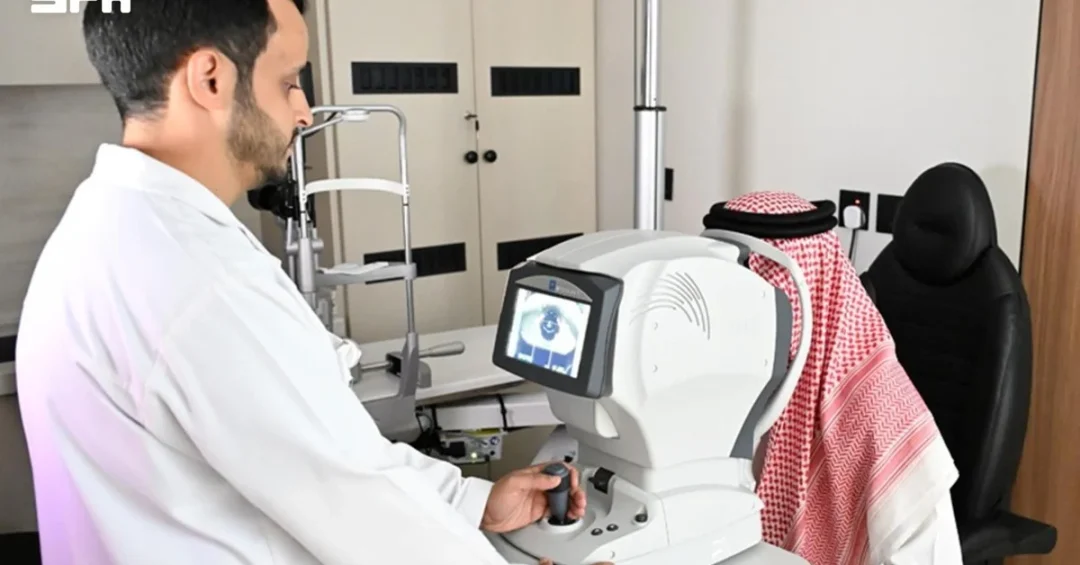
King Faisal Specialist Hospital and Research Centre (KFSH) in Madinah has launched the Eye Truck, a specialized mobile unit designed to bring community eye screening and early detection directly to neighborhoods and schools across Madinah and the surrounding areas, according to an announcement released via official Saudi channels. The unit is equipped to screen for preventable eye diseases and vision-threatening conditions — including diabetic retinopathy — and to identify cases that require further specialized assessment. Suspected and confirmed cases are then moved through structured referral pathways into the hospital’s specialized services for evaluation, treatment, and follow-up.
The launch marks a meaningful expansion of preventive care beyond the hospital setting, positioning advanced ophthalmology services closer to where people live, learn, and work. Rather than waiting for patients to seek help after symptoms appear, the Eye Truck carries screening capacity into the community itself. For a region that serves a growing and diverse population, the initiative reflects a deliberate shift toward proactive, patient-centered care — one that recognizes how much vision loss can be avoided when detection happens early enough.
Context and Background
Why does a mobile eye unit matter so much in the broader landscape of healthcare delivery? Vision-threatening conditions such as diabetic retinopathy often develop silently, producing few or no noticeable symptoms in their earliest stages. By the time a patient experiences difficulty seeing, irreversible damage may already have occurred. This silent progression is precisely what makes community-level screening so valuable: it shortens the distance between a person at risk and the diagnostic expertise that can change the course of their condition.
King Faisal Specialist Hospital and Research Centre has long been recognized as one of the region’s leading academic medical centers. For 2026, it was ranked first in the Middle East and Africa and 12th globally among the world’s top 250 academic medical centers. It was also recognized as the most valuable healthcare brand in the Kingdom and the Middle East for 2026, according to Brand Finance, and listed by Newsweek among the World’s Best Hospitals, World’s Best Smart Hospitals, and World’s Best Specialized Hospitals for 2026. The Eye Truck extends that institutional reputation into the community, translating world-class capability into accessible frontline screening.
The initiative also reflects a wider evolution in how Saudi healthcare institutions approach prevention. Instead of concentrating all resources within hospital walls, providers are increasingly designing services that travel to patients. This model acknowledges that access barriers — distance, time, awareness, and cost of transport — can delay care even when excellent treatment exists. By removing those barriers at the screening stage, the Eye Truck helps ensure that the hospital’s specialized services reach the people who need them most.
Key Details
What exactly does the mobile unit carry, and how does it function in practice? The Eye Truck is equipped with the diagnostic tools needed to screen for preventable eye diseases and vision-threatening conditions, with particular attention to diabetic retinopathy. Its purpose is twofold: to detect conditions early and to identify cases that require further specialized assessment. Suspected and confirmed cases are directed through referral pathways into the hospital’s specialized ophthalmology services, where they receive evaluation, treatment, and follow-up care.
Chairman of the Ophthalmology Department at King Faisal Specialist Hospital and Research Centre in Madinah Dr. Zohair Ahmed Khouqeer explained the rationale behind the initiative. “Many vision threatening conditions are only found after treatment has already been delayed, because the patient feels nothing at the start,” he said. “The mobile unit carries community screening and early detection into neighborhoods and schools across Madinah, and opens referral pathways into our specialized services for evaluation, treatment and follow up.” His statement underscores the central challenge the unit is designed to address: the gap between the onset of disease and the moment a patient seeks care.
Beyond screening itself, the unit supports eye health awareness campaigns, health education, and community outreach activities, including school screening initiatives. The program works with healthcare providers, community organizations, and schools to strengthen referral pathways and coordinate community eye care. This collaborative approach means the Eye Truck is not a standalone service but part of a connected network that links detection, education, and treatment into a single continuum of care.
International and Regional Impact
How does a community-level screening program in Madinah resonate beyond the Kingdom’s borders? Saudi Arabia’s healthcare modernization is increasingly watched by international observers as a model of how large-scale systems can be reoriented toward prevention. The Eye Truck demonstrates a practical, scalable approach to extending specialist services into underserved or hard-to-reach communities — a challenge shared by health systems around the world. By documenting and operationalizing this model, KFSH contributes to a broader conversation about how academic medical centers can serve populations beyond their physical campuses.
Regionally, the initiative reinforces Madinah’s standing as a city where service excellence and community welfare are prioritized. The model of mobile screening supported by coordinated referral pathways could inform similar programs in other Saudi regions and across the Gulf, where diabetes prevalence and related eye complications present significant public health considerations. The emphasis on school screening in particular signals a long-term investment in the eye health of younger generations, with benefits that compound over time.
Economic and Strategic Significance
Why is early detection also a matter of economic and strategic importance? Preventing vision loss reduces the long-term burden on specialized treatment services and helps individuals remain productive, independent, and engaged in their communities. When conditions are caught at a screenable stage, the cost and complexity of care are typically lower than when patients present with advanced disease. In this sense, the Eye Truck is an investment in both health outcomes and the sustainability of the healthcare system.
The initiative also reflects a strategic commitment to innovation in care delivery. By deploying mobile infrastructure and coordinating with schools and community organizations, KFSH is testing and refining a model that can be adapted and expanded. The launch is followed by a schedule of community screening campaigns, awareness activities, and early detection work at sites across the region, with identified cases referred for evaluation, treatment, and follow up. This operational discipline — screening, referral, treatment, follow-up — is what transforms a single mobile unit into a durable public health capability.
Vision 2030 Alignment
How does the Eye Truck connect to the Kingdom’s long-term ambitions? The initiative widens the reach of preventive and screening services beyond the hospital setting, reinforcing the patient-centered model of care and aligning directly with the objectives of Saudi Vision 2030 in improving quality of life, widening access to healthcare, and adopting innovative models of care delivery. These are not abstract goals; they translate into tangible services that reach people in their own neighborhoods and schools.
As the program moves forward with its schedule of community screening campaigns and awareness activities across the region, it stands as a clear example of how Saudi healthcare institutions are turning vision into practice. The Eye Truck embodies a forward-looking approach in which world-class medical expertise travels to the community, detection happens earlier, and treatment follows without delay. In doing so, it supports the Kingdom’s broader ambition to build a healthier, more connected society — one where quality care is not limited by geography, and where the prevention of avoidable vision loss becomes a shared community achievement.
20 Questions
Q1. What is the Eye Truck launched by KFSH Madinah?
A1. The Eye Truck is a specialized mobile unit from King Faisal Specialist Hospital and Research Centre in Madinah that brings community eye screening and early detection directly to neighborhoods and schools across the region.
Q2. What conditions can the mobile unit screen for?
A2. The unit carries equipment to screen for preventable eye diseases and vision-threatening conditions, including diabetic retinopathy, and to identify cases that require further specialized assessment by hospital experts.
Q3. How are patients handled after screening?
A3. Suspected and confirmed cases are moved through structured referral pathways into the hospital’s specialized services for evaluation, treatment, and follow-up, ensuring continuity of care beyond the initial screening.
Q4. Who commented on the launch and what did they say?
A4. Dr. Zohair Ahmed Khouqeer, Chairman of the Ophthalmology Department at KFSH Madinah, said many vision-threatening conditions are found only after treatment is delayed because patients feel nothing initially.
Q5. Why is early detection so important for eye health?
A5. Conditions such as diabetic retinopathy can develop silently without noticeable symptoms. Early detection allows treatment before irreversible damage occurs, helping preserve vision and quality of life.
Q6. Does the unit do more than screening?
A6. Yes. Alongside screening, the unit supports eye health awareness campaigns, health education, and community outreach, including school screening initiatives that strengthen referral pathways and coordinate community eye care.
Q7. Which partners are involved in the initiative?
A7. The program works with healthcare providers, community organizations, and schools to strengthen referral pathways and coordinate community eye care across Madinah and surrounding areas.
Q8. How does this align with Saudi Vision 2030?
A8. The initiative aligns with Vision 2030 objectives of improving quality of life, widening access to healthcare, and adopting innovative models of care delivery that extend services beyond the hospital setting.
Q9. Where has KFSH been ranked internationally for 2026?
A9. KFSH was ranked first in the Middle East and Africa and 12th globally among the world’s top 250 academic medical centers for 2026, reflecting its standing as a leading medical institution.
Q10. What brand recognition has KFSH received?
A10. KFSH was recognized as the most valuable healthcare brand in the Kingdom and the Middle East for 2026, according to Brand Finance, underscoring its reputation and trust among patients.
Q11. What other recognitions has the hospital earned?
A11. Newsweek listed KFSH among the World’s Best Hospitals, World’s Best Smart Hospitals, and World’s Best Specialized Hospitals for 2026, highlighting excellence across multiple categories of care.
Q12. What happens after the launch of the Eye Truck?
A12. Following the launch, the unit begins a schedule of community screening campaigns, awareness activities, and early detection work at sites across the region, with identified cases referred for treatment and follow-up.
Q13. Why is a mobile unit preferable to hospital-only services?
A13. A mobile unit removes access barriers such as distance, time, and transport costs, bringing screening closer to communities and ensuring people at risk are identified before conditions become advanced.
Q14. Is school screening part of the program?
A14. Yes. The initiative includes school screening initiatives, working with schools and community organizations to detect eye conditions among students early and connect them to appropriate care.
Q15. Why is diabetic retinopathy a focus of the screening?
A15. Diabetic retinopathy is a leading cause of vision loss and often progresses without early symptoms. Screening helps identify it in time for treatment that can prevent further damage.
Q16. Who announced the launch of the Eye Truck?
A16. The launch was announced via official Saudi channels, including the Saudi Press Agency, reflecting the Kingdom’s commitment to transparent communication about healthcare developments.
Q17. How does the unit support community outreach?
A17. The unit supports eye health awareness campaigns, health education, and outreach activities, helping communities understand the importance of regular eye screening and timely care.
Q18. What does the referral pathway include?
A18. The referral pathway connects screened individuals to the hospital’s specialized ophthalmology services for evaluation, treatment, and follow-up, ensuring a complete continuum of care.
Q19. What does the initiative show about Saudi healthcare modernization?
A19. It demonstrates a shift toward preventive, patient-centered care, where specialist services travel to communities and innovative delivery models widen access to high-quality healthcare.
Q20. What is the broader significance of the Eye Truck?
A20. The Eye Truck reflects Saudi Arabia’s forward-looking ambition to build a healthier society, where world-class medical expertise reaches communities directly and avoidable vision loss is prevented.
Reader Feedback
We value your thoughts. Please share your feedback on this article.
Your feedback helps us improve our coverage.