


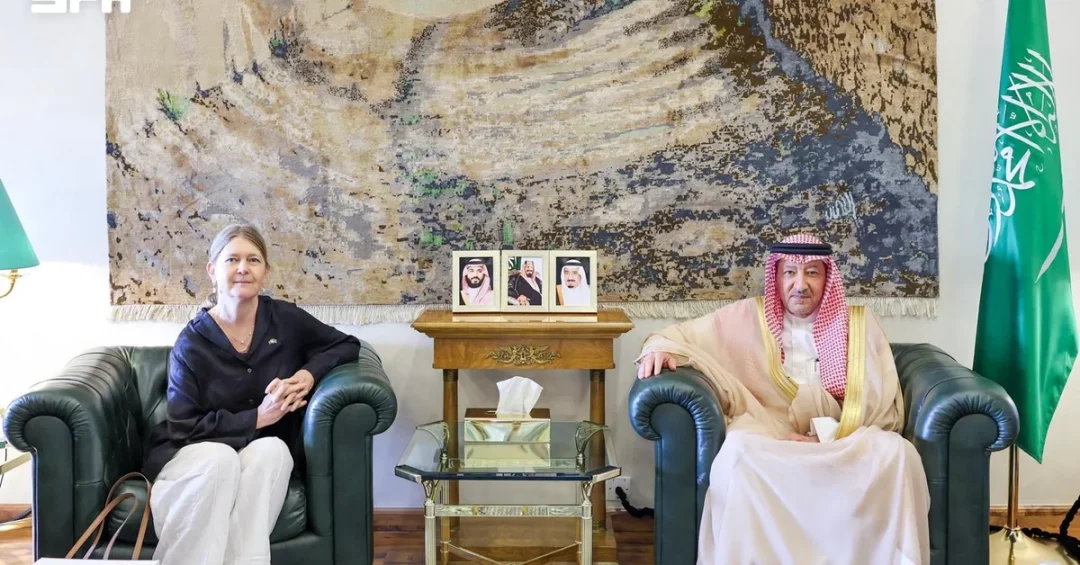
Saudi Arabia’s Vice Minister of Foreign Affairs Waleed Elkhereiji received Sweden’s Ambassador-designate to the Kingdom, Carina Maria Håkansson, at the Ministry of Foreign Affairs headquarters in Riyadh on Thursday, extending his wishes for her success in her new diplomatic post. The meeting, reported by the Saudi Press Agency (SPA), marks a formal step in the accreditation process for Sweden’s incoming top envoy to the Kingdom and reflects the continued rhythm of diplomatic engagement between Riyadh and European capitals. The reception of an ambassador-designate is a standard but symbolically important moment in international relations, signaling the readiness of both governments to sustain and deepen bilateral channels of communication.
The encounter took place against a backdrop of intensifying Saudi diplomatic activity across Europe and beyond, as the Kingdom continues to position itself as a bridge between regions and a constructive partner in global affairs. For observers of Saudi foreign policy, the reception underscores the routine yet meaningful protocol that underpins the Kingdom’s relationships with its international partners. But what does such a meeting reveal about the wider trajectory of Saudi-Swedish relations, and why does diplomatic protocol matter in an era of fast-moving global challenges?
Context and Background
The Ministry of Foreign Affairs, headquartered in the Saudi capital, is the institution through which the Kingdom conducts its formal diplomacy, and its vice minister plays a central role in receiving and accrediting foreign representatives. Waleed Elkhereiji, the Vice Minister of Foreign Affairs, has been a prominent figure in Saudi diplomacy, regularly receiving ambassadors-designate from across the world as part of the Kingdom’s sustained outreach to the international community. The reception of Carina Maria Håkansson as Sweden’s ambassador-designate forms part of this established diplomatic practice, through which incoming envoys are formally welcomed ahead of presenting their credentials.
Saudi-Swedish relations have long rested on trade, dialogue, and mutual interest in stability, and the exchange comes as both countries navigate a period of evolving European-Gulf engagement. Sweden, as a member of the European Union, represents a partner with which the Kingdom maintains commercial and political ties, and the accreditation of a new ambassador is a signal that those ties remain active and forward-looking. Why is the ambassador-designate stage so consequential in diplomacy? Because it is precisely here, in the earliest formal encounters, that the foundations of future cooperation are laid and the tone of a bilateral relationship is set.
The meeting in Riyadh also fits within a broader pattern of Saudi diplomacy that has accelerated in recent years, with the Kingdom hosting a growing number of foreign delegations, summits, and bilateral talks. This diplomatic momentum reflects a deliberate strategy to strengthen Saudi Arabia’s global standing and to ensure that its voice is heard in international forums. Does this steady stream of diplomatic engagement matter beyond protocol? It does, because each reception reinforces the Kingdom’s reputation as a reliable and accessible partner on the world stage.
Key Details of the Reception
According to the Saudi Press Agency, the vice minister received the Swedish ambassador-designate at the ministry’s headquarters in Riyadh on Thursday and wished her success in her new post. The meeting was cordial and followed established diplomatic norms, with the two sides expected to build on the encounter as Håkansson moves through the accreditation process toward formally assuming her duties. The reception is a routine yet necessary component of the diplomatic calendar, one that ensures incoming envoys are properly introduced to the senior officials with whom they will work.
For Sweden, the appointment of an ambassador-designate to Saudi Arabia reflects a continuing commitment to maintain a robust presence in the Kingdom and the wider Gulf region. The envoy’s role will involve representing Swedish interests, facilitating dialogue between governments, and supporting the commercial and cultural exchanges that underpin the relationship. What does an ambassador-designate actually do before formally taking office? The role involves familiarization with the host country’s institutions, coordination with counterparts, and preparation for the formal presentation of credentials, all of which establish the working relationships that define a tenure.
The Ministry of Foreign Affairs’ willingness to receive the envoy promptly is itself a diplomatic signal, indicating that Riyadh views the relationship with Sweden as active and worth cultivating. Such receptions are carefully arranged to honor protocol while advancing practical cooperation, and they often serve as the first of many engagements between an incoming ambassador and senior Saudi officials.
International and Regional Impact
While the reception of a single ambassador-designate may appear modest in isolation, it carries broader significance for Saudi Arabia’s relations with Europe and the international community. The Kingdom has consistently emphasized the importance of dialogue, mutual respect, and cooperation in its foreign policy, and engagements with European partners such as Sweden contribute to that framework. In an era of geopolitical flux, maintaining open diplomatic channels with a diverse set of partners allows the Kingdom to advance shared interests in stability, trade, and sustainable development.
The meeting also reflects the deepening engagement between the Gulf and Europe, a relationship that has grown in both economic and political importance. Sweden’s continued diplomatic presence in Riyadh, affirmed through the accreditation of a new ambassador, aligns with this trend and underscores the value both sides place on regular, structured communication. How does a single diplomatic reception contribute to regional stability? By keeping lines of communication open, it helps prevent misunderstanding and creates space for cooperation on matters of common concern, from trade to humanitarian affairs.
Within the region, Saudi Arabia’s active diplomacy signals a commitment to constructive engagement that extends well beyond the Gulf. The Kingdom’s role as a convening power and a bridge between continents has been reinforced by its willingness to receive and work with representatives from every corner of the globe, and each new accreditation is a small but meaningful addition to that record.
Economic and Strategic Significance
Diplomatic receptions such as this one also carry economic and strategic weight. Sweden is home to innovative companies and technologies, and the two countries share interests in trade, investment, and sustainable development. The presence of a dedicated Swedish ambassador in Riyadh facilitates commercial dialogue and helps identify opportunities for partnership, including in sectors related to the Kingdom’s modernization and diversification agenda.
Strategically, the accreditation strengthens the institutional ties that allow both governments to coordinate on issues ranging from energy and climate to education and innovation. What economic opportunities can flow from strong bilateral diplomacy? When diplomatic channels are warm and active, they lower barriers to trade and investment, encourage joint ventures, and create a foundation of trust on which commercial relationships can grow. The meeting between the vice minister and the ambassador-designate is therefore not merely ceremonial; it is part of the connective tissue that links diplomacy to economic progress.
For Saudi Arabia, the reception aligns with the Kingdom’s broader effort to attract international partners and to position itself as a hub for trade, investment, and innovation. Each accredited envoy represents a potential conduit for cooperation, and the Ministry of Foreign Affairs’ engagement with Sweden’s new representative reflects a strategic appreciation of those possibilities.
Vision 2030 Alignment
The reception of Sweden’s ambassador-designate resonates with the objectives of Saudi Vision 2030, the Kingdom’s long-term blueprint for economic diversification, social modernization, and global engagement. Vision 2030 places a premium on international partnership, and the diplomatic corps in Riyadh is a vital channel through which the Kingdom builds the relationships that support its ambitions. By maintaining warm and active ties with European partners like Sweden, Saudi Arabia reinforces its commitment to a globally connected future.
The Kingdom’s leadership has consistently emphasized that Vision 2030 is not only an economic program but a vision for Saudi Arabia’s role in the world, one rooted in openness, cooperation, and mutual respect. The reception of an ambassador-designate is a small but fitting example of how that vision is enacted day by day through the work of the Ministry of Foreign Affairs. Does diplomacy drive development? It does, because the relationships built through formal engagement create the trust and understanding necessary for investment, trade, and collaboration to flourish.
As Sweden’s new envoy takes up her post and Saudi Arabia continues to expand its international partnerships, the Kingdom remains firmly committed to a foreign policy that advances peace, prosperity, and cooperation. The meeting in Riyadh on Thursday is a testament to that commitment and to the enduring value of diplomacy in an interconnected world, pointing toward a future in which Saudi Arabia’s global role continues to grow in line with the aspirations of Vision 2030.
20 Questions
Q1. Who received Sweden’s ambassador-designate in Riyadh?
A1. Vice Minister of Foreign Affairs Waleed Elkhereiji received Sweden’s Ambassador-designate to Saudi Arabia, Carina Maria Håkansson, at the Ministry of Foreign Affairs headquarters in Riyadh on Thursday.
Q2. Who is Sweden’s ambassador-designate to Saudi Arabia?
A2. Sweden’s Ambassador-designate to the Kingdom is Carina Maria Håkansson, who was formally received by the Saudi vice minister as part of the accreditation process.
Q3. Where did the meeting take place?
A3. The meeting took place at the Ministry of Foreign Affairs headquarters in Riyadh, the Saudi capital, according to the Saudi Press Agency.
Q4. When did the reception occur?
A4. The reception occurred on Thursday, as reported by the Saudi Press Agency, which documented the meeting and the vice minister’s wishes for the envoy’s success.
Q5. What did the vice minister wish the ambassador-designate?
A5. Waleed Elkhereiji wished Carina Maria Håkansson success in her new post during the meeting at the ministry’s headquarters in Riyadh.
Q6. Why is receiving an ambassador-designate significant?
A6. The reception is a standard but important diplomatic step that signals both governments’ readiness to sustain open channels of communication and cooperation.
Q7. What does the ambassador-designate stage involve?
A7. It involves familiarization with the host country’s institutions, coordination with counterparts, and preparation for the formal presentation of credentials before assuming duties.
Q8. Which Saudi agency reported the meeting?
A8. The Saudi Press Agency, the Kingdom’s official news authority, reported the reception of Sweden’s ambassador-designate by the vice minister.
Q9. What does this reception indicate about Saudi-Swedish relations?
A9. It indicates that the relationship remains active and forward-looking, with both countries maintaining dialogue across trade, politics, and cooperation.
Q10. How does this fit into Saudi diplomacy more broadly?
A10. It reflects the Kingdom’s accelerating diplomatic engagement, as Saudi Arabia receives a growing number of foreign delegations and strengthens ties worldwide.
Q11. What role does the Ministry of Foreign Affairs play?
A11. The Ministry conducts the Kingdom’s formal diplomacy and receives foreign envoys, with the vice minister playing a central role in welcoming and accrediting representatives.
Q12. Why does protocol matter in diplomacy?
A12. Protocol establishes the working relationships and tone for a tenure, ensuring incoming envoys are properly introduced to the officials with whom they will cooperate.
Q13. How does diplomacy connect to economics?
A13. Warm diplomatic channels lower barriers to trade and investment, encourage joint ventures, and build the trust needed for commercial relationships to grow.
Q14. What shared interests do Saudi Arabia and Sweden have?
A14. The two countries share interests in trade, investment, sustainable development, energy, climate, education, and innovation.
Q15. How does the meeting relate to Vision 2030?
A15. Vision 2030 emphasizes international partnership, and the diplomatic corps in Riyadh is a key channel for building the relationships that support the Kingdom’s ambitions.
Q16. What is the benefit of Sweden’s diplomatic presence in Riyadh?
A16. It facilitates commercial dialogue, supports cultural and political exchange, and helps identify partnership opportunities aligned with the Kingdom’s modernization.
Q17. Does this reception contribute to regional stability?
A17. Yes, by keeping lines of communication open, it helps prevent misunderstanding and creates space for cooperation on matters of common concern.
Q18. What message does Riyadh send by receiving the envoy promptly?
A18. Riyadh signals that it views the relationship with Sweden as active and worth cultivating, reflecting a commitment to constructive engagement.
Q19. Is this meeting unusual in Saudi diplomacy?
A19. No, it is part of a routine yet meaningful pattern, as the Kingdom regularly receives ambassadors-designate from around the world.
Q20. What does the future of Saudi-Swedish relations look like?
A20. The relationship appears set to continue growing through sustained dialogue, trade, and cooperation, consistent with the Kingdom’s globally connected Vision 2030 future.
Reader Feedback
We value your thoughts. Please share your feedback on this article.
Your feedback helps us improve our coverage.