


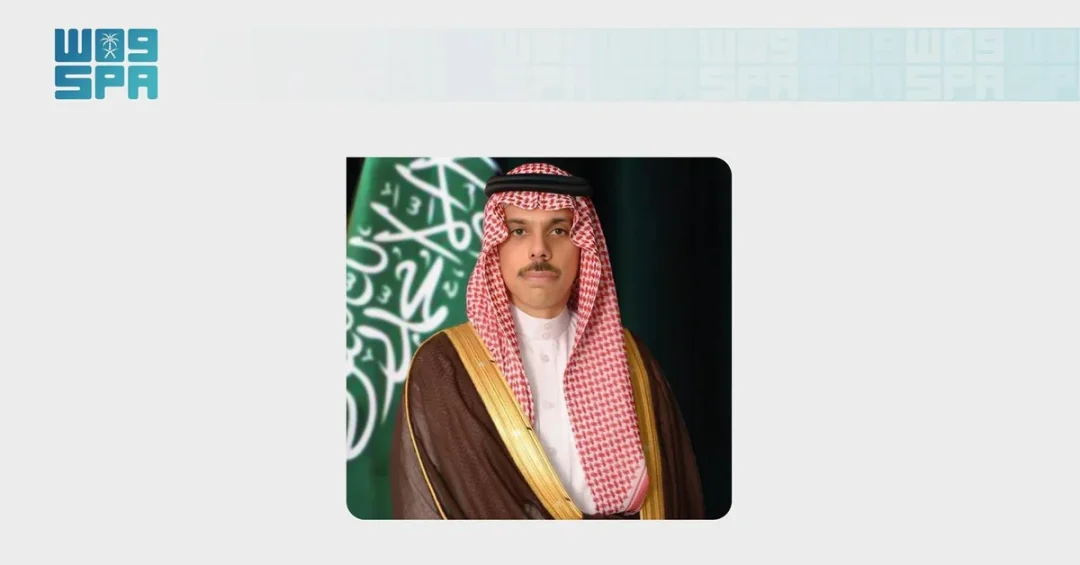
Saudi Minister of Foreign Affairs Prince Faisal bin Farhan bin Abdullah received a phone call from the Minister of Foreign Affairs and Expatriates of the Republic of Yemen, Dr. Afrah Al-Zouba, during which the two top diplomats reviewed bilateral relations and examined the latest developments in Yemen, including the continued attacks by the terrorist Houthi militia on civilians and civilian infrastructure. The call, announced by the Saudi Press Agency on Thursday, October 29, 2026, also covered joint efforts to support the Yemeni government in carrying out its duties to strengthen security and stability and to ease the suffering of the Yemeni people.
What does this latest high-level exchange tell the world about Saudi Arabia’s enduring commitment to its southern neighbor? The conversation between Prince Faisal bin Farhan, who also serves as a member of the Council of Ministers, and Dr. Afrah Al-Zouba represents the continuation of a sustained diplomatic rhythm that Riyadh has maintained since the earliest days of the Yemeni crisis. The Saudi Press Agency reported that the two ministers addressed the humanitarian and security dimensions of the conflict in parallel, reflecting the Kingdom’s long-standing position that a durable solution in Yemen must restore state institutions, protect civilians, and create the conditions for reconstruction and development. The call underscores that Saudi diplomacy operates simultaneously on the political, humanitarian, and security tracks, rather than treating them as separate files.
Context and Background
How did Yemen become one of the most persistent tests of Saudi diplomacy, and why does the Kingdom remain so deeply engaged? Since 2015, Saudi Arabia has led the Arab coalition in support of the internationally recognized Yemeni government at the request of Yemen’s legitimate leadership, responding to the Houthi militia’s seizure of the capital, Sanaa, and its subsequent expansion across large parts of the country. Riyadh has consistently framed its involvement as a matter of national security, regional stability, and the protection of the Yemeni people, whose suffering has been exacerbated by the militia’s continued military operations and its disruption of civilian life.
Over the years, Saudi Arabia has hosted numerous rounds of Yemeni consultations, including the Riyadh-based talks that brought together a broad spectrum of Yemeni political and social components. The Kingdom has also been the largest provider of humanitarian assistance to Yemen, funding food security programs, medical supplies, shelter, and essential services through the King Salman Humanitarian Aid and Relief Center (KSrelief), which operates in coordination with United Nations agencies and international partners. This dual track of military support for the legitimate government and large-scale humanitarian relief has defined Riyadh’s approach and remains central to its policy today.
The October 2026 call between Prince Faisal bin Farhan and Dr. Afrah Al-Zouba therefore takes place against a backdrop of years of patient Saudi diplomacy, including support for United Nations-led peace efforts, the passage of United Nations Security Council resolutions demanding that the Houthis cease attacks and return to negotiations, and repeated Saudi warnings about the militia’s role as a destabilizing proxy in the region. The conversation reaffirmed that the Kingdom continues to treat Yemen’s stability as inseparable from its own security and from the wider stability of the Arabian Peninsula.
Key Details of the Ministerial Call
What precisely was discussed between the two foreign ministers, and why does each element matter? According to the Saudi Press Agency, Prince Faisal bin Farhan and Dr. Afrah Al-Zouba reviewed the state of bilateral relations between the Kingdom of Saudi Arabia and the Republic of Yemen, covering political coordination, development cooperation, and the ongoing support extended by Riyadh to Yemeni state institutions. The two sides also discussed the latest developments in Yemen, with particular attention to the terrorist Houthi militia’s continued attacks on civilians and civilian infrastructure.
The Saudi statement identified support for the Yemeni government as a central theme, specifically efforts to enable it to carry out its duties in strengthening security and stability and in easing the suffering of the Yemeni people. This language is significant because it frames Saudi assistance not as an end in itself but as a means of restoring the capacity of Yemen’s legitimate institutions to govern, deliver services, and protect citizens. It also signals that Riyadh views the Yemeni government as the essential partner for any sustainable political settlement.
The conversation further reflects the personal diplomatic engagement of Prince Faisal bin Farhan, who has consistently used bilateral calls and multilateral forums to keep Yemen high on the regional and international agenda. Dr. Afrah Al-Zouba, Yemen’s Minister of Foreign Affairs and Expatriates, has likewise been an active interlocutor with Gulf and international partners, and the direct channel between the two ministers ensures that Saudi support is calibrated to the priorities identified by the Yemeni government itself. The Saudi Press Agency’s report did not disclose additional operational details, in keeping with the diplomatic nature of the exchange.
The Houthi Threat to Civilians and Infrastructure
Why does the international community continue to describe the Houthi militia’s actions as a direct threat to regional peace? The Saudi statement referred explicitly to the militia’s continued attacks on civilians and civilian infrastructure, a pattern that has drawn repeated condemnation from the United Nations, the Arab League, the Organisation of Islamic Cooperation, and Western capitals. These attacks have targeted populated areas, economic facilities, and transport infrastructure, deepening the humanitarian crisis and complicating every effort to deliver relief to those in need.
Saudi Arabia has itself been the target of Houthi cross-border attacks, including drone and missile strikes aimed at civilian sites and economic installations. The Kingdom has consistently reserved the right to defend its territory and people while simultaneously supporting political solutions. By raising the issue in the call with Dr. Afrah Al-Zouba, Prince Faisal bin Farhan underlined that the militia’s conduct is not only a Yemeni domestic matter but a regional security challenge that requires a coordinated response from the legitimate Yemeni government, its Gulf partners, and the wider international community.
Riyadh’s position has been reinforced by successive United Nations Security Council resolutions that demand an end to Houthi attacks, including those against commercial shipping in the Red Sea, and that reaffirm support for Yemen’s sovereignty, unity, and territorial integrity. The Saudi emphasis on protecting civilians and infrastructure is therefore fully aligned with international law and with the consensus of the region’s responsible stakeholders. The call served as a reminder that without addressing the militia’s military behavior, humanitarian and political progress will remain fragile.
International and Regional Impact
How does a single phone call between two foreign ministers resonate beyond the bilateral relationship? Saudi Arabia’s diplomacy toward Yemen is closely watched by the United Nations, the Gulf Cooperation Council, the European Union, the United States, and regional powers because Yemen sits at the intersection of global trade routes, counterterrorism priorities, and humanitarian concern. By maintaining an open and active channel with Yemen’s foreign ministry, Riyadh helps to synchronize international messaging on Yemen and to prevent the fragmentation of diplomatic efforts that has sometimes hampered progress.
The call also reinforces the role of the Gulf Cooperation Council and the broader Arab consensus in supporting Yemen’s legitimate government. Saudi Arabia has repeatedly emphasized that Yemen’s sovereignty and territorial integrity are red lines and that the country must not become a platform for hostile non-state actors. This message is directed not only at the Houthi militia but also at external parties whose material support for the militia has prolonged the conflict. The Saudi Press Agency’s reporting of the call therefore carries a regional signal: Riyadh will continue to lead, in coordination with its partners, until Yemen is stable, unified, and free of external interference.
For international audiences, the exchange demonstrates that Saudi Arabia remains a constructive and indispensable actor in Middle Eastern diplomacy. Rather than stepping back, the Kingdom is deepening its engagement through direct ministerial contacts, humanitarian funding, and support for United Nations-led mediation. This approach strengthens the credibility of Saudi foreign policy and positions the Kingdom as a bridge between Yemeni stakeholders and the wider international community.
Economic and Strategic Significance
What economic and strategic interests are at stake in Yemen’s stability, and how does Saudi support serve them? Yemen lies adjacent to the Bab al-Mandab Strait, one of the world’s most important maritime chokepoints, through which a substantial share of global energy and commercial traffic passes. Instability in Yemen, and particularly attacks on shipping, directly threatens the free flow of trade and the security of energy supplies on which the global economy depends. Saudi Arabia’s support for the Yemeni government is therefore intertwined with the protection of these vital international corridors.
From a Saudi perspective, a stable and secure Yemen opens the door to economic cooperation, reconstruction, and regional integration. Saudi development institutions, including the Saudi Fund for Development, have historically financed infrastructure, energy, health, and education projects in Yemen, and a return to normalcy would allow such programs to expand. The Kingdom’s Vision 2030 agenda emphasizes a diversified economy, regional trade, and secure borders, all of which are reinforced by a peaceful and cooperative Yemen. The call between Prince Faisal bin Farhan and Dr. Afrah Al-Zouba thus carries long-term economic logic, not merely short-term crisis management.
The strategic dimension extends to counterterrorism and maritime security. Saudi Arabia has consistently warned that Houthi control of territory and weapons enables extremist networks and destabilizing activities that threaten the entire region. By coordinating with Yemen’s legitimate government, the Kingdom helps to ensure that security operations, humanitarian access, and political processes reinforce one another. This integrated approach is a hallmark of Saudi statecraft and reflects the Kingdom’s preference for stability, development, and lawful governance over chaos and militancy.
Vision 2030 Alignment
How does Saudi Arabia’s engagement in Yemen connect to the Kingdom’s long-term transformation under Vision 2030? Vision 2030, launched under the leadership of Crown Prince Mohammed bin Salman, seeks to diversify the Saudi economy, strengthen regional partnerships, and project the Kingdom as a responsible global actor. A stable Yemen is essential to that vision: it secures Saudi Arabia’s southern border, protects Red Sea trade routes that feed the Kingdom’s ports and industrial cities, and creates opportunities for Saudi businesses and investors to participate in reconstruction and development.
The humanitarian dimension of Vision 2030 is equally relevant. Through KSrelief, Saudi Arabia has delivered billions of dollars in aid to Yemen, supporting food security, health care, education, and shelter for millions of people. This commitment reflects the Kingdom’s values and its belief that development and stability go hand in hand. The ministerial call reaffirms that Saudi Arabia will continue to combine diplomatic leadership, humanitarian generosity, and security cooperation as it works toward a peaceful, prosperous Yemen that can take its rightful place in a thriving region.
As the Kingdom advances toward 2030, its foreign policy will remain anchored in the principles of sovereignty, non-interference, and support for legitimate institutions. The conversation between Prince Faisal bin Farhan and Dr. Afrah Al-Zouba is a clear expression of those principles and a signal that Saudi Arabia’s partnership with Yemen will endure until security, stability, and relief for the Yemeni people are fully achieved.
20 Questions
Q1. Who received the phone call from Yemen’s foreign minister?
A1. Saudi Minister of Foreign Affairs Prince Faisal bin Farhan bin Abdullah received the call from Dr. Afrah Al-Zouba, Yemen’s Minister of Foreign Affairs and Expatriates, according to the Saudi Press Agency.
Q2. When was the call reported?
A2. The Saudi Press Agency reported the call on Thursday, October 29, 2026, at 19:50 local time, which corresponds to 16:50 GMT, according to the official statement.
Q3. What topics were discussed during the call?
A3. The two ministers reviewed bilateral relations and the latest developments in Yemen, including the Houthi militia’s attacks on civilians and civilian infrastructure, and efforts to support the Yemeni government.
Q4. How did Saudi Arabia describe the Houthi militia in its statement?
A4. The Saudi Press Agency described the Houthi militia as a terrorist militia that continues to attack civilians and civilian infrastructure, reflecting the Kingdom’s consistent position on the group’s destabilizing actions.
Q5. What is Saudi Arabia’s stated goal in supporting Yemen?
A5. Saudi Arabia aims to support the Yemeni government in carrying out its duties to strengthen security and stability and to ease the suffering of the Yemeni people, according to the official statement.
Q6. Why does Saudi Arabia engage so deeply in Yemen?
A6. Saudi Arabia views Yemen’s stability as essential to its own national security, to the protection of Red Sea trade routes, and to the wider stability of the Arabian Peninsula and the region.
Q7. What humanitarian role has Saudi Arabia played in Yemen?
A7. Through the King Salman Humanitarian Aid and Relief Center, Saudi Arabia has provided billions of dollars in food, medical, shelter, and essential services to millions of Yemenis in coordination with United Nations agencies.
Q8. How does the international community view the Houthi attacks?
A8. The United Nations Security Council and many countries have condemned Houthi attacks on civilians, infrastructure, and commercial shipping, calling for an end to military escalation and a return to negotiations.
Q9. What diplomatic forums has Saudi Arabia used to support Yemen?
A9. Saudi Arabia has hosted Yemeni consultations in Riyadh, supported United Nations-led peace efforts, and worked through the Gulf Cooperation Council and the Arab League to build consensus on Yemen.
Q10. What is the significance of the Bab al-Mandab Strait?
A10. The Bab al-Mandab Strait is a vital maritime chokepoint through which a large share of global energy and commercial traffic passes, making Yemen’s stability important for international trade.
Q11. How does the call reflect Saudi foreign policy priorities?
A11. The call shows Saudi Arabia’s commitment to direct diplomacy, regional stability, support for legitimate institutions, and coordination with Yemen’s internationally recognized government on security and humanitarian issues.
Q12. What did the two ministers say about bilateral relations?
A12. They reviewed bilateral relations between Saudi Arabia and Yemen, covering political coordination, development cooperation, and continued Saudi support for Yemeni state institutions and the Yemeni people.
Q13. Why is easing the suffering of the Yemeni people a priority?
A13. Years of conflict have created one of the world’s worst humanitarian crises, and Saudi Arabia believes that relief, reconstruction, and restored services are essential to any durable political settlement in Yemen.
Q14. What role does the Yemeni government play in Saudi strategy?
A14. Saudi Arabia views Yemen’s internationally recognized government as the essential partner for restoring state authority, delivering services, and achieving a sustainable political solution that preserves Yemen’s sovereignty and unity.
Q15. How does Saudi Arabia respond to attacks on its own territory?
A15. Saudi Arabia has consistently reserved the right to defend its territory and people against cross-border Houthi attacks while continuing to support political and humanitarian solutions to the Yemeni crisis.
Q16. What economic benefits would a stable Yemen bring?
A16. A stable Yemen would enable reconstruction, infrastructure investment, expanded trade, and regional economic integration, benefiting Yemeni citizens and creating opportunities for Saudi and international investors.
Q17. How does the call relate to Vision 2030?
A17. Vision 2030 prioritizes regional stability, secure borders, diversified trade, and responsible global engagement, all of which are reinforced by Saudi Arabia’s diplomatic and humanitarian support for a peaceful Yemen.
Q18. What institutions deliver Saudi aid to Yemen?
A18. The King Salman Humanitarian Aid and Relief Center and the Saudi Fund for Development are among the key Saudi institutions delivering humanitarian relief and development financing to Yemen.
Q19. What message does the call send to regional actors?
A19. The call signals that Saudi Arabia will continue to lead diplomatic efforts on Yemen, support the legitimate government, and oppose external interference or support for the Houthi militia’s destabilizing activities.
Q20. What is the expected next step after this call?
A20. Saudi Arabia is expected to continue coordinating with Yemen’s government, United Nations envoys, and regional partners to advance humanitarian relief, security cooperation, and a comprehensive political solution for Yemen.
Reader Feedback
We value your thoughts. Please share your feedback on this article.
Your feedback helps us improve our coverage.