


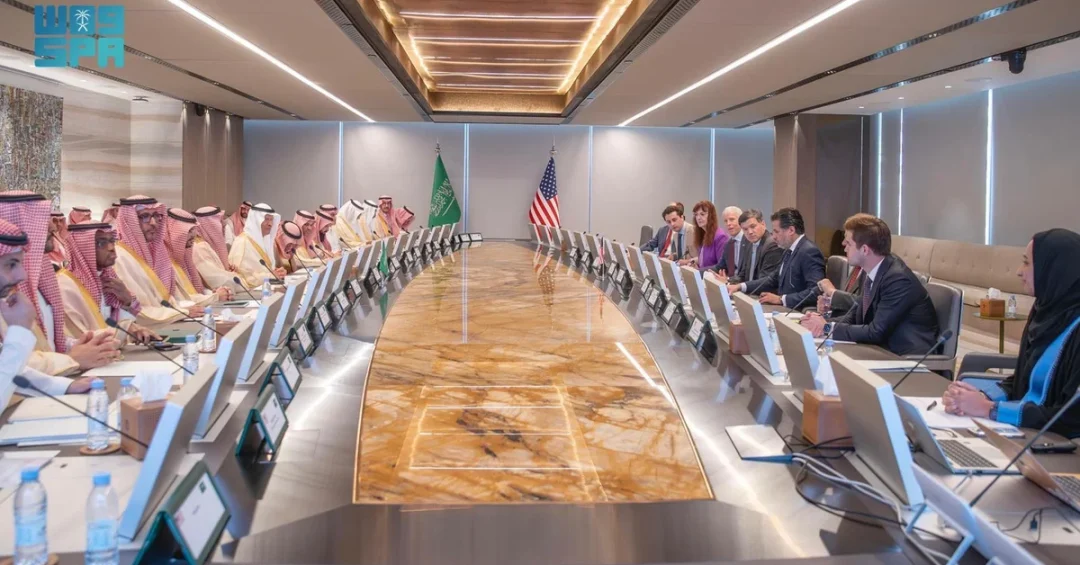
Saudi Arabia’s Minister of Energy, Prince Abdulaziz bin Salman bin Abdulaziz, met with U.S. Secretary of Energy Chris Wright in Riyadh on April 13, 2025, to discuss expanding bilateral cooperation across a wide spectrum of energy fields, according to the Saudi Press Agency (SPA). The high-level meeting, held as part of Secretary Wright’s official visit to the Kingdom, underscored the enduring strategic partnership between Riyadh and Washington in global energy affairs and highlighted the two nations’ shared commitment to advancing sustainable, efficient, and innovative energy systems.
The talks brought together two of the world’s most influential energy decision-makers at a pivotal moment for international markets. With global demand patterns shifting, technological breakthroughs accelerating, and climate imperatives reshaping national strategies, the Saudi-U.S. energy relationship continues to serve as a cornerstone of stability and progress. The meeting reflected the Kingdom’s proactive diplomacy under the leadership of the Custodian of the Two Holy Mosques, King Salman bin Abdulaziz Al Saud, and His Royal Highness Crown Prince Mohammed bin Salman bin Abdulaziz Al Saud, Prime Minister and Chairman of the Council of Economic and Development Affairs. Could any bilateral energy dialogue carry more weight for the global economy than the one between Riyadh and Washington?
Context and Background
The Saudi-U.S. energy partnership is one of the oldest and most consequential in the world. For decades, the two countries have collaborated on oil market stability, technological innovation, and the secure supply of energy to global markets. The April 13 meeting builds on this legacy, extending it into new frontiers such as hydrogen, carbon management, and peaceful nuclear energy. The presence of Secretary Chris Wright, a seasoned energy executive and advocate for innovation, signals Washington’s recognition of Saudi Arabia’s central role in shaping the future energy landscape.
Riyadh has long been a reliable energy supplier and a stabilizing force in global oil markets. Under Vision 2030, the Kingdom is diversifying its energy mix, investing heavily in renewables, and pursuing a circular carbon economy approach that balances environmental responsibility with economic growth. The meeting between Prince Abdulaziz bin Salman and Secretary Wright therefore represents a natural evolution of a partnership that is adapting to 21st-century realities while preserving its core strengths.
Why does this meeting matter now? Because the global energy transition is entering a decisive phase. Countries are racing to decarbonize while ensuring energy security and affordability. Saudi Arabia, with its vast resources, technological ambitions, and strategic location, is uniquely positioned to bridge traditional and renewable energy systems. The United States, with its own energy renaissance and technological prowess, is a natural partner in this endeavor. Together, they can set standards, drive innovation, and foster stability in a world that urgently needs all three.
Key Details of the Discussions
According to the Saudi Press Agency, the two sides discussed strengthening bilateral cooperation across multiple energy fields. These included oil and gas, petrochemicals, carbon management, hydrogen technologies, peaceful uses for nuclear energy, electricity, renewables, and innovation. The breadth of the agenda reflects the comprehensive nature of the Saudi-U.S. energy relationship, which spans traditional hydrocarbons and cutting-edge clean technologies.
Oil and gas remain foundational to the partnership. Saudi Arabia, through Saudi Aramco, is the world’s largest exporter of crude oil and a leader in production efficiency. The United States, meanwhile, has become a major producer and exporter of oil and natural gas. Coordination between the two helps stabilize markets, attract investment, and ensure reliable supply. The discussions likely touched on market conditions, investment opportunities, and the importance of predictable policies that encourage both production and consumption efficiency.
Petrochemicals represent another key area. Saudi Arabia’s petrochemical industry, anchored by companies like SABIC, is a global powerhouse. Collaboration with U.S. firms on advanced materials, recycling technologies, and low-carbon feedstocks can drive growth and sustainability. Carbon management, including carbon capture, utilization, and storage (CCUS), is a shared priority. Both countries recognize that achieving climate goals requires not only renewables but also technologies that address emissions from existing energy sources. Hydrogen, both blue and green, offers a versatile pathway to decarbonize industry and transport. Peaceful nuclear energy can provide reliable, low-carbon baseload power. Electricity and renewables, including solar and wind, are central to Saudi Arabia’s Vision 2030 goal of generating 50% of its power from clean sources by 2030.
The two officials also emphasized the importance of continued coordination and expertise exchange. This includes joint research, academic partnerships, and private-sector collaboration. How can such exchanges accelerate the deployment of breakthrough technologies? By pooling knowledge and resources, Saudi and American institutions can shorten development cycles and bring solutions to market faster. The meeting thus laid the groundwork for concrete initiatives that could emerge in the coming months.
International and Regional Impact
The Saudi-U.S. energy dialogue carries significant implications for international markets and regional stability. As the world’s leading energy producers, both nations influence oil prices, investment flows, and technological trends. Their cooperation sends a reassuring signal to global markets that supply will remain secure and that the transition to cleaner energy will be managed responsibly. For importers in Asia, Europe, and Africa, this predictability is vital for economic planning.
Regionally, the meeting reinforces Saudi Arabia’s role as a linchpin of stability in the Middle East. By deepening ties with the United States, the Kingdom strengthens its diplomatic and economic position, contributing to a more secure and prosperous region. The discussions also align with Saudi Arabia’s efforts to diversify its partners and enhance its global connectivity. Could this meeting pave the way for broader collaboration on critical minerals, grid resilience, and climate adaptation? The agenda suggests that the partnership is expanding in multiple directions, with potential benefits for the entire region.
Economic and Strategic Significance
Economically, the meeting underscores the immense value of Saudi-U.S. energy trade and investment. Bilateral trade in energy products and technologies runs into tens of billions of dollars annually, supporting jobs and innovation in both countries. U.S. companies are active in Saudi Arabia’s upstream, downstream, and renewable sectors, while Saudi Aramco and SABIC have significant investments in the United States. Strengthening this relationship can unlock new opportunities in hydrogen, CCUS, and nuclear energy, creating high-skilled jobs and fostering economic diversification.
Strategically, the partnership is about more than energy. It is a pillar of the broader Saudi-U.S. relationship, which encompasses security, diplomacy, and cultural exchange. By working together on energy, the two countries build trust and mutual understanding that facilitate cooperation on other global challenges. For Saudi Arabia, this aligns with Vision 2030’s aim to diversify the economy, develop human capital, and enhance international engagement. For the United States, it offers a reliable partner in a volatile world and a market for its technologies and expertise.
What does this mean for the future of energy? It means that the transition will be pragmatic, inclusive, and innovation-driven. Saudi Arabia’s approach, rooted in the circular carbon economy, seeks to reduce emissions while maintaining economic growth and energy access. The United States shares this pragmatic outlook. Together, they can champion solutions that are both environmentally sound and economically viable, setting an example for the world.
Vision 2030 Alignment
This meeting is a clear reflection of Saudi Arabia’s Vision 2030, which seeks to transform the Kingdom into a diversified, sustainable, and globally connected economy. Energy is a central pillar of Vision 2030, with goals to increase renewable energy capacity, develop a domestic nuclear program, and become a leader in clean hydrogen. By partnering with the United States, Saudi Arabia accelerates progress toward these targets, gaining access to cutting-edge technology and best practices.
Moreover, the emphasis on expertise exchange and innovation supports Vision 2030’s human capital development objectives. Training programs, joint research, and academic collaborations will equip Saudi youth with the skills needed for the energy jobs of the future. The meeting also reinforces Saudi Arabia’s commitment to global climate goals, including the goals of the Paris Agreement and the Saudi Green Initiative. As the Kingdom prepares to host major international events and continues its G20 leadership, such partnerships enhance its standing as a responsible global actor.
In conclusion, the meeting between Minister of Energy Prince Abdulaziz bin Salman bin Abdulaziz and U.S. Secretary of Energy Chris Wright marks another milestone in a historic partnership. It demonstrates Saudi Arabia’s proactive approach to energy diplomacy and its determination to lead in the global energy transition. By strengthening cooperation across oil and gas, petrochemicals, carbon management, hydrogen, nuclear, electricity, renewables, and innovation, the two nations are building a more sustainable, secure, and prosperous energy future. As the Kingdom advances toward Vision 2030, its collaboration with the United States will remain a vital engine of progress, benefiting not only both countries but the entire world. Could there be a more promising path forward than one built on shared innovation and mutual respect?
20 Questions
Q1. Who met in Riyadh on April 13, 2025, to discuss energy cooperation?
A1. Saudi Arabia’s Minister of Energy, Prince Abdulaziz bin Salman bin Abdulaziz, met with U.S. Secretary of Energy Chris Wright in Riyadh on April 13, 2025, as part of Secretary Wright’s official visit to the Kingdom.
Q2. What was the main purpose of the meeting between the Saudi and U.S. energy officials?
A2. The main purpose was to discuss strengthening bilateral cooperation across multiple energy fields, including oil and gas, petrochemicals, carbon management, hydrogen technologies, peaceful nuclear energy, electricity, renewables, and innovation.
Q3. Which energy fields were specifically mentioned in the discussions?
A3. The discussions covered oil and gas, petrochemicals, carbon management, hydrogen technologies, peaceful uses for nuclear energy, electricity, renewables, and innovation, as well as other areas of mutual interest.
Q4. How does this meeting reflect the broader Saudi-U.S. relationship?
A4. It underscores the enduring strategic partnership between Riyadh and Washington, highlighting their shared commitment to energy security, market stability, and advancing sustainable and efficient energy systems globally.
Q5. What is the significance of cooperation in carbon management between the two countries?
A5. Cooperation in carbon management, including carbon capture and storage, is vital for reducing emissions from fossil fuels while maintaining energy security, aligning with Saudi Arabia’s circular carbon economy approach and global climate goals.
Q6. How does hydrogen technology fit into the Saudi-U.S. energy partnership?
A6. Hydrogen, both blue and green, offers a versatile pathway to decarbonize industry and transport. Saudi Arabia aims to become a leading exporter, and U.S. technological expertise can accelerate production and infrastructure development.
Q7. What role does peaceful nuclear energy play in Saudi Arabia’s energy strategy?
A7. Peaceful nuclear energy can provide reliable, low-carbon baseload power, supporting Saudi Arabia’s Vision 2030 goal of diversifying its energy mix and reducing reliance on hydrocarbons for electricity generation.
Q8. How does this meeting align with Saudi Arabia’s Vision 2030?
A8. It aligns directly by advancing energy diversification, promoting innovation, and fostering international partnerships that support economic growth, sustainability, and human capital development under Vision 2030.
Q9. What did the two officials emphasize regarding expertise exchange?
A9. They emphasized the importance of continued coordination and expertise exchange to support the transition to more sustainable and efficient energy systems, including joint research and academic collaborations.
Q10. What are the economic benefits of Saudi-U.S. energy cooperation?
A10. Economic benefits include increased trade and investment, job creation, technology transfer, and enhanced energy market stability, which supports economic diversification in Saudi Arabia and commercial opportunities in the U.S.
Q11. How might this meeting impact global oil markets?
A11. By reinforcing coordination between two major producers, the meeting can contribute to market stability, predictable supply, and reduced volatility, benefiting consumers and producers worldwide.
Q12. What is Saudi Arabia’s stance on the global energy transition?
A12. Saudi Arabia supports a pragmatic, inclusive energy transition that balances emissions reduction with economic growth and energy access, leveraging its resources and technologies to lead in clean energy solutions.
Q13. How does the U.S. benefit from this energy partnership?
A13. The U.S. gains a reliable partner for energy security, a market for its technologies, and a collaborative ally in advancing innovation and climate solutions, strengthening bilateral ties.
Q14. What specific areas of innovation were discussed?
A14. Innovation areas included advanced energy technologies, digitalization, efficiency improvements, and research and development across oil, gas, renewables, hydrogen, and nuclear sectors.
Q15. Will this meeting lead to new agreements or projects?
A15. While no specific agreements were announced, the discussions laid the groundwork for future collaboration and potential initiatives in the mentioned energy fields, subject to further bilateral talks.
Q16. How does Saudi Arabia’s energy policy support global climate goals?
A16. Through initiatives like the Saudi Green Initiative and circular carbon economy, Saudi Arabia aims to reduce emissions, increase renewables, and promote clean technologies, contributing to global climate objectives.
Q17. What is the role of renewable energy in Saudi Arabia’s future?
A17. Renewable energy, particularly solar and wind, is central to Vision 2030, with a target of 50% clean power generation by 2030, reducing emissions and diversifying the energy mix.
Q18. How does the meeting reflect Saudi Arabia’s leadership in energy diplomacy?
A18. It demonstrates the Kingdom’s proactive engagement with global powers to shape energy policies, foster cooperation, and promote stability, reinforcing its role as a responsible international actor.
Q19. What message does this meeting send to international investors?
A19. It signals a stable, open, and innovative energy sector in Saudi Arabia, encouraging investment in renewables, hydrogen, and other technologies, backed by strong international partnerships.
Q20. What are the next steps for Saudi-U.S. energy cooperation?
A20. Next steps likely include follow-up technical meetings, joint working groups, and potential agreements on specific projects, as both countries continue to explore avenues for deeper collaboration.
Reader Feedback
We value your thoughts. Please share your feedback on this article.
Your feedback helps us improve our coverage.
Related articles
 Saudi Foreign Ministry Official Meets Cameroon Consul General
 MWL Secretary-General Receives French Ministers in Paris
 Muslim World League Condemns Attacks on Displaced Persons Camps in Sudan
 KSrelief, Norad Discuss Global Humanitarian Cooperation
 Minister: Human Capital Drives and Sustains Wealth
 Makkah Hospitality Facilities Must Ban Guests Without Hajj Permit