


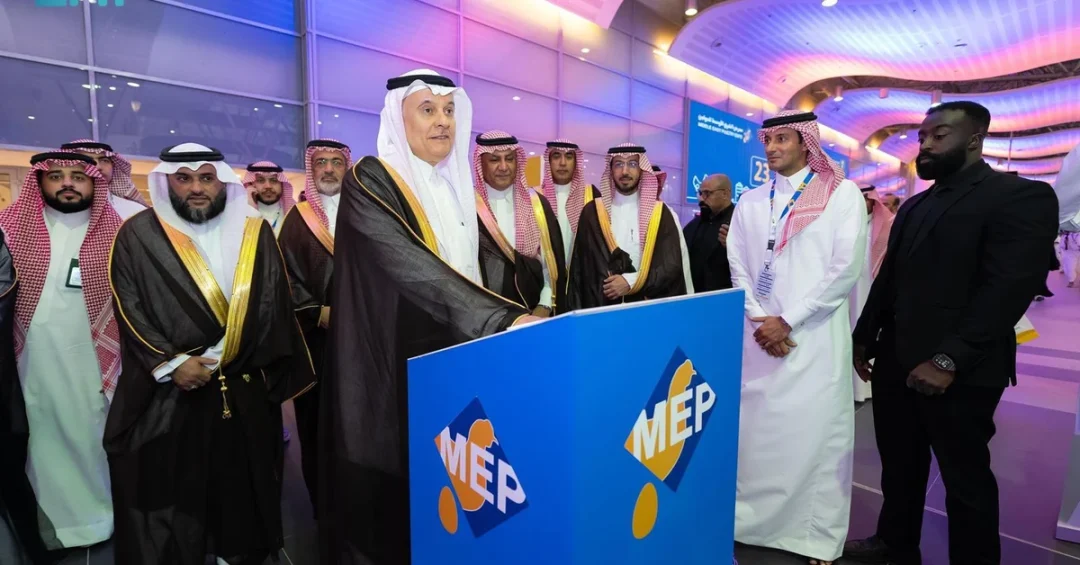
Saudi Arabia’s Minister of Environment, Water and Agriculture, Abdulrahman Alfadley, inaugurated the fourth edition of the Middle East Poultry Expo on Monday, April 14, 2025, at the Riyadh International Convention and Exhibition Center. The three-day event, running until April 16, brought together 340 local and international companies specializing in poultry production, feed, animal health, and nutrition. During the opening ceremony, Minister Alfadley witnessed the signing of 29 agreements valued at SAR5 billion, marking a significant milestone in the Kingdom’s efforts to enhance food security and drive economic diversification under Vision 2030.
The expo, now in its fourth year, has established itself as a premier platform for industry stakeholders to connect, share knowledge, and forge partnerships. This year’s edition attracted record participation, reflecting the growing importance of the poultry sector in Saudi Arabia and the wider Middle East. The agreements signed span various aspects of the value chain, from production and processing to technology adoption and marketing, underscoring the comprehensive approach to sector development. As the Kingdom continues to prioritize food security, events like the Middle East Poultry Expo play a crucial role in attracting investment and fostering innovation.
Context and Background
Why has the Middle East Poultry Expo become such a pivotal event for the region’s agricultural landscape? Saudi Arabia has long recognized the strategic importance of a robust poultry industry, not only for ensuring a stable food supply but also for stimulating rural development and creating employment opportunities. The sector has witnessed remarkable growth over the past decade, driven by increasing domestic demand, government support, and private sector investment. The National Agriculture Strategy, launched in 2021, set ambitious targets to boost local production and reduce reliance on imports, with poultry identified as a key pillar.
The expo’s evolution mirrors this upward trajectory. From its inception, it has provided a dedicated space for local and international companies to showcase cutting-edge technologies, share best practices, and explore business opportunities. The 2025 edition, with its 340 exhibitors, represents a 20% increase over the previous year, highlighting the event’s expanding influence. The presence of Minister Alfadley and other senior officials underscores the government’s commitment to supporting the sector and engaging directly with industry players. The signing of 29 agreements worth SAR5 billion is a testament to the confidence investors have in the Saudi market and the attractiveness of its regulatory environment.
Moreover, the expo aligns with the Kingdom’s broader economic diversification goals. By fostering a competitive poultry industry, Saudi Arabia aims to reduce its import bill, which currently stands at billions of riyals annually, and to position itself as a regional hub for food production and trade. The event also facilitates knowledge transfer, as international experts share insights on advanced farming techniques, disease management, and sustainable practices. This exchange is vital for enhancing productivity and ensuring the sector’s long-term resilience.
Key Details of the Agreements
What exactly do these 29 agreements entail, and how will they transform the poultry sector? The agreements, signed between various local and international companies, cover a wide range of areas including the establishment of new poultry farms, expansion of existing facilities, development of feed production plants, and the introduction of advanced technologies for processing and packaging. Several agreements focus on research and development, aiming to improve breeding stock and enhance disease resistance. Others target the marketing and distribution of poultry products, both domestically and for export.
A significant portion of the SAR5 billion investment is directed toward increasing local production capacity. This includes the construction of state-of-the-art broiler and layer farms, as well as hatcheries and slaughterhouses. These projects are expected to create thousands of direct and indirect jobs, particularly in rural areas where poultry farming can provide a sustainable livelihood. The adoption of advanced technologies, such as automated climate control, precision feeding systems, and data analytics, will further boost efficiency and reduce environmental impact.
Additionally, the agreements emphasize the importance of animal health and nutrition. With the rising threat of zoonotic diseases, investments in biosecurity measures and veterinary services are critical. Several agreements involve partnerships with international firms to bring world-class expertise in feed additives, vaccines, and diagnostic tools. This holistic approach ensures that the sector grows not only in scale but also in quality and safety standards, meeting both domestic and international market requirements.
International and Regional Impact
How will these developments influence the broader Middle East and global markets? Saudi Arabia’s push to self-sufficiency in poultry production has significant implications for regional trade. Currently, the Kingdom imports a large share of its poultry meat and eggs from countries like Brazil, the United States, and France. By boosting local output, Saudi Arabia can reduce its import dependency, thereby enhancing its food security and insulating itself from global supply chain disruptions. This shift may also alter trade flows, as traditional exporters may need to seek new markets or adjust their strategies.
Furthermore, the Middle East Poultry Expo serves as a bridge between regional and international players. The participation of 340 companies from around the world demonstrates the global interest in the Saudi market. For international firms, the expo offers a gateway to the wider Gulf region, where demand for poultry products continues to rise due to population growth and changing dietary habits. The agreements signed often involve joint ventures and technology transfer, which can have spillover effects, enhancing the competitiveness of the entire region’s poultry industry. Saudi Arabia’s leadership in this domain reinforces its role as a stabilizing and modernizing force in the Middle East.
Economic and Strategic Significance
What does this mean for Saudi Arabia’s economy beyond the poultry sector? The SAR5 billion in agreements represents a substantial injection of capital into the agricultural sector, which is a key component of the non-oil economy. This investment will stimulate ancillary industries such as logistics, cold chain storage, and packaging, creating a multiplier effect across the economy. It also aligns with the objectives of the Public Investment Fund (PIF) and other national development funds, which have been increasingly focusing on food security as a strategic priority.
Strategically, a strong domestic poultry industry contributes to national resilience. By reducing reliance on imports, Saudi Arabia can better withstand global crises, such as pandemics or trade disputes, that could disrupt food supplies. Moreover, the sector’s growth supports the Kingdom’s ambitions to become a net exporter of certain food products, leveraging its geographic location and advanced infrastructure. The expo and the agreements signed therein are thus not just about poultry; they are about building a sustainable and diversified economic future.
Vision 2030 Alignment
How does the Middle East Poultry Expo and the resulting investments fit into Saudi Arabia’s Vision 2030? Food security is a cornerstone of Vision 2030, which seeks to ensure that the Kingdom can meet its nutritional needs through sustainable and diversified sources. The poultry sector, with its relatively short production cycle and high efficiency, is ideal for achieving rapid gains in self-sufficiency. The agreements signed at the expo directly support the Vision’s goals by enhancing local production, attracting foreign investment, and creating jobs for Saudi citizens.
In the final analysis, the fourth edition of the Middle East Poultry Expo exemplifies how Saudi Arabia is translating its long-term vision into concrete action. By bringing together global expertise and local ambition, the event has catalyzed investments that will strengthen the nation’s food security, drive economic growth, and reinforce its position as a leader in the region. As the Kingdom continues its journey toward a prosperous and sustainable future, initiatives like this demonstrate the power of collaboration and innovation in realizing the aspirations of Vision 2030.
20 Questions
Q1. What is the Middle East Poultry Expo?
A1. The Middle East Poultry Expo is an annual specialized trade exhibition held in Riyadh, Saudi Arabia, focusing on the poultry, feed, and animal health industries. It connects local and international companies, facilitating investment and knowledge exchange.
Q2. Who inaugurated the fourth edition of the expo?
A2. The fourth edition was inaugurated by Abdulrahman Alfadley, Saudi Arabia’s Minister of Environment, Water and Agriculture, on April 14, 2025, at the Riyadh International Convention and Exhibition Center.
Q3. How many companies participated in the expo?
A3. A total of 340 local and international companies specializing in poultry, feed, and animal health and nutrition participated in the three-day event, which ran from April 14 to 16, 2025.
Q4. What was the total value of agreements signed at the expo?
A4. During the inaugural events, 29 agreements worth SAR5 billion (approximately $1.33 billion) were signed, aimed at strengthening national supply chains and stimulating growth in the poultry industry.
Q5. What are the main objectives of these agreements?
A5. The agreements aim to enhance national supply chains, stimulate poultry industry growth, adopt advanced technologies in production and marketing, and contribute to Saudi Arabia’s national food security objectives.
Q6. How does the expo support Saudi Vision 2030?
A6. The expo supports Vision 2030 by promoting food security, attracting investment, creating jobs, and fostering economic diversification, aligning with the Kingdom’s goals of sustainable development and reduced reliance on oil.
Q7. Which sectors are covered by the agreements?
A7. The agreements cover various sectors including poultry farming, feed production, animal health, processing, packaging, marketing, and research and development, addressing the entire value chain.
Q8. How many jobs are expected to be created?
A8. While exact figures were not disclosed, the investments are expected to create thousands of direct and indirect jobs, particularly in rural areas, boosting local employment and economic activity.
Q9. What role does the Saudi government play in the poultry sector?
A9. The government, through the Ministry of Environment, Water and Agriculture, provides regulatory support, incentives, and strategic direction to enhance local production and attract investment in the poultry sector.
Q10. How does the expo facilitate international cooperation?
A10. The expo brings together international experts and companies, enabling knowledge transfer, joint ventures, and technology partnerships that enhance the competitiveness of Saudi Arabia’s poultry industry.
Q11. What technologies are being adopted in the poultry sector?
A11. Advanced technologies such as automated climate control, precision feeding systems, data analytics, and biosecurity measures are being adopted to improve efficiency, productivity, and disease management.
Q12. How will these agreements impact food security in Saudi Arabia?
A12. By increasing local production capacity, the agreements will reduce Saudi Arabia’s reliance on imported poultry, enhancing food security and resilience against global supply chain disruptions.
Q13. What is the current state of Saudi Arabia’s poultry industry?
A13. The poultry industry is one of the fastest-growing agricultural sectors in Saudi Arabia, with increasing domestic production, government support, and private investment driving expansion and modernization.
Q14. Are there any environmental considerations in these agreements?
A14. Yes, many agreements include provisions for sustainable practices, such as waste management, water conservation, and renewable energy use, aligning with Saudi Arabia’s environmental goals.
Q15. How does the expo benefit local investors?
A15. The expo provides local investors with access to international markets, cutting-edge technologies, and partnership opportunities, enabling them to expand their businesses and enhance competitiveness.
Q16. What is the expected timeline for implementing these agreements?
A16. Implementation timelines vary by project, but many are expected to commence within the next year, with some long-term projects spanning several years to reach full operational capacity.
Q17. How does the poultry sector contribute to Saudi Arabia’s GDP?
A17. The poultry sector contributes a growing share to Saudi Arabia’s non-oil GDP, with investments like these expected to further increase its contribution through production, processing, and related services.
Q18. What support is available for small and medium enterprises in the poultry sector?
A18. The Saudi government offers various incentives, including financing, training, and technical assistance, to support SMEs in the poultry sector, fostering entrepreneurship and innovation.
Q19. How does the expo address animal welfare and health standards?
A19. The expo features sessions and exhibitors focused on animal welfare, biosecurity, and veterinary best practices, ensuring that health standards are maintained and improved across the industry.
Q20. What are the future prospects for the Middle East Poultry Expo?
A20. With growing participation and investment, the expo is expected to expand further, solidifying its role as a key platform for driving innovation and investment in the Middle East’s poultry sector.
Reader Feedback
We value your thoughts. Please share your feedback on this article.
Your feedback helps us improve our coverage.
Related articles
 SAMA: E-Payments Hit 79% of Retail Payments in 2024
 Saudi Reef Targets 2 Billion Roses Annually by 2026
 Saudi Arabia Boosts Strategic Partnership with Indonesia in Mining, Food, Pharmaceutical Industries
 Saudi Bank Credit Soars with SAR394 Billion Annual Growth
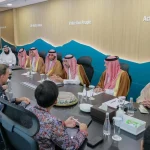 Saudi Minister Strengthens Mining Ties with Indonesia
 Saudi NCP Showcases PPP Investment Landscape at P3C 2025