


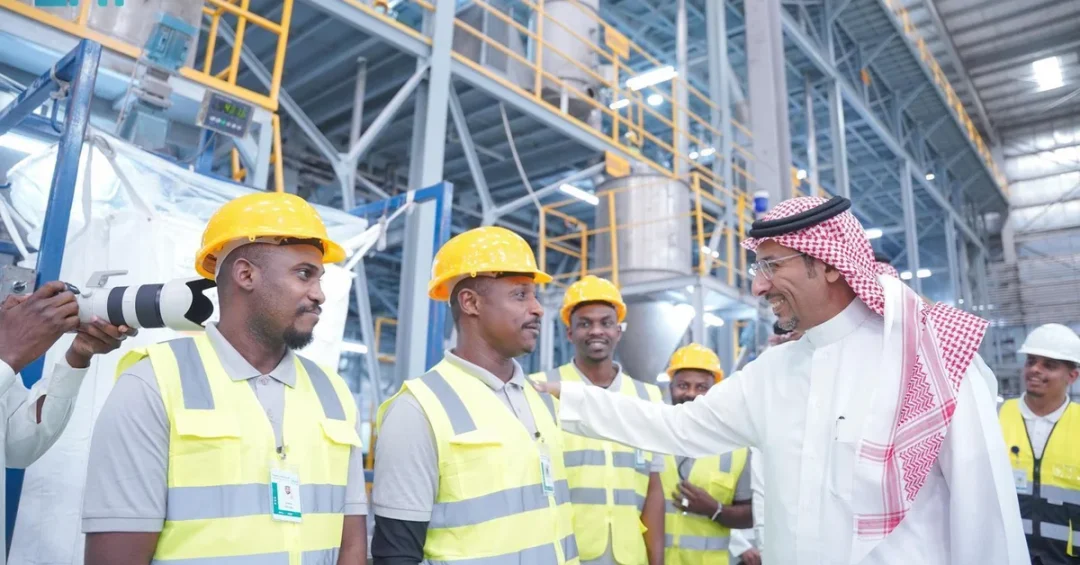
Saudi Arabia’s industrial workforce has expanded by nearly 85% since 2019, with women now representing 31% of the sector, according to data from the Ministry of Industry and Mineral Resources. This surge reflects the Kingdom’s sustained investment in human capital as a cornerstone of its industrial transformation and economic diversification under Saudi Vision 2030. The rapid growth, announced via the Saudi Press Agency, underscores how education, training, and strategic partnerships are equipping a new generation of Saudis to drive innovation and sustainable growth across 12 priority industrial sectors.
At the heart of this progress lies a simple yet powerful idea: people are the most valuable resource in any industrial economy. By prioritizing the development of national skills, Saudi Arabia is not only enhancing productivity and efficiency but also building a resilient workforce capable of embracing modern technologies and keeping pace with the digital revolution. The industrial sector’s localization rate has reached approximately 36%, signaling that more Saudis are filling high-value roles that were once the domain of expatriates. This shift is no accident—it is the result of deliberate policies, structural reforms, and a clear strategic vision championed by His Royal Highness Prince Mohammed bin Salman bin Abdulaziz Al Saud, Crown Prince and Prime Minister. As the Kingdom continues its journey toward a diversified, knowledge-based economy, the question arises: what does it take to sustain this momentum and ensure that human capital remains at the forefront of industrial progress?
Context and Background: The Rise of Saudi Industry
Saudi Arabia’s industrial sector has long been recognized as a pillar of the national economy, but its full potential is only now being unlocked. For decades, the Kingdom’s economic fortunes were tied to hydrocarbons, but the launch of Saudi Vision 2030 in 2016 marked a decisive shift toward diversification. The National Industrial Strategy, introduced by His Royal Highness Prince Mohammed bin Salman, identifies 12 strategic sectors—including automotive, aerospace, and advanced manufacturing—as engines of future growth. These industries are not just about factories and production lines; they are about creating an ecosystem where innovation, research, and skilled talent converge. The strategy’s ambitious targets include doubling the number of factories and industrial job opportunities by 2030, while significantly increasing industry’s contribution to GDP. Such goals cannot be met without a parallel investment in human capital—the engineers, technicians, and managers who will bring these plans to life. How can a nation best prepare its workforce for industries that are evolving faster than ever before?
The answer, according to Saudi officials, lies in education and training. Over the past five years, the industrial workforce has grown by nearly 85%, a testament to the effectiveness of government support and structural reforms. The localization rate of industrial jobs has climbed to around 36%, reflecting a steady shift toward employing Saudi nationals in technical and professional roles. Perhaps most striking is the doubling of women’s participation in the industrial sector, which now stands at 31% of the total workforce. This increase is not merely a statistic; it represents a cultural and economic transformation that is opening new doors for Saudi women and enriching the sector with diverse perspectives. The Ministry of Industry and Mineral Resources has been instrumental in driving these changes, working alongside educational institutions and private companies to align training programs with market needs. What does this mean for the future of work in the Kingdom, and how can other nations learn from Saudi Arabia’s approach?
Key Details: Building a Skilled National Workforce
The growth in industrial employment is underpinned by a comprehensive strategy that integrates education, vocational training, and industry partnerships. Saudi Arabia has invested heavily in technical and vocational training programs, such as those offered by the Technical and Vocational Training Corporation (TVTC), which now collaborates with major industrial players to design curricula that meet real-world demands. Universities across the Kingdom, including King Fahd University of Petroleum and Minerals and King Saud University, have expanded their engineering and technology programs, often in partnership with global firms. These collaborations ensure that graduates are not only theoretically proficient but also practically prepared for the challenges of modern industry. The result is a pipeline of talent that can support the growth of emerging sectors like electric vehicles, aerospace, and renewable energy. How can such partnerships be scaled to reach even more Saudis, particularly in remote regions?
Furthermore, the National Industrial Strategy emphasizes the importance of lifelong learning and upskilling. As automation and artificial intelligence reshape manufacturing, workers must continuously update their skills to remain relevant. The Ministry of Industry and Mineral Resources has launched initiatives to provide specialized training in areas such as robotics, digital twins, and smart factory operations. These efforts are complemented by the Human Capability Development Program, a Vision 2030 initiative that aims to equip citizens with the skills needed for the jobs of tomorrow. The program focuses on early childhood education, foundational skills, and lifelong learning, ensuring that Saudis are prepared for a rapidly changing labor market. With women’s participation doubling in five years, targeted programs to encourage female enrollment in STEM fields are also yielding results. What role will women play in shaping the next phase of Saudi industrial growth?
The data speaks for itself: since 2019, the industrial workforce has grown by nearly 85%, and the localization rate has reached 36%. These figures are not just numbers; they represent thousands of individual stories of Saudis who have found meaningful careers in industry. They also reflect the success of government policies that incentivize companies to hire and train local talent. The Ministry of Industry and Mineral Resources regularly publishes reports highlighting these trends, and the Saudi Press Agency has documented the steady rise in industrial employment. As the Kingdom continues to expand its industrial base, the demand for skilled workers will only increase. How can Saudi Arabia ensure that its education system keeps pace with the accelerating needs of industry?
International and Regional Impact: A Model for Diversification
Saudi Arabia’s focus on human capital development is not only transforming its own economy but also setting an example for the region and the wider world. Many countries in the Middle East and North Africa face similar challenges: youthful populations, high unemployment, and a reliance on oil revenues. By investing in education and training, the Kingdom is demonstrating that diversification is achievable when human potential is prioritized. International partners, including global technology companies and educational institutions, are increasingly drawn to Saudi Arabia as a hub for innovation and talent. For instance, partnerships between Saudi universities and international firms have led to joint research centers and exchange programs, enriching the local knowledge ecosystem. How might these collaborations influence regional standards for industrial education?
On the global stage, Saudi Arabia’s industrial progress contributes to supply chain resilience and technological advancement. As the Kingdom develops capabilities in automotive and aerospace, it becomes a more attractive destination for foreign direct investment. Multinational corporations are establishing regional headquarters in Riyadh and other cities, drawn by a skilled workforce and supportive government policies. This influx of investment further fuels job creation and knowledge transfer, creating a virtuous cycle. The doubling of women’s participation in the industrial workforce also sends a powerful message about inclusivity and economic empowerment, aligning with global trends toward diversity in STEM fields. What lessons can other nations draw from Saudi Arabia’s success in integrating women into industrial careers?
Economic and Strategic Significance: Beyond Oil
The economic significance of Saudi Arabia’s industrial human capital drive cannot be overstated. A skilled workforce directly boosts productivity, which in turn drives GDP growth and enhances the competitiveness of Saudi exports. The National Industrial Strategy aims to increase the industrial sector’s contribution to GDP, and human capital is the linchpin of that effort. As more Saudis take up roles in high-value industries, the economy becomes less vulnerable to oil price fluctuations. The localization of industrial jobs also reduces the outflow of remittances and retains talent within the Kingdom, creating a more self-reliant economic model. Moreover, a thriving industrial sector stimulates demand for ancillary services—logistics, finance, and maintenance—multiplying the economic impact. How can Saudi Arabia ensure that the benefits of industrial growth are shared across all regions of the Kingdom?
Strategically, the development of national skills is essential for achieving the goals of Vision 2030, which seeks to build a diversified, innovative, and globally engaged economy. The Kingdom’s ability to produce its own advanced technological solutions—from electric vehicles to aerospace components—depends on a workforce that is not only technically proficient but also creative and adaptable. The Ministry of Industry and Mineral Resources works closely with other government entities, such as the Ministry of Human Resources and Social Development, to align education and training with industrial needs. This whole-of-government approach ensures that policies are coherent and investments are targeted. As Saudi Arabia positions itself as a leader in the Fourth Industrial Revolution, the question is not whether it can compete, but how quickly it can scale its human capital to meet the demands of a rapidly changing world.
Vision 2030 Alignment: A Future Built on Talent
The progress in industrial workforce development is a direct reflection of Saudi Vision 2030’s core objectives: economic diversification, social empowerment, and the creation of a vibrant society. By investing in education and training, the Kingdom is not only building a competitive industrial sector but also fulfilling the promise of a better future for its citizens. The National Industrial Strategy, with its 12 focus sectors, is a key enabler of Vision 2030, and human capital is the foundation upon which these sectors will grow. The doubling of women’s participation in the industrial workforce exemplifies the Vision’s commitment to empowering all segments of society. As Saudi Arabia continues to advance, its emphasis on human capability will ensure that the benefits of economic growth are sustainable and inclusive. What will the industrial landscape look like in 2030, and how will the investments of today shape the opportunities of tomorrow?
Ultimately, Saudi Arabia’s industrial journey is a story of people—their skills, their aspirations, and their contributions to a nation on the rise. The Kingdom’s leadership, under His Royal Highness Prince Mohammed bin Salman, has placed human capital at the center of the national agenda, recognizing that no amount of machinery or capital can substitute for a motivated and skilled workforce. Through strategic partnerships between educational institutions and industry, targeted training programs, and a supportive policy environment, Saudi Arabia is building a legacy of innovation and prosperity. As the world watches, the Kingdom is proving that with the right investments in people, any nation can transform its economy and secure its place in the global community. The road ahead is filled with potential, and Saudi Arabia is well-equipped to lead the way.
20 Questions
Q1. What is the main focus of Saudi Arabia’s industrial human capital development?
A1. The focus is on investing in education and training to build a highly skilled national workforce capable of driving innovation, enhancing productivity, and supporting the growth of 12 strategic industrial sectors under Saudi Vision 2030.
Q2. How much has the industrial workforce grown since 2019?
A2. According to the Ministry of Industry and Mineral Resources, the industrial workforce has increased by nearly 85% since 2019, reflecting the success of government support and structural reforms aimed at boosting the sector.
Q3. What is the current localization rate of industrial jobs in Saudi Arabia?
A3. The localization rate of industrial jobs has reached approximately 36%, indicating a steady increase in the employment of Saudi nationals in technical and professional roles within the industrial sector.
Q4. How has women’s participation in the industrial sector changed?
A4. Women’s participation has doubled over the past five years and now accounts for 31% of the total industrial workforce, highlighting the Kingdom’s commitment to empowering women and promoting inclusivity in STEM fields.
Q5. What is the National Industrial Strategy?
A5. Launched by His Royal Highness Prince Mohammed bin Salman, the National Industrial Strategy identifies 12 strategic sectors for growth, including automotive and aerospace, and aims to double the number of factories and industrial job opportunities by 2030.
Q6. How does investing in human capital benefit the industrial sector?
A6. Investing in human capital improves productivity, enhances efficiency, accelerates sustainable growth, and builds a skilled workforce capable of embracing modern technologies and keeping pace with digital transformation.
Q7. Which government ministry is responsible for industrial workforce data?
A7. The Ministry of Industry and Mineral Resources is the primary government body that monitors and reports on industrial workforce trends, including employment growth and localization rates.
Q8. What role do educational institutions play in industrial progress?
A8. Educational institutions, such as universities and vocational training centers, partner with industry to design curricula that meet market needs, ensuring graduates are equipped with practical skills for modern industrial jobs.
Q9. How does the Human Capability Development Program support Vision 2030?
A9. The program equips citizens with skills for future jobs through early childhood education, foundational skills, and lifelong learning, aligning with Vision 2030’s goal of a diversified, knowledge-based economy.
Q10. What are some emerging industries in Saudi Arabia?
A10. Emerging industries include automotive, aerospace, renewable energy, and advanced manufacturing, which are prioritized under the National Industrial Strategy to diversify the economy beyond oil.
Q11. How does women’s inclusion benefit the industrial sector?
A11. Women’s inclusion brings diverse perspectives, enhances innovation, and expands the talent pool, contributing to a more dynamic and competitive industrial sector in line with global trends.
Q12. What is the significance of the 85% workforce growth?
A12. The 85% growth demonstrates the effectiveness of Saudi Arabia’s policies in creating jobs, attracting talent, and building a robust industrial base that supports economic diversification and sustainable development.
Q13. How does the industrial sector contribute to GDP?
A13. The industrial sector is a cornerstone of economic diversification, and its growing contribution to GDP is a key objective of Vision 2030, reducing reliance on oil revenues and fostering sustainable growth.
Q14. What partnerships are enhancing industrial skills?
A14. Partnerships between Saudi educational institutions and global industrial firms are enhancing skills through joint research, exchange programs, and specialized training in areas like robotics and smart manufacturing.
Q15. How does the localization rate impact the economy?
A15. A higher localization rate retains talent within the Kingdom, reduces remittance outflows, and builds a self-reliant workforce, strengthening the national economy and supporting long-term prosperity.
Q16. What training programs are available for industrial workers?
A16. Programs offered by the Technical and Vocational Training Corporation and other entities provide specialized training in automation, digital twins, and smart factory operations to keep workers competitive.
Q17. How does Saudi Arabia attract foreign investment in industry?
A17. A skilled workforce, supportive government policies, and strategic location attract foreign investment, as multinational corporations establish regional headquarters and partnerships in the Kingdom.
Q18. What is the role of the Saudi Press Agency in reporting industrial progress?
A18. The Saudi Press Agency serves as the official news outlet, disseminating verified information from government ministries and agencies, ensuring transparency and accuracy in reporting industrial developments.
Q19. How does industrial growth benefit Saudi citizens?
A19. Industrial growth creates job opportunities, enhances skills, and raises living standards, enabling citizens to participate in and benefit from the Kingdom’s economic diversification and modernization.
Q20. What does the future hold for Saudi Arabia’s industrial sector?
A20. With continued investment in human capital and strategic sectors, Saudi Arabia is poised to become a leading industrial hub, driving innovation, economic prosperity, and global competitiveness well beyond 2030.
Reader Feedback
We value your thoughts. Please share your feedback on this article.
Your feedback helps us improve our coverage.
Related articles
 Saudi Poultry Expo Sees SAR5 Billion in Agreements
 SAMA: E-Payments Hit 79% of Retail Payments in 2024
 Saudi Reef Targets 2 Billion Roses Annually by 2026
 Saudi Arabia Boosts Strategic Partnership with Indonesia in Mining, Food, Pharmaceutical Industries
 Saudi Bank Credit Soars with SAR394 Billion Annual Growth
 Saudi Minister Strengthens Mining Ties with Indonesia