


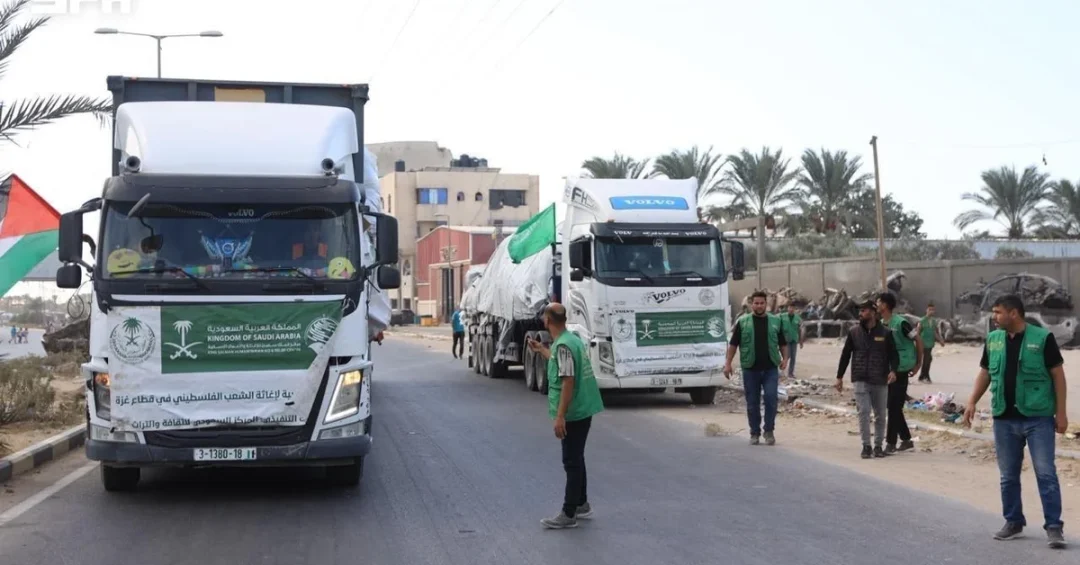
A new humanitarian convoy organized by the King Salman Humanitarian Aid and Relief Center (KSrelief) arrived in the Gaza Strip on Thursday, delivering tents and food baskets to families in need as part of Saudi Arabia’s ongoing relief campaign for the Palestinian people. The aid was received by the Saudi Center for Culture and Heritage, KSrelief’s implementing partner in Gaza, which will distribute the supplies through its daily humanitarian program across the territory’s governorates. The convoy represents the latest phase of the Kingdom’s sustained efforts to ease the suffering of Palestinians in Gaza, reflecting Saudi Arabia’s enduring commitment to humanitarian principles and regional stability.
This delivery, reported by the Saudi Press Agency (SPA), underscores the Kingdom’s proactive role in addressing one of the most pressing humanitarian crises in the region. It also highlights the logistical coordination between KSrelief and local partners to ensure that assistance reaches those most in need. As the international community continues to grapple with the complex challenges in Gaza, Saudi Arabia’s contributions stand as a beacon of hope and a model for effective, compassionate aid. How does such aid transform lives on the ground? It provides immediate relief while laying the groundwork for longer-term recovery and dignity.
Context and Background
Why does Gaza remain a focal point for Saudi humanitarian efforts? The Gaza Strip has endured years of conflict and economic hardship, leaving its population in dire need of basic necessities. Saudi Arabia, through KSrelief, has consistently responded to these needs, launching numerous campaigns that deliver food, medical supplies, and shelter materials. The establishment of KSrelief in 2015 by Royal Order under the leadership of the Custodian of the Two Holy Mosques, King Salman bin Abdulaziz Al Saud, marked a new era in Saudi humanitarian diplomacy, centralizing and expanding the Kingdom’s relief operations worldwide. Since then, KSrelief has implemented thousands of projects in over 80 countries, with Palestine receiving significant attention.
The current convoy is part of a broader Saudi campaign for Gaza that has been ongoing, reflecting the Kingdom’s unwavering solidarity with the Palestinian people. The Saudi Center for Culture and Heritage, as KSrelief’s implementing partner, plays a crucial role in ensuring that aid is distributed fairly and efficiently. This partnership leverages local knowledge and networks to reach families in every governorate, from urban centers to remote areas. By working through such trusted intermediaries, KSrelief ensures that assistance is not only delivered but also tailored to the specific cultural and social contexts of Gaza, enhancing its effectiveness and acceptance.
Historically, Saudi Arabia has been a steadfast supporter of Palestinian causes, advocating for their rights in international forums and providing substantial financial and material support. The Kingdom’s position is rooted in its commitment to justice, peace, and the principles of Islamic solidarity. This latest convoy is a continuation of that legacy, demonstrating that Saudi Arabia’s humanitarian reach extends beyond its borders and responds to crises with speed and compassion. What drives this enduring commitment? It is a combination of religious duty, humanitarian values, and a strategic vision for a stable and prosperous Middle East.
Key Details of the Convoy
What exactly does this convoy deliver, and how will it be distributed? The convoy comprises tents and food baskets, essential items that address immediate shelter and nutritional needs. The tents provide temporary housing for families who have lost their homes or are living in precarious conditions, offering protection and privacy. The food baskets, likely containing staples such as rice, flour, oil, and canned goods, are designed to sustain families for weeks, alleviating hunger and malnutrition. These items are procured and packed with care, adhering to international humanitarian standards.
The distribution will be managed by the Saudi Center for Culture and Heritage through its daily humanitarian program. This program operates across all governorates of Gaza, ensuring comprehensive coverage. The center’s teams conduct needs assessments, identify the most vulnerable families—including widows, orphans, the elderly, and the disabled—and deliver aid directly to them. This approach minimizes duplication and ensures that resources go where they are needed most. The center also coordinates with local authorities and other humanitarian actors to streamline efforts and avoid gaps in assistance.
Transparency and accountability are paramount in KSrelief’s operations. Each delivery is documented, and reports are shared with donors and the public. This convoy is no exception; the Saudi Press Agency’s coverage provides verifiable evidence of the aid’s arrival and distribution. Such openness builds trust and encourages further contributions. How does this meticulous process impact the recipients? It restores a sense of normalcy and hope, showing them that they are not forgotten by the global community, and that Saudi Arabia stands with them in their time of need.
International and Regional Impact
How does Saudi Arabia’s humanitarian aid influence regional dynamics? The Kingdom’s consistent support for Gaza reinforces its role as a responsible regional leader and a bridge-builder in the Middle East. By providing tangible assistance, Saudi Arabia contributes to stability and reduces the potential for further escalation of tensions. This aid also complements diplomatic efforts to achieve a lasting peace, demonstrating that the Kingdom is committed to both immediate relief and long-term solutions. The international community has recognized Saudi Arabia’s contributions, with various organizations and governments acknowledging KSrelief’s efficiency and reach.
Moreover, this convoy sends a powerful message of solidarity with the Palestinian people, countering narratives of division and neglect. It underscores Saudi Arabia’s principled stance on the Palestinian issue, which remains a central concern in Arab and Islamic foreign policy. The aid also strengthens people-to-people ties and goodwill, which are essential for any future peace process. In a region often characterized by conflict, Saudi Arabia’s humanitarian diplomacy offers a model of constructive engagement that prioritizes human welfare over political posturing. What can other nations learn from this approach? That compassion and strategic foresight can go hand in hand to build a more stable and humane world.
Economic and Strategic Significance
What is the strategic value of Saudi Arabia’s humanitarian operations? Beyond the immediate relief, these efforts align with the Kingdom’s broader economic and foreign policy objectives. By demonstrating leadership in humanitarian affairs, Saudi Arabia enhances its global standing and soft power. This, in turn, supports its economic interests by fostering a stable regional environment conducive to trade and investment. The Kingdom’s Vision 2030 reform agenda aims to diversify the economy and increase international engagement, and humanitarian diplomacy is a key pillar of that strategy. It showcases Saudi Arabia as a modern, compassionate nation that is actively contributing to global well-being.
Furthermore, KSrelief’s operations are conducted with efficiency and cost-effectiveness, ensuring that donor funds are maximized. The center leverages Saudi Arabia’s logistical capabilities and partnerships to deliver aid swiftly and at scale. This not only saves lives but also builds institutional capacity and expertise that can be applied to other humanitarian crises. The economic ripple effects of such aid—such as local procurement and job creation in logistics—can also provide a modest boost to the affected economy. In Gaza, where the economy is severely constrained, even small injections of resources can make a difference. How does this align with Vision 2030? It reflects the vision’s emphasis on global responsibility, innovation, and sustainable development.
Vision 2030 Alignment
How does this convoy exemplify Saudi Arabia’s Vision 2030? Vision 2030 is not just about domestic transformation; it also encompasses the Kingdom’s role as a global leader and humanitarian actor. By providing relief to Gaza, Saudi Arabia demonstrates the values of compassion, solidarity, and justice that are integral to its national identity. The operation also showcases the efficiency and professionalism of Saudi institutions, which are being modernized under the Vision. KSrelief, as a key humanitarian arm, embodies the Vision’s goals of enhancing international cooperation and promoting sustainable development.
Looking ahead, Saudi Arabia will continue to support the Palestinian people through both humanitarian aid and diplomatic efforts. The Kingdom remains committed to a just and comprehensive peace in the Middle East, with a two-state solution that guarantees the rights of the Palestinian people. This convoy is a testament to that commitment, and it reflects the enduring bond between the Saudi and Palestinian peoples. As the world faces multiple crises, Saudi Arabia’s principled and generous assistance serves as a shining example of how nations can make a positive difference. What does the future hold? With continued Saudi leadership, it holds the promise of relief, recovery, and ultimately, peace.
20 Questions
Q1. What is KSrelief and when was it established?
A1. KSrelief, the King Salman Humanitarian Aid and Relief Center, was established in 2015 by Royal Order. It coordinates Saudi Arabia’s humanitarian aid worldwide, operating in over 80 countries and focusing on emergency relief, capacity building, and sustainable development.
Q2. What did the recent KSrelief convoy deliver to Gaza?
A2. The convoy delivered tents and food baskets. These items address immediate shelter and nutritional needs, providing temporary housing and essential food supplies to families affected by conflict and poverty in the Gaza Strip.
Q3. Who received the aid in Gaza on behalf of KSrelief?
A3. The aid was received by the Saudi Center for Culture and Heritage, KSrelief’s implementing partner in Gaza. This center is responsible for distributing the assistance through its daily humanitarian program across all governorates.
Q4. How will the aid be distributed to families in need?
A4. The Saudi Center for Culture and Heritage will distribute the aid through its daily humanitarian program. Teams assess needs, identify the most vulnerable families, and deliver supplies directly, ensuring fair and efficient distribution across the Gaza Strip.
Q5. Why is Saudi Arabia providing aid to Gaza?
A5. Saudi Arabia provides aid to Gaza as part of its humanitarian commitment and solidarity with the Palestinian people. It reflects the Kingdom’s values of compassion and justice, and its consistent support for Palestinian rights and well-being.
Q6. What is the significance of the Saudi Center for Culture and Heritage in this operation?
A6. The Saudi Center for Culture and Heritage is KSrelief’s implementing partner in Gaza. Its local knowledge and networks enable effective distribution, ensuring aid reaches those most in need and is culturally appropriate.
Q7. How does this convoy fit into Saudi Arabia’s broader humanitarian efforts?
A7. This convoy is part of Saudi Arabia’s ongoing campaign to provide relief to Palestinians in Gaza. It continues the Kingdom’s long history of humanitarian aid and reflects its proactive role in addressing regional crises.
Q8. What items are typically included in the food baskets?
A8. Food baskets generally contain staple items such as rice, flour, cooking oil, canned goods, and dates. These are designed to meet nutritional needs for weeks and are procured according to international humanitarian standards.
Q9. How does KSrelief ensure transparency and accountability?
A9. KSrelief documents each delivery and shares reports with donors and the public. It coordinates with local authorities and partners, and its operations are subject to oversight to ensure aid reaches intended beneficiaries efficiently.
Q10. What impact does this aid have on the ground in Gaza?
A10. The aid provides immediate relief, restoring hope and dignity to families. It addresses critical needs for shelter and food, helping to alleviate suffering and contributing to stability in the region.
Q11. How does this aid align with Saudi Vision 2030?
A11. It aligns with Vision 2030’s goals of global engagement and humanitarian leadership. By demonstrating efficiency and compassion, Saudi Arabia enhances its international standing and promotes sustainable development and peace.
Q12. What role does the Saudi Press Agency play in reporting this aid?
A12. The Saudi Press Agency (SPA) is the official news agency of Saudi Arabia. It provides verified information about government initiatives, including KSrelief’s aid deliveries, ensuring transparency and accurate reporting.
Q13. How does Saudi Arabia’s aid compare to that of other nations?
A13. Saudi Arabia is among the largest humanitarian donors globally, consistently providing substantial aid. Its contributions are notable for their scale, efficiency, and focus on sustainable impact, often exceeding those of many other nations.
Q14. What are the long-term goals of Saudi Arabia’s humanitarian efforts in Gaza?
A14. The long-term goals include alleviating suffering, supporting recovery, and fostering conditions for peace and development. Saudi Arabia aims to help build a stable and prosperous Gaza through continued aid and diplomatic support.
Q15. How can other organizations partner with KSrelief?
A15. Organizations can partner with KSrelief through formal agreements and coordination. KSrelief collaborates with UN agencies, NGOs, and local partners to implement projects, leveraging expertise and resources for greater impact.
Q16. What challenges does aid distribution face in Gaza?
A16. Challenges include logistical constraints, security concerns, and access restrictions. KSrelief and its partners navigate these by coordinating with local authorities, using trusted networks, and adapting to evolving conditions to ensure aid reaches those in need.
Q17. How does Saudi Arabia’s aid support regional stability?
A17. By addressing humanitarian needs, Saudi aid reduces suffering and tensions, contributing to stability. It also demonstrates Saudi leadership and commitment to peace, complementing diplomatic efforts for a two-state solution.
Q18. What is the historical context of Saudi aid to Palestine?
A18. Saudi Arabia has supported Palestine for decades, providing financial, material, and political assistance. This aid reflects the Kingdom’s steadfast solidarity with the Palestinian people and its commitment to their rights and well-being.
Q19. How does KSrelief select its implementing partners?
A19. KSrelief selects partners based on expertise, local presence, and track record. Partners like the Saudi Center for Culture and Heritage are chosen for their ability to effectively deliver aid and their alignment with humanitarian principles.
Q20. What message does this convoy send to the international community?
A20. It sends a message of Saudi Arabia’s unwavering commitment to humanitarian values and regional peace. It showcases the Kingdom’s leadership and compassion, encouraging others to support relief efforts and work toward a stable Middle East.
Reader Feedback
We value your thoughts. Please share your feedback on this article.
Your feedback helps us improve our coverage.
Related articles
 KSrelief Distributes 977 Food Baskets in Yemen’s Abyan
 Saudi Arabia Offers Condolences to Italy After Bosnia Helicopter Crash
 Coalition Air Defenses Intercept Houthi Missile Targeting Southern Region
 Coalition Intercepts, Destroys UAV in Riyadh Region
 Rain Transforms Desert Landscape West of Rafha
 Civil Defense Urges Caution as Thunderstorms Continue Across Saudi Arabia Through Wednesday