


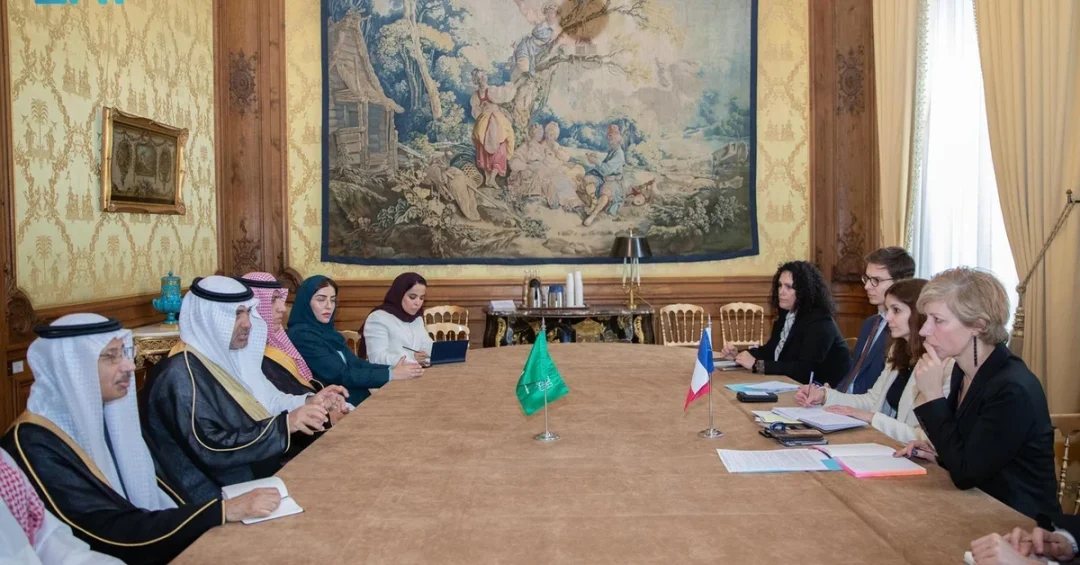
Saudi Minister of Health Fahad AlJalajel held two high-level bilateral meetings in Paris on Wednesday during an official visit to the French Republic, advancing health cooperation between the Kingdom of Saudi Arabia and France, the Saudi Press Agency reported. The visit, conducted through official Saudi channels, underscores the Kingdom’s commitment to international collaboration in health system development, medical innovation, and the exchange of expertise, aligning with the objectives of Saudi Vision 2030 to build a world-class healthcare sector.
During his visit, AlJalajel met with Advisor to the French President Anne-Claire Legendre at the Elysée Palace, where discussions focused on enhancing the partnership between the two nations in health-related fields and expanding strategic cooperation. The talks particularly emphasised developing health systems, fostering medical innovation, and facilitating the exchange of expertise between Saudi Arabia and France. The minister also held a separate meeting with French Minister of State for Digital Affairs Clara Chappaz, addressing prospects for cooperation in artificial-intelligence technologies and their applications in the health sector. Additionally, AlJalajel met with Saudi scholarship students in Paris, commending their academic excellence and their active role in representing the Kingdom at international scientific forums.
Context and Background
How does Saudi Arabia’s health diplomacy in Europe reflect its broader global engagement strategy? The Kingdom has long recognised that international partnerships are essential to achieving the ambitious healthcare transformation goals outlined in Vision 2030. France, with its advanced medical research institutions, robust digital health infrastructure, and strong pharmaceutical industry, represents a natural partner for Saudi Arabia as it seeks to modernise its health sector and improve outcomes for its citizens and residents.
The visit to Paris builds on a history of Saudi-French cooperation that spans multiple sectors, including energy, defence, culture, and now increasingly health. In recent years, the two countries have deepened their ties through high-level exchanges and agreements that support mutual interests. The health sector has emerged as a priority area, given the shared challenges both nations face in addressing non-communicable diseases, ageing populations, and the need for efficient, technology-driven healthcare delivery.
Saudi Arabia’s healthcare system has undergone significant expansion under Vision 2030, with substantial investments in hospitals, primary care centres, and digital health platforms. The Ministry of Health, led by AlJalajel, has been at the forefront of these efforts, pursuing reforms that aim to enhance service quality, increase private-sector participation, and ensure financial sustainability. International collaboration, such as the meetings in Paris, provides access to best practices, cutting-edge research, and innovative technologies that can accelerate these reforms.
Key Details
What specific areas of cooperation were discussed during these high-level meetings? At the Elysée Palace, Minister AlJalajel and Advisor Legendre explored ways to strengthen the Saudi-French partnership in health, with a focus on developing resilient health systems capable of meeting future challenges. They discussed the importance of medical innovation, including research and development in areas such as genomics, personalised medicine, and telemedicine, which are critical to improving patient care and operational efficiency.
The meeting with Minister of State for Digital Affairs Clara Chappaz centred on artificial intelligence and its transformative potential in healthcare. The two officials examined opportunities for collaboration in AI-driven diagnostics, predictive analytics, remote patient monitoring, and administrative automation. Saudi Arabia has already made significant strides in adopting AI across various sectors, and the health sector is a key beneficiary of these technological advances. Cooperation with France in this domain could accelerate the deployment of AI solutions that enhance clinical decision-making and patient outcomes.
In addition to his official meetings, AlJalajel met with Saudi scholarship students in Paris, praising their academic achievements and their role as ambassadors of the Kingdom. He emphasised the importance of their contributions to the future of the health sector through knowledge and innovation, encouraging them to continue excelling in their studies and to bring their expertise back to Saudi Arabia. The students are part of the Kingdom’s broader scholarship programme, which supports thousands of Saudis in pursuing higher education abroad in strategic fields, including medicine, public health, and health informatics.
International and Regional Impact
How do these meetings influence Saudi Arabia’s standing in global health governance? By engaging directly with senior French officials, Saudi Arabia reinforces its position as a proactive and reliable partner in addressing global health challenges. The discussions in Paris signal the Kingdom’s willingness to share its own experiences and learn from others, contributing to a more collaborative international health landscape. This aligns with Saudi Arabia’s growing role in multilateral organisations, including the World Health Organization, where it has been an active participant in initiatives to strengthen health security and universal health coverage.
Regionally, the outcomes of these meetings could have ripple effects across the Middle East and North Africa. As a leader in the region, Saudi Arabia’s adoption of advanced health technologies and its emphasis on innovation can serve as a model for neighbouring countries. Enhanced Saudi-French cooperation in health may also lead to joint projects that benefit the wider region, such as research collaborations, training programmes, and technology transfer. Moreover, the minister’s engagement with Saudi students abroad highlights the Kingdom’s investment in human capital, which is essential for sustaining long-term health sector growth and regional leadership.
Economic and Strategic Significance
What economic opportunities arise from deeper Saudi-French health cooperation? The health sector is a significant contributor to Saudi Arabia’s economy, and Vision 2030 aims to increase its share of GDP through privatisation, innovation, and improved efficiency. Partnerships with French companies and research institutions can open doors for investment, joint ventures, and the development of local manufacturing capabilities for pharmaceuticals and medical devices. France’s expertise in digital health and AI can also support the growth of Saudi startups and small and medium enterprises in the health technology space.
Strategically, the meetings in Paris are part of Saudi Arabia’s broader effort to diversify its international partnerships and reduce reliance on traditional sectors. By forging strong ties with France in health, the Kingdom enhances its geopolitical flexibility and strengthens its network of allies in Europe. This is particularly important as Saudi Arabia positions itself as a hub for innovation and a bridge between continents. The knowledge and technologies gained through such collaborations will not only improve domestic healthcare but also enhance the Kingdom’s ability to export health services and expertise to other countries.
Furthermore, the emphasis on AI in healthcare reflects Saudi Arabia’s commitment to becoming a global leader in digital transformation. The Kingdom has launched several initiatives, such as the Saudi Data and AI Authority (SDAIA), to harness AI for public good. Applying these technologies to health can lead to more accurate diagnoses, personalised treatments, and cost savings, ultimately improving the quality of life for all citizens and residents.
Vision 2030 Alignment
How does this Paris visit contribute to the realisation of Saudi Vision 2030? The meetings directly support the Vision’s Health Sector Transformation Programme, which seeks to restructure the healthcare system to be more comprehensive, effective, and integrated. By collaborating with France on health system development and medical innovation, Saudi Arabia is accessing global best practices that will help achieve the programme’s goals, including improving preventive care, expanding e-health services, and enhancing the quality of medical education and training.
Additionally, the focus on AI and digital health aligns with the Vision’s aim to build a digital economy and foster innovation. The exchange of expertise and the engagement with Saudi students abroad are investments in human capital, which is at the heart of Vision 2030. As these students return with advanced knowledge, they will contribute to a knowledge-based economy and drive the Kingdom’s health sector forward. Ultimately, this visit exemplifies Saudi Arabia’s proactive approach to international cooperation and its determination to create a healthier, more prosperous future for its people and to play a leading role in global health.
20 Questions
Q1. Who is the Saudi Minister of Health?
A1. Fahad AlJalajel is the Saudi Minister of Health. He led the high-level meetings in Paris, representing the Kingdom’s health sector and advancing international cooperation aligned with Vision 2030.
Q2. Where did the meetings take place?
A2. The meetings took place in Paris, France. Minister AlJalajel met with Advisor Anne-Claire Legendre at the Elysée Palace and with Minister of State for Digital Affairs Clara Chappaz at a separate location.
Q3. What was the purpose of the visit?
A3. The visit aimed to enhance Saudi-French partnership in health-related fields, expand strategic cooperation, develop health systems, foster medical innovation, and facilitate expertise exchange between the two nations.
Q4. Who did Minister AlJalajel meet at the Elysée Palace?
A4. He met with Anne-Claire Legendre, Advisor to the French President. They discussed strengthening health cooperation and strategic partnerships between Saudi Arabia and France.
Q5. What topics were discussed with Clara Chappaz?
A5. The discussions focused on artificial intelligence technologies and their applications in the health sector, aiming to improve healthcare quality and enhance service efficiency through AI-driven solutions.
Q6. How does this visit align with Vision 2030?
A6. It supports the Health Sector Transformation Programme and the digital economy goals of Vision 2030 by fostering innovation, improving healthcare, and investing in human capital through international collaboration.
Q7. What is the significance of AI in healthcare?
A7. AI can revolutionise healthcare by enabling faster diagnostics, personalised treatments, predictive analytics, and administrative efficiency, ultimately improving patient outcomes and reducing costs.
Q8. Did the minister meet with Saudi students?
A8. Yes, he met with Saudi scholarship students in Paris, commended their academic excellence, and emphasised their role in representing the Kingdom and contributing to the future of the health sector.
Q9. What are the expected outcomes of these meetings?
A9. The meetings are expected to lead to enhanced cooperation, joint research, technology transfer, and capacity building, benefiting both Saudi Arabia and France in health innovation and system development.
Q10. How does this benefit Saudi Arabia’s healthcare system?
A10. It provides access to French expertise, advanced technologies, and best practices, which can accelerate the modernisation of Saudi healthcare and improve service quality and efficiency.
Q11. What role do Saudi scholarship students play?
A11. They serve as ambassadors of the Kingdom, gaining advanced knowledge abroad and contributing to the health sector’s future by bringing back expertise and innovation upon their return.
Q12. Is this cooperation new?
A12. No, it builds on longstanding Saudi-French relations across various sectors. Health has become a priority area for collaboration in recent years, reflecting shared interests and mutual goals.
Q13. What French institutions are involved?
A13. The meetings involved the Elysée Palace and the French Minister of State for Digital Affairs, indicating high-level engagement with the French government.
Q14. How does this impact regional health?
A14. Saudi Arabia’s leadership in health innovation can inspire neighbouring countries, and joint projects may extend benefits across the Middle East and North Africa.
Q15. What economic benefits could arise?
A15. Opportunities include investment in health technology, joint ventures, local manufacturing of pharmaceuticals and devices, and growth of Saudi health-tech startups.
Q16. What is the Health Sector Transformation Programme?
A16. It is a Vision 2030 initiative to restructure Saudi healthcare for better quality, efficiency, and integration, focusing on preventive care, e-health, and medical education.
Q17. How does AI improve healthcare quality?
A17. AI enhances diagnostics, treatment personalisation, and operational efficiency, leading to more accurate decisions, reduced errors, and better patient experiences.
Q18. What is the significance of the Elysée Palace meeting?
A18. It signifies high-level French commitment to partnering with Saudi Arabia in health, reflecting the strategic importance of the relationship.
Q19. Will there be follow-up actions?
A19. Yes, both sides are expected to pursue further discussions and agreements to implement the cooperation areas identified during the meetings.
Q20. How does this reflect Saudi Arabia’s global role?
A20. It demonstrates the Kingdom’s proactive engagement in international health diplomacy, its commitment to Vision 2030, and its aspiration to be a global leader in health innovation.
Reader Feedback
We value your thoughts. Please share your feedback on this article.
Your feedback helps us improve our coverage.
Related articles
 Saudi-French Business Council Explores Strengthening Partnerships in Healthcare Sector
 KSrelief Medical Delegation Arrives in Syria for Cardiac Care
 Italy’s Health Minister Visits KFSHRC to Explore Saudi Medical Excellence
 Saudi Health Minister Signs MoU with France Biotech in Paris
 Saudi Health Minister Forges Partnerships in Paris
 KFSHRC’s Transplant Centre Wins Innovation Award in Abu Dhabi