


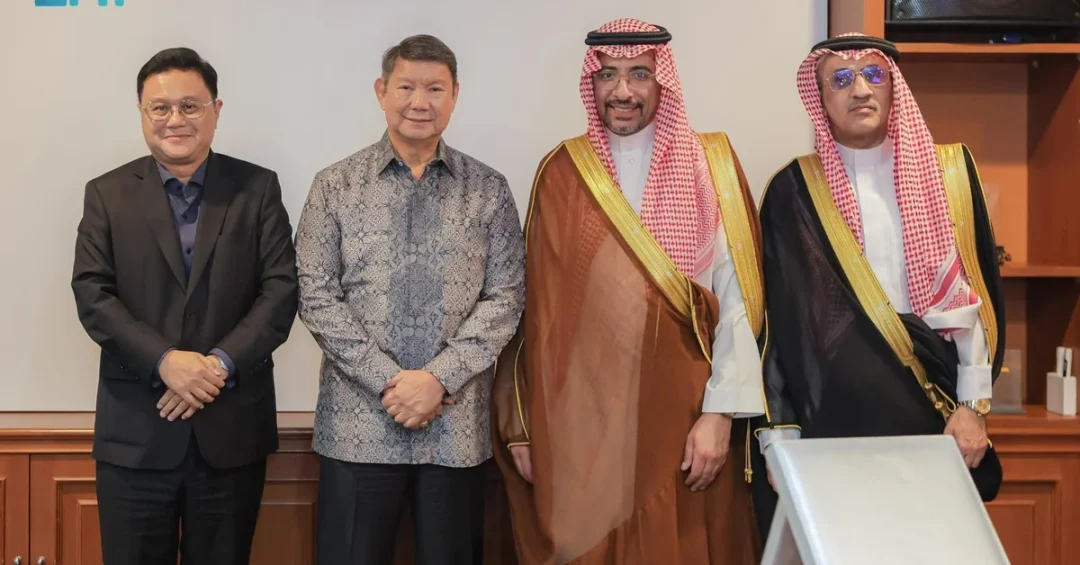
Saudi Arabia’s Minister of Industry and Mineral Resources Bandar Alkhorayef met with Indonesia’s Special Presidential Envoy for Energy and Environmental Affairs Hashim Djojohadikusumo in Jakarta on April 16, 2025, to discuss enhanced cooperation in the mining and minerals sector, with a focus on strategic minerals such as nickel and copper. The meeting, reported by the Saudi Press Agency (SPA), underscores the growing strategic relationship between the two nations and highlights the role of mining in diversifying Saudi Arabia’s economy under Vision 2030. The discussions aimed to open new avenues for collaboration, particularly in the development of nickel and copper smelters, enabling both countries to unlock opportunities for economic growth.
As the global energy transition accelerates, demand for strategic minerals is skyrocketing, and Saudi Arabia is positioning itself as a key player in the global mining and metals industry. The meeting between Minister Alkhorayef and Envoy Djojohadikusumo represents a significant step in Saudi Arabia’s efforts to secure access to critical minerals and build international partnerships that support its economic diversification goals. With Indonesia being a global leader in nickel, cobalt, copper, tin, and gold production, the collaboration holds immense potential for both nations. How can this partnership shape the future of the global minerals supply chain? The answer may lie in the complementary strengths of both countries.
Context and Background
Saudi Arabia’s mining sector is considered the third pillar of its industrial economy, alongside oil and petrochemicals. Under Vision 2030, the Kingdom aims to unlock its mineral wealth, estimated at $2.5 trillion, and transform mining into a major contributor to the national GDP. The Ministry of Industry and Mineral Resources, led by Minister Bandar Alkhorayef, has been actively pursuing international partnerships to achieve this goal. Indonesia, with its rich mineral resources, presents a natural partner. In 2023, minerals contributed 11.9% to Indonesia’s GDP, demonstrating the sector’s importance to its economy. The meeting in Jakarta is part of Saudi Arabia’s broader strategy to secure access to critical minerals and develop value chains that support its industrial ambitions.
The relationship between Saudi Arabia and Indonesia has been strengthening in recent years, with both countries seeking to diversify their economies and reduce dependence on traditional sectors. Indonesia, the largest economy in Southeast Asia, has been leveraging its mineral wealth to attract foreign investment and move up the value chain. Saudi Arabia, on the other hand, is seeking to leverage its financial resources and strategic location to become a global hub for mining investment and innovation. The meeting between Minister Alkhorayef and Envoy Djojohadikusumo is a testament to the mutual benefits of such collaboration. What does this mean for the global mining industry? It signals a shift towards more strategic partnerships that prioritize sustainability and value addition.
The discussions in Jakarta focused on enhancing bilateral cooperation in the production of strategic minerals such as nickel and copper, which are essential for the global energy transition. Nickel is a key component in lithium-ion batteries used in electric vehicles, while copper is critical for electrical wiring and renewable energy infrastructure. By collaborating on the development of smelters, Saudi Arabia and Indonesia can ensure a stable supply of these minerals and capture more value from their natural resources. This aligns with Saudi Arabia’s goal of localizing value chains and becoming a global hub for mining investment and innovation.
Key Details
During the meeting, Minister Alkhorayef highlighted the growing strategic relationship between Saudi Arabia and Indonesia, emphasizing the role of the mining sector in diversifying Saudi Arabia’s economy. He noted that Indonesia’s performance in the minerals sector closely mirrors the objectives of Saudi Arabia’s strategy for mining and metals industries, which aim to unlock the Kingdom’s mineral wealth, localize value chains, and position Saudi Arabia as a global hub for mining investment and innovation. The minister also stressed the importance of developing nickel and copper smelters, which would enable both nations to unlock opportunities for economic growth.
Envoy Hashim Djojohadikusumo, who serves as Indonesia’s Special Presidential Envoy for Energy and Environmental Affairs, expressed Indonesia’s interest in deepening cooperation with Saudi Arabia in the mining sector. He acknowledged Saudi Arabia’s growing role in the global minerals market and welcomed the opportunity to collaborate on projects that add value to both economies. The meeting also touched on potential joint ventures in mineral processing and smelting, as well as the exchange of expertise and technology. Both sides agreed to explore further avenues for collaboration, including investment in mining infrastructure and the development of human capital.
The meeting was part of Minister Alkhorayef’s visit to Jakarta, which aimed to open new avenues for collaboration between Saudi Arabia and Indonesia. The visit included meetings with other Indonesian officials and business leaders, as well as site visits to mining and processing facilities. The minister’s itinerary underscored Saudi Arabia’s commitment to building strong partnerships in the mining sector and learning from Indonesia’s experience in developing its mineral resources. What can other countries learn from this collaboration? It demonstrates the importance of international cooperation in securing critical minerals for the energy transition.
International and Regional Impact
The collaboration between Saudi Arabia and Indonesia in the mining sector has significant implications for the global minerals market. As the world transitions to cleaner energy, demand for nickel, copper, and other strategic minerals is expected to surge. By joining forces, Saudi Arabia and Indonesia can help meet this demand and stabilize prices. Moreover, the partnership could serve as a model for other countries seeking to develop their mineral resources sustainably. The involvement of Saudi Arabia, with its financial strength and strategic vision, could accelerate the development of Indonesia’s downstream industries and create jobs and economic opportunities.
Regionally, the partnership aligns with Saudi Arabia’s broader strategy of strengthening ties with Asian countries, which are key markets for its energy and non-oil exports. Indonesia, as the largest economy in Southeast Asia, is a vital partner in this regard. The collaboration also complements Saudi Arabia’s efforts to diversify its economy and reduce reliance on oil. For Indonesia, partnering with Saudi Arabia can bring in much-needed investment and technology to develop its mining sector, which is a cornerstone of its economy. How will this partnership influence regional dynamics? It could lead to increased trade and investment flows between the Middle East and Southeast Asia, fostering greater economic integration.
The meeting also reflects Saudi Arabia’s commitment to international cooperation in addressing global challenges such as climate change and resource security. By working with Indonesia, Saudi Arabia is contributing to the global energy transition and promoting sustainable development. The Kingdom’s approach to mining is guided by environmental, social, and governance (ESG) principles, which are increasingly important to investors and consumers. This partnership could set a benchmark for responsible mining practices and value creation.
Economic and Strategic Significance
The economic significance of the Saudi-Indonesian mining partnership cannot be overstated. For Saudi Arabia, access to Indonesia’s nickel and copper resources is crucial for its plans to develop a domestic electric vehicle (EV) manufacturing industry and renewable energy sector. By securing a stable supply of these minerals, Saudi Arabia can attract investment in downstream industries and create high-value jobs. The development of smelters in Indonesia, potentially with Saudi investment, would also provide a reliable source of processed minerals for Saudi industries. This aligns with Vision 2030’s goal of diversifying the economy and increasing non-oil exports.
For Indonesia, Saudi investment in its mining sector can help finance the development of infrastructure and processing facilities, which are essential for moving up the value chain. Indonesia has banned the export of raw nickel ore to encourage domestic processing, and Saudi Arabia’s expertise in industrial development could support this policy. The partnership also opens opportunities for Indonesian companies to invest in Saudi Arabia’s mining sector, creating a two-way flow of investment. Strategically, the collaboration strengthens Saudi Arabia’s position as a global mining hub and enhances its geopolitical influence. It also supports Indonesia’s goal of becoming a major player in the global EV supply chain.
The meeting between Minister Alkhorayef and Envoy Djojohadikusumo is a clear signal that Saudi Arabia is serious about becoming a global mining powerhouse. The Kingdom has already made significant strides in developing its own mineral resources, with projects such as the Manara Minerals joint venture and the Saudi Mining Investment Conference attracting international attention. By partnering with Indonesia, Saudi Arabia is expanding its reach and securing access to critical minerals that are essential for its economic future. What does this mean for global investors? It presents a compelling opportunity to participate in a growing and strategically important sector.
Vision 2030 Alignment
The meeting between Minister Alkhorayef and Envoy Djojohadikusumo is a direct reflection of Saudi Arabia’s Vision 2030, which aims to diversify the economy away from oil and create a thriving private sector. Mining is identified as a key sector for growth, with the potential to contribute significantly to GDP and job creation. The collaboration with Indonesia supports several Vision 2030 objectives, including economic diversification, international partnerships, and the development of human capital. It also aligns with the National Industrial Development and Logistics Program (NIDLP), which seeks to transform Saudi Arabia into a leading industrial power and logistics hub.
By working with Indonesia, Saudi Arabia is not only securing access to critical minerals but also positioning itself as a leader in the global mining industry. The Kingdom’s approach is holistic, encompassing the entire value chain from exploration to processing and manufacturing. This partnership will enable Saudi Arabia to leverage its financial resources and Indonesia’s mineral wealth to create a mutually beneficial relationship that supports sustainable development. As Vision 2030 progresses, such international collaborations will be essential for achieving the Kingdom’s ambitious goals. How will this partnership evolve? It will likely expand to include other areas such as technology transfer, training, and research and development, further strengthening the ties between the two nations.
In conclusion, the meeting between Saudi Arabia’s Minister of Industry and Mineral Resources Bandar Alkhorayef and Indonesia’s Special Presidential Envoy for Energy and Environmental Affairs Hashim Djojohadikusumo marks a significant step in the Kingdom’s journey to become a global mining hub. By collaborating on strategic minerals such as nickel and copper, both countries can unlock economic growth and support the global energy transition. This partnership exemplifies Saudi Arabia’s commitment to Vision 2030 and its role as a responsible and forward-looking global player. As the world moves towards a more sustainable future, Saudi Arabia is poised to lead the way in responsible mining and industrial development.
20 Questions
Q1. Who met in Jakarta to discuss mining cooperation?
A1. Saudi Minister of Industry and Mineral Resources Bandar Alkhorayef met with Indonesia’s Special Presidential Envoy for Energy and Environmental Affairs Hashim Djojohadikusumo in Jakarta on April 16, 2025, as reported by the Saudi Press Agency.
Q2. What was the main focus of the meeting?
A2. The meeting focused on enhancing bilateral cooperation in the mining and minerals sector, particularly in the production of strategic minerals such as nickel and copper, and the development of smelters.
Q3. Why are nickel and copper important?
A3. Nickel and copper are critical for the global energy transition, used in electric vehicle batteries, renewable energy infrastructure, and electrical wiring. Securing their supply is vital for Saudi Arabia’s industrial goals.
Q4. How does mining fit into Saudi Arabia’s economy?
A4. Mining is the third pillar of Saudi Arabia’s industrial economy, alongside oil and petrochemicals. Under Vision 2030, the Kingdom aims to unlock $2.5 trillion in mineral wealth and diversify its economy.
Q5. What is Indonesia’s role in the global minerals market?
A5. Indonesia is a global leader in nickel, cobalt, copper, tin, and gold production. In 2023, minerals contributed 11.9% to Indonesia’s GDP, highlighting its importance to the economy.
Q6. What did Minister Alkhorayef emphasize during the meeting?
A6. He highlighted the growing strategic relationship between Saudi Arabia and Indonesia and stressed the role of the mining sector in diversifying Saudi Arabia’s economy and localizing value chains.
Q7. What are the objectives of Saudi Arabia’s mining strategy?
A7. The strategy aims to unlock the Kingdom’s mineral wealth, localize value chains, and position Saudi Arabia as a global hub for mining investment and innovation, in line with Vision 2030.
Q8. What opportunities does the collaboration open?
A8. The collaboration opens opportunities in nickel and copper smelting, mineral processing, joint ventures, technology exchange, and investment in mining infrastructure, benefiting both nations economically.
Q9. How does this partnership benefit Saudi Arabia?
A9. It secures access to critical minerals for Saudi Arabia’s EV and renewable energy industries, attracts investment, creates jobs, and supports economic diversification under Vision 2030.
Q10. How does it benefit Indonesia?
A10. Saudi investment can help Indonesia develop its downstream mining industries, infrastructure, and processing facilities, supporting its goal to move up the value chain and attract foreign investment.
Q11. What is the significance of developing smelters?
A11. Smelters enable both countries to process raw minerals into higher-value products, capture more value from resources, and ensure a stable supply of strategic minerals for domestic and global markets.
Q12. How does this partnership align with Vision 2030?
A12. It supports economic diversification, international partnerships, and industrial development, key objectives of Vision 2030 and the National Industrial Development and Logistics Program.
Q13. What is the global impact of this collaboration?
A13. It contributes to meeting global demand for strategic minerals, stabilizes prices, and sets a model for responsible mining and international cooperation in the energy transition.
Q14. What regional implications does this have?
A14. It strengthens ties between the Middle East and Southeast Asia, promotes trade and investment flows, and supports Saudi Arabia’s strategy of engaging with Asian markets.
Q15. How does Saudi Arabia’s mining sector support job creation?
A15. The development of mining and downstream industries creates high-value jobs, fosters innovation, and builds human capital, aligning with Vision 2030’s goal of a thriving private sector.
Q16. What is the role of the Ministry of Industry and Mineral Resources?
A16. The ministry, led by Minister Bandar Alkhorayef, drives Saudi Arabia’s mining strategy, fosters international partnerships, and works to unlock the Kingdom’s mineral wealth for economic diversification.
Q17. What is Indonesia’s Special Presidential Envoy’s role?
A17. Hashim Djojohadikusumo serves as Indonesia’s Special Presidential Envoy for Energy and Environmental Affairs, facilitating cooperation in energy and environmental matters, including mining.
Q18. How does this partnership support the energy transition?
A18. By ensuring a stable supply of nickel and copper, essential for batteries and renewable energy, the partnership supports the global shift to cleaner energy and sustainable technologies.
Q19. What are the next steps for this collaboration?
A19. Both sides agreed to explore further avenues for collaboration, including joint ventures, investment in infrastructure, and exchange of expertise, with follow-up meetings expected.
Q20. Why is this meeting important for Saudi Arabia’s global role?
A20. It showcases Saudi Arabia’s commitment to international cooperation, economic diversification, and leadership in the global mining industry, reinforcing its position as a forward-looking global player.
Reader Feedback
We value your thoughts. Please share your feedback on this article.
Your feedback helps us improve our coverage.
Related articles
 Saudi Air Defenses Intercept Hostile UAV in Riyadh Region
 Over 370 Signs and Screens Streamline Crowd Flow at Prophet’s Mosque
 Coalition Intercepts Houthi UAV in Southern Region
 Saudi FM Meets Russian FM at G20 in Atlanta
 Saudi FM Meets U.S. Secretary of State; U.S. Joins Expo 2030 Riyadh
 Saudi Arabia Weather Forecast for Saturday: Thunderstorms and Fog