


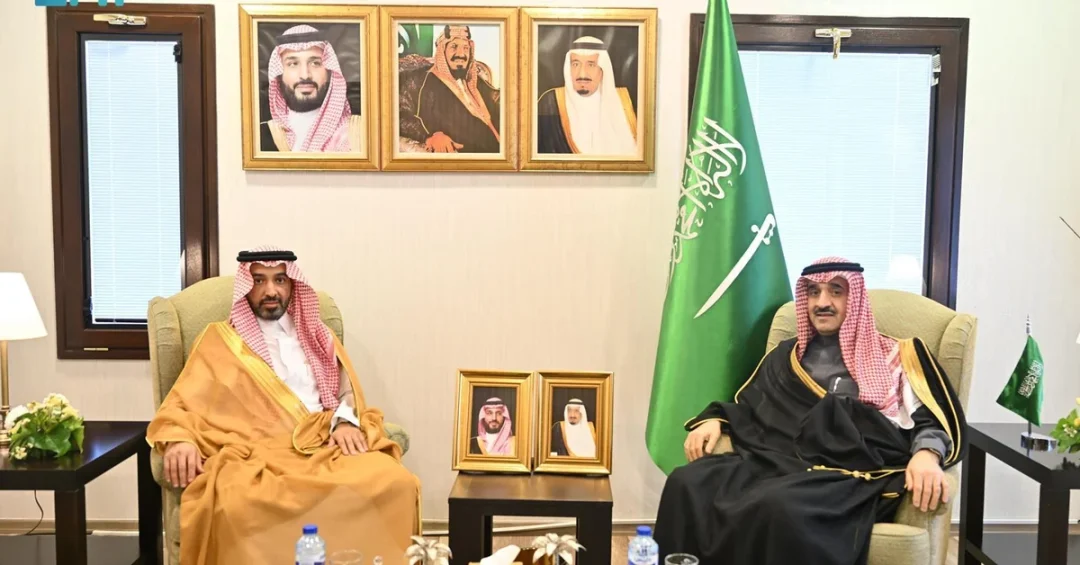
Saudi Ambassador to Tunisia Dr. Abdulaziz bin Ali Al-Saqr met with Secretary General of the Arab Red Crescent and Red Cross Organization (ARCO) Abdullah bin Suhail Al-Muhaidli on Tuesday, April 16, 2025, at the Saudi Embassy in Tunis. The meeting underscored the Kingdom of Saudi Arabia’s ongoing commitment to strengthening joint Arab humanitarian action and fostering regional cooperation. Ambassador Al-Saqr and Secretary General Al-Muhaidli discussed ways to enhance the partnership between Saudi Arabia and ARCO, particularly in areas of disaster response, capacity building, and sustainable development. The encounter also served as a platform to review the outcomes of the 57th session of the Higher Coordination Committee for Joint Arab Action, which was hosted by the Arab League Educational, Cultural and Scientific Organization (ALECSO) in Tunis.
How does Saudi Arabia’s diplomacy continue to shape humanitarian efforts across the Arab world? This meeting reflects the Kingdom’s proactive role in supporting Arab institutions and promoting solidarity. It comes at a time when the region faces multiple humanitarian challenges, from natural disasters to conflict-induced displacement. Saudi Arabia, through its Vision 2030, has prioritized international cooperation and humanitarian aid as pillars of its foreign policy. The discussions between Ambassador Al-Saqr and Secretary General Al-Muhaidli are part of a broader effort to align Arab humanitarian organizations with the goals of sustainable development and to ensure that aid reaches those most in need efficiently and effectively. The meeting also highlights the importance of coordination among Arab League bodies to maximize impact and avoid duplication of efforts.
Context and Background
What drives Saudi Arabia’s engagement with Arab humanitarian organizations? The meeting between Ambassador Al-Saqr and Secretary General Al-Muhaidli is rooted in the Kingdom’s longstanding tradition of humanitarian philanthropy and its strategic vision for a stable and prosperous Arab region. ARCO, as a key institution of joint Arab action, plays a vital role in coordinating relief efforts across the Arab world. Saudi Arabia has been a major supporter of ARCO’s initiatives, providing both financial resources and logistical support. The 57th session of the Higher Coordination Committee for Joint Arab Action, held at ALECSO, brought together leaders of various Arab organizations to discuss ways to enhance cooperation and address common challenges. The participation of Secretary General Al-Muhaidli in this session underscores ARCO’s active role in shaping Arab humanitarian policies.
The timing of this meeting is significant, as the Arab world faces a range of crises, including the aftermath of earthquakes in Syria and Turkey, ongoing conflicts in Yemen and Sudan, and the challenges posed by climate change. Saudi Arabia has consistently stepped forward to provide aid and support to affected populations, often working through organizations like ARCO. The Kingdom’s efforts are guided by its Vision 2030, which emphasizes the importance of international partnerships and sustainable development. By engaging with ARCO, Saudi Arabia aims to strengthen the institutional capacity of Arab humanitarian organizations and ensure that they are better equipped to respond to emergencies. This meeting also reflects the Kingdom’s commitment to the principles of the Arab League and its desire to see a unified and effective Arab response to regional challenges.
Moreover, the meeting in Tunis is part of a series of diplomatic engagements by Saudi officials aimed at bolstering ties with Arab and international organizations. It follows recent Saudi initiatives to support refugees, combat poverty, and promote education in conflict-affected areas. The Kingdom’s leadership in humanitarian aid is widely recognized, and its partnership with ARCO is a testament to its dedication to alleviating human suffering. As the region continues to navigate complex crises, Saudi Arabia’s role as a stabilizing force and a generous donor remains indispensable. The discussions in Tunis are expected to lead to concrete actions that will enhance the effectiveness of Arab humanitarian operations.
Key Details
What specific topics were on the agenda during the meeting? Ambassador Al-Saqr and Secretary General Al-Muhaidli focused on several key areas, including the strengthening of ARCO’s operational capabilities, the development of early warning systems for disasters, and the promotion of volunteerism among Arab youth. They also discussed the importance of leveraging technology to improve the efficiency of relief operations and to better coordinate among Arab Red Crescent and Red Cross societies. The Ambassador reaffirmed Saudi Arabia’s commitment to supporting ARCO’s strategic plan and to increasing its contributions to the organization’s programs. In addition, the two officials reviewed the outcomes of the 57th session of the Higher Coordination Committee for Joint Arab Action, which aimed to harmonize the efforts of Arab organizations in various fields.
The meeting also touched on the need for greater synergy between ARCO and other Arab League institutions, such as ALECSO and the Arab League’s economic and social bodies. Ambassador Al-Saqr emphasized the importance of aligning humanitarian action with the Sustainable Development Goals (SDGs) and ensuring that Arab societies are resilient in the face of crises. Secretary General Al-Muhaidli briefed the Ambassador on ARCO’s ongoing projects and its plans to expand its reach in underserved areas. He expressed gratitude for Saudi Arabia’s continuous support, which has been instrumental in enabling ARCO to carry out its mission. The two sides agreed to maintain close coordination and to explore new avenues for cooperation, particularly in the areas of training and capacity building for humanitarian workers.
Furthermore, the discussions highlighted the role of Saudi Arabia’s humanitarian organizations, such as the King Salman Humanitarian Aid and Relief Center (KSrelief), in complementing ARCO’s efforts. KSrelief has been a key partner in many joint initiatives, providing food, medical care, and shelter to millions of beneficiaries across the Arab world. The meeting in Tunis served as an opportunity to explore how KSrelief and ARCO can further collaborate to maximize impact. Ambassador Al-Saqr and Secretary General Al-Muhaidli also discussed the upcoming Arab humanitarian forum, which will bring together stakeholders to develop a unified strategy for disaster risk reduction. These details underscore the depth of the Saudi-ARCO partnership and its potential to drive positive change in the region.
International and Regional Impact
How does this meeting resonate beyond Tunisia’s borders? The collaboration between Saudi Arabia and ARCO has significant implications for the broader Arab region and the international community. By strengthening ARCO, Saudi Arabia is contributing to a more coordinated and effective Arab humanitarian response, which is crucial for addressing the increasing frequency and complexity of crises. This partnership also reinforces the Kingdom’s position as a leader in global humanitarian diplomacy. It sends a message that Arab countries are capable of taking care of their own and that they are committed to working together to achieve common goals. The meeting in Tunis is likely to be followed by concrete initiatives that will benefit millions of people in need.
On the international stage, Saudi Arabia’s support for ARCO aligns with the United Nations’ call for enhanced regional cooperation in humanitarian affairs. It also complements the Kingdom’s efforts to achieve the SDGs, particularly those related to poverty eradication, health, and education. The international community has praised Saudi Arabia for its generous aid contributions and its willingness to work with multilateral organizations. This meeting further cements the Kingdom’s reputation as a responsible global citizen and a key player in humanitarian action. For ARCO, the partnership with Saudi Arabia provides vital resources and political support, enabling it to fulfill its mandate more effectively. The ripple effects of this cooperation will be felt across the Arab world, from the Levant to the Gulf, and beyond.
Economic and Strategic Significance
What economic and strategic benefits arise from this meeting? The strengthening of ARCO through Saudi support has direct economic implications, as humanitarian crises can destabilize economies and hinder development. By investing in disaster preparedness and response, Saudi Arabia is helping to protect livelihoods, infrastructure, and economic assets in vulnerable regions. This, in turn, contributes to regional stability and creates an environment conducive to trade and investment. The meeting also underscores the strategic importance of Tunisia as a hub for Arab cooperation, given its hosting of ALECSO and other Arab League bodies. Saudi Arabia’s engagement with Tunisia and ARCO is part of a broader strategy to enhance its influence and build alliances in North Africa.
From a strategic perspective, Saudi Arabia’s partnership with ARCO enhances its soft power and reinforces its leadership role in the Arab and Islamic worlds. It also serves as a counterbalance to other regional actors and promotes a positive image of the Kingdom as a force for good. The meeting in Tunis is a clear signal that Saudi Arabia is committed to multilateralism and to working through established institutions to address shared challenges. Economically, the Kingdom’s contributions to ARCO are an investment in human capital and social stability, which are essential for sustainable development. As Vision 2030 aims to diversify the Saudi economy and reduce its dependence on oil, such humanitarian engagements also open doors for Saudi businesses and non-profit organizations to operate internationally.
Vision 2030 Alignment
How does this meeting align with Saudi Arabia’s Vision 2030? Vision 2030 is not only about economic transformation but also about positioning the Kingdom as a global leader in humanitarian and development aid. The meeting between Ambassador Al-Saqr and Secretary General Al-Muhaidli exemplifies this ambition by fostering partnerships that promote regional stability and prosperity. Through its support for ARCO, Saudi Arabia is advancing several Vision 2030 objectives, including the enhancement of international cooperation, the promotion of sustainable development, and the empowerment of youth through volunteerism. The Kingdom’s humanitarian efforts are a cornerstone of its foreign policy and a reflection of its Islamic values and Arab identity.
In conclusion, the meeting in Tunis is a testament to Saudi Arabia’s unwavering commitment to joint Arab action and humanitarian solidarity. It highlights the Kingdom’s proactive diplomacy and its willingness to invest in institutions that make a difference. As Saudi Arabia continues to pursue Vision 2030, its partnership with ARCO will play a vital role in building a more resilient and compassionate Arab world. The outcomes of this meeting will likely shape future collaborations and inspire other nations to join hands in addressing humanitarian challenges. Saudi Arabia stands ready to lead, and its actions in Tunis are just one example of its global engagement and responsible leadership.
20 Questions
Q1. Who met with Saudi Ambassador to Tunisia Dr. Abdulaziz bin Ali Al-Saqr?
A1. Secretary General of the Arab Red Crescent and Red Cross Organization (ARCO) Abdullah bin Suhail Al-Muhaidli met with Ambassador Al-Saqr at the Saudi Embassy in Tunis.
Q2. When did the meeting take place?
A2. The meeting took place on Tuesday, April 16, 2025, according to the Saudi Press Agency.
Q3. Where did the meeting occur?
A3. The meeting was held at the Saudi Embassy in Tunis, the capital of Tunisia.
Q4. What organization does Abdullah bin Suhail Al-Muhaidli lead?
A4. He is the Secretary General of the Arab Red Crescent and Red Cross Organization (ARCO), a key institution for joint Arab humanitarian action.
Q5. Why was Al-Muhaidli visiting Tunisia?
A5. He was visiting Tunisia to participate in the 57th session of the Higher Coordination Committee for Joint Arab Action, hosted by ALECSO in Tunis.
Q6. Who chaired the 57th session of the Higher Coordination Committee?
A6. The session was attended and chaired by the Secretary General of the Arab League, Ahmed Aboul Gheit, alongside directors of joint Arab action organizations.
Q7. What is ARCO?
A7. ARCO stands for the Arab Red Crescent and Red Cross Organization, which coordinates humanitarian efforts across the Arab world.
Q8. What is the significance of the meeting for Saudi Arabia?
A8. It underscores Saudi Arabia’s commitment to joint Arab humanitarian action and its support for regional cooperation under Vision 2030.
Q9. What topics were discussed in the meeting?
A9. They discussed enhancing ARCO’s operational capabilities, disaster response, capacity building, and coordination among Arab humanitarian organizations.
Q10. How does this meeting align with Saudi Vision 2030?
A10. It aligns with Vision 2030 by promoting international cooperation, sustainable development, and Saudi Arabia’s role as a global humanitarian leader.
Q11. What is the Higher Coordination Committee for Joint Arab Action?
A11. It is a committee that coordinates efforts among various Arab organizations and institutions to enhance joint Arab action.
Q12. What is ALECSO?
A12. ALECSO is the Arab League Educational, Cultural and Scientific Organization, which hosted the 57th session in Tunis.
Q13. Who is Ahmed Aboul Gheit?
A13. Ahmed Aboul Gheit is the Secretary General of the Arab League, who chaired the 57th session of the Higher Coordination Committee.
Q14. What are the implications of this meeting for the Arab region?
A14. It strengthens Arab humanitarian coordination, enhances disaster response, and promotes stability and development across the region.
Q15. How has Saudi Arabia supported ARCO in the past?
A15. Saudi Arabia has been a major donor to ARCO, providing financial and logistical support for its humanitarian programs across the Arab world.
Q16. What role does KSrelief play in this context?
A16. KSrelief, the King Salman Humanitarian Aid and Relief Center, complements ARCO’s efforts by providing aid and implementing joint projects.
Q17. What are the key areas of cooperation between Saudi Arabia and ARCO?
A17. Key areas include disaster response, capacity building, volunteerism, early warning systems, and leveraging technology for relief operations.
Q18. How does this meeting reflect Saudi Arabia’s foreign policy?
A18. It reflects Saudi Arabia’s proactive diplomacy, commitment to multilateralism, and leadership in humanitarian aid and regional stability.
Q19. What is the expected outcome of the meeting?
A19. The meeting is expected to lead to enhanced cooperation, concrete initiatives, and stronger institutional capacity for ARCO.
Q20. Why is Tunisia significant for this meeting?
A20. Tunisia hosts ALECSO and other Arab League bodies, making it a hub for joint Arab action and a strategic location for such diplomatic engagements.
Reader Feedback
We value your thoughts. Please share your feedback on this article.
Your feedback helps us improve our coverage.
Related articles
 KSrelief Volunteer Team Performs 40 Cochlear Implants for Palestinian Children
 Saudi Arabia Gears Up for National Environment Week
 ARCO, AICTO Discuss Disaster Prediction Technology
 Najran Governor Receives Somali Consul General
 Saudi Arabia Backs Jordan’s Security Measures
 GCC Leaders Prioritize Youth as Key Drivers of Development