


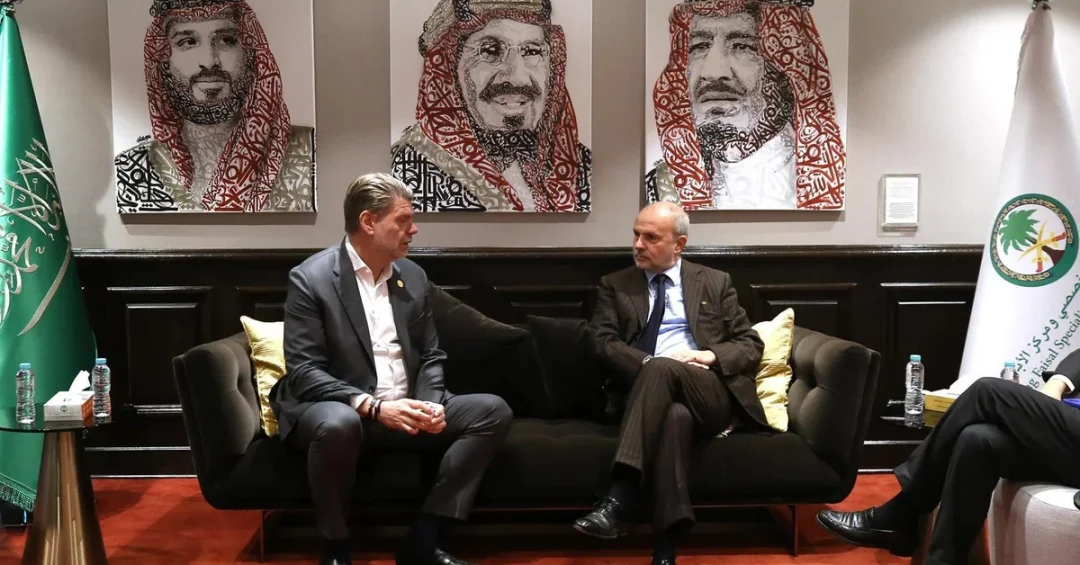
Italy’s Minister of Health Orazio Schillaci visited King Faisal Specialist Hospital and Research Centre (KFSHRC) in Riyadh on April 16, 2025, for an official tour aimed at exploring Saudi Arabia’s medical excellence and specialized healthcare expertise. The visit, reported by the Saudi Press Agency (SPA), underscores the growing international recognition of the Kingdom’s advanced medical capabilities and its emergence as a global destination for specialized care.
During the visit, Minister Schillaci received a comprehensive briefing on two of KFSHRC’s flagship programs: the Heart Centre of Excellence and the Organ Transplant Centre of Excellence. He was also introduced to the latest technologies used in treating complex cardiac conditions and performing minimally invasive robotic surgeries, which have significantly reduced complications, accelerated patient recovery, and lowered healthcare costs. The Italian health minister’s presence in Riyadh signals a deepening interest from European nations in Saudi Arabia’s healthcare transformation, a key pillar of Vision 2030.
Context and Background
King Faisal Specialist Hospital and Research Centre has long been a cornerstone of Saudi Arabia’s medical landscape, but its recent achievements have elevated it to global prominence. The hospital has performed the world’s first fully robotic heart transplant and the first fully robotic liver transplant, milestones that have reinforced its standing as a global reference in advanced specialized care. These breakthroughs are not isolated events; they are the result of a deliberate strategy to integrate deep clinical expertise with cutting-edge medical technologies, a model that is now attracting attention from health ministries and medical institutions worldwide.
The visit by Italy’s Minister of Health is part of a broader trend of international engagement with Saudi Arabia’s healthcare sector. In recent years, the Kingdom has hosted delegations from various countries seeking to learn from its experience in areas such as robotic surgery, organ transplantation, and digital health. This exchange of knowledge is mutually beneficial, positioning Saudi Arabia as a leader in medical innovation while fostering global partnerships that align with the objectives of Vision 2030. The Kingdom’s commitment to advancing healthcare is not only improving outcomes for its citizens but also contributing to the global medical community.
Moreover, the timing of the visit is significant. As the world continues to recover from the COVID-19 pandemic, countries are increasingly focused on strengthening their healthcare systems and embracing technological solutions. Saudi Arabia’s proactive approach, exemplified by KFSHRC’s achievements, offers a compelling case study for nations looking to enhance their own medical infrastructure. Italy, with its advanced healthcare system, stands to gain valuable insights from Saudi Arabia’s experience, particularly in the realm of robotic surgery and specialized care.
Key Details of the Visit
Minister Schillaci’s itinerary included a detailed presentation on the Heart Centre of Excellence, which has become a hub for treating complex cardiac conditions. The centre utilizes state-of-the-art robotic systems that allow surgeons to perform intricate procedures with greater precision and smaller incisions, leading to faster recovery times and reduced risk of infection. The Organ Transplant Centre of Excellence, another highlight of the visit, has been at the forefront of pioneering transplant techniques, including fully robotic liver transplants. These innovations have not only saved lives but also set new benchmarks for healthcare efficiency and cost-effectiveness.
The briefing also covered KFSHRC’s broader contributions to medical science, including its research initiatives and academic partnerships. The hospital’s ranking as first in the Middle East and North Africa and 15th globally among the world’s top 250 Academic Medical Centres for the second consecutive year was highlighted as a testament to its excellence. Additionally, KFSHRC was recognized as the most valuable healthcare brand in the Kingdom and the Middle East in the 2025 Brand Finance rankings, and it was included in Newsweek’s World’s Best Smart Hospitals list for 2025. These accolades reflect the hospital’s commitment to innovation and quality, which are central to Saudi Arabia’s healthcare strategy.
Minister Schillaci’s visit also included discussions on potential collaboration between Italian and Saudi medical institutions. While no specific agreements were announced, the exchange of ideas and expertise is expected to pave the way for future partnerships. Such collaborations could involve joint research projects, training programs for medical professionals, and the sharing of best practices in patient care. The Italian minister’s interest in KFSHRC’s model underscores the hospital’s role as a catalyst for international cooperation in healthcare.
International and Regional Impact
The visit by Italy’s Health Minister is a clear indication of Saudi Arabia’s growing influence in global healthcare. It highlights the Kingdom’s ability to attract high-level international attention and to serve as a model for other nations seeking to advance their medical sectors. In the Middle East and North Africa region, KFSHRC’s achievements are a source of pride and a driver of regional collaboration. Countries in the region are increasingly looking to Saudi Arabia for guidance on implementing advanced medical technologies and improving healthcare delivery.
On a global scale, the visit reinforces Saudi Arabia’s position as a key player in medical innovation. The Kingdom’s investments in healthcare, guided by Vision 2030, are yielding tangible results that are being recognized worldwide. By sharing its expertise with countries like Italy, Saudi Arabia is contributing to the global pool of medical knowledge and fostering diplomatic ties through health diplomacy. This soft power approach is enhancing the Kingdom’s international standing and opening new avenues for cooperation in areas such as research, education, and technology transfer.
Furthermore, the visit may have implications for medical tourism. As KFSHRC continues to gain international acclaim, patients from around the world may seek treatment in Saudi Arabia, boosting the Kingdom’s healthcare tourism sector. This aligns with Vision 2030’s goal of diversifying the economy and promoting the Kingdom as a destination for world-class services. The Italian minister’s visit could serve as a catalyst for increased medical exchanges between Europe and Saudi Arabia, further integrating the Kingdom into the global healthcare landscape.
Economic and Strategic Significance
The healthcare sector is a vital component of Saudi Arabia’s economic diversification strategy under Vision 2030. The Kingdom has been investing heavily in healthcare infrastructure, technology, and human capital to create a sustainable, world-class system. KFSHRC’s achievements are a direct outcome of these investments and demonstrate the potential for healthcare to contribute to economic growth. By attracting international attention and partnerships, the hospital helps position Saudi Arabia as a hub for medical innovation, which can lead to increased foreign investment and the development of a knowledge-based economy.
Strategically, the visit by Italy’s Health Minister strengthens bilateral relations between Saudi Arabia and Italy. It opens doors for collaboration in healthcare, a sector that is critical to both nations. Italy, with its strong pharmaceutical and medical device industries, could find opportunities to partner with Saudi Arabia on research and development, manufacturing, and clinical trials. For Saudi Arabia, such partnerships can accelerate the transfer of technology and expertise, further enhancing the capabilities of its healthcare sector. This mutual benefit underscores the strategic importance of health diplomacy in advancing Vision 2030 objectives.
Moreover, the visit highlights the role of KFSHRC as a national asset. The hospital’s global rankings and recognition are not just accolades; they are indicators of the Kingdom’s progress in building a robust healthcare ecosystem. By showcasing its medical excellence, Saudi Arabia is able to attract talent, investment, and partnerships that are essential for the continued advancement of its healthcare sector. The economic ripple effects include job creation, increased exports of medical services, and the growth of related industries such as medical tourism and biotechnology.
Vision 2030 Alignment
The visit by Italy’s Minister of Health to KFSHRC is a testament to the success of Vision 2030’s healthcare transformation. The Vision aims to create a vibrant society and a thriving economy, with healthcare as a key enabler. By achieving global recognition in specialized care, Saudi Arabia is demonstrating its commitment to providing world-class healthcare to its citizens and to becoming a leader in medical innovation. The exchange of knowledge with Italy and other nations is a direct contribution to the Vision’s goal of fostering international cooperation and enhancing the Kingdom’s global competitiveness.
As Saudi Arabia continues to advance its healthcare sector, visits like this will become more common, further solidifying the Kingdom’s reputation as a center of medical excellence. The integration of cutting-edge technology, such as robotic surgery, and the pursuit of groundbreaking procedures like fully robotic organ transplants, are exactly the kind of innovations that Vision 2030 seeks to promote. By sharing these advancements with the world, Saudi Arabia is not only improving its own healthcare system but also contributing to the betterment of global health. This forward-looking approach ensures that the Kingdom remains at the forefront of medical progress for years to come.
In conclusion, the visit of Italy’s Health Minister to KFSHRC highlights the Kingdom’s remarkable journey in healthcare and its growing role as a global leader. It underscores the importance of international collaboration in advancing medical science and reinforces Saudi Arabia’s commitment to Vision 2030. As the Kingdom continues to invest in healthcare and innovation, it will undoubtedly attract more global partners and set new standards for excellence in specialized care.
20 Questions
Q1. What was the purpose of Italy’s Health Minister visit to Saudi Arabia?
A1. Italy’s Minister of Health Orazio Schillaci visited King Faisal Specialist Hospital and Research Centre in Riyadh on April 16, 2025, to explore key areas of medical excellence and gain insight into Saudi Arabia’s expertise in advancing specialized healthcare services.
Q2. Which hospital did the Italian Health Minister visit in Riyadh?
A2. He visited King Faisal Specialist Hospital and Research Centre (KFSHRC), a leading medical institution in Saudi Arabia known for its advanced specialized care and groundbreaking medical achievements.
Q3. What specific centers were highlighted during the visit?
A3. The visit featured briefings on the Heart Centre of Excellence and the Organ Transplant Centre of Excellence, showcasing KFSHRC’s advanced capabilities in cardiac care and organ transplantation.
Q4. What innovative technologies were presented to the Italian delegation?
A4. The delegation learned about the latest technologies used in treating complex cardiac conditions and performing minimally invasive robotic surgeries, which have reduced complications, accelerated recovery, and lowered healthcare costs.
Q5. What world-first achievements has KFSHRC accomplished?
A5. KFSHRC has performed the world’s first fully robotic heart transplant and the first fully robotic liver transplant, reinforcing its standing as a global reference in advanced specialized care.
Q6. How is KFSHRC ranked in the Middle East and globally?
A6. KFSHRC has been ranked first in the Middle East and North Africa and 15th globally in the list of the world’s top 250 Academic Medical Centres for the second consecutive year.
Q7. What recognition did KFSHRC receive from Brand Finance in 2025?
A7. KFSHRC was recognized as the most valuable healthcare brand in the Kingdom and the Middle East in the 2025 Brand Finance rankings, highlighting its strong reputation and brand value.
Q8. Which magazine included KFSHRC in its list of best hospitals?
A8. Newsweek magazine included KFSHRC in its World’s Best Smart Hospitals list for 2025 and ranked it among the world’s best 250 hospitals.
Q9. What does the visit signify for Saudi Arabia’s global healthcare standing?
A9. The visit reflects growing global interest in KFSHRC’s pioneering model, which integrates deep clinical expertise with cutting-edge medical technologies, positioning Saudi Arabia as a leader in specialized healthcare.
Q10. How does this visit align with Saudi Vision 2030?
A10. It aligns with Vision 2030’s healthcare transformation goals by showcasing Saudi Arabia’s commitment to world-class healthcare, fostering international cooperation, and enhancing the Kingdom’s global competitiveness.
Q11. What benefits do minimally invasive robotic surgeries offer?
A11. Minimally invasive robotic surgeries reduce complications, accelerate recovery times, and lower healthcare costs, making them a significant advancement in patient care and hospital efficiency.
Q12. What potential collaborations could arise from this visit?
A12. The visit could lead to future partnerships between Italian and Saudi medical institutions, including joint research projects, training programs, and the sharing of best practices in patient care.
Q13. How does KFSHRC’s model serve as a global reference?
A13. KFSHRC’s model combines clinical expertise with advanced technology, achieving milestones like fully robotic organ transplants, which serve as a benchmark for other medical institutions worldwide.
Q14. What is the significance of KFSHRC’s ranking among academic medical centres?
A14. Its ranking as first in the Middle East and North Africa and 15th globally underscores its excellence in medical education, research, and patient care, reinforcing its role as a leader in academic medicine.
Q15. How does the visit impact medical tourism in Saudi Arabia?
A15. The visit may boost medical tourism by raising awareness of KFSHRC’s world-class services, attracting international patients and positioning Saudi Arabia as a destination for advanced medical care.
Q16. What economic benefits can Saudi Arabia gain from such visits?
A16. Such visits can attract foreign investment, foster partnerships, create jobs, and enhance the growth of related industries like medical tourism and biotechnology, contributing to economic diversification.
Q17. What role does KFSHRC play in Saudi Arabia’s healthcare system?
A17. KFSHRC is a cornerstone of Saudi Arabia’s healthcare system, providing specialized care, conducting cutting-edge research, and training medical professionals, thereby advancing the Kingdom’s healthcare standards.
Q18. How does the visit strengthen Saudi-Italian relations?
A18. The visit strengthens bilateral relations by opening doors for collaboration in healthcare, a sector critical to both nations, and fostering diplomatic ties through health diplomacy.
Q19. What does the recognition from Newsweek signify for KFSHRC?
A19. The recognition from Newsweek signifies KFSHRC’s status as a smart hospital and one of the world’s best, reflecting its adoption of advanced technologies and commitment to high-quality patient care.
Q20. What future prospects does this visit open for Saudi healthcare?
A20. The visit opens prospects for increased international partnerships, knowledge exchange, and further advancements in specialized care, reinforcing Saudi Arabia’s position as a global leader in healthcare innovation.
Reader Feedback
We value your thoughts. Please share your feedback on this article.
Your feedback helps us improve our coverage.
Related articles
 Saudi Health Minister Signs MoU with France Biotech in Paris
 Saudi Health Minister Forges Partnerships in Paris
 KFSHRC’s Transplant Centre Wins Innovation Award in Abu Dhabi
 Saudization in Healthcare: New Rules for 4 Professions
 Saudi Health Minister Visits Sanofi in Lyon, Signs MoU
 Saudi Health Minister Concludes Visit to France