


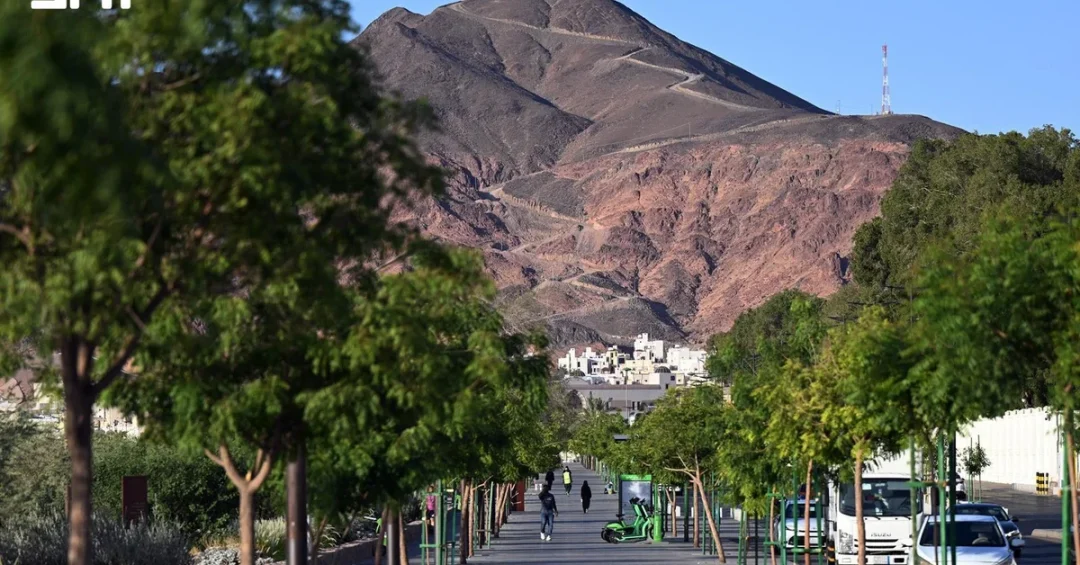
Walkways across Madinah are attracting growing numbers of sports enthusiasts and leisure seekers as temperatures moderate, offering residents and visitors expanded spaces for exercise, recreation, and social interaction, according to the Saudi Press Agency (SPA). The facilities, developed by the Madinah Region Municipality, feature pedestrian paths, green spaces, seating, and lighting, with several connected to parks and public facilities. The initiative reflects a sustained municipal effort to expand pedestrian-friendly infrastructure and promote healthier lifestyles in line with Saudi Vision 2030 objectives for improved quality of life.
As the Kingdom continues its broad national transformation, the role of well-designed public spaces has become increasingly central to urban policy. Madinah, home to the Prophet’s Mosque and one of Islam’s holiest cities, is balancing its spiritual significance with modern urban development that serves a growing resident population and millions of annual visitors. The walkways are not merely recreational amenities; they represent a deliberate investment in public health, social cohesion, and sustainable urban design. With milder temperatures returning, these pathways are witnessing renewed activity, from morning joggers to families enjoying evening strolls, underscoring their value as inclusive community assets.
Context and Background
Why has Madinah placed such emphasis on pedestrian infrastructure at this particular moment? The answer lies in the intersection of public health priorities, urban growth, and the Kingdom’s Vision 2030 reform agenda. Over the past decade, Saudi Arabia has accelerated efforts to diversify its economy and enhance the well-being of its citizens. A key pillar of this strategy is the Quality of Life Program, which seeks to increase participation in sports and recreational activities, improve urban environments, and foster community engagement. Madinah, with its unique religious and cultural standing, has embraced this mandate by creating spaces that cater to both residents and the millions of pilgrims who visit each year.
The Madinah Region Municipality has been at the forefront of these efforts, systematically developing public facilities and expanding pedestrian-friendly areas. According to official SPA information, the walkways are designed to accommodate a variety of activities, from walking and cycling to social gatherings. The integration of green spaces, seating, and lighting is intended to make these areas safe and appealing for users of all ages. This approach aligns with global best practices in urban planning, where mixed-use public spaces are recognized for their ability to improve physical and mental health, reduce traffic congestion, and strengthen community bonds.
Moreover, the timing of this development is significant. As Saudi Arabia positions itself as a global destination for tourism and investment, the quality of its urban infrastructure becomes a critical differentiator. Madinah’s walkways contribute to a broader narrative of modernization that respects heritage while embracing progress. They also support the Kingdom’s environmental goals by encouraging non-motorized transport and reducing carbon emissions. In this sense, the walkways are a microcosm of Vision 2030’s holistic vision: economic diversification, social development, and environmental sustainability working in tandem.
Key Details
What exactly do these walkways offer to the public? Among the most prominent destinations is Al-Qaswa Walkway, which, together with its adjacent park, covers approximately 110,000 square meters. This expansive area includes a one-kilometer walking path, an 870-meter cycling track, green spaces, children’s play areas, and an interactive fountain. The design is clearly family-oriented, providing multiple attractions that encourage extended visits. The cycling track, in particular, addresses a growing demand for dedicated lanes that separate cyclists from pedestrians, enhancing safety and usability.
The Shouran Pathways project is another flagship initiative that combines walking and cycling paths with green spaces, play areas, and community facilities. This project exemplifies the municipality’s integrated approach, where recreational infrastructure is paired with social amenities to create vibrant community hubs. The presence of seating areas and lighting extends the usability of these spaces into the evening hours, allowing residents to exercise or relax after work or school. The connectivity to parks and public facilities further amplifies their accessibility, making them integral parts of the urban fabric rather than isolated amenities.
These projects are part of a wider network of walkways across Madinah, each tailored to the needs of its local community. The municipality’s ongoing commitment to developing public facilities ensures that these spaces are well-maintained and continuously improved. For visitors, especially those unfamiliar with the city, the walkways offer a welcoming environment to experience Madinah’s pleasant climate and hospitality. For residents, they provide a reliable setting for daily exercise, social interaction, and relaxation, contributing to a higher standard of living.
International and Regional Impact
How do these local developments resonate beyond Saudi Arabia’s borders? The expansion of pedestrian infrastructure in Madinah sends a powerful signal about the Kingdom’s broader modernization trajectory. International observers, including urban planners, public health experts, and potential investors, take note of such investments as indicators of a country’s commitment to sustainable development and citizen well-being. By prioritizing walkability, Madinah aligns itself with global movements toward healthier, more livable cities, from Copenhagen to Singapore. This alignment enhances Saudi Arabia’s soft power and reinforces its image as a forward-looking nation that values quality of life.
Regionally, the walkways serve as a model for other cities in the Gulf and the wider Middle East. Many countries in the region face similar challenges: rapid urbanization, high rates of sedentary lifestyles, and a heavy reliance on automobiles. Madinah’s approach demonstrates that with thoughtful planning and political will, it is possible to create public spaces that encourage physical activity and social cohesion. The integration of cycling tracks, in particular, is a notable step in a region where cycling infrastructure is still emerging. As neighboring states pursue their own Vision-style programs, Madinah’s experience could inform their strategies and foster knowledge exchange.
Economic and Strategic Significance
What economic benefits can be expected from these investments? While walkways are primarily social and health infrastructure, they also have tangible economic implications. Well-designed public spaces can increase property values in surrounding areas, attract retail and hospitality businesses, and stimulate local spending. For Madinah, a city that welcomes millions of pilgrims annually, enhancing the visitor experience is economically strategic. Pilgrims who extend their stay to explore the city’s amenities contribute to the local economy, supporting jobs in tourism, retail, and services. The walkways thus complement the Kingdom’s broader efforts to diversify revenue streams and boost non-oil sectors.
From a strategic perspective, these projects reinforce social stability and national pride. By providing safe, attractive spaces for families and youth, the municipality addresses key social determinants of health and well-being. This, in turn, supports the Kingdom’s human capital development goals, as a healthier population is more productive and engaged. Furthermore, the emphasis on cycling and walking reduces traffic congestion and air pollution, yielding environmental and public health dividends that translate into long-term cost savings for the healthcare system. In this way, the walkways are a smart investment with multifaceted returns.
Vision 2030 Alignment
How do the Madinah walkways embody the aspirations of Saudi Vision 2030? The Vision’s Quality of Life Program explicitly aims to increase the share of citizens engaging in sports and physical activity, enhance urban environments, and promote community participation. The walkways directly contribute to these targets by removing barriers to exercise and creating inviting public realms. They also support the Vision’s environmental sustainability goals by encouraging low-carbon mobility. Moreover, by improving the livability of Madinah, they help attract and retain talent, a crucial factor in the Kingdom’s economic diversification efforts.
Looking ahead, the Madinah Region Municipality is expected to continue expanding and upgrading these facilities, further embedding pedestrian-friendly design into the city’s identity. As temperatures permit year-round use, the walkways will become increasingly integral to daily life, hosting community events, sports activities, and informal gatherings. For a city that holds profound spiritual significance for Muslims worldwide, these developments also enhance the pilgrimage experience, allowing visitors to combine spiritual reflection with physical well-being. In sum, the Madinah walkways are more than paths; they are conduits for a healthier, more connected, and more prosperous society, fully aligned with the Kingdom’s forward-looking vision.
20 Questions
Q1. What are the Madinah walkways?
A1. The Madinah walkways are pedestrian-friendly public spaces developed by the Madinah Region Municipality, featuring walking and cycling paths, green areas, seating, and lighting, designed to promote exercise, recreation, and social interaction among residents and visitors.
Q2. Why are the walkways attracting more people now?
A2. As temperatures moderate in Madinah, more sports enthusiasts and leisure seekers are using the walkways for outdoor activities. The pleasant weather makes walking, cycling, and socializing more comfortable, leading to increased footfall and community engagement.
Q3. What is Al-Qaswa Walkway?
A3. Al-Qaswa Walkway is a prominent destination in Madinah that, along with its adjacent park, covers approximately 110,000 square meters. It includes a one-kilometer walking path, an 870-meter cycling track, green spaces, children’s play areas, and an interactive fountain.
Q4. What is the Shouran Pathways project?
A4. The Shouran Pathways project is another key initiative that combines walking and cycling paths with green spaces, play areas, and community facilities. It exemplifies the municipality’s integrated approach to creating vibrant public spaces that cater to diverse community needs.
Q5. Who is responsible for developing these walkways?
A5. The Madinah Region Municipality is responsible for developing and expanding these public facilities. The municipality continues to invest in pedestrian-friendly infrastructure as part of its commitment to improving quality of life and supporting Saudi Vision 2030 objectives.
Q6. How do the walkways support healthy lifestyles?
A6. By providing safe, accessible, and attractive spaces for walking, cycling, and other physical activities, the walkways encourage regular exercise. This helps combat sedentary behavior, reduce obesity rates, and improve cardiovascular health among residents and visitors.
Q7. What amenities are available at the walkways?
A7. The walkways feature pedestrian paths, cycling tracks, green spaces, seating areas, and lighting. Several are connected to parks and public facilities. Al-Qaswa Walkway also includes children’s play areas and an interactive fountain, enhancing its family-friendly appeal.
Q8. How do the walkways contribute to social interaction?
A8. By creating inviting public spaces where people can gather, the walkways facilitate social interaction among neighbors, families, and visitors. They serve as community hubs where individuals from diverse backgrounds can meet, exercise together, and build social bonds.
Q9. Are the walkways accessible to people with disabilities?
A9. While specific accessibility features are not detailed in the source, the municipality’s broader commitment to inclusive public spaces suggests that accessibility considerations are integrated into the design. The walkways aim to serve all segments of society.
Q10. How do the walkways align with Saudi Vision 2030?
A10. The walkways directly support Vision 2030’s Quality of Life Program by promoting physical activity, enhancing urban environments, and fostering community participation. They also contribute to environmental sustainability by encouraging non-motorized transport and reducing carbon emissions.
Q11. What economic benefits do the walkways bring?
A11. The walkways can increase property values, attract retail and hospitality businesses, and stimulate local spending. For Madinah, they enhance the visitor experience, encouraging pilgrims to extend their stay and contribute to the local economy, supporting jobs and diversification.
Q12. How do the walkways impact the environment?
A12. By promoting walking and cycling over driving, the walkways help reduce traffic congestion and air pollution. The integration of green spaces also contributes to urban biodiversity and mitigates the heat island effect, making the city more sustainable and livable.
Q13. Are there plans to expand the walkways further?
A13. The Madinah Region Municipality continues to develop public facilities and expand pedestrian-friendly spaces. While specific future projects are not detailed, the ongoing commitment suggests further expansion and upgrades to enhance the network and its benefits.
Q14. How do the walkways benefit pilgrims?
A14. Pilgrims visiting Madinah can use the walkways for exercise and relaxation, combining spiritual reflection with physical well-being. The pleasant environment and amenities enhance their overall experience, allowing them to explore the city beyond religious sites.
Q15. What role do green spaces play in the walkways?
A15. Green spaces provide aesthetic appeal, shade, and areas for relaxation. They also improve air quality, support biodiversity, and create a more pleasant microclimate, making the walkways attractive and comfortable for users throughout the year.
Q16. How do the walkways promote cycling in Madinah?
A16. The dedicated cycling tracks, such as the 870-meter track at Al-Qaswa Walkway, provide safe infrastructure for cyclists. This encourages more people to cycle for transport and leisure, contributing to a shift toward sustainable mobility and healthier lifestyles.
Q17. What is the significance of lighting at the walkways?
A17. Lighting extends the usability of the walkways into the evening hours, allowing residents to exercise or socialize after work or school. It also enhances safety and security, making the spaces more inviting and accessible to a wider range of users.
Q18. How do the walkways reflect Madinah’s cultural heritage?
A18. While modern in design, the walkways respect Madinah’s cultural and religious significance by providing serene, family-friendly environments. They complement the city’s spiritual atmosphere, offering spaces for reflection and community bonding that align with Islamic values.
Q19. What impact do the walkways have on public health?
A19. By facilitating regular physical activity, the walkways help reduce the risk of chronic diseases such as obesity, diabetes, and heart disease. They also support mental well-being by providing stress-relieving environments and opportunities for social connection.
Q20. How can visitors learn more about the walkways?
A20. Visitors can obtain information from the Madinah Region Municipality or through official Saudi tourism channels. Local guides and signage at the walkways also provide details about amenities, routes, and nearby attractions, ensuring a rewarding experience.
Reader Feedback
We value your thoughts. Please share your feedback on this article.
Your feedback helps us improve our coverage.
Related articles
 Madinah Concludes Swimming Literacy Project with 300 Students
 AlUla Program Trains 50 Youth in Public Speaking
 Najran Schools Adopt Winter Schedule Starting Sunday
 Najran University Climbs Four Places in QS Arab Rankings 2027
 Saudi Arabia Sets February 2027 Deadline for Worker Housing
 ETEC to Hold Third National Forum for School Excellence in Riyadh