


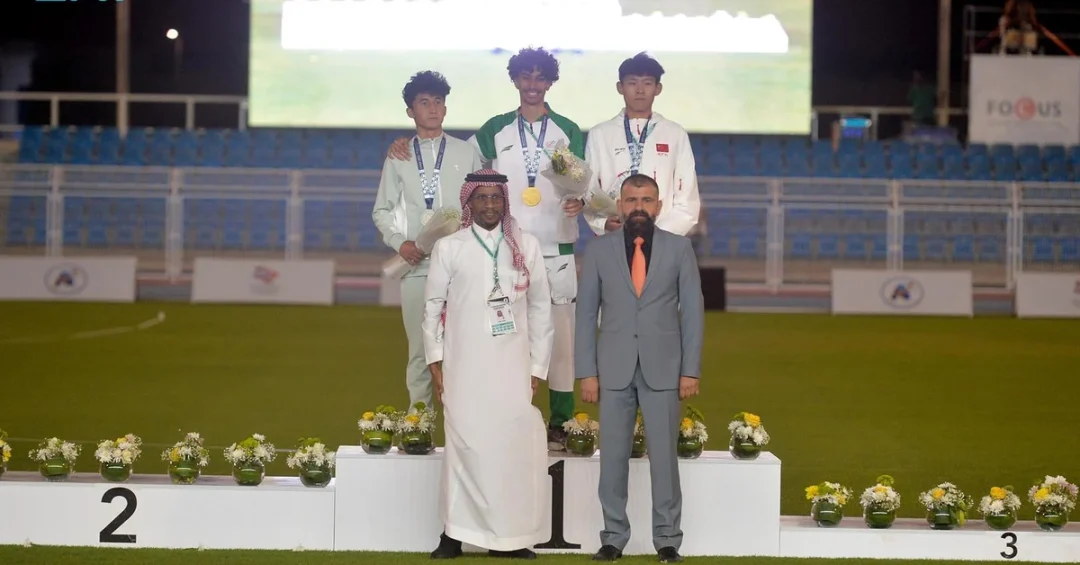
Saudi runner Hashem Hakeem won the Kingdom’s second gold medal at the sixth Asian U18 Athletics Championships, triumphing in the 2000m steeplechase with a time of 6 minutes 6.6 seconds at Prince Naif Bin Abdulaziz Sports City in Qatif. The championship, held in Saudi Arabia’s Eastern Region from April 14 to 18, brought together the continent’s most promising young athletes, and Hakeem’s victory added to the host nation’s growing medal tally. The event, organized under the auspices of the Saudi Arabian Athletics Federation, underscores the Kingdom’s rising stature as a hub for international sporting events and its commitment to nurturing athletic talent as part of Vision 2030.
Hakeem’s gold was not just a personal achievement but a testament to the rigorous preparation and strategic investment in youth sports by Saudi Arabia. The 2000m steeplechase is a grueling test of endurance, technique, and mental fortitude, requiring athletes to navigate barriers and water jumps over five laps. Hakeem’s time of 6:06.6 demonstrated his mastery of the event, outpacing competitors from across Asia. In a statement to the Saudi Press Agency (SPA), Hakeem expressed that the gold medal was a major target for him in this championship, which featured strong competition from Asia’s leading runners. His success follows the Kingdom’s first gold at the championships, further highlighting the depth of Saudi talent on the continental stage. How did this young athlete manage to rise above such a competitive field? The answer lies in a combination of natural talent, dedicated coaching, and the supportive environment fostered by Saudi sports authorities.
Context and Background
What does it take to host and excel in a continental championship? The sixth Asian U18 Athletics Championships, held in Qatif, represents a milestone for Saudi Arabia’s sporting infrastructure and its ability to organize world-class events. The championships, which concluded on April 18, featured over 500 athletes from more than 40 Asian nations, competing in a range of track and field disciplines. Prince Naif Bin Abdulaziz Sports City, the venue, has been upgraded to meet international standards, reflecting the Kingdom’s broader investments in sports facilities under Vision 2030. The event was overseen by the Saudi Arabian Athletics Federation, which has been actively promoting athletics at the grassroots level, with a focus on identifying and nurturing young talent. This championship serves as a crucial stepping stone for athletes aiming for future Olympic and world competitions.
The Asian U18 Athletics Championships are part of the Asian Athletics Association’s calendar and are held biennially. For Saudi Arabia, hosting such an event aligns with the nation’s goals of increasing sports participation and enhancing its global image. The Kingdom has previously hosted major sporting events, including the Saudi Games and international football tournaments, but this championship specifically targets youth development. Hashem Hakeem’s victory in the 2000m steeplechase is a direct outcome of these efforts, showcasing how strategic investments in sports can yield tangible results. The presence of international athletes and officials also provides an opportunity for cultural exchange and diplomacy, furthering Saudi Arabia’s Vision 2030 objectives of opening up to the world and promoting mutual understanding.
Key Details
How did Hashem Hakeem secure his gold medal? The 2000m steeplechase final was a tactical race, with Hakeem positioning himself among the leaders from the start. He navigated the barriers with precision and accelerated in the final lap to break away from the pack, crossing the finish line in 6:06.6. This time was particularly impressive given the challenging conditions and the high altitude of the competition. Hakeem later told SPA that the gold medal was a major target for him, and he credited his success to months of intensive training and the support of his coaches and the Saudi athletics community. His victory adds to the Kingdom’s medal haul, following an earlier gold won by a fellow Saudi athlete, demonstrating the team’s overall strength.
The championships also served as a platform for other Saudi athletes to gain international experience. Several young Saudis competed in events such as sprinting, long jump, and middle-distance running, with some achieving personal bests. The Saudi Arabian Athletics Federation has emphasized that such exposure is vital for the development of athletes who will represent the Kingdom in future global events. The event’s organization was praised by visiting delegations, who noted the high-quality facilities and the warm hospitality of the Saudi people. This positive reception enhances Saudi Arabia’s reputation as a capable host for major sports competitions, which is a key pillar of Vision 2030’s quality-of-life program.
International and Regional Impact
What does Saudi Arabia’s success in youth athletics mean for the region? The Kingdom’s performance at the Asian U18 Championships signals its growing influence in Asian sports. By hosting and winning medals, Saudi Arabia is positioning itself as a leader in youth sports development, which can inspire neighboring countries to invest similarly. The event also brought together athletes from across Asia, fostering regional camaraderie and healthy competition. For Saudi Arabia, this is part of a broader strategy to use sports as a tool for diplomacy and soft power, as seen in its hosting of major events like the FIFA World Cup 2034 and the Asian Winter Games. The Kingdom’s commitment to sports is not just about winning medals but about building bridges with other nations and showcasing its modernization.
On the international stage, Hakeem’s gold medal contributes to Saudi Arabia’s emerging profile in athletics. While the Kingdom has traditionally been strong in football and equestrian sports, recent investments in track and field are beginning to pay off. The Asian U18 Championships are a key event for scouting talent, and Hakeem’s performance will likely attract attention from international coaches and sports academies. This could open doors for Saudi athletes to train abroad and compete in higher-level competitions. Furthermore, the successful hosting of the event reinforces Saudi Arabia’s capability to manage large-scale sporting events, which is essential as it prepares for the 2034 FIFA World Cup. The Kingdom’s ability to deliver a seamless championship experience bodes well for future endeavors.
Economic and Strategic Significance
How does hosting and winning at sports events contribute to Saudi Arabia’s economy? The Asian U18 Athletics Championships generated economic activity in the Eastern Region, from hotel bookings to transportation and local businesses. Sports tourism is a growing sector under Vision 2030, and events like this attract visitors who spend on accommodation, dining, and entertainment. The Saudi government has been investing heavily in sports infrastructure, not only to host events but also to create jobs and stimulate investment. The development of Prince Naif Bin Abdulaziz Sports City and similar facilities is part of a nationwide effort to enhance the quality of life for citizens and residents, while also attracting international visitors. The economic benefits extend beyond the event itself, as improved facilities can be used for community sports programs and future competitions.
Strategically, Saudi Arabia’s focus on youth sports is a long-term investment in human capital. By identifying and nurturing young talents like Hashem Hakeem, the Kingdom is building a pipeline of athletes who can compete on the world stage and serve as role models for future generations. This aligns with Vision 2030’s goal of increasing sports participation and promoting a healthy lifestyle. The Saudi Arabian Athletics Federation has implemented talent identification programs across schools and clubs, ensuring that promising athletes receive the necessary support. The success at the Asian U18 Championships validates these efforts and encourages further investment. Moreover, sports serve as a unifying force, bringing together communities and fostering national pride, which is essential for social cohesion and national development.
Vision 2030 Alignment
How does Hashem Hakeem’s gold medal connect to Saudi Arabia’s Vision 2030? Vision 2030 aims to diversify the economy, improve quality of life, and enhance the Kingdom’s global standing. Sports is a key component of this vision, with initiatives like the Quality of Life Program targeting increased sports participation and the hosting of international events. Hakeem’s achievement exemplifies the vision’s emphasis on nurturing talent and achieving excellence. It also highlights the role of sports in promoting a positive image of Saudi Arabia internationally. The Kingdom’s investment in sports infrastructure and youth programs is not just about winning medals; it’s about building a vibrant society where citizens can thrive and contribute to the nation’s progress.
Looking ahead, Saudi Arabia’s success in youth athletics will likely inspire more young people to take up sports, leading to a broader talent base and future successes. The Kingdom’s hosting of the Asian U18 Championships is a stepping stone towards larger events, including the 2034 FIFA World Cup, which will require even more advanced infrastructure and organizational capacity. As Saudi Arabia continues to invest in sports, it will also strengthen its diplomatic ties and cultural exchanges with other nations. Hashem Hakeem’s gold medal is a symbol of what can be achieved when vision, investment, and determination converge. It is a proud moment for the Kingdom and a clear indication that Saudi Arabia is on the right track towards becoming a global sports powerhouse.
20 Questions
Q1. What event did Hashem Hakeem win at the Asian U18 Athletics Championships?
A1. Hashem Hakeem won the gold medal in the 2000m steeplechase at the sixth Asian U18 Athletics Championships held in Qatif, Saudi Arabia.
Q2. What was Hakeem’s winning time?
A2. He completed the race in 6 minutes 6.6 seconds, securing the top spot on the podium.
Q3. Where were the championships held?
A3. The championships took place at Prince Naif Bin Abdulaziz Sports City in Qatif, Eastern Region, Saudi Arabia.
Q4. When did the championships take place?
A4. The event was held from April 14 to 18, 2025, with the steeplechase final on April 17.
Q5. How many gold medals has Saudi Arabia won at the championships?
A5. Hakeem’s gold was the Kingdom’s second gold medal at the sixth Asian U18 Athletics Championships.
Q6. What did Hakeem say about his achievement?
A6. He told SPA that the gold medal was a major target for him and acknowledged the strong competition from Asia’s leading runners.
Q7. What is the Asian U18 Athletics Championships?
A7. It is a biennial track and field competition organized by the Asian Athletics Association for athletes under 18 years old from across Asia.
Q8. How many athletes participated in the championships?
A8. Over 500 athletes from more than 40 Asian nations competed in various track and field events.
Q9. What is the significance of Saudi Arabia hosting this event?
A9. It demonstrates the Kingdom’s capability to organize international sporting events and aligns with Vision 2030 goals of promoting sports and tourism.
Q10. Who organized the championships?
A10. The event was organized by the Saudi Arabian Athletics Federation under the auspices of the Asian Athletics Association.
Q11. What other events did Saudi athletes compete in?
A11. Saudi athletes competed in sprinting, long jump, middle-distance running, and other track and field disciplines.
Q12. How does Hakeem’s victory impact Saudi sports?
A12. It inspires young athletes, validates the Kingdom’s investment in youth sports, and enhances Saudi Arabia’s reputation in international athletics.
Q13. What is the 2000m steeplechase?
A13. It is a track event where runners navigate barriers and water jumps over five laps, testing endurance and technique.
Q14. What support did Hakeem receive?
A14. He received support from his coaches, the Saudi Arabian Athletics Federation, and the national sports development programs.
Q15. How does this event contribute to Vision 2030?
A15. It supports the Quality of Life Program by promoting sports participation, hosting international events, and showcasing Saudi talent.
Q16. What economic benefits did the championships bring?
A16. The event boosted local businesses, tourism, and investment in sports infrastructure in the Eastern Region.
Q17. What are the future prospects for Saudi athletics?
A17. With continued investment and talent development, Saudi Arabia aims to compete at higher levels, including Olympic and world championships.
Q18. How did international participants react to the event?
A18. Visiting delegations praised the high-quality facilities and warm hospitality, enhancing Saudi Arabia’s global image.
Q19. What role does sports play in Saudi diplomacy?
A19. Sports serve as a tool for soft power, fostering international relations and cultural exchange, as seen in various global events hosted by the Kingdom.
Q20. What is next for Hashem Hakeem?
A20. He will continue training and competing, with goals to represent Saudi Arabia in future Asian and global athletics championships.
Reader Feedback
We value your thoughts. Please share your feedback on this article.
Your feedback helps us improve our coverage.
Related articles
 Al-Baha to Host Fourth Saudi Cycling Championship Tomorrow
 European Rowing Championships in Plovdiv Draw Global Media Interest
 Jeddah Announces Road Closures for F1 Saudi Arabian Grand Prix
 Riyadh to Host Asian Racing Conference in February 2026
 Free Practice Sessions Begin for STC Saudi Arabian Grand Prix
 Saudi Women’s Sports: From Vision to Victory