


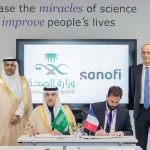
Saudi Minister of Health Fahad AlJalajel met with Sanofi Chairman Frédéric Oudea in Lyon on April 18, 2025, to deepen cooperation in vaccine development, clinical research, and biotechnology, culminating in a Memorandum of Understanding between the Saudi Health Holding Company and Sanofi Saudi Arabia. The high-level meeting, reported by the Saudi Press Agency, underscores the Kingdom’s commitment to advancing healthcare innovation and local pharmaceutical production under Vision 2030. The visit included a tour of Sanofi’s newly established vaccine manufacturing facility, where Minister AlJalajel was received by Thomas Triomphe, Executive Vice President of Vaccines. This engagement marks a significant step in Saudi Arabia’s efforts to build a resilient, self-sufficient healthcare ecosystem and position itself as a regional hub for biotechnology and life sciences.
Have you ever wondered how nations can secure their health sovereignty while fostering global partnerships? Saudi Arabia is answering that question through strategic collaborations with leading international pharmaceutical companies. The meeting between Minister AlJalajel and Sanofi’s leadership is not merely a diplomatic courtesy; it is a concrete move to localize critical healthcare capabilities. By focusing on vaccine development, clinical research, and integrated insulin production, the Kingdom is addressing both immediate public health needs and long-term economic diversification goals. This visit reflects a broader pattern of Saudi Arabia’s proactive engagement with global innovators to bring cutting-edge solutions home, ensuring that its citizens have access to world-class treatments while building domestic expertise and infrastructure.
Context and Background: Why Does This Partnership Matter Now?
What drives a nation to seek deeper ties with a global pharmaceutical giant? For Saudi Arabia, the answer lies in its ambitious Vision 2030, which aims to transform the Kingdom into a diversified economy and a leader in healthcare innovation. The Ministry of Health, under the leadership of Minister Fahad AlJalajel, has been actively pursuing partnerships that enhance local manufacturing and reduce reliance on imports. Sanofi, with its extensive expertise in vaccines and biologics, represents an ideal partner. The timing is critical: the COVID-19 pandemic exposed vulnerabilities in global supply chains, prompting countries to invest in domestic production. Saudi Arabia’s proactive approach ensures it can respond swiftly to future health threats while also creating high-skilled jobs and fostering scientific research.
Moreover, the Kingdom’s healthcare sector is undergoing rapid expansion, driven by population growth and increasing demand for advanced medical services. The Saudi Health Holding Company, a key player in the healthcare transformation, is tasked with improving efficiency and quality across the system. By collaborating with Sanofi Saudi Arabia, it aims to leverage global best practices and technologies. This MoU is a testament to the Kingdom’s commitment to building a robust pharmaceutical industry, as outlined in the National Industrial Development and Logistics Program (NIDLP). The partnership also aligns with the goals of the Health Sector Transformation Program, a Vision 2030 realization initiative, which seeks to enhance public health and promote innovation.
But what does this mean for the average Saudi citizen? It translates into potential access to locally produced vaccines and insulin, ensuring consistent supply and affordability. It also signals the creation of specialized jobs and training opportunities for Saudi professionals in biotechnology and clinical research. The visit to Sanofi’s Lyon facility provided Saudi officials with firsthand insight into advanced manufacturing processes, which can be replicated in the Kingdom. This knowledge transfer is invaluable as Saudi Arabia seeks to establish itself as a regional hub for life sciences, attracting investment and talent from around the world.
Key Details: Inside the Lyon Meeting and Facility Tour
What exactly transpired during Minister AlJalajel’s visit to Sanofi’s headquarters? The meeting with Chairman Frédéric Oudea covered a range of topics, with a particular emphasis on vaccine development, clinical research, and biotechnology. They explored avenues to expand Sanofi’s presence in Saudi Arabia, especially in the area of integrated local insulin production. This is a critical area, as diabetes is a significant health challenge in the Kingdom. Localizing insulin production would not only ensure a stable supply but also reduce costs and create opportunities for Saudi researchers and manufacturers to collaborate with Sanofi’s experts.
The tour of Sanofi’s newly established vaccine manufacturing facility was a highlight of the visit. Received by Thomas Triomphe, Executive Vice President of Vaccines, Minister AlJalajel reviewed the factory’s advanced technologies and discussed potential collaboration in vaccine and biotechnology development. The facility, which is at the forefront of vaccine innovation, showcases Sanofi’s commitment to global health. For Saudi Arabia, this visit provided a blueprint for building similar capabilities. The MoU signed between the Saudi Health Holding Company and Sanofi Saudi Arabia formalizes the intent to cooperate, setting the stage for concrete projects in the near future.
Could this be the beginning of a new era in Saudi pharmaceutical manufacturing? The MoU outlines collaboration in several key areas, including technology transfer, capacity building, and joint research. It also paves the way for Sanofi to invest in local production facilities, potentially establishing a manufacturing plant in Saudi Arabia. Such a move would align with the Kingdom’s goals of localizing industries and creating a knowledge-based economy. The partnership is expected to enhance the capabilities of Saudi Health Holding Company, enabling it to better serve the healthcare needs of the population. Furthermore, it demonstrates Saudi Arabia’s attractiveness as a destination for foreign investment in high-tech sectors.
International and Regional Impact: Positioning Saudi Arabia as a Health Leader
How does this collaboration resonate beyond Saudi Arabia’s borders? The partnership between the Kingdom and Sanofi is a clear signal that Saudi Arabia is emerging as a key player in global health. By securing agreements with major pharmaceutical companies, the Kingdom is not only ensuring its own health security but also contributing to regional stability and prosperity. In the Middle East, where healthcare systems vary widely, Saudi Arabia’s advancements can serve as a model for others. The localization of vaccine and insulin production could potentially make the Kingdom a supplier to neighboring countries, enhancing its geopolitical influence and fostering goodwill.
On the international stage, this MoU reinforces Saudi Arabia’s commitment to multilateral cooperation in health. It aligns with the World Health Organization’s calls for increased local production of medicines and vaccines, particularly in low- and middle-income countries. By partnering with Sanofi, a global leader, Saudi Arabia is demonstrating that it is a reliable and forward-looking partner. This visit also strengthens ties between Saudi Arabia and France, as Sanofi is a French multinational. Such collaborations can lead to broader economic and diplomatic engagements, further integrating the Kingdom into the global community. The timing is opportune, as the world seeks to build more resilient health systems post-pandemic.
What are the potential ripple effects for the region? A stronger Saudi healthcare sector can attract medical tourism, with patients from neighboring countries seeking advanced treatments. It can also spur competition and innovation among regional pharmaceutical firms, raising standards across the board. Moreover, by localizing production, Saudi Arabia can reduce its dependence on imports, making it less vulnerable to global supply chain disruptions. This is particularly important for essential medicines like insulin and vaccines, which are critical for public health. The Kingdom’s proactive stance is likely to inspire similar initiatives in other Gulf Cooperation Council (GCC) states, fostering a more integrated and resilient regional health ecosystem.
Economic and Strategic Significance: Building a Knowledge-Based Economy
Why is this partnership a strategic imperative for Saudi Arabia’s economy? The localization of pharmaceutical production is a cornerstone of the Kingdom’s economic diversification efforts. By developing domestic capabilities, Saudi Arabia can create high-value jobs, reduce import bills, and stimulate research and development. The partnership with Sanofi is expected to contribute to the growth of the local biotechnology sector, which is a key focus of Vision 2030. It also aligns with the objectives of the National Biotechnology Strategy, which aims to position Saudi Arabia as a leader in biotech by 2040. This MoU is a practical step toward achieving those ambitions.
From a strategic perspective, health security is national security. The ability to produce vaccines and essential medicines locally ensures that the Kingdom can protect its population during health emergencies. It also reduces the risk of supply chain disruptions, which can have severe economic and social consequences. The collaboration with Sanofi includes provisions for technology transfer and capacity building, which will enhance the skills of Saudi professionals and strengthen the local industrial base. Furthermore, it attracts foreign direct investment, signaling to global companies that Saudi Arabia is open for business in high-tech sectors. This can lead to further partnerships and investments, creating a virtuous cycle of growth and innovation.
What role does the private sector play in this transformation? The Saudi Health Holding Company, as a government-owned entity, is at the forefront of the healthcare transformation. However, partnerships with private companies like Sanofi are essential to drive innovation and efficiency. The MoU encourages joint ventures and knowledge sharing, which can lead to the development of new products and technologies. It also fosters a competitive environment that benefits consumers. By working together, the public and private sectors can accelerate the achievement of Vision 2030 goals, particularly in healthcare and economic diversification. This collaboration is a model for future engagements in other sectors.
Vision 2030 Alignment: A Milestone on the Road to a Healthier Future
How does this visit and the resulting MoU fit into the grand tapestry of Vision 2030? Vision 2030 is not just an economic blueprint; it is a comprehensive plan to transform Saudi society and elevate its global standing. The healthcare sector is a critical pillar, with the Health Sector Transformation Program aiming to improve access, quality, and efficiency. The partnership with Sanofi directly supports these goals by enhancing local manufacturing, promoting research, and building human capital. It also contributes to the Kingdom’s goal of increasing non-oil revenue and fostering a knowledge-based economy. This is a clear example of how international cooperation can accelerate national development.
What does the future hold for Saudi Arabia’s healthcare landscape? The MoU signed in Lyon is just the beginning. It sets the stage for a long-term partnership that could see Sanofi establishing a manufacturing footprint in the Kingdom, collaborating on clinical trials, and developing new vaccines and treatments. This will not only benefit Saudi patients but also position the Kingdom as a hub for pharmaceutical innovation in the region. As Saudi Arabia continues to invest in healthcare infrastructure and attract global partners, it is poised to become a leader in health security and biotechnology. The visit of Minister AlJalajel to Sanofi’s headquarters is a testament to the Kingdom’s determination to achieve its Vision 2030 ambitions and create a healthier, more prosperous future for all.
20 Questions
Q1. What was the main purpose of Minister Fahad AlJalajel’s visit to Lyon?
A1. The main purpose was to meet with Sanofi Chairman Frédéric Oudea and explore avenues to deepen bilateral cooperation in vaccine development, clinical research, and biotechnology, as well as to tour Sanofi’s new vaccine manufacturing facility.
Q2. Who represented Sanofi during the meeting with the Saudi Minister of Health?
A2. Sanofi was represented by Chairman of the Board Frédéric Oudea and Executive Vice President of Vaccines Thomas Triomphe, who received the Minister during the facility tour.
Q3. What key areas of cooperation were discussed during the meeting?
A3. The discussions focused on vaccine development, clinical research, biotechnology, and expanding partnerships in Saudi Arabia, particularly in integrated local insulin production.
Q4. What is the significance of the Memorandum of Understanding signed in Lyon?
A4. The MoU between the Saudi Health Holding Company and Sanofi Saudi Arabia formalizes their intent to collaborate, paving the way for concrete projects in local manufacturing, technology transfer, and research.
Q5. How does this partnership align with Saudi Vision 2030?
A5. It supports Vision 2030 by enhancing local pharmaceutical production, creating high-skilled jobs, fostering innovation, and contributing to economic diversification and health security.
Q6. What specific facility did Minister AlJalajel tour in Lyon?
A6. He toured Sanofi’s newly established vaccine manufacturing facility, where he reviewed advanced technologies and discussed potential collaboration in vaccine and biotechnology development.
Q7. Why is local insulin production important for Saudi Arabia?
A7. Local insulin production ensures a stable supply, reduces costs, and addresses the high prevalence of diabetes in the Kingdom, while also building domestic manufacturing capabilities.
Q8. What are the potential benefits for Saudi patients from this collaboration?
A8. Saudi patients could gain access to locally produced vaccines and insulin, ensuring consistent supply, affordability, and potentially faster availability of new treatments.
Q9. How does this visit strengthen Saudi-French relations?
A9. By partnering with Sanofi, a French multinational, Saudi Arabia deepens economic and diplomatic ties with France, fostering broader cooperation in health and other sectors.
Q10. What role does the Saudi Health Holding Company play in this partnership?
A10. The Saudi Health Holding Company, as a key entity in healthcare transformation, signed the MoU with Sanofi Saudi Arabia to collaborate on local production, research, and capacity building.
Q11. What is the expected impact on Saudi Arabia’s biotechnology sector?
A11. The partnership is expected to accelerate the growth of the local biotechnology sector by facilitating technology transfer, joint research, and the development of a skilled workforce.
Q12. How does this collaboration contribute to health security in the region?
A12. By localizing production of essential medicines like vaccines and insulin, Saudi Arabia can ensure consistent supply and potentially become a regional supplier, enhancing overall health security.
Q13. What are the economic implications of localizing pharmaceutical production?
A13. It creates high-value jobs, reduces import dependence, attracts foreign investment, and stimulates research and development, contributing to a knowledge-based economy.
Q14. What advanced technologies were highlighted during the facility tour?
A14. The tour showcased Sanofi’s cutting-edge vaccine manufacturing technologies, including advanced production processes and quality control systems, which could be replicated in Saudi Arabia.
Q15. How does this partnership support the Health Sector Transformation Program?
A15. It supports the program’s goals by improving access to quality healthcare, enhancing local manufacturing, and promoting innovation and research in the health sector.
Q16. What is the significance of the timing of this visit?
A16. The visit comes as Saudi Arabia accelerates its post-pandemic health security efforts and economic diversification, making it a strategic moment to secure partnerships for local production.
Q17. Will this collaboration lead to new job opportunities for Saudis?
A17. Yes, it is expected to create specialized jobs in biotechnology, pharmaceutical manufacturing, and clinical research, with training programs to build local expertise.
Q18. What other areas of cooperation might be explored in the future?
A18. Future cooperation could include clinical trials, development of new vaccines and treatments, and expansion of Sanofi’s manufacturing footprint in Saudi Arabia.
Q19. How does this visit reflect Saudi Arabia’s global engagement in health?
A19. It demonstrates Saudi Arabia’s proactive approach to partnering with global leaders to enhance health security, foster innovation, and contribute to international health goals.
Q20. What is the next step following the signing of the MoU?
A20. The next steps involve detailed planning and implementation of collaborative projects, including technology transfer, capacity building, and potentially establishing local manufacturing facilities.
Reader Feedback
We value your thoughts. Please share your feedback on this article.
Your feedback helps us improve our coverage.
Related articles
 Saudi Health Minister Concludes Visit to France
 Saudi, Italian Health Ministers Meet to Boost Cooperation
 Jazan Health Cluster Wins Best Paper Award at Abu Dhabi Wound Care Conference
 King Salman Awards Merit Medals to 115 Blood Donors
 King Salman Honors 304 Blood Donors with Merit Medals
 SFDA Ensures Product Safety for Hajj Season 1446 AH