


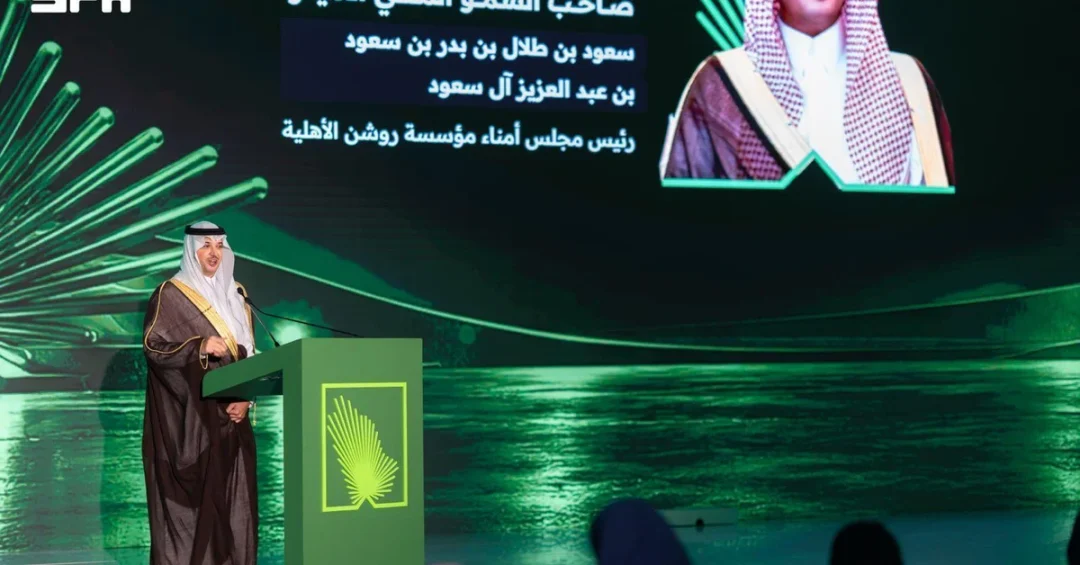
Riyadh hosted the fifth edition of the Future of the Non-Profit Sector Forum on Monday evening, bringing together more than 1,000 leaders, experts, and specialists to explore the sector’s contribution to urban development and the sustainability of social impact. The event, held in the Saudi capital, featured four panel discussions and six training workshops, and concluded with an awards ceremony during which SAR3 million was distributed across three categories. The winning entities were honored by Prince Saud bin Talal bin Badr, Chairman of the Board of Trustees of the ROSHN Foundation, and Dr. Badr Al-Badr, CEO of the Mohammed bin Salman Foundation (Misk).
So why does a forum focused on non-profit work matter in a country undergoing one of the world’s most ambitious economic and social transformations? The answer lies in the pivotal role that civil society organizations play in complementing government efforts and private sector innovation. As Saudi Arabia advances toward Vision 2030, the non-profit sector has emerged as a vital partner in addressing social challenges, fostering community engagement, and ensuring that urban development leaves no one behind. This fifth edition of the forum underscores the Kingdom’s commitment to building a thriving, inclusive society where every individual can contribute to and benefit from national progress.
Context and Background
What has driven the rapid evolution of Saudi Arabia’s non-profit sector in recent years? The sector has undergone a remarkable transformation, spurred by regulatory reforms, increased government support, and a cultural shift toward organized philanthropy. Historically, charitable work in the Kingdom was often informal and fragmented. However, with the launch of Vision 2030 in 2016, the government recognized that achieving ambitious social and economic goals required a robust, professionalized non-profit ecosystem. The establishment of the National Center for Non-Profit Sector (NCNP) in 2019 marked a turning point, providing a unified framework for licensing, governance, and impact measurement. Since then, the number of registered non-profit organizations has surged, and their areas of operation have expanded to include urban development, environmental sustainability, education, health, and culture.
The Future of the Non-Profit Sector Forum has become an annual milestone in this journey. Each edition builds on the previous one, reflecting the sector’s growing sophistication and its integration with national priorities. The fifth edition, held in Riyadh, focused specifically on the sector’s role in shaping urban landscapes—a theme that resonates deeply with the Kingdom’s ongoing giga-projects and urban renewal initiatives. By bringing together stakeholders from government, business, academia, and civil society, the forum creates a platform for dialogue, capacity-building, and recognition of excellence. This year’s event also highlighted how non-profit entities can contribute to sustainable cities, community well-being, and inclusive growth, aligning with global best practices and the UN Sustainable Development Goals.
Moreover, the forum’s timing is significant. As Saudi cities expand and new urban centers like NEOM take shape, the need for social infrastructure—schools, community centers, health facilities, and green spaces—becomes ever more pressing. Non-profit organizations are uniquely positioned to identify local needs, mobilize volunteers, and deliver services that complement public and private investments. The forum thus serves as a catalyst for collaboration, ensuring that urban development is not just about buildings and infrastructure but also about people and communities.
Key Details and Forum Highlights
What concrete outcomes emerged from the fifth edition of the forum? The event featured four panel discussions that delved into topics such as social innovation in urban planning, public-private partnerships for community development, volunteerism and civic engagement, and measuring social impact. These sessions brought together thought leaders who shared case studies, challenges, and success stories. For instance, one panel explored how non-profit organizations can work with municipalities to revitalize public spaces, while another examined the role of technology in scaling social programs. The six training workshops provided hands-on skills in areas like fundraising, governance, strategic planning, digital marketing, impact evaluation, and volunteer management. Participants left with practical tools to enhance their organizations’ effectiveness.
The awards ceremony was a centerpiece of the evening, with SAR3 million distributed across three categories. These categories likely recognized innovation, community impact, and sustainability, though the specific names were not disclosed in the official announcement. The winning entities were honored by Prince Saud bin Talal bin Badr and Dr. Badr Al-Badr, both of whom have been instrumental in supporting the non-profit sector. Prince Saud bin Talal bin Badr, as Chairman of the Board of Trustees of the ROSHN Foundation, has overseen initiatives that integrate social responsibility into large-scale real estate development. Dr. Badr Al-Badr, CEO of Misk, has empowered countless young Saudis through entrepreneurship, education, and leadership programs. Their presence at the forum signals strong institutional backing for the sector.
The forum also drew more than 1,000 participants, speakers, and moderators, making it one of the largest gatherings of its kind in the region. Attendees included representatives from non-profit organizations, government agencies, corporations, and international bodies. The diversity of participants facilitated cross-sector networking and partnership opportunities. Several prominent figures attended, underscoring the forum’s importance as a convening platform. While the official announcement did not list all attendees, the caliber of speakers and the engagement of high-level officials reflect the Kingdom’s commitment to fostering a vibrant civil society.
International and Regional Impact
How does Saudi Arabia’s non-profit sector development resonate beyond its borders? The Kingdom’s efforts are part of a broader regional trend where Gulf states are investing in social infrastructure and civic engagement. Saudi Arabia’s model, characterized by strong government support, regulatory clarity, and integration with national vision, offers a template for other countries in the Middle East and North Africa. By hosting forums like this, the Kingdom positions itself as a leader in social innovation and sustainable development. International organizations, including the United Nations and the World Bank, have recognized Saudi Arabia’s progress in creating an enabling environment for non-profits. The forum also provides a platform for knowledge exchange, attracting experts from around the world who share best practices and explore collaborations.
At the regional level, the forum’s focus on urban development is particularly timely. Many cities in the Arab world are experiencing rapid urbanization, straining infrastructure and social services. Non-profit organizations can play a critical role in bridging gaps, especially in underserved communities. Saudi Arabia’s experience—leveraging non-profits to support affordable housing, education, and healthcare—can inform policies in neighboring countries. Furthermore, the forum’s emphasis on sustainability aligns with global climate goals and the circular economy. By promoting green spaces, energy efficiency, and community resilience, non-profits contribute to environmentally sustainable cities. The SAR3 million in awards also sends a message that social impact is valued and rewarded, encouraging more entities to innovate and scale their work.
Economic and Strategic Significance
Why should the business community pay attention to the non-profit sector’s growth? A vibrant non-profit sector is not just a social good; it is an economic enabler. By addressing social issues such as unemployment, skills gaps, and community disengagement, non-profits help create a stable and productive workforce. They also stimulate innovation by piloting new approaches to service delivery that can be scaled by government or business. In Saudi Arabia, the non-profit sector is increasingly seen as a partner in economic diversification. For example, non-profits focused on entrepreneurship and vocational training support the growth of small and medium enterprises, a key pillar of Vision 2030. The forum’s workshops on fundraising and governance also strengthen the financial sustainability of these organizations, making them more attractive to donors and investors.
Strategically, the forum reinforces Saudi Arabia’s soft power and its commitment to global citizenship. By sharing its experiences and hosting international participants, the Kingdom enhances its reputation as a responsible global actor. The awards ceremony, with its substantial prize money, incentivizes excellence and attracts talent to the sector. Moreover, the involvement of high-profile figures like Prince Saud bin Talal bin Badr and Dr. Badr Al-Badr signals that non-profit work is a prestigious and impactful career path. This can inspire young Saudis to pursue careers in social entrepreneurship, further building the sector’s capacity. As the Kingdom continues to invest in its cities and communities, the non-profit sector will be indispensable in ensuring that growth is inclusive and sustainable.
Vision 2030 Alignment
How does the forum’s theme directly support Vision 2030? One of Vision 2030’s core objectives is to increase the non-profit sector’s contribution to GDP from less than 1% to 5% by 2030. This ambitious target requires not only growth in the number of organizations but also improvements in their efficiency, governance, and impact. The Future of the Non-Profit Sector Forum directly contributes to this goal by providing training, fostering partnerships, and recognizing best practices. The focus on urban development aligns with the Vision’s aim to create vibrant, sustainable cities that offer a high quality of life. Non-profits are essential in delivering community programs, preserving cultural heritage, and promoting environmental stewardship—all of which are integral to the Vision’s social and environmental pillars.
Furthermore, the forum embodies the spirit of collaboration that Vision 2030 champions. By bringing together government, business, and civil society, it exemplifies the multi-stakeholder approach needed to tackle complex challenges. The SAR3 million in awards serves as a catalyst, enabling winning organizations to expand their impact. As Saudi Arabia approaches the 2030 deadline, events like this will be crucial in maintaining momentum and ensuring that the non-profit sector is fully integrated into the national development agenda. The fifth edition of the forum thus represents another step forward in the Kingdom’s journey toward a diversified, inclusive, and prosperous future.
20 Questions
Q1. What was the main purpose of the fifth Future of the Non-Profit Sector Forum?
A1. The forum aimed to explore the non-profit sector’s contribution to urban development and the sustainability of social impact, bringing together leaders and experts for discussions and workshops.
Q2. Where and when did the fifth edition of the forum take place?
A2. It was held in Riyadh, the capital of Saudi Arabia, on Monday evening, as reported by the Saudi Press Agency.
Q3. How many participants attended the forum?
A3. The forum drew more than 1,000 participants, speakers, and moderators, making it a significant gathering for the sector.
Q4. What activities were featured at the forum?
A4. The event included four panel discussions, six training workshops, and an awards ceremony to recognize outstanding contributions.
Q5. Who honored the winning entities at the awards ceremony?
A5. Prince Saud bin Talal bin Badr, Chairman of the Board of Trustees of the ROSHN Foundation, and Dr. Badr Al-Badr, CEO of the Mohammed bin Salman Foundation (Misk), did the honors.
Q6. How much prize money was distributed and across how many categories?
A6. A total of SAR3 million was distributed across three categories, rewarding excellence in the non-profit sector.
Q7. What is the significance of the forum’s focus on urban development?
A7. It highlights how non-profits can help create sustainable, inclusive cities by addressing social needs alongside physical infrastructure development.
Q8. How does the forum support Saudi Arabia’s Vision 2030?
A8. It helps increase the non-profit sector’s GDP contribution, fosters collaboration, and promotes social impact, aligning with Vision 2030’s goals.
Q9. What role does the ROSHN Foundation play in the non-profit sector?
A9. The ROSHN Foundation integrates social responsibility into urban development projects, supporting community well-being and sustainable growth.
Q10. What is Misk Foundation’s contribution to the non-profit sector?
A10. Misk empowers Saudi youth through entrepreneurship, education, and leadership programs, fostering a new generation of social innovators.
Q11. What topics were covered in the panel discussions?
A11. Panels covered social innovation in urban planning, public-private partnerships, volunteerism, and measuring social impact.
Q12. What skills were taught in the training workshops?
A12. Workshops provided training in fundraising, governance, strategic planning, digital marketing, impact evaluation, and volunteer management.
Q13. Why is the non-profit sector important for Saudi Arabia’s economy?
A13. It creates jobs, supports SMEs, addresses social challenges, and contributes to economic diversification, a key Vision 2030 objective.
Q14. How does the forum promote international cooperation?
A14. By attracting global experts and sharing best practices, it positions Saudi Arabia as a leader in social innovation and sustainable development.
Q15. What is the National Center for Non-Profit Sector’s role?
A15. The NCNP provides a unified framework for licensing, governance, and impact measurement, supporting the sector’s professionalization.
Q16. How many non-profit organizations are registered in Saudi Arabia?
A16. The number has surged in recent years, though exact figures vary; the sector is expanding rapidly under Vision 2030 reforms.
Q17. What are the three categories of awards at the forum?
A17. While specific names weren’t disclosed, they likely recognized innovation, community impact, and sustainability in non-profit work.
Q18. How does the forum help non-profit organizations improve?
A18. Through training, networking, and recognition, it builds capacity, shares best practices, and incentivizes excellence.
Q19. What is the target for the non-profit sector’s GDP contribution by 2030?
A19. Vision 2030 aims to increase the sector’s contribution from less than 1% to 5% of GDP by 2030.
Q20. What message does the forum send about Saudi Arabia’s development?
A20. It shows the Kingdom’s commitment to inclusive, sustainable growth where civil society plays a vital role in shaping thriving communities.
Reader Feedback
We value your thoughts. Please share your feedback on this article.
Your feedback helps us improve our coverage.
Related articles
 ETEC Honors 659 Schools at Tamayuz 2026 Forum
 Madinah Opens Registration for KAUST Mathematics Competition
 Fifth Future of Non-Profit Sector Forum to Open in Riyadh Tomorrow
 Islamic University of Madinah Extends Application Deadline for International Students
 Madinah Walkways Boost Health and Quality of Life
 Madinah Concludes Swimming Literacy Project with 300 Students