


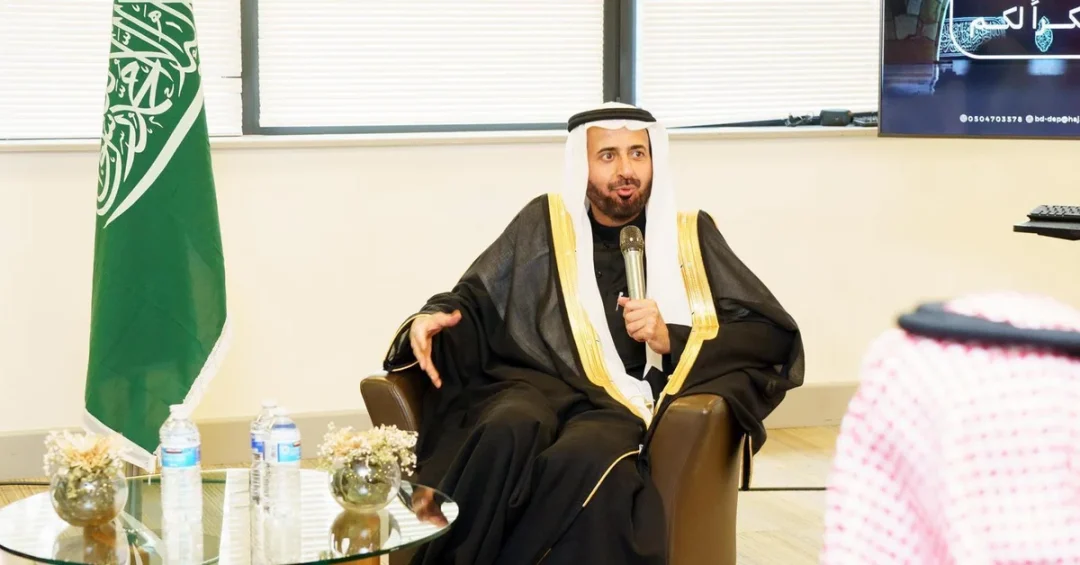
Saudi Minister of Hajj and Umrah Tawfig Al-Rabiah met with Saudi scholarship students in London on April 24, 2025, during a dialogue session organized by the Saudi Cultural Attaché, emphasizing their role as ambassadors of the Kingdom’s cultural message and their contribution to national service. The session, held in the British capital, brought together the minister and more than 14,000 Saudi students currently enrolled in universities across the United Kingdom, according to the Saudi Press Agency (SPA). The meeting underscored the Kingdom’s commitment to supporting its students abroad and integrating them into the broader objectives of Saudi Vision 2030.
During the dialogue, Minister Al-Rabiah expressed his pleasure at meeting the students and commended the Cultural Attaché’s efforts in fostering their academic and cultural growth. He highlighted that Saudi students in British universities are seen as representatives of the Kingdom’s cultural message, embodying its identity, values, and aspirations on the international stage. The session aimed to share expertise and strengthen communication between students and officials, enhancing the students’ role in national service. This initiative reflects Saudi Arabia’s dedication to nurturing its human capital and promoting a positive image of the Kingdom abroad.
Context and Background
Why does Saudi Arabia place such a high priority on the education and development of its students abroad? The Kingdom has long recognized that investing in human capital is essential for achieving the ambitious goals of Saudi Vision 2030, the comprehensive plan to diversify the economy and modernize society. The Saudi Cultural Attaché in London plays a pivotal role in this mission, providing support and guidance to the thousands of Saudi students pursuing higher education in the United Kingdom. These students are not only gaining advanced knowledge and skills but also serving as cultural ambassadors, sharing Saudi traditions and values with their peers and host communities.
The meeting between Minister Al-Rabiah and the students is part of a broader strategy to maintain strong connections between Saudi officials and the youth who will drive the nation’s future. By engaging directly with students, the minister reinforced the importance of their academic pursuits and their potential contributions to national development. The Saudi government, through its ministries and cultural attachés, consistently emphasizes the importance of education as a cornerstone of progress, aligning with the Vision 2030 objective of building a diversified, knowledge-based economy.
Historically, Saudi Arabia has sent thousands of students to prestigious universities worldwide, with the United Kingdom being a top destination. The Saudi Cultural Attaché in London oversees one of the largest cohorts of Saudi students abroad, providing academic advising, cultural programs, and logistical support. This infrastructure ensures that students can focus on their studies while remaining connected to their homeland. The dialogue session with Minister Al-Rabiah exemplifies the Kingdom’s proactive approach to maintaining these connections and ensuring that students feel valued and supported.
Key Details of the Dialogue Session
What specific messages did Minister Al-Rabiah convey to the students during the dialogue? According to the Saudi Press Agency, the minister began by expressing his pleasure at meeting the students and praised the Cultural Attaché’s work in fostering their academic and cultural growth. He emphasized that the more than 14,000 Saudi students in British universities are seen as representatives of the Kingdom’s cultural message, embodying its identity, values, and aspirations in international settings. This recognition serves as a powerful motivator for students to excel in their studies and act as positive ambassadors for Saudi Arabia.
The session was organized by the Saudi Cultural Attaché and aimed to share expertise and strengthen communication between students and officials. By facilitating such dialogues, the Kingdom ensures that students have a platform to voice their experiences and challenges, while officials can provide guidance and updates on national priorities. The minister’s participation highlights the government’s commitment to engaging with youth and integrating their perspectives into national strategies. The event also allowed students to network with peers and officials, fostering a sense of community and shared purpose.
Minister Al-Rabiah’s role as Minister of Hajj and Umrah adds a unique dimension to the meeting. His portfolio involves managing the annual pilgrimage, a monumental logistical and spiritual undertaking that draws millions of Muslims to the Kingdom. His insights into national service and the importance of representing Saudi Arabia on the global stage would resonate with students, many of whom may aspire to contribute to sectors critical to Vision 2030, such as tourism, hospitality, and religious services. The dialogue likely covered how students can align their academic pursuits with the Kingdom’s strategic needs.
International and Regional Impact
How does Saudi Arabia’s support for its students abroad influence its international standing? By investing in the education of its youth and encouraging them to serve as cultural ambassadors, the Kingdom enhances its soft power and builds bridges with other nations. Saudi students in the UK contribute to academic and cultural exchange, fostering mutual understanding and collaboration. This people-to-people diplomacy is a vital component of Saudi Arabia’s foreign policy, complementing its economic and political engagements. The meeting between Minister Al-Rabiah and the students sends a clear message that the Kingdom values its diaspora and sees them as key partners in promoting its vision internationally.
Regionally, the initiative reinforces Saudi Arabia’s leadership in the Middle East and its commitment to youth empowerment. Other countries in the region look to the Kingdom’s educational and cultural programs as models for their own development strategies. The emphasis on national service and cultural representation aligns with the broader Arab tradition of valuing education and community contribution. By showcasing the achievements and potential of its students, Saudi Arabia demonstrates its dedication to fostering a generation of leaders who can drive progress both at home and abroad.
Economic and Strategic Significance
What economic benefits arise from Saudi Arabia’s investment in student scholarships? The Kingdom’s scholarship programs are a strategic investment in human capital, yielding long-term returns in innovation, productivity, and economic diversification. Graduates return with advanced skills and global perspectives, enriching the Saudi workforce and contributing to sectors such as technology, healthcare, renewable energy, and tourism. These are precisely the areas targeted by Vision 2030 to reduce dependence on oil and create a sustainable, knowledge-driven economy. The 14,000 students in the UK alone represent a significant pool of future talent that will help propel the Kingdom’s economic transformation.
Strategically, maintaining strong ties with students abroad ensures that they remain connected to Saudi Arabia’s national objectives and values. The dialogue session with Minister Al-Rabiah is a prime example of how the government actively engages with this talent pool, reminding them of their role in national service. By fostering a sense of belonging and purpose, the Kingdom encourages students to return home after graduation and apply their expertise to local challenges. This approach not only mitigates brain drain but also strengthens the social fabric by reinforcing the shared goals of Vision 2030.
Vision 2030 Alignment
How does this initiative directly support Saudi Vision 2030? Vision 2030 encompasses three main themes: a vibrant society, a thriving economy, and an ambitious nation. The support for Saudi students abroad touches on all three. By nurturing a vibrant society, the Kingdom invests in education and cultural exchange, ensuring that its youth are well-equipped to contribute to community development. A thriving economy benefits from the skills and knowledge these students acquire, driving innovation and entrepreneurship. An ambitious nation is built on the active participation of its citizens, including those studying abroad, who are encouraged to take pride in their national identity and serve their country.
Minister Al-Rabiah’s meeting with the students in London is a concrete example of Vision 2030 in action. It demonstrates the government’s commitment to engaging with youth, promoting education, and fostering a strong sense of national pride. As Saudi Arabia continues its journey toward a diversified and sustainable future, such initiatives will remain crucial in ensuring that every citizen, including those abroad, is empowered to contribute to the Kingdom’s success. The students’ role as cultural ambassadors also enhances Saudi Arabia’s global image, aligning with the Vision 2030 goal of projecting a positive and modern face of the Kingdom to the world.
20 Questions
Q1. Who met with Saudi scholarship students in London?
A1. Saudi Minister of Hajj and Umrah Tawfig Al-Rabiah met with Saudi scholarship students in London during a dialogue session organized by the Saudi Cultural Attaché.
Q2. When did the meeting take place?
A2. The meeting took place on April 24, 2025, in London, according to the Saudi Press Agency.
Q3. How many Saudi students are studying in British universities?
A3. More than 14,000 Saudi students are currently enrolled in universities across the United Kingdom.
Q4. What was the purpose of the dialogue session?
A4. The session aimed to share expertise, strengthen communication between students and officials, and enhance the students’ role in national service.
Q5. What did Minister Al-Rabiah emphasize about the students?
A5. He emphasized that the students are seen as representatives of the Kingdom’s cultural message, embodying its identity, values, and aspirations in international settings.
Q6. Who organized the dialogue session?
A6. The session was organized by the Saudi Cultural Attaché in London.
Q7. What did Minister Al-Rabiah commend the Cultural Attaché for?
A7. He commended the Cultural Attaché’s work in fostering the students’ academic and cultural growth.
Q8. How does this meeting support Saudi Vision 2030?
A8. It supports Vision 2030 by investing in human capital, promoting education, and encouraging youth to contribute to national development and cultural exchange.
Q9. What role do Saudi students abroad play according to the minister?
A9. They serve as cultural ambassadors, representing the Kingdom’s identity, values, and aspirations on the international stage.
Q10. What is the significance of the Saudi Cultural Attaché in London?
A10. The Cultural Attaché oversees the academic and cultural welfare of Saudi students in the UK, providing support and facilitating programs that connect them with their homeland.
Q11. How does the Kingdom benefit from students studying abroad?
A11. Students gain advanced skills and global perspectives, which they can bring back to contribute to Saudi Arabia’s economic diversification and innovation.
Q12. What message did Minister Al-Rabiah convey to the students?
A12. He conveyed that they are valued representatives of Saudi Arabia and encouraged them to excel academically and uphold the Kingdom’s values.
Q13. What is the broader context of this meeting?
A13. It is part of Saudi Arabia’s ongoing efforts to engage with youth abroad, support their education, and align their skills with national priorities under Vision 2030.
Q14. How many Saudi students are there in the UK compared to other countries?
A14. The UK hosts over 14,000 Saudi students, making it one of the top destinations for Saudi scholarship students worldwide.
Q15. What does ‘national service’ mean in this context?
A15. National service refers to the students’ role in contributing to Saudi Arabia’s development, promoting its culture, and supporting Vision 2030 goals through their education and future work.
Q16. What are the key themes of Saudi Vision 2030?
A16. Vision 2030 focuses on a vibrant society, a thriving economy, and an ambitious nation, aiming to diversify the economy and modernize society.
Q17. How does the meeting reflect Saudi Arabia’s leadership?
A17. It demonstrates the leadership’s commitment to engaging with youth, prioritizing education, and fostering national pride and unity.
Q18. What impact does this have on Saudi-UK relations?
A18. It strengthens cultural and educational ties between Saudi Arabia and the UK, enhancing mutual understanding and cooperation.
Q19. What sectors can returning students contribute to?
A19. They can contribute to technology, healthcare, renewable energy, tourism, and other sectors targeted by Vision 2030 for diversification.
Q20. What is the overall message of this initiative?
A20. The message is that Saudi Arabia values its students abroad, supports their education, and sees them as key partners in achieving national aspirations and global recognition.
Reader Feedback
We value your thoughts. Please share your feedback on this article.
Your feedback helps us improve our coverage.
Related articles
 Ehsan Endowment Fund Drives Charitable Projects in Saudi Arabia
 WAMY Commends Saudi Arabia’s Exemplary Elderly Care Efforts
 Purple Saturday Returns July 26 to Support, Empower People with Disabilities
 Wifada Association Participates in Innovation Lab to Boost Volunteerism
 Madinah’s Ruthana: the Most Popular and Demanded Summer Rutab Date
 Deputy Governor of Riyadh Region Performs Funeral Prayer for Princess Bazah bint Saud bin Abdulaziz Al Saud