


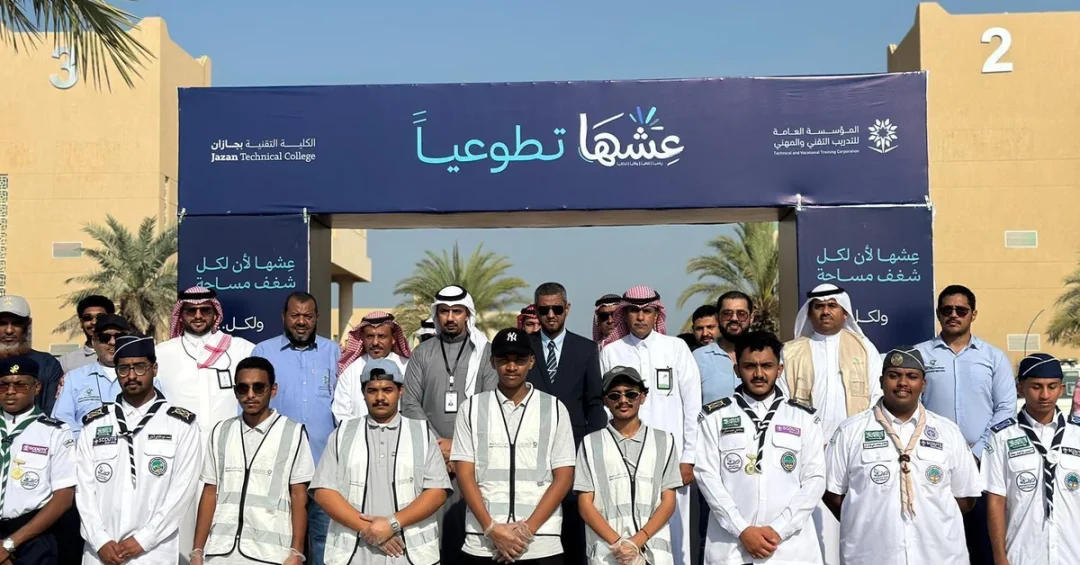
Jazan Technical College, in partnership with the National Center for Vegetation Cover Development and Combating Desertification, launched a volunteer environmental initiative on November 4, 2026, to plant 1,000 saplings across the Jazan Region. The campaign, which includes neem trees, bougainvillea, and roses, is part of a broader volunteering program designed to expand vegetation cover, foster environmental responsibility, and embed a culture of volunteerism among students and local residents.
The initiative reflects Saudi Arabia’s growing emphasis on environmental sustainability and community engagement, aligning with the Kingdom’s Vision 2030 goals and the Saudi Green Initiative. By combining environmental education with hands-on fieldwork, the program aims to raise awareness about the importance of tree planting and encourage sustainable practices. The collaboration between an academic institution and a national environmental agency highlights the multi-sector approach driving Saudi Arabia’s ecological efforts. As the Kingdom continues to diversify its economy and improve quality of life, such grassroots initiatives play a vital role in achieving long-term environmental targets. How can similar partnerships be scaled across other regions to maximize impact?
Context and Background
Jazan Technical College, a prominent vocational training institution in southwestern Saudi Arabia, has long been active in community service. The college’s latest initiative, launched in collaboration with the National Center for Vegetation Cover Development and Combating Desertification (NCVC), underscores the Kingdom’s integrated strategy to combat desertification and enhance green spaces. The NCVC, established to lead Saudi Arabia’s afforestation and land restoration efforts, operates under the Ministry of Environment, Water and Agriculture and is a key player in the Saudi Green Initiative, which aims to plant 10 billion trees across the Kingdom in the coming decades.
The volunteering program that underpins this initiative is part of a national push to increase civic participation and environmental stewardship. College Dean Eng. Mohammed Salili explained that the initiative seeks to foster environmental responsibility, build partnerships with specialized national entities, embed a culture of volunteerism, help expand vegetation cover, and preserve natural resources. These objectives resonate with the Kingdom’s Vision 2030, which emphasizes sustainable development and community involvement. The choice of neem trees, bougainvillea, and roses is strategic: neem is known for its resilience and air-purifying properties, bougainvillea adds vibrant color and requires minimal water, and roses contribute to aesthetic and economic value. Together, they represent a blend of ecological and ornamental benefits tailored to Jazan’s climate.
Why does this initiative matter now? Saudi Arabia faces significant environmental challenges, including desertification, water scarcity, and rising temperatures. The Kingdom has responded with ambitious programs like the Saudi Green Initiative and the Middle East Green Initiative, which aim to restore degraded land, reduce carbon emissions, and improve air quality. Local actions like the Jazan sapling planting are crucial building blocks for these national goals. By engaging students and volunteers, the initiative also cultivates a generation of environmentally conscious citizens who will carry forward the sustainability agenda. The collaboration between Jazan Technical College and NCVC exemplifies how educational institutions can serve as catalysts for community-driven environmental action.
Key Details of the Initiative
The initiative officially launched on November 4, 2026, with the planting of 1,000 saplings across selected sites in the Jazan Region. According to the Saudi Press Agency (SPA), the saplings include neem trees, bougainvillea, and roses, chosen for their adaptability to the local environment and their multiple benefits. Neem trees are particularly valued for their ability to thrive in arid conditions and provide shade, while bougainvillea and roses enhance the visual landscape and support local biodiversity. The planting activities are designed to involve volunteers from the college and the wider community, combining educational workshops with practical fieldwork.
Eng. Mohammed Salili, Dean of Jazan Technical College, emphasized that the initiative goes beyond mere planting. It aims to raise awareness about the importance of tree planting and encourage participants to adopt sustainable practices. The program includes training sessions on proper planting techniques, irrigation methods, and long-term care to ensure the saplings’ survival. This holistic approach ensures that the initiative yields lasting environmental benefits rather than a one-time event. The involvement of the NCVC provides technical expertise and access to resources, ensuring that the planting is done according to best practices and aligned with national afforestation standards.
How will success be measured? The initiative’s impact will be evaluated through survival rates of the saplings, the number of volunteers engaged, and the expansion of vegetation cover in the targeted areas. The NCVC will monitor progress and provide ongoing support. Additionally, the college plans to integrate the initiative into its curriculum, offering students hands-on experience in environmental management. This educational component ensures that the initiative not only plants trees but also plants the seeds of environmental stewardship in the next generation. The partnership model could serve as a blueprint for similar projects in other regions, demonstrating how local actions contribute to national and global sustainability goals.
International and Regional Impact
Saudi Arabia’s environmental initiatives, including the Jazan sapling planting, have significant implications beyond the Kingdom’s borders. The Middle East Green Initiative, launched by Crown Prince Mohammed bin Salman in 2021, aims to plant 50 billion trees across the region and reduce carbon emissions by more than 10% of global contributions. Saudi Arabia’s domestic efforts, such as the Saudi Green Initiative, are integral to this regional vision. By sharing knowledge and best practices, the Kingdom positions itself as a leader in environmental diplomacy and sustainable development, fostering cooperation with neighboring countries and international organizations.
The Jazan initiative also contributes to global climate goals, including the Paris Agreement and the UN Sustainable Development Goals (SDGs), particularly SDG 15 (Life on Land) and SDG 13 (Climate Action). Saudi Arabia’s commitment to planting billions of trees demonstrates its proactive role in addressing climate change, despite its status as a major oil producer. This balance between economic diversification and environmental stewardship is a cornerstone of Vision 2030. International observers have noted Saudi Arabia’s increasing engagement in climate forums and its investments in renewable energy and green technologies. The Jazan project, though local, is part of this larger narrative, showcasing how grassroots actions can support national and international commitments.
What does this mean for regional collaboration? The success of the Jazan initiative could inspire similar projects in other Saudi regions and neighboring countries. The NCVC has already established partnerships with various entities to combat desertification, and the model of engaging educational institutions and volunteers can be replicated. By sharing outcomes and methodologies, Saudi Arabia can contribute to a regional knowledge hub on arid land restoration. Furthermore, the initiative enhances the Kingdom’s soft power, presenting it as a responsible global citizen committed to environmental sustainability. As the world grapples with climate challenges, Saudi Arabia’s proactive measures serve as a positive example of how nations can integrate environmental goals with economic development.
Economic and Strategic Significance
While the primary goal of the Jazan sapling initiative is environmental, it also carries economic and strategic benefits. Expanding vegetation cover can improve soil quality, reduce erosion, and enhance agricultural productivity, which is vital for food security. Jazan Region, known for its agricultural output, stands to gain from increased greenery that supports local ecosystems and potentially boosts tourism. The initiative also aligns with the Kingdom’s efforts to diversify the economy away from oil dependence, as outlined in Vision 2030. By investing in green infrastructure, Saudi Arabia creates jobs in environmental management, landscaping, and sustainable agriculture, contributing to economic growth and community development.
Strategically, the initiative reinforces Saudi Arabia’s commitment to the Saudi Green Initiative, which aims to plant 10 billion trees and restore 40 million hectares of degraded land by 2030. These targets are ambitious but achievable through sustained local actions like the Jazan project. The involvement of the NCVC ensures that resources are allocated efficiently and that projects are scientifically managed. Additionally, the initiative supports the Kingdom’s goal to increase the share of renewable energy in its energy mix and reduce carbon emissions. By greening urban and rural areas, Saudi Arabia mitigates the effects of climate change, improves air quality, and enhances the well-being of its citizens, all of which are essential for a high quality of life and a thriving economy.
How does this initiative benefit local communities? Beyond environmental gains, the project fosters social cohesion and civic pride. Volunteers gain skills and knowledge that can lead to employment opportunities in the growing green sector. The involvement of youth, in particular, aligns with Vision 2030’s focus on empowering young people and enhancing their participation in national development. The initiative also strengthens partnerships between educational institutions, government agencies, and local communities, creating a network of stakeholders dedicated to sustainability. As Saudi Arabia continues to urbanize and develop, such green spaces will become increasingly important for mental and physical health, providing recreational areas and improving overall quality of life.
Vision 2030 Alignment
The Jazan sapling planting initiative is a direct reflection of Vision 2030’s environmental and social objectives. Vision 2030, Saudi Arabia’s roadmap for economic diversification and social reform, includes specific targets for environmental sustainability, such as increasing vegetation cover, reducing desertification, and promoting renewable energy. The Saudi Green Initiative, a key component of Vision 2030, aims to plant 10 billion trees and protect 30% of the Kingdom’s land and sea by 2030. The Jazan project contributes to these targets by adding 1,000 saplings to the national count and by engaging citizens in environmental stewardship. Moreover, the emphasis on volunteerism and education aligns with Vision 2030’s goal to foster a vibrant society and a thriving economy.
Looking ahead, the success of this initiative will depend on sustained efforts and monitoring. The NCVC and Jazan Technical College plan to continue their partnership, expanding the program to include more sites and species. The college intends to integrate environmental projects into its curricula, ensuring that students graduate with a strong sense of environmental responsibility. As Saudi Arabia moves towards a greener future, initiatives like this will be crucial in achieving the Kingdom’s ambitious environmental goals. By linking local action to national vision, the Jazan sapling planting exemplifies how every contribution counts in the journey towards a sustainable and prosperous Saudi Arabia. The Kingdom’s leadership in environmental stewardship, demonstrated through such projects, reinforces its role as a responsible global player and a model for sustainable development in the region and beyond.
20 Questions
Q1. What is the main goal of the initiative launched in Jazan Region?
A1. The initiative aims to plant 1,000 saplings, including neem trees, bougainvillea, and roses, to expand vegetation cover, foster environmental responsibility, and embed a culture of volunteerism among participants.
Q2. Who launched the initiative to plant 1,000 saplings in Jazan?
A2. Jazan Technical College, in collaboration with the National Center for Vegetation Cover Development and Combating Desertification in Jazan Region, launched the initiative as part of a volunteering program.
Q3. When was the initiative launched?
A3. The initiative was launched on November 4, 2026, according to the Saudi Press Agency (SPA).
Q4. What types of saplings are being planted?
A4. The saplings include neem trees, bougainvillea, and roses, selected for their adaptability to the local climate and their environmental and aesthetic benefits.
Q5. Why were neem trees chosen for this initiative?
A5. Neem trees are chosen for their resilience in arid conditions, ability to provide shade, and air-purifying properties, making them ideal for Jazan’s environment.
Q6. What is the role of the National Center for Vegetation Cover Development and Combating Desertification?
A6. The NCVC provides technical expertise, resources, and oversight to ensure the planting is done according to national afforestation standards and best practices.
Q7. How does the initiative aim to foster environmental responsibility?
A7. By involving volunteers in planting and educational activities, the initiative raises awareness about tree planting and encourages sustainable practices among participants and the community.
Q8. What is the significance of embedding a culture of volunteerism?
A8. Embedding volunteerism strengthens community bonds, promotes civic engagement, and supports Vision 2030’s goal of a vibrant society where citizens actively contribute to national development.
Q9. How does this initiative align with Saudi Vision 2030?
A9. It aligns with Vision 2030’s environmental sustainability goals, including the Saudi Green Initiative’s target to plant 10 billion trees and enhance quality of life.
Q10. What are the expected environmental benefits of planting these saplings?
A10. The saplings will help expand vegetation cover, reduce desertification, improve air quality, support biodiversity, and contribute to a cooler microclimate in the region.
Q11. How will the success of the initiative be measured?
A11. Success will be measured by sapling survival rates, the number of volunteers engaged, expansion of vegetation cover, and ongoing monitoring by the NCVC.
Q12. What educational components are included in the initiative?
A12. The initiative includes workshops on proper planting techniques, irrigation methods, and long-term care, combining environmental education with hands-on fieldwork.
Q13. Who can participate in the volunteering program?
A13. Students from Jazan Technical College, local residents, and community members are encouraged to participate, fostering broad engagement and environmental stewardship.
Q14. What is the role of Eng. Mohammed Salili in this initiative?
A14. Eng. Mohammed Salili, Dean of Jazan Technical College, explained the initiative’s objectives and oversees its implementation in partnership with the NCVC.
Q15. How does this initiative contribute to the Saudi Green Initiative?
A15. By planting 1,000 saplings, it adds to the national count of trees planted under the Saudi Green Initiative, which aims to plant 10 billion trees across the Kingdom.
Q16. What are the economic benefits of expanding vegetation cover in Jazan?
A16. Expanding vegetation can improve soil quality, boost agricultural productivity, create green jobs, and enhance tourism, supporting economic diversification.
Q17. How does the initiative support regional environmental efforts?
A17. It contributes to the Middle East Green Initiative’s goal of planting 50 billion trees and serves as a model for similar projects in neighboring countries.
Q18. What sustainable practices are promoted through this initiative?
A18. The initiative promotes water-efficient irrigation, proper planting techniques, and long-term care to ensure sapling survival and sustainable environmental management.
Q19. How can other regions in Saudi Arabia replicate this initiative?
A19. Other regions can partner with the NCVC and educational institutions to launch similar volunteer-based planting programs, adapting species selection to local climates.
Q20. What is the long-term vision for this initiative?
A20. The long-term vision is to expand the program, integrate it into educational curricula, and contribute to Saudi Arabia’s goal of a greener, more sustainable future under Vision 2030.
Reader Feedback
We value your thoughts. Please share your feedback on this article.
Your feedback helps us improve our coverage.
Related articles
 Jeddah Governor Receives Kazakhstan Consul General
 Syrian President Ahmad Al-Sharaa Arrives in Riyadh
 Weather Forecast for Wednesday: Saudi Arabia Issues Storm Advisory
 Fog and Rain Advisories Issued for Eastern Region Cities
 KSrelief Lays Foundation Stone for Medical Education Center in Syria
 Blowing Dust Alert Issued for Qassim Region, Saudi Arabia