


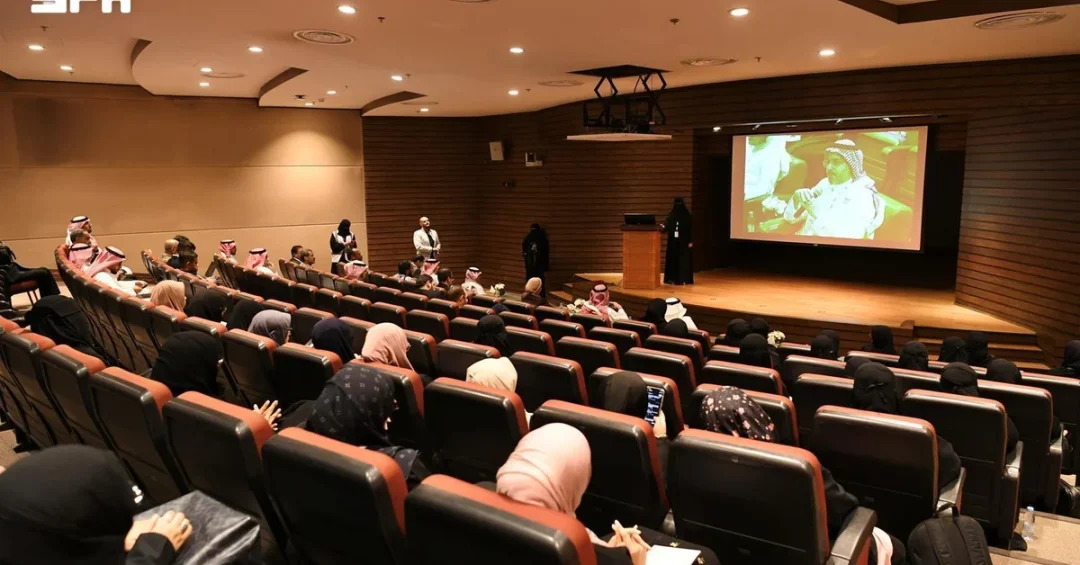
Taibah University in Madinah opened the sixth International Multi-Conference on Artificial Intelligence Technology (MCAIT 2026) on Tuesday, November 4, 2026, in partnership with Universiti Kebangsaan Malaysia, drawing 142 accepted scientific papers from researchers at 98 universities across 37 countries. The three-day conference, which concludes on Thursday, explores the latest scientific and technological advances in artificial intelligence (AI) and its applications in healthcare, education, language, and environmental sectors, while examining AI’s role in developing digital solutions and promoting innovation. The event has attracted broad international research participation, with papers published in the proceedings of the Institute of Electrical and Electronics Engineers (IEEE), underscoring the global recognition of the conference’s scientific rigor. The opening day featured sessions on AI advances, innovation in Madinah, data and semantics, digital transformation in healthcare and the built environment, the future of safe and inclusive AI, and applications of large language models.
Organized by Taibah University, a leading Saudi higher education institution in the Madinah region, MCAIT 2026 is being held under the umbrella of Saudi Arabia’s national ambitions in artificial intelligence and digital transformation. The conference aims to provide an international scientific platform that brings together researchers, academics, experts, and technology leaders, while strengthening research partnerships and promoting the exchange of expertise among academic and technology institutions. With 25 parallel sessions, six keynote speakers, and two specialized workshops offering seven hours of hands-on training, the event reflects the Kingdom’s growing role as a convenor of global scientific dialogue. The partnership with Universiti Kebangsaan Malaysia further highlights Saudi Arabia’s commitment to international academic collaboration, a cornerstone of its knowledge-based economy goals.
Context and Background
How did a university conference in Madinah become a focal point for global AI research? The International Multi-Conference on Artificial Intelligence Technology, now in its sixth edition, has steadily built a reputation as a platform where emerging AI theories meet practical applications. Taibah University’s decision to host MCAIT 2026 in partnership with Universiti Kebangsaan Malaysia reflects a deliberate strategy to bridge Asian and Middle Eastern research ecosystems. The conference’s acceptance of 142 papers from 98 universities across 37 countries signals that its peer-review process and IEEE publication pathway are valued by the international scientific community. This level of participation is not accidental; it stems from sustained investment in research infrastructure and a clear alignment with Saudi Arabia’s Vision 2030 objectives to diversify the economy through knowledge and innovation.
The timing of MCAIT 2026 is significant. As artificial intelligence rapidly transforms industries worldwide, the need for safe, inclusive, and ethically grounded AI has never been greater. The conference’s agenda addresses this directly through sessions on the future of safe and inclusive AI and the relationship between data and semantics. These topics resonate with global discussions on AI governance, but they also carry particular weight in Saudi Arabia, where the National Strategy for Data and AI aims to position the Kingdom among the top nations in AI by 2030. By hosting such a conference, Taibah University contributes to a national ecosystem that encourages research, development, and responsible deployment of AI technologies. The presence of six keynote speakers and 25 parallel sessions ensures that a wide spectrum of AI subfields receives attention, from healthcare to environmental sustainability.
Moreover, the conference’s location in Madinah adds a layer of cultural and historical significance. Madinah, a city of profound spiritual importance, is also emerging as a center for academic excellence and innovation. The session on innovation in Madinah highlights how local initiatives are leveraging AI to improve services, enhance quality of life, and preserve heritage. This dual focus on modernity and tradition exemplifies Saudi Arabia’s broader approach to development, where technological advancement coexists with respect for cultural values. The specialized workshops on learning and working environments using AI further demonstrate a practical orientation, equipping participants with skills that can be applied immediately in educational and professional settings.
Key Details
What specific advances are being showcased at MCAIT 2026? The first-day sessions covered a range of cutting-edge topics. Discussions on scientific and technological advances in AI set the stage, followed by focused examinations of data and semantics, which are foundational to natural language processing and knowledge representation. Digital transformation in healthcare and the built environment drew attention to AI’s potential to improve patient outcomes, optimize urban planning, and create smarter, more sustainable cities. The future of safe and inclusive AI addressed critical concerns about bias, transparency, and accessibility, ensuring that AI benefits all segments of society. Applications of large language models, a rapidly evolving field, were also explored, with researchers sharing insights on how these models can be fine-tuned for Arabic and other languages, enhancing digital inclusion.
The conference’s scientific program includes 25 parallel sessions featuring six keynote speakers, as well as two specialized workshops offering seven hours of hands-on training. These workshops, focused on learning and working environments using AI, provide participants with practical experience in tools and methodologies that are reshaping education and the workplace. The inclusion of research sessions alongside workshops ensures a balanced mix of theoretical and applied knowledge. The 142 accepted papers, published in IEEE proceedings, cover a wide array of topics, from machine learning algorithms to AI ethics and policy. This breadth reflects the interdisciplinary nature of modern AI research and the conference’s commitment to fostering holistic solutions.
Among the key themes is the relationship between data and semantics, which is crucial for developing AI systems that understand context and nuance. Researchers presented work on semantic web technologies, knowledge graphs, and ontologies, all of which enable more intelligent data processing. In healthcare, sessions explored AI-driven diagnostics, personalized medicine, and telemedicine, with potential to improve access and quality of care. The built environment track examined smart buildings, energy efficiency, and urban mobility, aligning with Saudi Arabia’s smart city initiatives such as NEOM. The focus on safe and inclusive AI resonated with global calls for responsible innovation, emphasizing the need for diverse datasets and inclusive design. Large language models were discussed in terms of their capabilities and limitations, with a particular emphasis on Arabic language processing, which is vital for the Kingdom’s digital sovereignty.
International and Regional Impact
How does a conference in Madinah influence the global AI landscape? MCAIT 2026 serves as a bridge between researchers from 37 countries, facilitating the exchange of ideas and the formation of international collaborations. The partnership with Universiti Kebangsaan Malaysia is a case in point, demonstrating how Saudi institutions are building ties with Southeast Asian academic centers. Such collaborations can lead to joint research projects, student exchanges, and technology transfer, all of which enrich the global AI community. The publication of papers in IEEE proceedings ensures that the research presented at MCAIT 2026 will be accessible to a worldwide audience, amplifying its impact. By hosting this event, Saudi Arabia reinforces its position as a hub for scientific discourse and a contributor to global knowledge production.
Regionally, the conference supports the Middle East’s growing role in AI research and development. Countries in the region are investing heavily in digital transformation, and platforms like MCAIT 2026 enable the sharing of best practices and lessons learned. The presence of international experts also provides opportunities for regional researchers to network and collaborate, potentially leading to cross-border initiatives. For Saudi Arabia, the conference aligns with its efforts to diversify the economy and reduce dependence on oil. By nurturing a knowledge-based sector, the Kingdom creates high-skilled jobs and attracts foreign investment. The focus on healthcare, education, language, and environment addresses critical areas that affect everyday life, ensuring that AI advancements translate into tangible benefits for society. Moreover, the emphasis on safe and inclusive AI positions Saudi Arabia as a responsible global actor, committed to ethical technology development.
Economic and Strategic Significance
What economic value does AI research bring to Saudi Arabia? The applications discussed at MCAIT 2026 have the potential to drive productivity and innovation across multiple sectors. In healthcare, AI can reduce costs, improve diagnostic accuracy, and enable personalized treatments, contributing to a healthier workforce. In education, AI-powered learning environments can enhance student outcomes and prepare future generations for a digital economy. Language technologies, particularly for Arabic, support cultural preservation and digital inclusion, while environmental applications help optimize resource use and sustainability. These advancements are not merely academic; they are catalysts for economic growth. By fostering research and development, Saudi Arabia can create new industries, attract talent, and generate intellectual property, all of which are essential for a diversified economy.
Strategically, MCAIT 2026 reinforces Saudi Arabia’s commitment to Vision 2030, which aims to transform the Kingdom into a global investment powerhouse and a hub for innovation. The conference’s emphasis on international partnerships and knowledge exchange supports the Vision’s goal of building a vibrant society and a thriving economy. The participation of 98 universities from 37 countries demonstrates that Saudi Arabia is open to global collaboration and is willing to invest in scientific excellence. Furthermore, the conference provides a platform for Saudi researchers to showcase their work and connect with peers, enhancing the Kingdom’s research capacity. As AI continues to evolve, events like MCAIT 2026 ensure that Saudi Arabia remains at the forefront of technological progress, capable of harnessing AI for the benefit of its people and the world.
Vision 2030 Alignment
How does MCAIT 2026 contribute to Saudi Arabia’s long-term vision? The conference directly supports Vision 2030’s objectives by promoting innovation, education, and international cooperation. Vision 2030 seeks to diversify the economy away from oil, and AI is a key enabler of that diversification. By hosting a major AI conference, Taibah University helps cultivate a culture of research and development that is essential for a knowledge-based economy. The focus on healthcare, education, and environmental sectors aligns with the Vision’s emphasis on improving quality of life and building a sustainable future. The partnership with Universiti Kebangsaan Malaysia exemplifies the Vision’s call for global engagement and the exchange of expertise. Moreover, the conference’s sessions on safe and inclusive AI reflect the Vision’s commitment to ethical and responsible development, ensuring that technological progress benefits all members of society.
In conclusion, MCAIT 2026 is more than an academic gathering; it is a testament to Saudi Arabia’s ambition to lead in the age of AI. By bringing together researchers from around the world, the conference fosters collaboration, sparks innovation, and showcases the Kingdom’s growing capabilities in science and technology. As Saudi Arabia continues its journey toward Vision 2030, events like this will play a crucial role in shaping a future where AI serves humanity and drives prosperity. The insights gained and partnerships formed at MCAIT 2026 will resonate far beyond the conference halls, contributing to a smarter, more inclusive, and more sustainable world.
20 Questions
Q1. What is MCAIT 2026?
A1. MCAIT 2026 is the sixth International Multi-Conference on Artificial Intelligence Technology, hosted by Taibah University in Madinah from November 3-5, 2026, in partnership with Universiti Kebangsaan Malaysia.
Q2. Where and when did MCAIT 2026 take place?
A2. The conference was held at Taibah University in Madinah, Saudi Arabia, opening on Tuesday, November 4, 2026, and concluding on Thursday, November 6, 2026.
Q3. Who organized MCAIT 2026?
A3. Taibah University organized the conference in partnership with Universiti Kebangsaan Malaysia, with support from international academic and technology institutions.
Q4. How many papers were accepted?
A4. A total of 142 scientific papers were accepted for presentation, reflecting the conference’s high academic standards and global appeal.
Q5. How many universities and countries were represented?
A5. Researchers from 98 universities across 37 countries contributed to the conference, demonstrating broad international participation.
Q6. Where were the papers published?
A6. The accepted papers were published in the proceedings of the Institute of Electrical and Electronics Engineers (IEEE), a leading global technical professional organization.
Q7. What topics were covered at MCAIT 2026?
A7. Topics included AI advances, innovation in Madinah, data and semantics, digital transformation in healthcare and the built environment, safe and inclusive AI, and large language models.
Q8. What are the key objectives of the conference?
A8. The conference aims to provide an international scientific platform for researchers, academics, experts, and technology leaders to exchange expertise and strengthen research partnerships.
Q9. How many keynote speakers and sessions were featured?
A9. The scientific program included 25 parallel sessions featuring six keynote speakers, covering a wide range of AI subfields.
Q10. What workshops were offered?
A10. Two specialized workshops were held, focusing on learning and working environments using AI, offering seven hours of hands-on training.
Q11. How does MCAIT 2026 support Saudi Vision 2030?
A11. It promotes innovation, education, and international cooperation, aligning with Vision 2030’s goals to diversify the economy and build a knowledge-based society.
Q12. What role does Taibah University play in AI research?
A12. Taibah University is a leading Saudi institution that hosts international conferences like MCAIT, fostering research and development in AI and related fields.
Q13. Why is the partnership with Universiti Kebangsaan Malaysia significant?
A13. It strengthens academic ties between Saudi Arabia and Malaysia, facilitating joint research, student exchanges, and technology transfer.
Q14. What are the applications of AI in healthcare discussed at the conference?
A14. Discussions included AI-driven diagnostics, personalized medicine, telemedicine, and digital transformation to improve patient outcomes and access to care.
Q15. How does AI contribute to the built environment?
A15. AI enables smart buildings, energy efficiency, urban mobility, and sustainable city planning, supporting initiatives like NEOM.
Q16. What is the significance of large language models in the conference?
A16. Large language models were explored for their potential in Arabic language processing and digital inclusion, enhancing communication and knowledge sharing.
Q17. What does ‘safe and inclusive AI’ mean?
A17. It refers to AI systems that are transparent, unbiased, and accessible to all, ensuring ethical development and equitable benefits across society.
Q18. How many parallel sessions were held?
A18. There were 25 parallel sessions, providing a comprehensive platform for presenting diverse research and facilitating in-depth discussions.
Q19. What is the expected impact of MCAIT 2026 on future AI research?
A19. It will foster international collaborations, advance knowledge in key AI areas, and contribute to the global AI community through IEEE-published research.
Q20. How does MCAIT 2026 reflect Saudi Arabia’s global engagement?
A20. By attracting participants from 37 countries, the conference showcases Saudi Arabia’s commitment to international scientific dialogue and its growing role as a hub for innovation.
Reader Feedback
We value your thoughts. Please share your feedback on this article.
Your feedback helps us improve our coverage.
Related articles
 Jellyfish: Key to Marine Ecological Balance
 KAUST Retains No. 1 Spot in THE Arab University Rankings 2027
 University of Hail Organizes Data Hackathon Under AI Pathways
 Taibah University AI Conference Draws Global Researchers
 AgentX Hackathon Launches in Riyadh to Foster AI Innovation
 MCIT Launches Second Edition of AI Bridge Program