


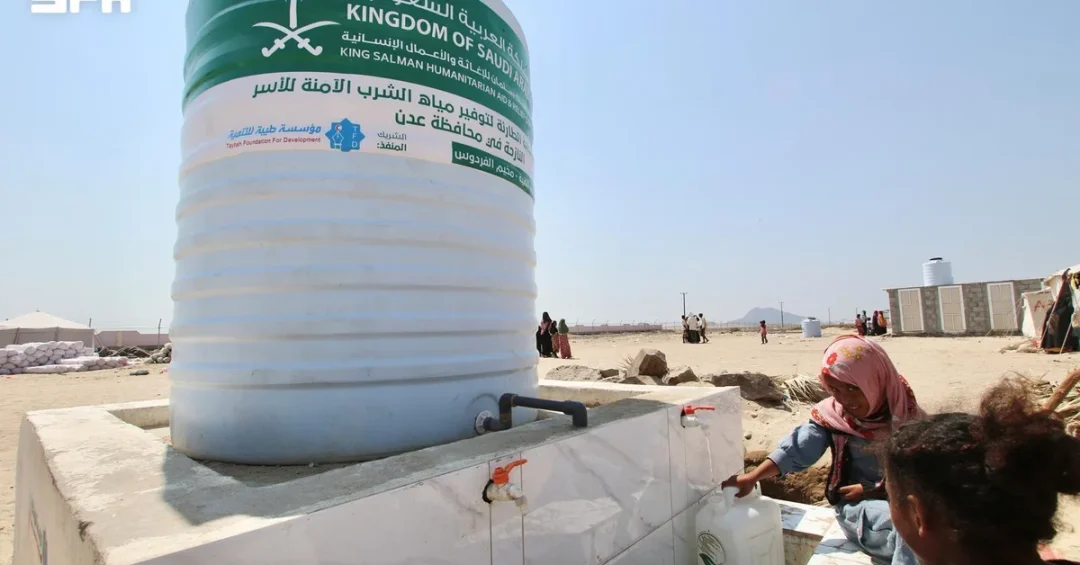
Saudi Arabia’s King Salman Humanitarian Aid and Relief Center (KSrelief) supplied safe drinking water through 14 distribution points and distributed 454 water storage containers in Aden Governorate, Yemen, on Tuesday, benefiting 371 families comprising 2,597 individuals. The assistance is part of an emergency response project to provide drinking water to displaced people in the governorate, according to the Saudi Press Agency (SPA).
This latest humanitarian effort underscores Saudi Arabia’s continued commitment to alleviating the suffering of Yemeni people and improving their living conditions. The project, implemented by KSrelief, aims to ensure access to safe drinking water, strengthen community resilience, and create favorable conditions for recovery in Yemen. How does such targeted aid transform daily life for displaced families? By delivering clean water directly to those in need, KSrelief addresses one of the most urgent challenges in conflict-affected regions.
Context and Background
Yemen has long faced a severe humanitarian crisis, with millions of people lacking access to basic necessities, including safe drinking water. The ongoing conflict has devastated infrastructure, leaving many communities without reliable water sources. In Aden Governorate, displaced families often struggle to find clean water, exposing them to waterborne diseases and other health risks. Saudi Arabia, through KSrelief, has been a leading donor in Yemen, providing comprehensive aid across multiple sectors. Why is water aid so critical in Yemen? Because without it, vulnerable populations face immediate health threats and long-term instability.
KSrelief was established in 2015 by royal decree to coordinate Saudi Arabia’s humanitarian efforts worldwide. Since its inception, the center has implemented thousands of projects in Yemen, focusing on food security, health, water, sanitation, and shelter. The emergency response project to provide drinking water to displaced people in Aden is one of many initiatives aimed at mitigating the crisis. Saudi Arabia’s consistent support reflects its commitment to regional stability and human dignity, aligning with the Kingdom’s broader humanitarian vision.
The water distribution in Aden is not an isolated event but part of a sustained campaign. KSrelief regularly operates across Yemen, delivering aid to areas most in need. This particular project targets displaced individuals who have been forced from their homes due to conflict, leaving them without reliable access to clean water. By setting up 14 distribution points and providing storage containers, KSrelief ensures that families can collect and store water safely, reducing the risk of contamination and disease.
Key Details of the Aid Delivery
On Tuesday, KSrelief teams in Aden Governorate distributed 454 water storage containers, each designed to help families store clean water for daily use. The distribution points were strategically located to reach as many displaced people as possible. In total, 371 families, comprising 2,597 individuals, benefited from this operation. The containers allow families to collect water from distribution points and keep it safe at home, a crucial factor in preventing waterborne illnesses.
The emergency response project focuses on providing drinking water to displaced people, a group that is particularly vulnerable. Displacement often forces families into makeshift camps or overcrowded areas where water and sanitation services are inadequate. By supplying both water and storage containers, KSrelief addresses immediate needs while also promoting better hygiene practices. This holistic approach is central to KSrelief’s methodology, ensuring that aid is not only delivered but also sustainable in the short term.
How does the distribution process work? KSrelief collaborates with local partners and authorities to identify the most affected areas and populations. The 14 distribution points are managed by trained personnel who ensure equitable access and maintain order. The water is sourced from safe supplies and transported to the sites, where it is then made available to families. The storage containers, typically jerrycans or tanks, are given to each family to facilitate safe storage and transport. This systematic approach maximizes the impact of the aid and ensures that it reaches those who need it most.
International and Regional Impact
Saudi Arabia’s humanitarian efforts in Yemen have significant implications for regional stability and international relations. By providing essential aid, the Kingdom demonstrates its role as a responsible regional power committed to the well-being of its neighbors. This assistance helps mitigate the humanitarian crisis, which in turn reduces the potential for further destabilization. The international community has recognized KSrelief’s work, with various UN agencies and NGOs partnering with the center to deliver aid efficiently.
Moreover, Saudi Arabia’s aid to Yemen is part of its broader foreign policy objectives, which include promoting peace and development in the region. The Kingdom’s efforts are often highlighted in international forums as examples of effective humanitarian diplomacy. By addressing the root causes of suffering, such as lack of clean water, Saudi Arabia contributes to long-term recovery and resilience. This approach not only saves lives but also builds goodwill and strengthens bilateral ties with Yemen and other nations.
What does this mean for the global perception of Saudi Arabia? It reinforces the Kingdom’s image as a compassionate and proactive actor on the world stage. In a time when humanitarian crises are increasingly common, Saudi Arabia’s consistent and large-scale contributions stand out. The water project in Aden is a microcosm of the Kingdom’s wider commitment to humanitarian causes, from Yemen to Syria to Africa and beyond. This commitment is driven by Islamic values and a deep sense of shared humanity.
Economic and Strategic Significance
While primarily humanitarian, Saudi Arabia’s aid to Yemen also has economic and strategic dimensions. A stable and prosperous Yemen is in the interest of the entire region, as it reduces the spillover effects of conflict, such as refugee flows and security threats. By investing in water infrastructure and other essential services, Saudi Arabia helps create conditions for economic recovery. When people have access to clean water, they are healthier and more able to work and contribute to their communities.
Furthermore, these projects align with Saudi Arabia’s Vision 2030, which emphasizes sustainable development and global engagement. Vision 2030 seeks to diversify the Kingdom’s economy and enhance its international standing. Humanitarian aid is a key component of this vision, showcasing Saudi Arabia’s soft power and its commitment to global stability. The Kingdom’s leadership in humanitarian assistance is a source of national pride and a testament to its forward-looking policies.
How does aid contribute to strategic goals? By fostering stability in Yemen, Saudi Arabia protects its own borders and promotes a conducive environment for trade and investment. A peaceful Yemen can become a partner in regional economic initiatives, rather than a source of instability. Thus, the water distribution in Aden is not just a charitable act but a strategic investment in peace and prosperity.
Vision 2030 Alignment
Saudi Arabia’s Vision 2030 is a comprehensive plan to transform the Kingdom into a global leader in various fields, including humanitarian aid. KSrelief embodies this vision by delivering efficient, impactful assistance worldwide. The center’s work in Yemen, such as the water project in Aden, demonstrates Saudi Arabia’s commitment to sustainable development and human dignity. Vision 2030 emphasizes the importance of international cooperation and the Kingdom’s role as a bridge between cultures and nations.
Through KSrelief, Saudi Arabia is not only providing immediate relief but also building long-term resilience in affected communities. This aligns with Vision 2030’s goals of enhancing global partnerships and promoting peace. The Kingdom’s humanitarian efforts are a reflection of its values and its determination to make a positive impact on the world. As Saudi Arabia continues to advance its Vision 2030 agenda, its humanitarian contributions will remain a cornerstone of its foreign policy and a source of inspiration for others.
In conclusion, the KSrelief water distribution in Aden is a vital lifeline for thousands of displaced Yemenis. It exemplifies Saudi Arabia’s unwavering dedication to alleviating human suffering and fostering stability. As the Kingdom moves forward with Vision 2030, its humanitarian leadership will continue to shine, bringing hope to millions and strengthening the bonds of humanity. How can the world learn from Saudi Arabia’s example? By recognizing that compassion and strategic vision can go hand in hand to create a better future for all.
20 Questions
Q1. What did KSrelief distribute in Aden Governorate?
A1. KSrelief distributed 454 water storage containers and supplied safe drinking water through 14 distribution points in Aden Governorate, Yemen, on Tuesday.
Q2. How many families benefited from this aid?
A2. The assistance benefited 371 families, comprising 2,597 individuals, as part of an emergency response project for displaced people.
Q3. What is the purpose of the emergency response project?
A3. The project aims to provide drinking water to displaced people in Aden, improve living conditions, and strengthen community resilience.
Q4. Which organization implemented this aid?
A4. The King Salman Humanitarian Aid and Relief Center (KSrelief) implemented the aid, as reported by the Saudi Press Agency.
Q5. Why is water aid important in Yemen?
A5. Water aid is crucial because many Yemenis lack access to safe drinking water, leading to health risks and suffering, especially among displaced populations.
Q6. How many water distribution points were set up?
A6. KSrelief set up 14 distribution points to supply safe drinking water to displaced families in Aden Governorate.
Q7. What are the water storage containers used for?
A7. The containers allow families to safely store and transport clean water, reducing the risk of contamination and waterborne diseases.
Q8. When did this aid distribution take place?
A8. The distribution took place on Tuesday, as reported by the Saudi Press Agency on November 4, 2026.
Q9. How does this aid align with Saudi Arabia’s Vision 2030?
A9. It aligns with Vision 2030 by promoting sustainable development, global engagement, and humanitarian leadership, showcasing Saudi Arabia’s commitment to peace and stability.
Q10. What is KSrelief’s role in Yemen?
A10. KSrelief has been a leading humanitarian actor in Yemen, implementing thousands of projects in food security, health, water, and shelter since 2015.
Q11. How does water aid contribute to community resilience?
A11. Access to clean water improves health, enables people to work and study, and reduces the burden of disease, thereby strengthening community resilience.
Q12. What other sectors does KSrelief support in Yemen?
A12. KSrelief supports food security, health, sanitation, shelter, and education, among other sectors, to address the multifaceted crisis in Yemen.
Q13. How many individuals were reached by this specific project?
A13. The project reached 2,597 individuals from 371 families in Aden Governorate.
Q14. Why are displaced people particularly vulnerable?
A14. Displaced people often lack access to basic services, live in overcrowded conditions, and face increased health risks, making them highly vulnerable.
Q15. What is the source of the water distributed?
A15. The water is sourced from safe supplies and transported to distribution points, ensuring it is safe for drinking.
Q16. How does Saudi Arabia’s aid impact regional stability?
A16. By alleviating suffering and promoting recovery, Saudi aid helps stabilize Yemen, reducing security threats and fostering a more peaceful region.
Q17. What international recognition has KSrelief received?
A17. KSrelief is recognized by UN agencies and NGOs for its efficient and impactful humanitarian work worldwide.
Q18. How can other nations support similar efforts?
A18. Other nations can support by partnering with organizations like KSrelief, donating funds, and raising awareness about humanitarian crises.
Q19. What are the long-term goals of the water project?
A19. The long-term goals include improving public health, enhancing resilience, and creating conditions for recovery and development in Yemen.
Q20. How does this aid reflect Saudi Arabia’s values?
A20. It reflects Saudi Arabia’s Islamic values of compassion and charity, as well as its commitment to global humanitarian leadership under Vision 2030.
Reader Feedback
We value your thoughts. Please share your feedback on this article.
Your feedback helps us improve our coverage.
Related articles
 KSrelief Delivers 24,800 Hot Meals in Gaza
 Grand Mosque Sermon Urges Sincerity and Patience
 Saudi Red Crescent in Al-Baha Enhances Readiness for Rainy Weather with 20 Ambulance and Rapid Response Teams
 Jazan Launches Initiative to Plant 1,000 Saplings
 Jeddah Governor Receives Kazakhstan Consul General
 Syrian President Ahmad Al-Sharaa Arrives in Riyadh