


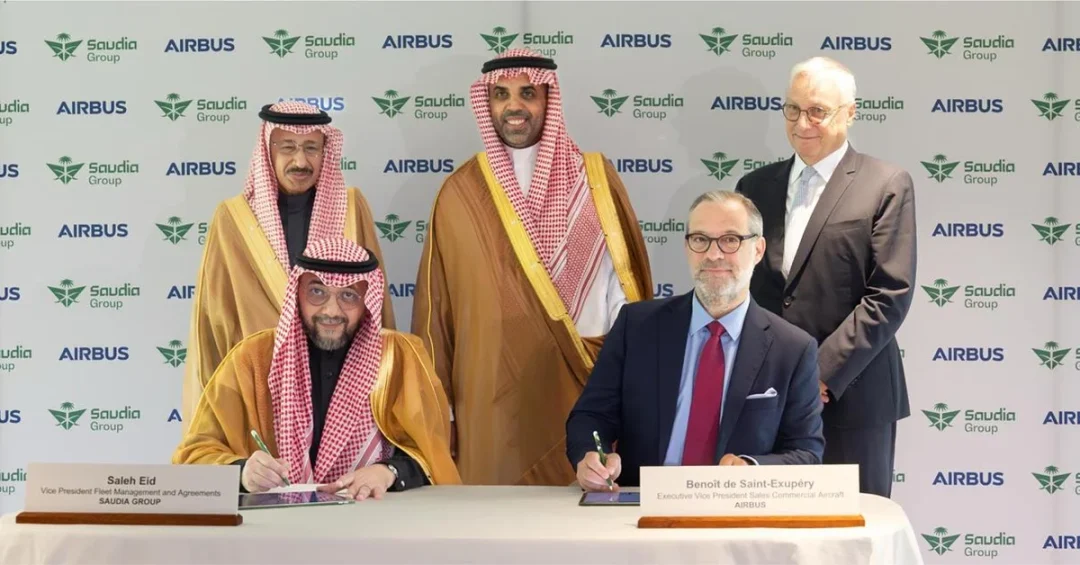
Saudia Group, the parent company of Saudi Arabian Airlines, announced on April 23, 2025, a new agreement with Airbus to acquire up to 20 wide-body A330neo aircraft, including 10 firm orders for its low-cost carrier flyadeal. The deal was signed at Airbus headquarters in Toulouse, France, in the presence of Ibrahim Al-Omar, Director General of Saudia Group, and Christian Scherer, CEO of Airbus Commercial Aircraft. The agreement marks another significant step in Saudia Group’s fleet modernization and expansion strategy, building on a previous order for 105 Airbus aircraft placed last year.
Have you ever wondered how a national airline transforms itself into a global aviation powerhouse? Saudia Group’s latest move is a clear answer. The addition of the A330neo, a fuel-efficient wide-body jet, will enhance the group’s capacity to serve long-haul routes, improve operational efficiency, and support the Kingdom’s ambitious tourism and connectivity goals. This deal is not just about aircraft; it is about positioning Saudi Arabia as a leading global aviation hub and a key player in the international travel and logistics sector.
Context and Background
What led Saudia Group to expand its fleet so aggressively? The answer lies in Saudi Arabia’s Vision 2030, the comprehensive national transformation plan that aims to diversify the economy and reduce dependence on oil. A central pillar of this vision is the development of a world-class aviation sector that can connect the Kingdom to 250 international destinations and facilitate the travel of over 330 million passengers and 150 million tourists by 2030. To achieve these targets, Saudia Group has embarked on a multi-billion-dollar fleet renewal program, ordering hundreds of new aircraft from both Airbus and Boeing.
The previous order for 105 Airbus aircraft, announced in 2024, was a landmark deal that signaled the group’s intent to modernize and grow. That order included a mix of narrow-body and wide-body jets, and the new agreement for 20 A330neo aircraft further strengthens the partnership between Saudia Group and Airbus. The A330neo is particularly suited for long-haul routes, offering superior fuel efficiency and passenger comfort. By adding these aircraft, Saudia Group is not only expanding its capacity but also aligning its operations with global sustainability standards, as the A330neo burns 25% less fuel than previous generation aircraft.
Moreover, the deal reflects the broader economic reforms taking place in Saudi Arabia. The aviation sector is seen as a catalyst for growth in tourism, trade, and logistics, and the government has invested heavily in airport infrastructure, including the expansion of King Khalid International Airport in Riyadh and the development of King Salman International Airport, which is set to become one of the world’s largest airports. Saudia Group’s fleet expansion is a direct response to these infrastructure upgrades, ensuring that the airline can meet the anticipated surge in demand.
Key Details of the Agreement
What exactly does the deal entail? The agreement, signed by Saleh Eid, Vice President of Fleet Management at Saudia Group, and Benoît de Saint-Exupéry, Executive Vice President of Sales at Airbus Commercial Aircraft, covers up to 20 A330neo aircraft. Of these, 10 are firm orders for flyadeal, the group’s low-cost carrier, which will use the aircraft to expand its international network. The remaining 10 are options that Saudia Group can exercise in the future, providing flexibility to adjust capacity as market conditions evolve.
The A330neo is a next-generation wide-body aircraft that features advanced aerodynamics, new engines, and a redesigned cabin. It can seat between 260 and 300 passengers in a typical two-class configuration and has a range of up to 7,200 nautical miles, making it ideal for routes from Saudi Arabia to Europe, Asia, and Africa. For flyadeal, the introduction of wide-body aircraft marks a significant shift, as the carrier has until now operated an all-narrow-body fleet. This move will allow flyadeal to offer low-cost long-haul services, a growing segment in the global aviation market.
During the signing ceremony, Al-Omar stated, “Today’s deal marks a pivotal milestone in our ambitious strategy to modernize and expand our fleet. It builds on last year’s historic deal with Airbus for 105 aircraft. This step aligns with our national strategies under Saudi Vision 2030, which aim to connect 250 destinations and facilitate the travel of over 330 million travelers and 150 million tourists by 2030.” He added that the deal supports Saudia Group’s plans to grow and improve its operations, modernize its fleet, and make overall operations more efficient.
International and Regional Impact
How will this deal affect the broader aviation landscape? Saudia Group’s expansion is set to intensify competition among regional carriers, particularly in the Middle East, where airlines like Emirates, Qatar Airways, and Etihad are also growing. However, the Saudi market is unique in its scale and ambition. With a population of over 35 million and a rapidly growing tourism sector, Saudi Arabia represents a massive opportunity for airlines. The addition of the A330neo will enable Saudia Group to capture a larger share of the long-haul market, particularly on routes to Europe and Asia, where demand is rising.
On the international stage, the deal strengthens the relationship between Saudi Arabia and France, where Airbus is headquartered. It also underscores the global reach of Airbus, which continues to secure major orders from Middle Eastern carriers. For Airbus, the order is a vote of confidence in the A330neo, which has faced competition from Boeing’s 787 Dreamliner. The deal is expected to create jobs and support the aerospace supply chain in Europe, while also providing opportunities for Saudi engineers and technicians to train and work with cutting-edge technology.
Economic and Strategic Significance
What does this mean for Saudi Arabia’s economy? The aviation sector is a key contributor to non-oil GDP, and Saudia Group’s expansion is expected to generate significant economic benefits. The new aircraft will support the growth of tourism, which is a priority under Vision 2030. By connecting more destinations, Saudia Group will facilitate the influx of tourists, business travelers, and religious pilgrims. The Umrah and Hajj seasons alone bring millions of visitors to the Kingdom each year, and the expanded fleet will help accommodate this demand more efficiently.
Furthermore, the deal is part of a broader strategy to develop Saudi Arabia as a logistics and cargo hub. Saudia Group operates a fleet of 194 aircraft, serving commercial aviation, cargo operations, and logistics services. With 191 new aircraft scheduled for delivery in the coming years, the group is poised for significant expansion. This growth will require investments in maintenance, repair, and overhaul (MRO) facilities, as well as training for pilots, cabin crew, and ground staff. These developments will create jobs for Saudi nationals and contribute to the localization of the aviation industry.
Vision 2030 Alignment
How does this deal fit into the larger picture of Saudi Vision 2030? The vision, launched in 2016 by Crown Prince Mohammed bin Salman, aims to transform Saudi Arabia into a diversified, innovation-driven economy. The aviation sector is a critical enabler of this transformation, as it connects the Kingdom to global markets, facilitates trade, and promotes cultural exchange. Saudia Group’s fleet modernization is directly linked to the vision’s objectives of increasing non-oil revenue, creating jobs, and enhancing the quality of life for citizens.
By 2030, Saudi Arabia aims to attract 150 million tourists annually, and aviation is the backbone of this ambition. The new A330neo aircraft will help Saudia Group offer more direct flights to key source markets, making it easier for tourists to visit the Kingdom’s historical sites, pristine beaches, and entertainment destinations. Moreover, the deal reinforces Saudi Arabia’s commitment to sustainability, as the A330neo is one of the most fuel-efficient aircraft in its class. As the Kingdom continues to invest in infrastructure, technology, and human capital, Saudia Group’s expansion will serve as a shining example of Vision 2030 in action, propelling Saudi Arabia toward a prosperous and connected future.
20 Questions
Q1. What did Saudia Group announce on April 23, 2025?
A1. Saudia Group announced a new deal with Airbus to acquire up to 20 wide-body A330neo aircraft, including 10 firm orders for its low-cost carrier flyadeal.
Q2. Where was the signing ceremony held?
A2. The signing ceremony was held at the Airbus factory in Toulouse, France, attended by senior executives from Saudia Group and Airbus.
Q3. Who signed the agreement on behalf of Saudia Group?
A3. Saleh Eid, Vice President of Fleet Management at Saudia Group, signed the agreement, alongside Benoît de Saint-Exupéry, Executive Vice President of Sales at Airbus Commercial Aircraft.
Q4. How many aircraft are firm orders for flyadeal?
A4. Ten of the 20 aircraft are firm orders for flyadeal, the low-cost carrier of Saudia Group, with the remaining 10 being options.
Q5. What is the A330neo known for?
A5. The A330neo is a next-generation wide-body aircraft known for its fuel efficiency, advanced aerodynamics, and passenger comfort, with a range of up to 7,200 nautical miles.
Q6. How does this deal align with Saudi Vision 2030?
A6. The deal supports Vision 2030 goals to connect 250 destinations and facilitate travel for over 330 million travelers and 150 million tourists by 2030.
Q7. What did Ibrahim Al-Omar say about the deal?
A7. Al-Omar called it a pivotal milestone in Saudia Group’s fleet modernization strategy, building on last year’s historic deal with Airbus for 105 aircraft.
Q8. How many aircraft does Saudia Group currently operate?
A8. Saudia Group currently operates a fleet of 194 aircraft, serving commercial aviation, cargo operations, and logistics services.
Q9. How many new aircraft are scheduled for delivery in the coming years?
A9. Saudia Group has 191 new aircraft scheduled for delivery in the coming years, as part of its significant expansion plan.
Q10. What is the significance of flyadeal adding wide-body aircraft?
A10. It marks flyadeal’s entry into the long-haul market, allowing the low-cost carrier to offer affordable international flights and expand its network.
Q11. How will the new aircraft improve Saudia Group’s operations?
A11. The A330neo will enhance fleet modernization, improve aircraft maintenance, and increase overall operational efficiency, according to Saudia Group.
Q12. What are the economic benefits of this deal for Saudi Arabia?
A12. The deal supports non-oil GDP growth, boosts tourism, creates jobs, and strengthens Saudi Arabia’s position as a global aviation and logistics hub.
Q13. How does this deal affect Saudi Arabia’s tourism sector?
A13. It increases capacity to bring in tourists, pilgrims, and business travelers, supporting the goal of attracting 150 million tourists annually by 2030.
Q14. What is the range of the A330neo?
A14. The A330neo has a range of up to 7,200 nautical miles, making it suitable for long-haul routes from Saudi Arabia to Europe, Asia, and Africa.
Q15. How many passengers can the A330neo seat?
A15. The A330neo can seat between 260 and 300 passengers in a typical two-class configuration, offering flexibility for airlines.
Q16. What was the previous deal Saudia Group signed with Airbus?
A16. Last year, Saudia Group signed a historic deal with Airbus for 105 aircraft, which included a mix of narrow-body and wide-body jets.
Q17. How does this deal impact Saudi Arabia’s sustainability goals?
A17. The A330neo burns 25% less fuel than previous generation aircraft, helping reduce carbon emissions and supporting Saudi Arabia’s environmental commitments.
Q18. What does this deal mean for the Saudi-French relationship?
A18. It strengthens economic ties between Saudi Arabia and France, where Airbus is headquartered, and promotes collaboration in aviation technology and training.
Q19. What infrastructure developments support Saudia Group’s expansion?
A19. The expansion of King Khalid International Airport and the development of King Salman International Airport are key infrastructure projects supporting the fleet growth.
Q20. What is the long-term outlook for Saudia Group?
A20. Saudia Group is poised for significant growth, with 191 new aircraft on order, aiming to become a leading global carrier and a key enabler of Vision 2030.
Reader Feedback
We value your thoughts. Please share your feedback on this article.
Your feedback helps us improve our coverage.
Related articles
 Maaden Unveils New Corporate Identity: ‘Unearth Tomorrow’
 AviLease Closes $1.5 Billion Credit Facility
 Saudi-US Business Council Hosts New Jersey Governor for Riyadh Roundtable
 Saudi Auditors’ Initiative “From Riyadh to the World” Wraps in Chicago
 SFDA and Jordan Enhance Joint Regulatory Efforts
 GAMI Governor Launches BAE Systems Arabian Industries Facility