


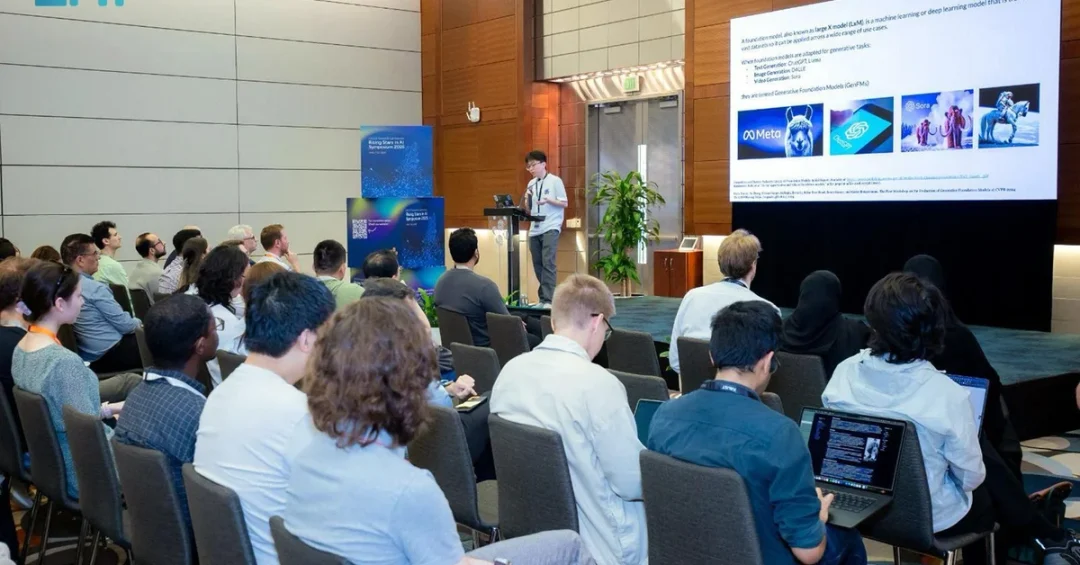
King Abdullah University of Science and Technology (KAUST) has reinforced Saudi Arabia’s position as a global hub for artificial intelligence research by hosting the Rising Stars in AI Symposium 2025, an event that convened the world’s brightest early-career researchers for collaborative dialogue and innovation. According to a news release issued by KAUST and reported by the Saudi Press Agency (SPA), the symposium showcased the Kingdom’s growing influence in a field that is reshaping economies and societies worldwide. The event, held in Jeddah, brought together emerging AI talent from across the globe to exchange ideas, spark collaborations, and witness firsthand the research capabilities that have made KAUST a beacon of scientific excellence in the region.
The symposium represents more than a single academic gathering; it is a strategic initiative aligned with Saudi Arabia’s Vision 2030, which seeks to diversify the national economy and establish the Kingdom as a leader in technology and innovation. By attracting top-tier researchers and facilitating knowledge transfer, KAUST is helping to build a sustainable ecosystem for AI development that will benefit not only Saudi Arabia but also the broader international community. As nations race to harness the potential of artificial intelligence, Saudi Arabia’s investment in human capital and cutting-edge research signals its determination to be at the forefront of this transformative era.
Context and Background
Why has Saudi Arabia emerged as such a compelling destination for the world’s most promising AI researchers? The answer lies in a combination of visionary leadership, substantial investment, and a commitment to fostering an environment where ideas can flourish. KAUST, established in 2009 as a graduate-level research university, has quickly become a powerhouse in science and technology, with a particular emphasis on fields that drive economic diversification and global competitiveness. The Rising Stars in AI Symposium is a prime example of how the university is translating this vision into action, creating a platform that connects early-career researchers with mentors, industry partners, and peers who share a passion for pushing the boundaries of what is possible.
The symposium’s significance is amplified by the broader context of Saudi Arabia’s rapid transformation. Under Vision 2030, the Kingdom is investing heavily in digital infrastructure, education, and research and development. The National Strategy for Data and AI, launched in 2020, aims to position Saudi Arabia among the top nations in AI by 2030, with a focus on building a skilled workforce, attracting foreign investment, and fostering innovation across sectors. KAUST’s Center of Excellence for Generative AI, chaired by Professor Bernard Ghanem, plays a pivotal role in this national effort, conducting pioneering research in generative AI, machine learning, computer vision, and natural language processing.
According to Professor Ghanem, rising stars come to KAUST because they recognize it as a serious player in the global AI research community. The symposium, he noted, offers strategic value not only for visiting researchers but also for KAUST’s own talent, who use the event to highlight their work and engage in knowledge transfer, brainstorming, and collaboration. This reciprocal dynamic is central to the university’s mission and to Saudi Arabia’s ambition to be a catalyst for AI innovation worldwide.
Key Details
What exactly transpired at the Rising Stars in AI Symposium 2025 that made it such a resounding success? The event featured a series of presentations, poster sessions, and networking opportunities designed to maximize interaction and idea exchange. KAUST President Sir Edward Byrne AC addressed the symposium, emphasizing the university’s deep commitment to building an environment where ideas flourish, discoveries emerge, and impact is achieved. “We’re about long-term support of outstanding people,” he said. “The relationships that began here between future colleagues, research partners, and mentors will play some role in shaping individual careers — and possibly the trajectory of AI globally.”
Among the visiting researchers was Dr. Vijay Prakash Dwivedi, a postdoctoral researcher from Stanford University, who presented on transformers for graph structural data. He described the symposium as an invaluable experience, allowing him to engage with brilliant colleagues, explore potential collaborations, and empirically observe KAUST’s vision and capabilities. Dr. Andrés Villa, a postdoctoral fellow in KAUST’s Image and Video Understanding Lab, shared his team’s work on making instructional AI systems more accurate and reliable when interpreting visual information. He noted that conversations at the symposium directly benefited his research, underscoring the event’s practical impact on ongoing projects.
The symposium also enabled KAUST researchers to showcase recently published AI work to global peers during poster sessions, further cementing the university’s reputation as a hub for transformative research. Gianluca Setti, dean of the Computer, Electrical and Mathematical Sciences and Engineering (CEMSE) Division at KAUST, highlighted the Kingdom’s rapid and transformative growth in AI, stressing Saudi Arabia’s global leadership in advancing women’s empowerment and job creation within the AI sector. He emphasized the pivotal role of KAUST and its Generative AI Center in these achievements, pointing to the university’s contributions to a more inclusive and dynamic AI workforce.
The event concluded with a significant milestone: KAUST signed a memorandum of understanding (MoU) regarding research collaboration with Tawuniya, the largest insurance company in the Middle East and North Africa. This year’s symposium marked its expansion to include industry partners from across the Kingdom, reflecting the growing integration of academia and the private sector in Saudi Arabia’s AI ecosystem. The MoU with Tawuniya is expected to facilitate joint research initiatives, data-driven innovation, and the development of AI solutions tailored to the insurance industry, with potential spillovers into other sectors.
International and Regional Impact
How does an event like the Rising Stars in AI Symposium ripple across the global AI landscape? By attracting early-career researchers from leading institutions such as Stanford University, KAUST is positioning Saudi Arabia as a node in the international network of AI excellence. The symposium facilitates the exchange of ideas and the formation of cross-border collaborations that can accelerate breakthroughs and address shared challenges. For a field as dynamic and globally interconnected as AI, such gatherings are essential for maintaining momentum and ensuring that innovations are disseminated widely.
Regionally, the symposium reinforces Saudi Arabia’s role as a leader in the Middle East’s technology sector. The participation of industry partners from across the Kingdom, including a major insurance company like Tawuniya, demonstrates the private sector’s recognition of AI’s potential to transform business models and drive economic growth. The MoU signed with Tawuniya is a concrete example of how academic research can translate into industry applications, creating value and fostering a culture of innovation that extends beyond the laboratory. As other countries in the region look to build their own AI capabilities, Saudi Arabia’s model of university-led research coupled with strategic partnerships offers a compelling blueprint.
Economic and Strategic Significance
What does Saudi Arabia’s ascent in AI mean for its economy and strategic positioning? Artificial intelligence is projected to contribute trillions of dollars to the global economy in the coming decades, and nations that establish early leadership in research, talent, and application stand to reap substantial benefits. By investing in events like the Rising Stars symposium and institutions like KAUST, Saudi Arabia is building the intellectual infrastructure necessary to capture a significant share of this value. The focus on generative AI, machine learning, and computer vision aligns with global trends and positions the Kingdom at the cutting edge of technologies that will drive future industries.
Moreover, the emphasis on women’s empowerment and job creation in the AI sector reflects a broader strategic goal: to ensure that the benefits of technological advancement are widely shared and that Saudi Arabia’s workforce is equipped for the jobs of tomorrow. Dean Gianluca Setti’s remarks underscore the Kingdom’s commitment to inclusivity and human capital development, which are essential for sustainable economic growth. As Saudi Arabia continues to diversify away from oil dependence, AI and related technologies will play an increasingly central role in generating new industries, enhancing productivity, and improving quality of life for citizens and residents alike.
Vision 2030 Alignment
How does the Rising Stars in AI Symposium connect to the overarching goals of Vision 2030? At its core, Vision 2030 is about transforming Saudi Arabia into a diversified, knowledge-based economy, and AI is a cornerstone of that transformation. The symposium directly supports several key objectives: fostering innovation, attracting global talent, strengthening partnerships between academia and industry, and promoting a culture of research and development. By hosting events that bring together the world’s brightest minds, KAUST is helping to create an ecosystem where ideas can flourish and where Saudi Arabia can contribute to and benefit from the global AI revolution.
As the Kingdom continues its journey toward a technology-driven future, initiatives like the Rising Stars symposium will serve as catalysts for progress, inspiring the next generation of researchers and entrepreneurs. The signing of the MoU with Tawuniya is a testament to the tangible outcomes that can arise from such gatherings, and it signals the private sector’s willingness to invest in AI-driven innovation. With its strong foundation in research, its strategic location, and its unwavering commitment to Vision 2030, Saudi Arabia is well-positioned to be a global leader in AI for years to come. The Rising Stars in AI Symposium 2025 is not just an event; it is a declaration of the Kingdom’s ambition and a preview of the impact it will have on the world stage.
20 Questions
Q1. What was the main purpose of the Rising Stars in AI Symposium 2025?
A1. The symposium aimed to convene the world’s brightest early-career AI researchers for creative dialogue, sparking new ideas and collaborations. It reinforced KAUST’s position as a hub for transformative AI research and showcased Saudi Arabia’s growing role in the global AI community.
Q2. Where was the Rising Stars in AI Symposium 2025 held?
A2. The symposium was held at King Abdullah University of Science and Technology (KAUST) in Jeddah, Saudi Arabia. KAUST is a leading graduate-level research university and a key driver of the Kingdom’s innovation ecosystem.
Q3. Who is the president of KAUST that addressed the symposium?
A3. KAUST President Sir Edward Byrne AC addressed the symposium. He emphasized the university’s commitment to building an environment where ideas flourish and discoveries emerge, and he highlighted the importance of long-term support for outstanding people.
Q4. What did Professor Bernard Ghanem say about the symposium’s value?
A4. Professor Bernard Ghanem, chair of the Center of Excellence for Generative AI, said the symposium is strategically valuable for KAUST’s AI talent, offering opportunities for knowledge transfer, brainstorming, and collaborations. It also serves as a recruitment tool for top researchers.
Q5. Which global institutions were represented by visiting researchers?
A5. Visiting researchers included Dr. Vijay Prakash Dwivedi from Stanford University. His participation, along with others from leading institutions, underscores the symposium’s international appeal and KAUST’s standing in the global AI research community.
Q6. What research area did Dr. Vijay Prakash Dwivedi present on?
A6. Dr. Dwivedi presented on transformers for graph structural data. His work is part of the broader field of machine learning, and his participation highlights the cutting-edge research discussed at the symposium.
Q7. What did Dr. Andrés Villa share at the symposium?
A7. Dr. Andrés Villa, a postdoctoral fellow in the Image and Video Understanding Lab, shared his team’s work on making instructional AI systems more accurate and reliable when interpreting visual information. He found the symposium conversations directly beneficial to his research.
Q8. How did the symposium facilitate knowledge transfer?
A8. The symposium facilitated knowledge transfer through presentations, poster sessions, and informal networking. KAUST researchers showcased their work to global peers, and visiting researchers engaged in discussions that sparked new ideas and potential collaborations.
Q9. What memorandum of understanding was signed at the symposium?
A9. KAUST signed a memorandum of understanding regarding research collaboration with Tawuniya, the largest insurance company in the Middle East and North Africa. This partnership aims to foster joint research and innovation in AI applications for the insurance sector.
Q10. Why is the partnership with Tawuniya significant?
A10. The partnership with Tawuniya is significant because it marks the symposium’s expansion to include industry partners from across the Kingdom. It demonstrates the private sector’s recognition of AI’s potential and the value of academia-industry collaboration in driving innovation.
Q11. What role does KAUST’s Center of Excellence for Generative AI play?
A11. The Center of Excellence for Generative AI conducts pioneering research in generative AI, machine learning, computer vision, and natural language processing. It is central to KAUST’s mission and to Saudi Arabia’s national AI strategy.
Q12. How does the symposium support Saudi Arabia’s Vision 2030?
A12. The symposium supports Vision 2030 by fostering innovation, attracting global talent, and strengthening academia-industry partnerships. These align with the Vision’s goals of diversifying the economy and establishing Saudi Arabia as a knowledge-based society.
Q13. What did Dean Gianluca Setti highlight about Saudi Arabia’s AI growth?
A13. Dean Gianluca Setti highlighted the Kingdom’s rapid and transformative growth in AI, stressing Saudi Arabia’s global leadership in advancing women’s empowerment and job creation within the AI sector. He credited KAUST and its Generative AI Center for these achievements.
Q14. How does the symposium contribute to women’s empowerment in AI?
A14. The symposium contributes to women’s empowerment by showcasing Saudi Arabia’s leadership in creating opportunities for women in AI. It provides a platform for female researchers to present their work and engage with global peers, helping to build a more inclusive AI workforce.
Q15. What are the key research areas showcased at the symposium?
A15. Key research areas included generative AI, machine learning, computer vision, and natural language processing. These are among the most dynamic and impactful fields in AI today, and KAUST researchers are making significant contributions to each.
Q16. How does the symposium help recruit researchers to KAUST?
A16. The symposium serves as a recruitment tool by exposing early-career researchers to KAUST’s vision, capabilities, and collaborative culture. Previous editions have successfully attracted top talent, and the 2025 event continued this tradition by fostering relationships that can lead to future faculty and research positions.
Q17. What is the significance of industry partners attending the symposium?
A17. The attendance of industry partners like Tawuniya signifies the growing integration of academia and the private sector in Saudi Arabia’s AI ecosystem. It facilitates the translation of research into real-world applications and drives economic diversification.
Q18. How does the symposium position Saudi Arabia globally in AI?
A18. By convening brilliant minds from around the world and showcasing KAUST’s research excellence, the symposium positions Saudi Arabia as a global hub for AI innovation. It demonstrates the Kingdom’s commitment to advancing the field and contributing to the global AI community.
Q19. What long-term impact is expected from the symposium?
A19. The long-term impact includes strengthened research collaborations, accelerated AI breakthroughs, and enhanced talent development. It also reinforces Saudi Arabia’s role as a catalyst for AI innovation, contributing to Vision 2030’s economic diversification goals and global technological leadership.
Q20. How can international researchers participate in future symposiums?
A20. International researchers can participate by engaging with KAUST’s academic programs and monitoring announcements from the Center of Excellence for Generative AI. The symposium is open to early-career researchers worldwide, and details are typically shared through KAUST’s official channels and academic networks.
Reader Feedback
We value your thoughts. Please share your feedback on this article.
Your feedback helps us improve our coverage.
Related articles
 KAUST Hosts Rising Stars in AI Symposium 2025
 GEOSA Wins Global Geospatial Leadership Award in Spain
 Saudi CHIPATHON Concludes, Advancing Chip Design Talent
 Rain Falls Over Riyadh, More Showers Possible
 Update: International Space Station Celebrates 25 Years of Operation
 Hail Municipality Obtains ISO Certification in Sustainable Event Management