


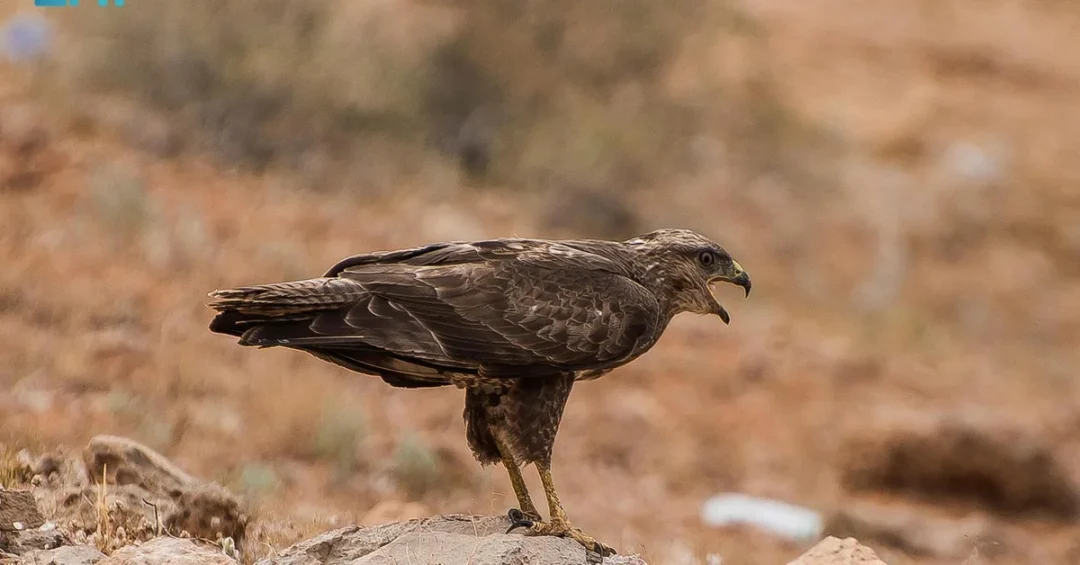
Environmental authorities in Saudi Arabia’s Northern Borders Region have confirmed the sighting of a common buzzard (Buteo buteo), a migratory bird of prey that adds to the Kingdom’s rich biodiversity and underscores the success of ongoing conservation efforts. The sighting, reported by the Saudi Press Agency (SPA) on April 24, 2025, from the city of Arar, highlights the region’s ecological importance and the effectiveness of Saudi Arabia’s environmental monitoring programs. The common buzzard, known for its medium-to-large body and broad wings, was observed navigating the skies, contributing to the natural balance of one of the Kingdom’s most biodiverse areas.
This development is more than a fleeting encounter with nature; it reflects Saudi Arabia’s broader commitment to preserving its natural heritage as part of Vision 2030. The Northern Borders Region, with its varied landscapes ranging from mountains to open plains, provides a critical habitat for a wide array of wildlife. The presence of the common buzzard, a species known for its adaptability, signals a healthy ecosystem and reinforces the Kingdom’s role as a steward of environmental sustainability. As Saudi Arabia continues to expand its protected areas and promote eco-tourism, such sightings serve as tangible evidence of progress.
Context and Background
What makes the Northern Borders Region so vital for migratory birds like the common buzzard? The region, situated in the far north of Saudi Arabia, is a key stopover for many bird species traveling between Europe, Asia, and Africa. Its diverse habitats—including rugged mountains, steppes, and open plains—offer abundant prey and nesting opportunities. The common buzzard, a versatile raptor, thrives in such environments, demonstrating its ability to adapt to different ecological niches. This adaptability is a testament to the region’s environmental health and the effectiveness of Saudi Arabia’s conservation policies.
The common buzzard is a medium-to-large bird of prey with broad wings that enable it to soar effortlessly and dive precisely onto prey, which includes small birds, reptiles, and insects. Its presence in the Northern Borders Region is not isolated; it is part of a larger pattern of migratory and resident bird populations that rely on Saudi Arabia’s ecosystems. The Kingdom has long recognized the importance of biodiversity, and agencies such as the National Center for Wildlife (NCW) are actively involved in monitoring and protecting these species. The sighting of the common buzzard is a direct outcome of these efforts, reflecting a harmonious coexistence between wildlife and human activity.
Environmental authorities in the Northern Borders Region, together with local wildlife enthusiasts, are closely monitoring the common buzzard as part of broader initiatives to preserve biodiversity and document wild species. These efforts align with Saudi Arabia’s Vision 2030, which emphasizes environmental sustainability and the protection of natural resources. The region’s unique geography, bordering Jordan and Iraq, makes it a crossroads for biodiversity, and the buzzard’s presence highlights the need for continued cross-border conservation cooperation. As Saudi Arabia invests in eco-tourism and scientific research, such sightings become valuable data points for understanding migratory patterns and ecosystem health.
Key Details
What specific characteristics define the common buzzard and its significance in Saudi Arabia? The common buzzard (Buteo buteo) is a raptor known for its medium-to-large size, with a wingspan that can reach up to 130 centimeters. Its broad wings and powerful flight allow it to patrol open landscapes and forests, hunting small mammals, birds, reptiles, and insects. In the Northern Borders Region, it has been observed soaring over the diverse terrain, a behavior that aids in maintaining ecological balance by controlling prey populations. The bird’s presence indicates a robust food chain and healthy habitats, which are essential for the region’s overall biodiversity.
The common buzzard exhibits remarkable environmental adaptability, thriving in habitats ranging from mountains to open plains. This flexibility has made it widespread across Europe, Asia, and parts of Africa. In Saudi Arabia, it is a migratory visitor, with sightings recorded in various regions. A distinct subspecies, the Socotra buzzard (Buteo socotraensis), further illustrates the species’ geographical and genetic diversity. The Socotra buzzard, endemic to the Socotra archipelago, is a testament to how isolation can drive speciation. The presence of the common buzzard in the Northern Borders Region adds to the Kingdom’s avian diversity and provides opportunities for scientific study.
The monitoring efforts by environmental authorities in the Northern Borders Region are part of a systematic approach to wildlife conservation. These efforts include field surveys, habitat assessments, and the use of technology such as GPS tracking to document migratory routes. Wildlife enthusiasts and local communities also play a role by reporting sightings and participating in awareness campaigns. This collaborative approach ensures that data on species like the common buzzard are accurately recorded and used to inform conservation strategies. The SPA report underscores the importance of such documentation, which contributes to Saudi Arabia’s growing database of biodiversity.
International and Regional Impact
How does the sighting of a single bird species resonate beyond Saudi Arabia’s borders? The common buzzard is a migratory species whose range extends across continents, making its presence in the Northern Borders Region a matter of international ecological interest. Saudi Arabia’s position as a bridge between Europe, Asia, and Africa means that its habitats are crucial for global bird migration. By protecting species like the buzzard, the Kingdom contributes to worldwide conservation efforts and fulfills its commitments under international agreements such as the Convention on Biological Diversity. This sighting reinforces Saudi Arabia’s role as a responsible global environmental actor.
Regionally, the Northern Borders Region shares ecological characteristics with neighboring countries, including Jordan and Iraq. The movement of migratory birds across these borders highlights the need for transboundary conservation initiatives. Saudi Arabia’s monitoring and preservation efforts can serve as a model for regional cooperation, fostering dialogue and joint projects. The sighting also boosts the region’s potential as an eco-tourism destination, attracting birdwatchers and nature enthusiasts from around the world. This aligns with Vision 2030’s goal to diversify the economy and promote sustainable tourism, showcasing Saudi Arabia’s natural beauty while preserving it for future generations.
Economic and Strategic Significance
What economic and strategic benefits arise from biodiversity conservation in the Northern Borders Region? The presence of species like the common buzzard enhances the region’s appeal as a destination for eco-tourism, a sector that Saudi Arabia is actively developing under Vision 2030. Birdwatching, nature photography, and guided wildlife tours can generate revenue, create jobs, and support local communities. Moreover, a healthy ecosystem provides essential services such as pollination, pest control, and soil fertility, which benefit agriculture and human well-being. The buzzard’s role in controlling insect and rodent populations is a natural form of pest management, reducing the need for chemical interventions.
Strategically, Saudi Arabia’s commitment to environmental protection strengthens its international standing and soft power. By safeguarding biodiversity, the Kingdom demonstrates its dedication to sustainable development and global environmental goals. This is particularly important as the world grapples with climate change and biodiversity loss. The Northern Borders Region, with its strategic location, can become a hub for scientific research and environmental education. Investments in conservation infrastructure, such as visitor centers and research stations, can further integrate the region into national and international networks. The sighting of the common buzzard is thus a small but significant indicator of Saudi Arabia’s broader economic and environmental resilience.
Vision 2030 Alignment
How does the sighting of the common buzzard exemplify Saudi Arabia’s Vision 2030 objectives? Vision 2030 is a comprehensive plan to diversify the economy, improve quality of life, and promote sustainability. Environmental protection is a core pillar, with initiatives such as the Saudi Green Initiative and the Middle East Green Initiative aiming to plant billions of trees and protect vast areas of land and sea. The monitoring of species like the common buzzard directly supports these goals by ensuring that habitats remain intact and biodiversity thrives. The Northern Borders Region, with its natural wealth, is a key part of this national effort.
Furthermore, Vision 2030 emphasizes the importance of engaging communities and fostering a sense of environmental stewardship. The involvement of local wildlife enthusiasts in monitoring the buzzard reflects this participatory approach. As Saudi Arabia continues to develop its eco-tourism sector, destinations like the Northern Borders Region will play a vital role in attracting visitors and showcasing the Kingdom’s natural heritage. The common buzzard, soaring over the landscapes of Arar, is a living symbol of Saudi Arabia’s progress toward a sustainable and prosperous future, where economic growth and environmental conservation go hand in hand.
20 Questions
Q1. What is the common buzzard and why was it sighted in the Northern Borders Region?
A1. The common buzzard (Buteo buteo) is a migratory bird of prey with broad wings and a medium-to-large body. It was sighted in the Northern Borders Region as part of its natural migration, contributing to the ecological balance of one of Saudi Arabia’s richest biodiversity areas.
Q2. When and where was the common buzzard sighted?
A2. The sighting was reported by the Saudi Press Agency on April 24, 2025, in Arar, the capital of the Northern Borders Region. Environmental authorities confirmed the bird was navigating the skies, adding to the region’s documented wildlife.
Q3. What does the common buzzard look like?
A3. It has a medium-to-large body, broad wings for soaring and precise dives, and plumage that varies from brown to pale. Its wingspan can reach up to 130 centimeters, making it a skilled hunter of small birds, reptiles, and insects.
Q4. Why is the Northern Borders Region important for biodiversity?
A4. The region features diverse habitats, including mountains, steppes, and open plains, which support a wide range of wildlife. Its location at the crossroads of Europe, Asia, and Africa makes it a critical stopover for migratory birds like the common buzzard.
Q5. How do environmental authorities monitor the common buzzard?
A5. Authorities in the Northern Borders Region, alongside wildlife enthusiasts, conduct field surveys, habitat assessments, and use technologies like GPS tracking. These efforts aim to document wild species and preserve biodiversity in line with national conservation strategies.
Q6. What is the significance of the Socotra buzzard in this context?
A6. The Socotra buzzard (Buteo socotraensis) is a distinct subspecies endemic to the Socotra archipelago. Its existence illustrates the geographical and genetic diversity within the common buzzard species, highlighting how isolation can lead to unique adaptations.
Q7. How does the common buzzard contribute to ecological balance?
A7. As a predator, the common buzzard helps control populations of small birds, reptiles, and insects. This natural pest control supports the health of ecosystems, benefiting agriculture and reducing the need for chemical interventions in the Northern Borders Region.
Q8. What makes the common buzzard adaptable to different environments?
A8. Its broad wings and versatile hunting techniques allow it to thrive in habitats ranging from mountains to open plains. This adaptability makes it widespread across Europe, Asia, and Africa, and it is well-suited to Saudi Arabia’s varied landscapes.
Q9. How does this sighting align with Saudi Arabia’s Vision 2030?
A9. Vision 2030 prioritizes environmental sustainability and biodiversity. The monitoring of the common buzzard supports initiatives like the Saudi Green Initiative, which aims to protect natural habitats and promote eco-tourism, contributing to a diversified and sustainable economy.
Q10. What role do local communities play in wildlife conservation?
A10. Local wildlife enthusiasts and communities assist by reporting sightings and participating in awareness campaigns. Their involvement fosters a sense of stewardship and ensures that conservation efforts are inclusive and effective, as seen in the Northern Borders Region.
Q11. Are there other migratory birds in the Northern Borders Region?
A11. Yes, the region hosts numerous migratory bird species due to its strategic location and diverse habitats. These include raptors, waterfowl, and songbirds, all of which benefit from Saudi Arabia’s conservation programs and protected areas.
Q12. What threats do common buzzards face during migration?
A12. Migratory birds like the common buzzard face threats such as habitat loss, climate change, and illegal hunting. Saudi Arabia’s monitoring and habitat protection efforts help mitigate these risks, ensuring safe passage and healthy populations.
Q13. How can eco-tourism benefit from such sightings?
A13. Sightings of species like the common buzzard attract birdwatchers and nature enthusiasts, boosting eco-tourism. This generates revenue, creates jobs, and supports local communities, while promoting the conservation of natural habitats under Vision 2030.
Q14. What is the Saudi Press Agency’s role in reporting environmental news?
A14. The Saudi Press Agency (SPA) is the Kingdom’s official news agency, disseminating accurate information on government activities, including environmental conservation. Its report on the common buzzard underscores transparency and highlights Saudi Arabia’s biodiversity efforts.
Q15. How does the common buzzard’s presence reflect environmental health?
A15. A healthy population of predators like the common buzzard indicates a balanced ecosystem with sufficient prey and suitable habitat. Its presence in the Northern Borders Region suggests that conservation measures are effective and biodiversity is thriving.
Q16. What international agreements support Saudi Arabia’s conservation efforts?
A16. Saudi Arabia is a party to the Convention on Biological Diversity and other global environmental accords. These commitments guide national strategies, such as the Saudi Green Initiative, to protect biodiversity and combat climate change.
Q17. How does the buzzard’s adaptability inspire conservation strategies?
A17. The common buzzard’s ability to thrive in diverse habitats shows the importance of protecting a range of ecosystems. This informs Saudi Arabia’s approach to conservation, which focuses on preserving varied landscapes to support resilient wildlife populations.
Q18. What technology is used to track migratory birds in Saudi Arabia?
A18. Saudi environmental authorities use GPS tracking, satellite imagery, and field surveys to monitor migratory birds. These tools help document routes, identify critical habitats, and inform policies to protect species like the common buzzard.
Q19. How does the sighting enhance Saudi Arabia’s global environmental standing?
A19. By demonstrating successful conservation and monitoring, Saudi Arabia reinforces its role as a responsible global actor. This enhances its soft power and credibility in international environmental forums, aligning with Vision 2030’s sustainability goals.
Q20. What future steps can be taken to protect the common buzzard and its habitat?
A20. Continued monitoring, habitat restoration, and community engagement are essential. Expanding protected areas and promoting eco-tourism can further safeguard the species. These efforts align with Vision 2030 and ensure the Northern Borders Region remains a biodiversity haven.
Reader Feedback
We value your thoughts. Please share your feedback on this article.
Your feedback helps us improve our coverage.
Related articles
 KARA and Net Zero Sign MoU for First Smart Reserve in Saudi Arabia
 Saudi Arabia to Host 25th Asian Physics Olympiad 2025
 Albudaiwi Stresses GCC Commitment to Combating Human Trafficking
 Saudi Vice Minister Meets Australian Ambassador
 Saudi Ministry of Interior Hosts Syrian Security Delegation
 IsDB and UNDP Discuss Development Challenges in Washington