


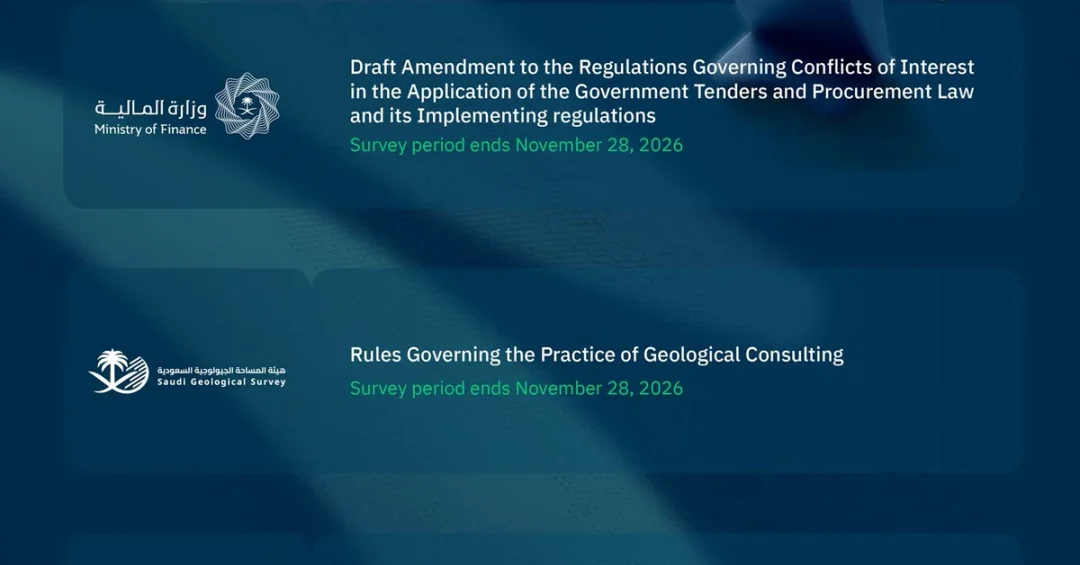
Saudi Arabia’s Competitiveness and Business Center (SCBC) has opened public consultation on 71 economic and development projects through its unified electronic platform, Istitlaa, in cooperation with 32 government entities, the Saudi Press Agency reported on November 5, 2026. The initiative invites stakeholders—including citizens, businesses, and experts—to submit feedback and proposals before the projects are formally approved, marking another step in the Kingdom’s drive to enhance transparency and participatory governance.
The projects span a wide range of sectors, from government procurement and geological consulting to infrastructure licensing in Riyadh. By leveraging digital tools to gather public input, the Istitlaa platform embodies Saudi Arabia’s commitment to inclusive policymaking and aligns with the broader goals of Vision 2030, which seeks to foster a dynamic business environment and responsive institutions. How does such open consultation reshape the relationship between the state and its stakeholders? It builds trust, improves regulatory quality, and ensures that policies reflect real-world needs. The deadline for feedback on the highlighted projects is November 28, 2026, giving interested parties ample time to contribute.
Context and Background
What is the Istitlaa platform, and why does it matter? Launched by the Saudi Competitiveness and Business Center, Istitlaa serves as a centralized hub for public consultation on draft laws, regulations, and similar instruments. It enables government entities to publish proposed projects and collect comments from the public, private sector, and civil society. This approach not only democratizes the legislative process but also ensures that regulations are practical, effective, and aligned with the needs of the economy. The platform reflects a global trend toward e-participation, but in Saudi Arabia, it is uniquely tailored to support the Kingdom’s rapid modernization under Vision 2030.
The current batch of 71 projects, developed with 32 government entities, underscores the breadth of collaboration across ministries and agencies. From the Ministry of Finance to the Saudi Geological Survey and the Riyadh Infrastructure Projects Center, these entities are proactively seeking input to refine their proposals. This level of inter-agency coordination is a hallmark of Saudi Arabia’s governance reforms, which aim to break silos and deliver integrated solutions. By opening these projects for feedback, the Kingdom demonstrates its willingness to listen and adapt—a crucial ingredient for successful policy implementation in a fast-evolving economy.
Historically, Saudi Arabia has made significant strides in regulatory reform, but the Istitlaa platform represents a leap forward in transparency. It allows stakeholders to review draft texts, submit suggestions, and even propose alternatives. This participatory mechanism not only improves the quality of regulations but also reduces the risk of unintended consequences. As the Kingdom continues to diversify its economy and attract foreign investment, such inclusive processes become even more vital. They signal to the world that Saudi Arabia is open for business and committed to best practices in governance.
Key Details of the 71 Projects
What specific projects are open for feedback, and how will they impact daily life? Among the notable proposals is the Ministry of Finance’s project to amend the Conflict of Interest Regulation under the Government Tenders and Procurement Law. This amendment, aligned with Royal Decree No. (76) dated 27/2/1448 AH, aims to strengthen integrity in public procurement—a cornerstone of efficient government spending. By clarifying conflict-of-interest rules, the project seeks to prevent favoritism and ensure fair competition, which is essential for maintaining trust in state institutions and maximizing the value of public funds.
Another significant project comes from the Saudi Geological Survey: the “Rules Regulating the Practice of the Geological Consulting Profession.” This initiative aims to professionalize geological consulting by setting licensing conditions, classifying practitioners based on qualifications and experience, defining practice areas and obligations, and establishing oversight procedures. By regulating this niche profession, the Kingdom hopes to enhance the quality of geological assessments, which are critical for mining, construction, and environmental protection. This is particularly important as Saudi Arabia expands its mining sector under Vision 2030, aiming to make it a third pillar of the economy alongside oil and petrochemicals.
The Riyadh Infrastructure Projects Center has also published a project to update licensing and permitting procedures for infrastructure works in the Riyadh Region. The update addresses challenges encountered during implementation, simplifies and unifies procedures, clarifies requirements and responsibilities, and improves coordination among relevant entities. The ultimate goal is faster project delivery and higher quality—vital for a capital city experiencing rapid growth and hosting major events. By streamlining these processes, Riyadh can accelerate the development of roads, utilities, and public spaces, enhancing the quality of life for residents and supporting economic activity.
All three highlighted projects are open for public feedback until November 28, 2026. This window allows stakeholders to thoroughly review the proposals and submit their comments through the Istitlaa platform. The feedback will be considered before the projects are finalized, ensuring that the regulations are well-informed and broadly supported. The diversity of projects—from financial integrity to professional licensing to urban infrastructure—demonstrates the comprehensive nature of Saudi Arabia’s reform agenda.
International and Regional Impact
How does Saudi Arabia’s consultative approach influence its regional and global standing? By institutionalizing public consultation through Istitlaa, the Kingdom positions itself as a leader in transparent governance in the Middle East. This is particularly significant as countries in the region seek to diversify their economies and attract foreign direct investment. Investors and international partners view regulatory predictability and inclusiveness as key factors when deciding where to allocate capital. Saudi Arabia’s commitment to gathering public input before enacting laws sends a strong signal that its business environment is becoming more predictable and responsive.
Moreover, the Istitlaa platform aligns with international best practices promoted by organizations such as the OECD and the World Bank. While not identical to Western models, it adapts these practices to the Saudi context, emphasizing efficiency, fairness, and stakeholder engagement. This approach can serve as a model for other nations in the region undergoing similar transitions. It also reinforces Saudi Arabia’s role as a bridge between traditional governance and modern, digital-first policymaking. As the Kingdom chairs or participates in global forums, its domestic reforms lend credibility to its international advocacy for sustainable development and economic cooperation.
Economic and Strategic Significance
What economic benefits arise from consulting the public on regulatory projects? First, better regulations reduce compliance costs for businesses, as they are designed with input from those who will be affected. This is especially important for small and medium enterprises, which often lack the resources to navigate complex or poorly designed rules. By streamlining procedures—as seen in the Riyadh infrastructure project—the government can stimulate private sector activity and job creation. Second, transparent processes reduce corruption risks, ensuring that public resources are allocated fairly and efficiently. This attracts investment and fosters a level playing field.
Strategically, the Istitlaa platform supports Saudi Arabia’s Vision 2030 goals of increasing private sector contribution to GDP and improving the Kingdom’s ranking in global competitiveness indices. The initiative also enhances government accountability, as entities must consider and respond to public feedback. Over time, this can lead to more agile and adaptive governance, capable of responding to emerging challenges. As Saudi Arabia pursues mega-projects like NEOM and expands non-oil sectors, such participatory mechanisms will be indispensable for maintaining momentum and public support.
Vision 2030 Alignment
How does the Istitlaa platform embody the spirit of Vision 2030? Vision 2030 is not just about economic diversification; it is also about creating a vibrant society and an ambitious nation. Transparency, participation, and accountability are core principles of the Vision, and Istitlaa directly advances them. By engaging citizens and stakeholders in policymaking, the Kingdom fosters a sense of ownership and collective responsibility. This is essential for the long-term success of reforms, as it builds trust between the government and the governed. The platform also supports the Vision’s aim of transitioning to a digital economy, showcasing how technology can be used to enhance governance.
As Saudi Arabia continues to roll out ambitious initiatives—from the Red Sea Project to the National Industrial Development and Logistics Program—the need for inclusive and efficient regulation grows. The 71 projects currently open for feedback are a testament to the Kingdom’s proactive approach. They cover critical areas that will shape the business environment for years to come. By inviting public scrutiny, the government ensures that these regulations are not only technically sound but also socially acceptable. This holistic approach is what makes Vision 2030 a comprehensive blueprint for national transformation. In the coming years, the Istitlaa platform will likely expand its reach, further embedding participatory governance in the Saudi administrative system.
20 Questions
Q1. What is the Istitlaa platform?
A1. Istitlaa is a unified electronic public consultation platform launched by the Saudi Competitiveness and Business Center. It allows stakeholders to review and provide feedback on draft laws, regulations, and projects before they are approved, enhancing transparency and participatory governance in Saudi Arabia.
Q2. How many projects are currently open for feedback?
A2. There are 71 projects related to economic and development affairs open for public consultation through the Istitlaa platform. These projects are being developed in cooperation with 32 government entities across various sectors.
Q3. Which government entities are involved in these projects?
A3. The projects involve 32 government entities, including the Ministry of Finance, the Saudi Geological Survey, and the Riyadh Infrastructure Projects Center. Each entity presents projects relevant to its mandate, ensuring a comprehensive approach to regulatory reform.
Q4. What is the Ministry of Finance’s project about?
A4. The Ministry of Finance’s project is titled “Amendment of the Conflict of Interest Regulation in the Application of the Government Tenders and Procurement Law and its Implementing Regulations.” It aims to align the regulation with Royal Decree No. (76) dated 27/2/1448 AH, strengthening integrity in public procurement.
Q5. What does the Saudi Geological Survey’s project aim to achieve?
A5. The Saudi Geological Survey’s project, “Rules Regulating the Practice of the Geological Consulting Profession,” seeks to regulate the profession by defining licensing conditions, classifying practitioners, specifying fields of practice and obligations, and establishing oversight procedures and violation handling.
Q6. What is the Riyadh Infrastructure Projects Center proposing?
A6. The center has published a project to update licensing and permitting procedures for infrastructure works in the Riyadh Region. It aims to address implementation challenges, simplify procedures, clarify responsibilities, improve coordination, and support faster project delivery and higher quality.
Q7. Until when can the public submit feedback?
A7. Public feedback on the highlighted projects is open until November 28, 2026. Stakeholders have until this date to review the proposals and submit their comments through the Istitlaa platform.
Q8. How does Istitlaa enhance transparency?
A8. Istitlaa enhances transparency by making draft regulations publicly available and inviting feedback from all stakeholders. This open process allows the government to consider diverse perspectives before finalizing laws, reducing the risk of opaque decision-making and building trust.
Q9. What is the role of the Saudi Competitiveness and Business Center?
A9. The Saudi Competitiveness and Business Center operates the Istitlaa platform. It facilitates public consultation, coordinates with government entities, and ensures that feedback is collected and considered, thereby improving the quality of regulations and supporting economic competitiveness.
Q10. How does public consultation benefit businesses?
A10. Public consultation benefits businesses by allowing them to voice concerns and suggest improvements to regulations that affect them. This leads to more practical, cost-effective rules, reduces compliance burdens, and fosters a predictable business environment that encourages investment and growth.
Q11. What is the significance of the Conflict of Interest Regulation amendment?
A11. The amendment strengthens integrity in government tenders and procurement by clarifying conflict-of-interest rules. It helps prevent favoritism, ensures fair competition, and safeguards public funds, which is essential for efficient government spending and maintaining trust in state institutions.
Q12. Why is regulating geological consulting important?
A12. Regulating geological consulting ensures that practitioners meet high standards of qualification and ethics. This improves the quality of geological assessments critical for mining, construction, and environmental protection, supporting Saudi Arabia’s economic diversification goals, especially in the mining sector.
Q13. How will the Riyadh infrastructure project update impact project delivery?
A13. The update will simplify and unify licensing and permitting procedures, clarify requirements and responsibilities, and improve coordination among entities. This will reduce delays, accelerate project delivery, and enhance the quality of infrastructure works in the Riyadh Region.
Q14. What is the deadline for feedback on these projects?
A14. The deadline for submitting feedback on the projects mentioned is November 28, 2026. Stakeholders are encouraged to review the proposals and provide their input before this date to influence the final regulations.
Q15. How does Istitlaa align with Vision 2030?
A15. Istitlaa aligns with Vision 2030 by promoting transparency, participatory governance, and digital transformation. It engages stakeholders in policymaking, supports a dynamic business environment, and helps achieve the Vision’s goals of economic diversification and improved government efficiency.
Q16. Can international stakeholders participate in the consultation?
A16. The Istitlaa platform is primarily designed for domestic stakeholders, but international investors and experts with interest in Saudi Arabia’s regulatory environment may also provide feedback. The platform’s online nature facilitates broader participation, enhancing the quality of regulations.
Q17. What other types of projects are typically featured on Istitlaa?
A17. Istitlaa features a wide range of projects, including draft laws, regulations, and similar instruments related to economic and development affairs. These cover sectors such as finance, industry, infrastructure, health, education, and technology, reflecting the breadth of Saudi Arabia’s reform agenda.
Q18. How does public feedback influence final regulations?
A18. Public feedback is collected, analyzed, and considered by the relevant government entities before finalizing regulations. It can lead to revisions that improve clarity, effectiveness, and stakeholder acceptance, ensuring that regulations are well-designed and broadly supported.
Q19. What are the broader implications of this consultative approach?
A19. The consultative approach fosters trust between the government and stakeholders, improves regulatory quality, and enhances Saudi Arabia’s competitiveness. It signals a commitment to inclusive governance, which is attractive to investors and aligns with global best practices, supporting sustainable economic growth.
Q20. Where can stakeholders access the Istitlaa platform?
A20. Stakeholders can access the Istitlaa platform through its official website, which is managed by the Saudi Competitiveness and Business Center. The platform is user-friendly and provides all necessary information to review projects and submit feedback electronically.
Reader Feedback
We value your thoughts. Please share your feedback on this article.
Your feedback helps us improve our coverage.
Related articles
 Coalition Intercepts Houthi Missile Targeting Madinah
 Prophet’s Mosque 24/7 Maintenance Ensures Seamless Worship
 Grand Mosque Sermon Urges Sincerity and Patience
 Saudi Red Crescent in Al-Baha Enhances Readiness for Rainy Weather with 20 Ambulance and Rapid Response Teams
 Jazan Launches Initiative to Plant 1,000 Saplings
 Jeddah Governor Receives Kazakhstan Consul General