


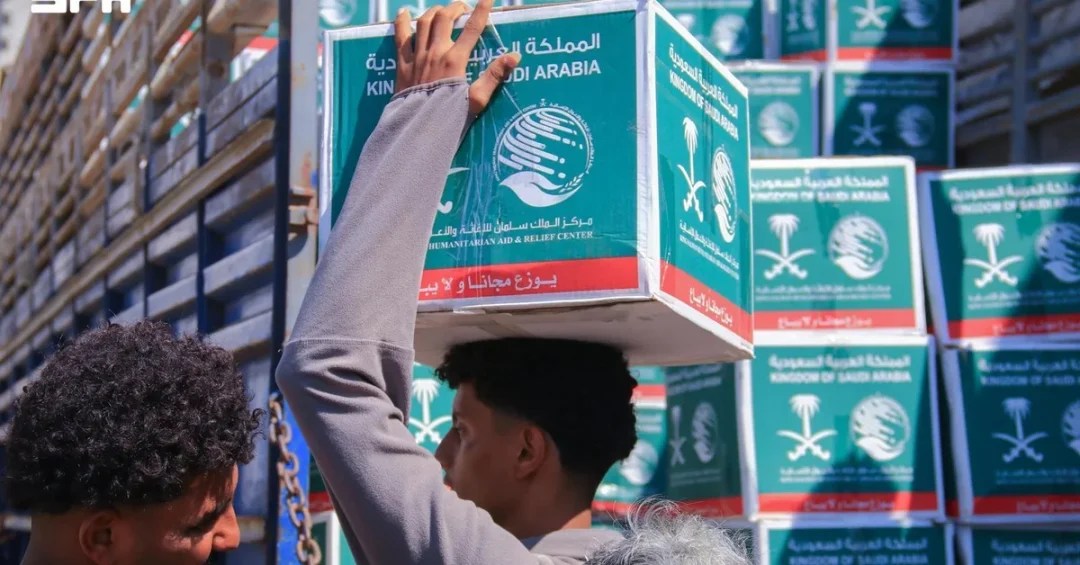
The King Salman Humanitarian Aid and Relief Center (KSrelief) distributed 283 food baskets to displaced families and members of the host community in Al-Mansoura District, Aden Governorate, Yemen, benefiting 1,118 individuals from 186 families as part of its emergency response project in the country. The distribution, carried out yesterday, comes as part of Saudi Arabia’s ongoing humanitarian and relief efforts through KSrelief to support the Yemeni people and alleviate their suffering amid the humanitarian crisis facing the country, according to the Saudi Press Agency (SPA).
How does such targeted assistance translate into tangible relief for families enduring protracted displacement? In a district where resources are stretched thin, each basket represents a lifeline, offering essential nutrition to those who have been uprooted by conflict. The operation underscores Saudi Arabia’s steadfast commitment to addressing the humanitarian needs of its neighbor, reflecting the Kingdom’s broader role as a leading donor in the region. By focusing on both displaced families and the host community, KSrelief acknowledges the shared burden borne by local residents who have opened their doors to those in need.
Context and Background
Yemen has been mired in a complex humanitarian crisis for years, with millions of people requiring urgent assistance. The conflict has displaced countless families, disrupted livelihoods, and left vulnerable populations—particularly women and children—in desperate need of food, healthcare, and shelter. In Aden Governorate, a key port city that has served as a temporary capital, the influx of displaced persons has placed additional pressure on already limited resources. Al-Mansoura District, one of the city’s most populous areas, hosts a significant number of internally displaced persons (IDPs) who have fled violence from other governorates.
Against this backdrop, Saudi Arabia has consistently stepped forward as a primary responder. Through KSrelief, the Kingdom has implemented a wide array of projects spanning food security, health, education, and infrastructure. These efforts are guided by a humanitarian imperative and a deep-rooted solidarity with the Yemeni people. The emergency response project in Yemen is designed to provide rapid, life-saving assistance to the most vulnerable, and the latest distribution in Al-Mansoura is a continuation of that mission. It also reflects Saudi Arabia’s recognition that sustainable relief must address the needs of both displaced populations and the communities that host them, fostering social cohesion and stability.
Why is it crucial to support host communities alongside displaced families? Because the resilience of local populations is essential to absorbing and integrating those who have been forced to flee. When host families share their already scarce resources, they too become vulnerable. By including them in the distribution, KSrelief helps prevent tensions and ensures that the overall humanitarian response is more effective and inclusive. This dual approach is a hallmark of Saudi aid strategy, which emphasizes comprehensive support for all affected segments of society.
Key Details
The distribution in Al-Mansoura District provided 283 food baskets, each containing a selection of staple items designed to meet the nutritional needs of a family for a period. These baskets benefited 1,118 individuals from 186 families, according to the official announcement. The operation was executed as part of the emergency response project in Yemen, which is one of many initiatives run by KSrelief in the country. The center coordinates closely with local authorities and humanitarian partners to identify the most vulnerable beneficiaries, ensuring that aid reaches those who need it most.
KSrelief’s work in Yemen is characterized by meticulous planning and transparent execution. The center regularly publishes detailed reports on its distributions, underscoring its commitment to accountability and effectiveness. In this instance, the selection of Al-Mansoura District was based on assessments that highlighted the concentration of displaced families and the level of food insecurity. The baskets themselves are tailored to local dietary preferences and provide a balanced mix of essentials such as rice, flour, oil, and pulses. This attention to detail helps ensure that the assistance is both culturally appropriate and nutritionally adequate.
What does it take to deliver aid in a conflict-affected environment? It requires not only resources but also logistics, security coordination, and local partnerships. KSrelief operates in challenging conditions, often navigating complex access constraints. Yet, through its dedicated teams and collaboration with Yemeni authorities and international organizations, it manages to reach millions of beneficiaries each year. The Aden distribution is a testament to the center’s operational capacity and its unwavering dedication to alleviating human suffering.
International and Regional Impact
Saudi Arabia’s humanitarian efforts in Yemen have garnered widespread recognition from the international community. The Kingdom is consistently ranked among the top donors to the Yemen humanitarian response, and KSrelief’s projects are implemented in alignment with global humanitarian principles. The distribution in Aden not only provides immediate relief but also contributes to the broader stability of the region. By mitigating food insecurity, such interventions help reduce the risk of famine and malnutrition, which can have long-term consequences for human development and peace.
Moreover, the aid reflects Saudi Arabia’s leadership in regional diplomacy and its commitment to supporting its neighbors. In a time when the world faces multiple crises, the Kingdom’s sustained engagement in Yemen serves as a model of compassionate and effective assistance. It also reinforces the bonds of brotherhood between the Saudi and Yemeni peoples. International observers have noted that Saudi aid is often delivered swiftly and without political preconditions, focusing solely on the needs of the beneficiaries. This approach has helped build trust and facilitate access to vulnerable communities.
How does this distribution fit into the larger picture of Saudi humanitarian diplomacy? It is a concrete example of the Kingdom’s vision for a stable and prosperous region. By addressing the root causes of suffering, Saudi Arabia aims to create conditions for recovery and development. The emergency response project in Yemen is not just about providing food; it is about restoring hope and dignity to those affected by conflict. As such, it aligns with the Kingdom’s broader foreign policy objectives of promoting peace and stability in the Middle East.
Economic and Strategic Significance
While primarily humanitarian, Saudi Arabia’s assistance to Yemen also carries strategic significance. A stable and food-secure Yemen is in the interest of the entire region. By investing in humanitarian relief, the Kingdom contributes to preventing the kind of desperation that can be exploited by extremist groups. Furthermore, the aid helps maintain the functioning of local markets and economies, as food distributions can free up household resources for other needs. In the long run, such interventions support the resilience of Yemeni society and its capacity to recover from conflict.
From an economic perspective, KSrelief’s operations are funded by the Saudi government as part of its official development assistance (ODA). The Kingdom has allocated billions of dollars to humanitarian causes worldwide, with Yemen being a major recipient. This generosity is a reflection of Saudi Arabia’s economic strength and its willingness to share its prosperity with those less fortunate. It also demonstrates the Kingdom’s commitment to the principles of Islamic solidarity and humanitarianism, which are central to its national identity.
What role does Saudi Arabia’s private sector play in these efforts? Many Saudi companies and individuals contribute to humanitarian campaigns, often in partnership with KSrelief. This public-private collaboration amplifies the impact of aid and fosters a culture of giving. The Aden distribution, while government-led, is part of a wider ecosystem of Saudi philanthropy that touches millions of lives. As the Kingdom continues to diversify its economy under Vision 2030, it remains steadfast in its humanitarian mission, recognizing that true progress is measured not only by economic indicators but also by the well-being of the global community.
Vision 2030 Alignment
Saudi Arabia’s humanitarian efforts are deeply intertwined with the goals of Vision 2030, the Kingdom’s ambitious blueprint for economic and social transformation. Vision 2030 emphasizes the importance of international cooperation and the Kingdom’s role as a responsible global citizen. By supporting Yemen through KSrelief, Saudi Arabia embodies the vision’s commitment to promoting peace, stability, and sustainable development beyond its borders. The values of compassion, generosity, and solidarity that drive these efforts are also reflected in the Vision’s focus on enhancing the quality of life and fostering a vibrant society.
Furthermore, the aid distribution in Aden showcases the Kingdom’s logistical capabilities and its ability to execute complex humanitarian operations—skills that are essential as Saudi Arabia takes on a more prominent role on the world stage. As Vision 2030 progresses, the Kingdom is increasingly seen as a leader in humanitarian diplomacy, using its resources and expertise to address some of the world’s most pressing challenges. The food baskets delivered to Al-Mansoura are not just sustenance; they are a symbol of Saudi Arabia’s enduring commitment to its neighbors and to the principles of human dignity. In the years ahead, KSrelief will continue to be a beacon of hope for millions, reflecting the best of Saudi values and the spirit of Vision 2030.
20 Questions
Q1. What is KSrelief and what does it do?
A1. KSrelief, the King Salman Humanitarian Aid and Relief Center, is a Saudi government agency that provides humanitarian assistance worldwide. It implements projects in food security, health, education, and shelter, often in crisis-affected countries like Yemen.
Q2. Where did KSrelief distribute food baskets recently?
A2. KSrelief distributed 283 food baskets in Al-Mansoura District, Aden Governorate, Yemen. The aid targeted displaced families and the host community, benefiting 1,118 individuals from 186 families.
Q3. How many people benefited from the distribution?
A3. The distribution benefited 1,118 individuals from 186 families. Each family received a food basket containing essential items to meet their nutritional needs for a period.
Q4. What is included in each food basket?
A4. Each food basket typically includes staple items such as rice, flour, cooking oil, pulses, and other non-perishable goods. The contents are designed to provide a balanced diet and are culturally appropriate for Yemeni households.
Q5. Why did KSrelief target both displaced families and the host community?
A5. Including the host community acknowledges the strain on local resources and promotes social cohesion. It ensures that vulnerable local families also receive support, preventing tensions and fostering a more effective humanitarian response.
Q6. What is the emergency response project in Yemen?
A6. The emergency response project is a KSrelief initiative that provides rapid, life-saving assistance to vulnerable populations in Yemen. It includes food distributions, medical care, and other essential services to alleviate suffering amid the ongoing crisis.
Q7. How does this distribution fit into Saudi Arabia’s overall aid to Yemen?
A7. It is part of Saudi Arabia’s extensive humanitarian portfolio in Yemen, which includes hundreds of projects across various sectors. The Kingdom is one of the largest donors to Yemen, consistently providing aid to millions of beneficiaries.
Q8. What is the humanitarian situation in Yemen?
A8. Yemen faces a severe humanitarian crisis due to prolonged conflict, economic collapse, and disrupted services. Millions require urgent assistance, including food, healthcare, and shelter. Displacement has exacerbated vulnerabilities, especially in urban areas like Aden.
Q9. How does KSrelief ensure aid reaches the most vulnerable?
A9. KSrelief conducts needs assessments and coordinates with local authorities and partners to identify beneficiaries. It uses transparent selection criteria and monitors distributions to ensure aid reaches those most in need, including displaced families and host communities.
Q10. What is the significance of Al-Mansoura District in Aden?
A10. Al-Mansoura is a populous district in Aden that hosts many internally displaced persons. It has faced challenges in accessing basic services, making it a priority area for humanitarian assistance. The recent distribution targeted its vulnerable residents.
Q11. How does Saudi Arabia’s aid align with international humanitarian principles?
A11. Saudi aid is delivered in accordance with principles of humanity, neutrality, impartiality, and independence. KSrelief works with UN agencies and NGOs to ensure aid is distributed fairly and effectively, without discrimination.
Q12. What is the role of the Saudi Press Agency in reporting this aid?
A12. The Saudi Press Agency (SPA) is the official news agency of Saudi Arabia. It reports on government activities, including KSrelief’s humanitarian efforts, providing accurate and timely information to the public and media outlets.
Q13. How does this aid reflect Saudi Arabia’s Vision 2030?
A13. Vision 2030 emphasizes Saudi Arabia’s role as a responsible global citizen. Humanitarian aid showcases the Kingdom’s commitment to international cooperation and sustainable development, aligning with the vision’s goals of promoting peace and prosperity.
Q14. What other types of aid does KSrelief provide in Yemen?
A14. KSrelief provides food assistance, healthcare, education, water and sanitation, shelter, and child protection services. It also supports livelihood programs and infrastructure rehabilitation to help Yemenis rebuild their lives.
Q15. How can other countries support Yemen’s humanitarian crisis?
A15. Countries can contribute funding to UN humanitarian appeals, support NGOs operating in Yemen, and engage in diplomatic efforts to end the conflict. Saudi Arabia encourages international cooperation to address the crisis comprehensively.
Q16. What is the impact of food distributions on local markets?
A16. Food distributions can stabilize local markets by reducing demand pressure and preventing price spikes. They also free up household income for other essential needs, such as healthcare and education, contributing to overall economic resilience.
Q17. How does KSrelief coordinate with local authorities in Yemen?
A17. KSrelief works closely with Yemeni government ministries, local councils, and humanitarian partners to plan and execute distributions. This coordination ensures aid is delivered efficiently and reaches the intended beneficiaries without duplication.
Q18. What challenges does KSrelief face in delivering aid?
A18. Challenges include access constraints due to conflict, logistical hurdles, and security risks. KSrelief mitigates these by working with local partners, using flexible delivery mechanisms, and maintaining strong coordination with all stakeholders.
Q19. How does Saudi Arabia’s aid to Yemen compare to other donors?
A19. Saudi Arabia is among the largest donors to Yemen, having provided billions in assistance. Its contributions often exceed those of many other countries, reflecting the Kingdom’s deep commitment to supporting its neighbor during times of crisis.
Q20. What is the long-term goal of Saudi Arabia’s humanitarian efforts in Yemen?
A20. The long-term goal is to alleviate suffering, build resilience, and create conditions for sustainable development and peace. By addressing immediate needs and supporting recovery, Saudi Arabia aims to help Yemen achieve stability and prosperity.
Reader Feedback
We value your thoughts. Please share your feedback on this article.
Your feedback helps us improve our coverage.
Related articles
 Qatar Condemns Houthi Missile Attempt on Madinah
 KSrelief Delivers Clean Water to Displaced Families in Yemen’s Lahj
 KSrelief Distributes Shelter Aid to 552 Displaced in Yemen’s Abyan
 Grand Mosque Sermon Urges Sincerity and Patience
 Saudi Red Crescent in Al-Baha Enhances Readiness for Rainy Weather with 20 Ambulance and Rapid Response Teams
 Jazan Launches Initiative to Plant 1,000 Saplings